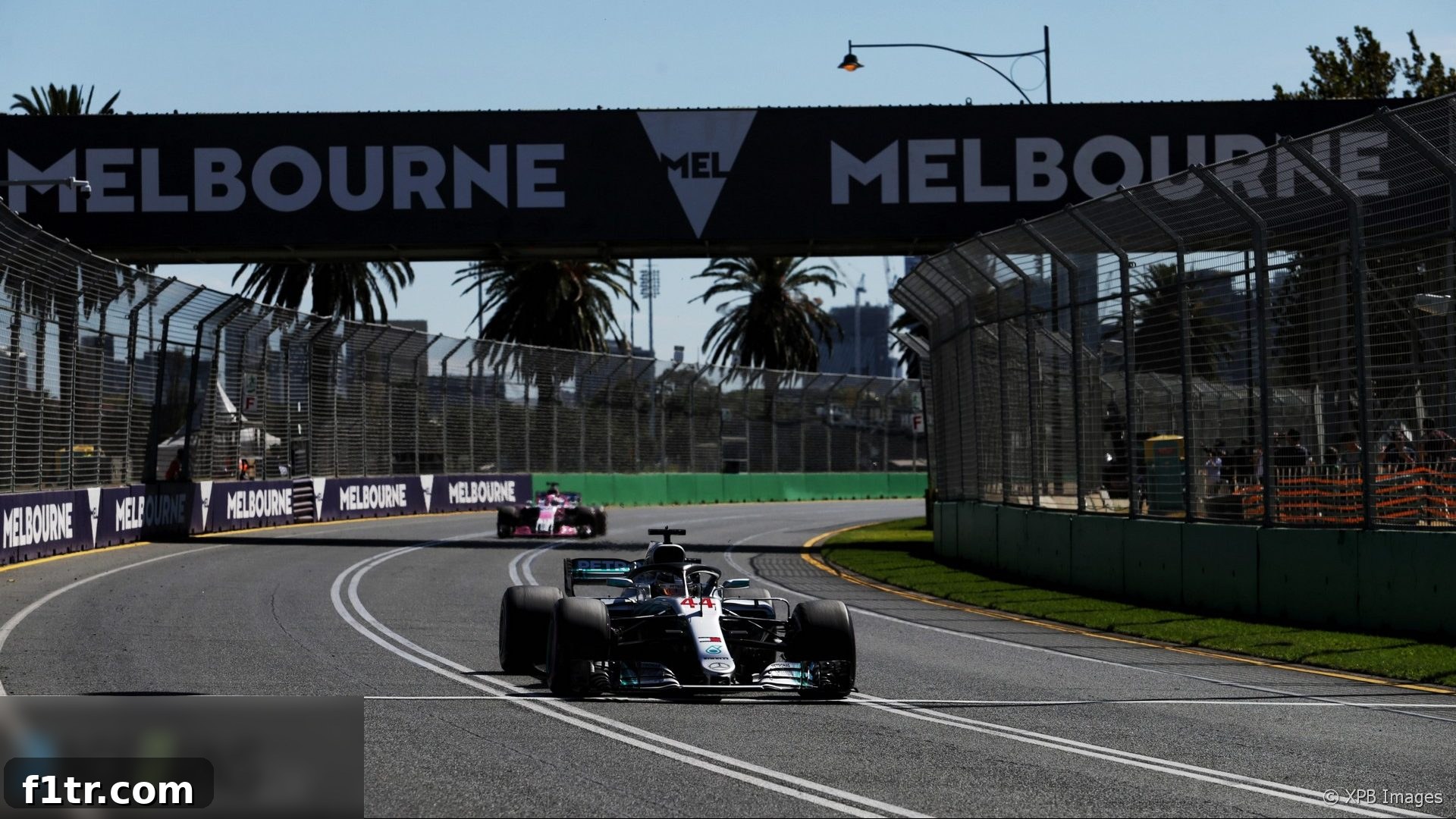
Lewis Hamilton, the reigning Formula 1 World Champion at the time, offered a tantalizing glimpse into the sheer performance capabilities of the Mercedes-AMG Petronas F1 W09 EQ Power+, revealing that the team was tackling the notoriously ultra-quick Turns 11 and 12 at Melbourne’s iconic Albert Park Circuit without even touching the brakes. This startling admission came during the crucial practice sessions for the opening round of the 2018 Formula 1 season, the Australian Grand Prix, immediately setting a high bar for the Silver Arrows’ performance and sparking immense intrigue within the F1 paddock and among fans worldwide.
“The car is undoubtedly quicker here than it was last year, which translates to a vastly improved feel across all sections of the track,” Hamilton remarked with a palpable sense of satisfaction. His words painted a vivid picture of a machine honed to perfection, capable of pushing the boundaries of what was previously thought possible on an F1 circuit. “Turns 11 and 12, in particular, are simply insane; we’re not even braking into that corner, which is a testament to the incredible downforce and mechanical grip generated by this year’s challenger.” This statement underscored the revolutionary design and engineering prowess that Mercedes had poured into their 2018 contender, the W09, a car that promised to redefine performance benchmarks in Formula 1 by maximizing aerodynamic efficiency and chassis stability.
The ability to take such high-speed corners flat-out or without requiring brake input is not merely a display of raw power but a complex interplay of aerodynamic efficiency, chassis stability, and driver confidence. These two specific corners at Albert Park are fast, sweeping right-handers that demand absolute precision and unwavering commitment from the driver. For an F1 car to navigate them at such incredible speeds, shedding the need for brake input, speaks volumes about the car’s advanced aerodynamic package and its ability to generate monumental levels of downforce, effectively gluing the car to the tarmac. This characteristic allows drivers to maintain crucial momentum, which is vital for optimizing lap times, and simultaneously reduces stress on the braking system, offering potential advantages over a full race distance. This technological leap by Mercedes signified their relentless pursuit of engineering excellence and their ambition to maintain their dominance in the Constructors’ Championship.
This revelation from the Australian Grand Prix practice sessions mirrored earlier reports from pre-season testing at Circuit de Catalunya. During those critical evaluation phases, Mercedes had already demonstrated their W09’s exceptional high-speed capability by taking the challenging Turns 3 and 9 at the Spanish circuit entirely flat-out. Such performance metrics are key indicators of a car’s potential for outright speed and cornering prowess, strongly suggesting that Mercedes had indeed unlocked another significant level of performance from their highly successful design philosophy. The consistent ability to tackle formidable corners without lifting off the throttle or engaging the brakes pointed to a fundamental strength in the W09’s design, particularly its groundbreaking aerodynamic efficiency and perfectly balanced chassis, making it a formidable package right out of the box and a serious contender for the 2018 F1 title.
During the crucial Friday practice sessions in Melbourne, Lewis Hamilton consistently topped the time sheets, heading both FP1 and FP2 with commanding performances. This immediate strong showing allowed the reigning world champions, Mercedes, to confidently declare they had “started on the right foot” for the highly anticipated new season. The confidence radiating from the Mercedes garage was palpable, reflecting their strong pre-season development and preparation. However, as the day progressed and teams refined their setups, the competitive landscape began to sharpen dramatically. By the close of the second practice session, the gap between the front-running teams — Mercedes, Red Bull Racing, and Ferrari — had narrowed significantly, with less than three-tenths of a second separating these championship contenders. This tight margin hinted at a fiercely contested season opener and an exhilarating battle for pole position and ultimately, the race victory.
“The gap closed up a little bit in FP2 in terms of the separation between us all, and that’s precisely what makes this sport so incredibly exciting,” Hamilton elaborated, acknowledging the intense competition that defines Formula 1. “It inherently makes it more challenging for me as a driver, constantly pushing me to find that extra fraction of a second, to really try and eke out every last bit of performance from the car and myself under pressure.” This sentiment reflected the high stakes of Formula 1, where every millisecond counts, and the smallest gain can make the decisive difference between victory and defeat. The prospect of such a close battle energizes drivers and fans alike, setting the stage for a thrilling qualifying session and an unpredictable race, where strategic calls and driver skill would be paramount. The fight for dominance promised to be tighter than ever, elevating the excitement for the entire F1 community.
Another critical aspect of performance and race strategy in modern Formula 1 revolves around meticulous tyre management. Pre-season testing in Barcelona had seen Mercedes grapple with significant tyre blistering issues, a problem that, if unresolved, could severely hamper their race pace and strategic options throughout the season. However, Hamilton expressed considerable relief that these issues appeared to be absent during the practice sessions in Melbourne. “The tyres definitely didn’t seem to have the same blistering problem that we encountered in Barcelona,” he confirmed. “This made the car feel a lot more normal and predictable, which is absolutely essential for consistent lap times and truly understanding the car’s full potential over longer runs.” The absence of blistering was a huge positive development, indicating that either the Albert Park circuit characteristics were kinder to the Pirelli compounds, or Mercedes had made significant strides in understanding and managing the tyre behaviour since testing. This provided a crucial foundation for their race weekend strategy, allowing them to focus on optimising other performance parameters rather than fighting debilitating tyre degradation.
Despite the strong start and the positive outlook on tyre performance, the looming threat of adverse weather conditions added a significant element of uncertainty to the remainder of the race weekend. Hamilton acknowledged that the final practice session and particularly qualifying would be a crucial step into the unknown if the forecast for rain in Melbourne proved accurate. The weather predictions had indicated a high probability of wet conditions for both Saturday and Sunday, potentially transforming the race weekend dynamics entirely and throwing conventional strategies out the window.
“As far as I’m aware, it’s going to rain tomorrow and on Sunday,” Hamilton stated, his tone reflecting a readiness for the challenging conditions ahead. “I’ve not yet had the opportunity to drive in the rain with these specific 2018-spec Pirelli tyres, so that will undoubtedly make things very interesting and present a new challenge.” Wet weather racing introduces a host of complexities, from severely reduced visibility and notoriously unpredictable grip levels to an increased risk of aquaplaning at high speeds. Mastering these conditions requires exceptional car control, precise judgment, and an uncanny ability to adapt rapidly to changing track surfaces. The lack of prior experience on the new tyres in the wet meant that Hamilton and Mercedes would have to learn on the fly, adding an extra layer of pressure and excitement to the weekend. It could also level the playing field, potentially allowing other teams that traditionally perform well in the wet to challenge the established front-runners, creating an enthralling spectacle for fans.
The Albert Park circuit, known for its semi-permanent street circuit nature with various surface changes, becomes particularly treacherous and demanding in wet conditions. The painted lines, drain covers, and changes in asphalt texture can become incredibly slippery, demanding the utmost respect and concentration from all drivers. Furthermore, the selection and precise management of wet and intermediate tyres becomes paramount, as does the critical timing of pit stops for tyre changes. A strategic gamble in the rain can either lead to glorious victory or catastrophic disaster, making the role of the pit wall strategists as critical as the driver’s performance on track. The prospect of rain promised a thrilling and unpredictable spectacle, a true test of man and machine in the opening round of the Formula 1 season, where adaptability and nerve would prove to be key determinants of success. The anticipation for the qualifying session and the race intensified with the thought of changeable weather, adding an exciting layer of unpredictability to the Australian Grand Prix.
The initial practice sessions had provided Mercedes and Lewis Hamilton with a remarkably strong foundation, showcasing the raw speed and sophisticated engineering of the W09. The unprecedented ability to take high-speed corners without braking, coupled with an improved car feel and seemingly resolved tyre issues, positioned them as clear and formidable contenders for the season’s opening victory. However, the rapidly closing gaps from fierce rivals Ferrari and Red Bull, combined with the ominous rain forecast for both qualifying and the race, ensured that the 2018 Australian Grand Prix was far from a foregone conclusion. The stage was unequivocally set for a classic Formula 1 season opener, packed with high-octane drama, intricate strategy battles, and the relentless pursuit of ultimate performance under potentially challenging and variable conditions. Fans eagerly awaited qualifying, anticipating a nail-biting session where every tenth of a second would count, especially if the heavens opened as predicted. The intricate dance between raw pace, astute tyre preservation, and strategic agility promised to make the Australian Grand Prix a truly memorable event, kicking off another captivating chapter in the illustrious history of Formula 1 racing, establishing the tone for an exhilarating championship battle ahead.
Go ad-free for just £1 per month>> Find out more and sign up
2018 F1 Season Coverage
Explore more in-depth articles and news from the thrilling 2018 Formula 1 season, offering further context and insights into the key developments and stories from that unforgettable year:
- F1 feared “death knell” for Drive to Survive after Ferrari and Mercedes snub
- McLaren staff told us we were “totally crazy” to take Honda engines in 2018 – Tost
- ‘It doesn’t matter if we start last’: How Red Bull’s junior team aided Honda’s leap forward
- Honda’s jet division helped F1 engineers solve power unit problem
- McLaren Racing losses rise after Honda split
Browse all 2018 F1 season articles