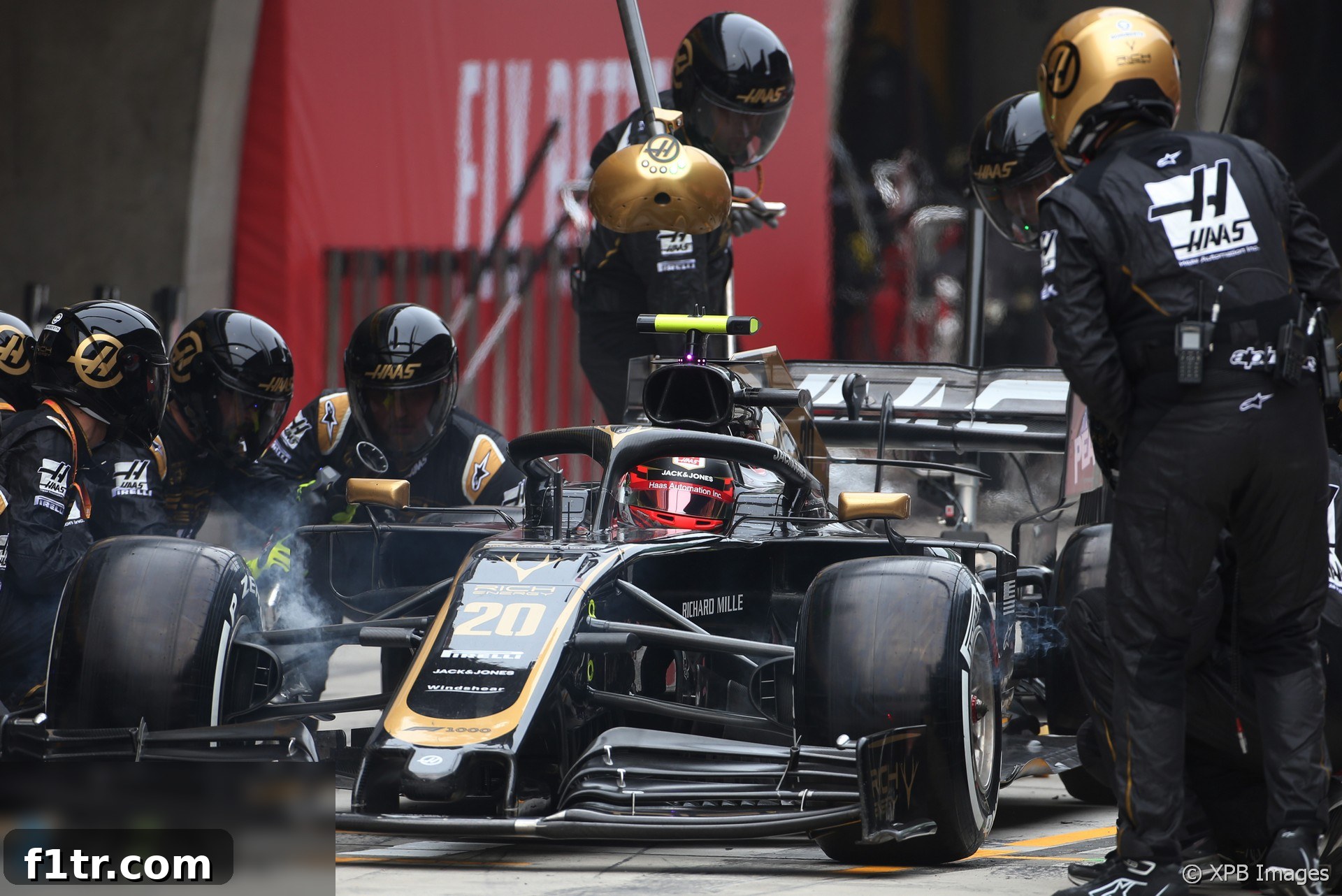
F1 Refuelling: Haas Drivers Grosjean and Magnussen Champion Its Return for Enhanced Racing
The debate surrounding the potential reintroduction of refuelling in Formula 1 continues to gather momentum, with prominent figures weighing in on its merits. Among the most vocal proponents are Haas F1 drivers Romain Grosjean and Kevin Magnussen, who have expressed strong support for bringing back a practice that was last seen in F1 a decade ago. Their arguments center on making cars lighter, more challenging to drive, and injecting a renewed strategic depth into the races.
The discussion was reignited by FIA president Jean Todt, who suggested exploring refuelling as a solution to the ever-increasing weight of modern F1 cars. Over recent years, the heft of Formula 1 machinery has grown substantially, prompting concerns from drivers about the impact on agility, tyre management, and the overall driving experience. While some other drivers have voiced reservations about the plan, Grosjean is firmly convinced that refuelling would be a transformative change for the better, fundamentally enhancing the sport.
The Driver’s Perspective: A Call for Lighter, Faster Cars
For many drivers, the feeling of wrestling a lighter, more agile car around a track is unmatched. The current generation of F1 cars, with their complex hybrid power units, extensive safety features like the Halo, and larger tyres, have seen their minimum weight balloon. This increase has inevitably altered the dynamic of driving, making cars less responsive and more demanding on tyres.
Romain Grosjean: Unlocking Speed, Strategy, and Driver Demand
“I am for refuelling,” stated Romain Grosjean, articulating a view shared by many who yearn for a return to a more nimble F1 car. “I think it’s a positive to get the car faster and lighter. It makes it more demanding on the drivers. I believe also it could open some strategy.” Grosjean’s comments underscore a desire to revert to an era where cars were inherently quicker due to their reduced mass, pushing drivers to the absolute limits of their physical and mental endurance.
He candidly admitted that the current heavy F1 cars have diminished the reward of driving them. “Driving a heavy car is not amazing,” Grosjean confessed. The sheer inertia of a heavier vehicle means slower changes of direction, increased strain on components, and a less immediate feeling of control. He elaborated on the tangible benefits, “If we have lighter cars due to refuelling, it’ll be better and also easier on the tyres.” Lighter cars exert less force on the Pirelli rubber, potentially leading to fewer critical tyre degradation issues and allowing drivers to push harder for longer stints.
Kevin Magnussen: Closer Racing and Enhanced Challenge
Echoing his teammate’s sentiments, Kevin Magnussen offered a robust endorsement of refuelling. “I think refuelling would be very good,” he affirmed, highlighting several critical advantages. Magnussen believes the reintroduction of refuelling would have a profound “positive effect on tyres,” similar to Grosjean’s assessment. This would allow for more aggressive driving and potentially more varied tyre strategies.
Crucially, Magnussen envisions a future where refuelling contributes to “closer racing between cars.” By enabling varied fuel loads and strategic pit stops, races could become less predictable and more dynamic. “It would be more fun for the drivers and more challenging in the races because the cars would be faster with the lighter fuel load,” he added. The prospect of starting a race with a significantly lighter car, pushing hard from the outset, and managing a refuelling stop presents a different kind of challenge that many drivers and fans find appealing.
Magnussen emphasized that refuelling should be considered a significant component of the wide-ranging changes planned for F1 cars for the 2021 season, designed to improve the quality of racing. He labeled it “a big one” that merits implementation. Beyond refuelling, he also shared a broader vision for F1’s future: “Also I think it would be great to maintain some fast cars that can follow each other easily. Maybe they’re producing more of the aerodynamics and downforce from the bottom of the car, from the floor. Also, more equal resources for the teams to have closer competition between the front and back of the field.” These comments underscore a holistic desire for a more competitive and thrilling Formula 1, with refuelling playing a key role in that transformation.
The Historical Context of Refuelling in F1
Refuelling was a staple of Formula 1 from 1994 until the end of the 2009 season, when it was banned primarily on grounds of safety and cost reduction. During its tenure, refuelling added a distinct strategic layer to races, allowing teams to vary their pit stop timings, fuel loads, and tyre choices to either gain track position through an ‘undercut’ or maintain it with an ‘overcut’. This often led to thrilling pit lane action, though critics argued it sometimes reduced on-track overtaking, as strategy played out more in the pits than on the track.
The FIA’s decision to remove refuelling was also motivated by a desire to curb rising team expenses. The specialized equipment, additional personnel, and logistical challenges of transporting and managing volatile race fuel added significant costs. Furthermore, safety concerns, though mitigated by strict protocols, were ever-present, particularly after a few high-profile pit lane fires in the past.
The Growing Problem of F1 Car Weight
The current discussion about refuelling is intrinsically linked to the escalating weight of Formula 1 cars. Since the ban in 2009, the minimum weight of an F1 car has surged from around 605 kg to 798 kg in 2024 (including the driver). This increase is a direct consequence of several technological and safety advancements:
- Hybrid Power Units: The V6 turbo-hybrid engines introduced in 2014 are significantly heavier and more complex than their V8 predecessors, incorporating electric motors, batteries, and energy recovery systems.
- Safety Structures: The implementation of the Halo cockpit protection device in 2018, along with enhanced crash structures and stricter roll hoop tests, has added considerable mass to the chassis.
- Larger Tyres: While not a massive contributor, the shift to larger diameter wheels and tyres has also played a role.
- Complex Aerodynamics: Although designed for performance, the intricate aerodynamic elements also add some weight.
The consequences of these heavier cars are multifold: reduced agility, slower cornering speeds at maximum fuel loads, increased tyre wear, and a less immediate sensation of speed for both drivers and spectators. For many, refuelling offers a practical way to mitigate this issue by allowing cars to start races with less fuel, thus being lighter and faster when it matters most.
Refuelling: A Strategic Game Changer or a Costly Distraction?
The reintroduction of refuelling could indeed be a strategic game-changer. Imagine a scenario where teams have to decide whether to run a shorter, faster stint with minimal fuel or a longer, more conservative one. This opens up various strategic permutations, such as early pit stops for an ‘undercut’ on fresher tyres and less fuel, or extending a stint to gain track position if rivals face traffic. This added layer of strategy could make races less predictable and inject more suspense as teams gamble on different approaches.
However, critics argue that refuelling merely shifts the race action from the track to the pit lane. Instead of on-track overtakes, gains might be made through quicker pit stops or more astute strategy calls, which might not always translate into a more thrilling spectacle for fans. There are also concerns about the substantial costs involved, as teams would need to invest in new refuelling rigs, trained personnel, and more complex logistical operations. Safety also remains a paramount concern, despite advances in technology and pit lane procedures.
The Broader 2021 F1 Regulations and Beyond
The discussion around refuelling is part of a much larger blueprint for the future of Formula 1, particularly the regulations introduced in 2022 (originally planned for 2021 before COVID-19 delays). The overarching goals include fostering closer racing, making cars easier to follow, promoting financial sustainability through cost caps, and reducing the aerodynamic dependency on front wings for overtaking. Within this ambitious framework, refuelling is seen by some, like the Haas drivers, as a vital element to achieve the desired outcome of faster, more exciting racing.
While Grosjean and Magnussen are fervent advocates, the F1 paddock remains divided. Other drivers and team principals have expressed valid doubts, citing potential downsides such as increased costs, continued safety risks, and whether it truly enhances the racing product. Some argue that refuelling complicates the sport unnecessarily and that efforts should instead focus on refining aerodynamic rules and tyre compounds to improve on-track action.
Conclusion: A Return to the Future for F1?
The arguments put forth by Haas drivers Romain Grosjean and Kevin Magnussen present a compelling case for the reintroduction of refuelling in Formula 1. Their vision for lighter, faster, and more strategically diverse racing resonates with many fans and purists who believe the sport has become too homogenized and heavy. While challenges such as cost, safety, and the true impact on race spectacle remain valid concerns, the prospect of a more demanding, dynamic, and unpredictable F1 season is undeniably alluring.
As Formula 1 continues to evolve and seek its optimal form for the future, the debate over refuelling highlights a fundamental tension: balancing technological advancement and safety with the core essence of thrilling, competitive motorsport. Whether refuelling makes a triumphant return remains to be seen, but the passionate advocacy from drivers like Grosjean and Magnussen ensures it will remain a central point of discussion as the sport charts its course forward.