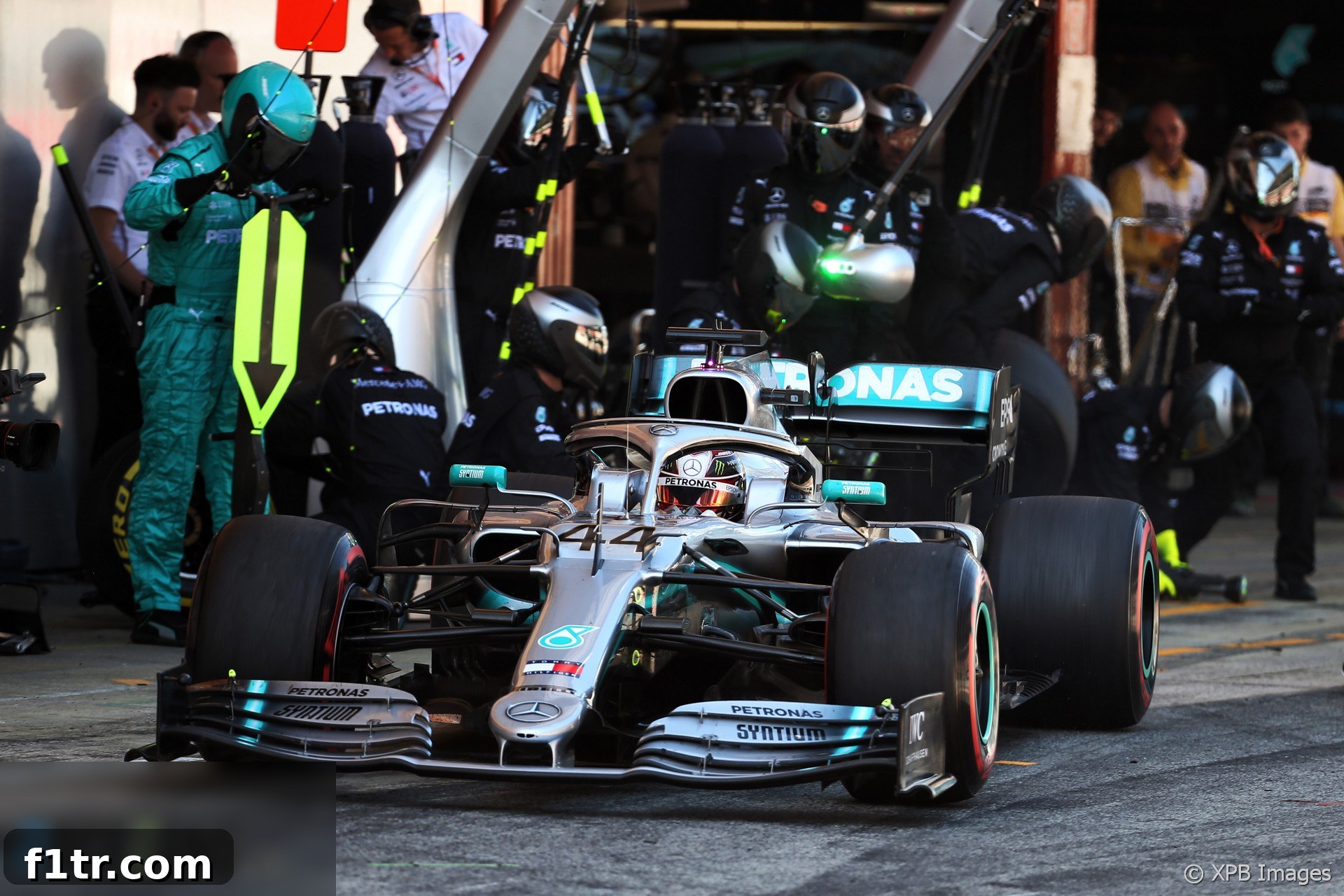
In the high-stakes world of Formula 1, every decision, from car design to race strategy, is scrutinized. Recently, Mercedes team principal Toto Wolff candidly acknowledged the delicate balance inherent in team strategy, admitting that deviating from their established practice of employing similar strategies for both drivers risks “favouring somebody unconsciously.” This statement opens a wider discussion on driver parity, team dynamics, and the pursuit of competitive advantage in a sport where milliseconds can dictate victory.
Mercedes’ Strategic Crossroads: Toto Wolff on Driver Parity and Unconscious Favoritism
The strategic choices made by top teams like Mercedes are often pivotal to race outcomes and can significantly impact the championship battle. A recent decision at Silverstone, where Lewis Hamilton was permitted to run an alternative strategy compared to Valtteri Bottas – a move that ultimately contributed to Hamilton’s victory – brought Mercedes’ long-standing policy into question. Historically, Mercedes has preferred to keep its drivers on broadly similar strategies, aiming to ensure fairness and minimize internal competition stemming from divergent tactical approaches.
The discussion we had with them in the morning was if you were to put them on the same tyre, on the same strategy, basically turn one or lap one would lock in the result. And we felt that picking up on their suggestion would provide an interesting race.
It still overlapped on many instances: We knew they would be racing each other but then maybe with a different strategy. So that’s what we tried.
I think in hindsight [the] argument has value and I think we need to look at it. Are we actually favouring somebody unconsciously, which we wouldn’t want to do. For sure it’s created more experience and more data for us to judge whether it’s something we want to do in the future.
Wolff’s reflection highlights the inherent tension between maximizing team points and maintaining an impartial environment for both drivers. The rationale behind allowing divergent strategies, as he explained, was to foster a more engaging race, preventing the outcome from being “locked in” from the very first lap. This approach, while thrilling for spectators, inevitably raises questions about fairness within the team. The concern about “unconsciously favouring somebody” underscores the intricate psychological and competitive aspects of managing two elite drivers vying for the same ultimate prize.
The experience at Silverstone has provided Mercedes with invaluable data and insight. As Wolff suggests, the team will now critically evaluate whether such strategic flexibility should become a more regular feature of their race weekends. This internal debate is crucial, as it could redefine how Mercedes approaches race management, potentially influencing driver performance, morale, and even future contract negotiations. The quest for victory must always be balanced with the imperative of fair play, a challenge that even the most dominant teams continually face.
Quotes: Dieter Rencken
The Nuances of Race Strategy: Balancing Team Goals and Individual Driver Ambitions
Race strategy in Formula 1 is a complex dance of calculations, predictions, and real-time adjustments. Teams spend countless hours analyzing data, simulating scenarios, and preparing contingency plans for every imaginable race condition. The decision to put drivers on different strategies, while potentially creating a more exciting spectacle, carries significant risks. It can lead to intra-team battles that consume valuable resources, confuse pit wall communications, and potentially even result in collisions if not managed perfectly.
For Mercedes, a team that has enjoyed a prolonged period of dominance, the question of driver parity has always been particularly sensitive. With two highly capable drivers, both capable of winning races and championships, ensuring that neither feels disadvantaged by team decisions is paramount. A perceived bias, even if unintentional, can erode trust, foster resentment, and ultimately undermine team cohesion. Wolff’s acknowledgment of the risk of “unconscious favouritism” speaks to the deep understanding within the team that fairness is not just about equal equipment, but also equal opportunity on track through strategic choices.
The Silverstone experiment offers a valuable lesson. It demonstrated that while diverging strategies can indeed spice up the racing, the long-term implications for team harmony and driver morale need careful consideration. Moving forward, Mercedes will likely weigh the entertainment value and potential for greater points against the foundational principle of equitable treatment for both Lewis Hamilton and Valtteri Bottas. This ongoing evaluation reflects the dynamic nature of F1, where teams must constantly adapt their philosophies to maintain a competitive edge while managing the human element of high-performance sport.
Engaging the F1 Community: Social Media Highlights and Fan Interaction
Social media has become an indispensable platform for drivers, teams, and fans to connect, share insights, and debate the thrilling world of motorsport. It offers a direct line of communication, often leading to candid exchanges and behind-the-scenes glimpses that enhance the fan experience. From celebratory posts to fiery exchanges, social media channels serve as a vibrant extension of the racing narrative, bringing fans closer to the action and the personalities involved.
From the Pit Wall to Your Feed: Notable Social Media Moments
Notable posts from Twitter, Instagram and more:
@ConorDaly22 didn’t jump the restart dude… if you listened to the driver briefing, they said once the leader goes flat it’s green flag. Just caught you takin a nap 😘
— Santino Ferrucci (@SantinoFerrucci) July 23, 2019
This tweet from IndyCar driver Santino Ferrucci to fellow competitor Conor Daly provides a glimpse into the passionate, sometimes fiery, nature of driver interactions. Debates around race restarts, particularly in series like IndyCar where rules can be interpreted in real-time, are common. Ferrucci’s comment playfully suggests Daly missed a detail from the driver briefing, highlighting the intense focus and rule adherence required at the top level of motorsport. Such direct exchanges on platforms like Twitter not only entertain fans but also underscore the competitive spirit and camaraderie, or sometimes rivalry, that exists between athletes.
- For more direct insights and official updates, explore our F1 Twitter Directory to follow your favorite teams and drivers.
Beyond the Track: Motorsport Headlines and Key Developments
The world of motorsport is constantly buzzing with news, innovations, and captivating stories that extend far beyond the Grand Prix circuits. From popular documentaries broadening F1’s appeal to strategic partnerships driving technological advancements, these headlines reflect the dynamic and evolving nature of global racing. Here’s a closer look at some interesting developments:
Unpacking the Latest News:
Formula 1: Drive To Survive to return to Netflix next year (Formula 1)
“And what’s more this year, for the first time, all 10 teams will join the line-up as they battle it out for victory in the greatest racing series in the world.”
The return of Netflix’s ‘Drive To Survive’ series is a monumental announcement for Formula 1, further solidifying its status as a global entertainment phenomenon. The key takeaway, that all ten teams will participate, promises an even more comprehensive and intimate look into the sport’s inner workings. This inclusive approach will offer unparalleled access to team principals, engineers, and drivers across the entire grid, from championship contenders to those fighting at the back. ‘Drive To Survive’ has been instrumental in attracting new audiences to F1, particularly in key markets like the United States, by blending compelling human drama with the high-octane action of racing. Its continued success and expanded coverage are vital for F1’s ongoing growth and mainstream appeal.
Massa: Debut Season a ‘Learning Curve’ (eracing365)
“For sure I cannot be so happy to see our position in the championship. But it doesn’t mean my season was bad.”
Felipe Massa’s transition from Formula 1 to Formula E marked a significant chapter in his illustrious career. His reflection on his debut season as a ‘learning curve’ perfectly encapsulates the challenges faced by even seasoned drivers when adapting to a new racing discipline. Formula E, with its unique electric powertrain, energy management strategies, and street circuits, demands a fundamentally different approach compared to traditional open-wheel racing. Massa’s honesty about his championship position, while tempered with a positive outlook on his overall season, highlights the intense competition and steep learning curve in Formula E. His experience is a testament to the talent required to succeed in any top-tier motorsport category, regardless of prior achievements.
Australian GP revives track change possibility (Autosport)
“We’ll have a look at the evolution of the design and layout in particular areas to see whether we can tweak it.”
Discussions about track changes at the Australian Grand Prix’s Albert Park circuit are a recurring theme, reflecting the constant drive within F1 to enhance racing spectacle and safety. Circuit modifications, whether minor tweaks or major reconfigurations, are often aimed at improving overtaking opportunities, increasing average speeds, or updating safety features to meet evolving FIA standards. Such alterations require extensive planning, simulations, and significant investment. The prospect of ‘tweaking’ the layout suggests a detailed analysis of specific corners or straights to find an optimal balance between challenge for drivers and excitement for fans. These discussions are vital for the long-term viability and appeal of classic venues like Albert Park on the F1 calendar.
Formula E bosses aim dig at ‘predictable’ F1 as countdown to London street race begins (The Sun)
“Formula E is about bringing motorsport to the masses, with wheel-to-wheel action, affordable prices and unpredictable racing. That’s not something that can be said about the other series right now.”
The rivalry between Formula E and Formula 1 is often played out in the media, with Formula E often positioning itself as a more accessible, sustainable, and “unpredictable” alternative to F1. The “dig” at F1’s perceived predictability highlights a core marketing strategy for the all-electric series: emphasizing close-quarters racing, a fan-centric approach with affordable tickets, and a greater variety of race winners. While F1 prides itself on technological marvels and historical prestige, Formula E aims to disrupt the traditional motorsport landscape by focusing on urban racing and environmental consciousness. This competitive rhetoric reflects the ongoing evolution of motorsport, with different series vying for distinct fan bases and sponsorship opportunities, each offering a unique proposition to enthusiasts worldwide.
Could Simone Resta’s return restore Ferrari to the front? (Motorsport magazine)
“Maybe it’s coincidence, maybe not, that this year’s car, completed after Resta’s departure, seems to have lost that thread. Even the development curve of last year’s car went somewhat awry in the second part of the season.”
The return of key technical personnel often signals a team’s intent to course-correct or inject new impetus into its development program. Simone Resta’s potential return to Ferrari, particularly in a period where the team might be struggling for consistent performance, sparks considerable speculation. In Formula 1, the impact of a technical director or chief designer on a car’s philosophy and development trajectory is immense. The observation that the current year’s car might have “lost that thread” after Resta’s initial departure suggests that his influence on previous successful designs was significant. Personnel movements at this level can lead to major shifts in a team’s technical direction, offering a renewed sense of hope for fans eagerly awaiting Ferrari’s return to championship-contending form.
Groupe Renault and BP deepen their strategic partnership (Renault)
“BP and Castrol are extending their partnership with Renault F1 Team until 2024, providing advanced fuels and engine oil, gear and hydraulic oils, greases and brake fluid, as well as supplying a range of high-performance industrial lubricants to the Team’s technical centres in Enstone for the chassis and in Viry-Châtillon for the engine.”
Strategic partnerships, particularly with fuel and lubricant suppliers, are foundational to success in modern Formula 1. The extension of Groupe Renault’s partnership with BP and Castrol until 2024 underscores the critical role these collaborations play in performance development. Beyond just branding, these partnerships involve deep technical integration, with the fuel and oil companies developing bespoke products optimized for the specific demands of F1 engines and transmissions. The mention of supplying a range of high-performance industrial lubricants to both the chassis (Enstone) and engine (Viry-Châtillon) technical centers highlights the comprehensive nature of these relationships. Such long-term commitments provide stability, allowing for continuous research and development that can yield crucial fractions of a second on track and contribute significantly to overall reliability.
We always endeavour to credit original sources. If you have a tip for a link to feature in the next RaceFans round-up please send it in via the contact form.
Enhance your RaceFans experience: Become a RaceFans supporter andgo ad-free
Voices from the Grandstand: Fan Debates and Community Insights
The passionate opinions of fans are the lifeblood of motorsport, adding another layer of depth and perspective to the racing narrative. Online forums and comment sections burst with analyses, predictions, and spirited debates, offering a rich tapestry of views on driver performance, team strategies, and the sport’s future. It’s a place where every race result, every strategic call, and every driver’s potential is meticulously dissected.
Driver Performance Under the Microscope: The Case of Pierre Gasly
Can Gasly regularly operate at the level we saw from him in the last race?
Silverstone will likely be Gasly’s Bahrain 2018. I reckon he is more of a Grosjean (good peak performance, but rarely reaches it) than a Leclerc or Verstappen, who seem to find a groove and stay within it.
Luke S (@Joeypropane)
This insightful comment encapsulates a common debate among F1 fans: the consistency of driver performance. Following a strong showing, the question invariably arises whether a driver can maintain that level. The comparison of Pierre Gasly to Romain Grosjean, known for flashes of brilliance interspersed with challenging periods, versus the consistent high performance of Charles Leclerc and Max Verstappen, highlights a critical metric for evaluating top-tier talent. Sustained excellence, the ability to “find a groove and stay within it,” is what separates good drivers from championship contenders. Gasly’s journey, particularly his tenure at Red Bull, has been marked by periods of immense pressure and fluctuating form. The fan’s perspective here underscores the high expectations placed on drivers in elite teams and the relentless demand for consistent, top-tier results in every session.
Celebrating Our Community and Honoring F1 History
Beyond the races themselves, the Formula 1 community thrives on shared experiences, from celebrating milestones together to reminiscing about pivotal moments in the sport’s rich history. These elements strengthen the bond between fans and create a sense of belonging within the global F1 family.
Happy Birthday Shout-Outs!
A very happy birthday to our esteemed community members, Lookingspiffy and Rdiulv! We hope you have a fantastic day celebrating.
If you’d like to receive a birthday shout-out on RaceFans, simply tell us your birthday via the contact form or by adding it to our community list here.
Remembering F1’s Past: A Decade Since a Defining Moment
- 10 years ago today, July 25, 2009, marked a dramatic day in Formula 1 history at the Hungarian Grand Prix qualifying session. Felipe Massa suffered a severe injury during a terrifying incident when he was struck on the head by a spring that had detached from Rubens Barrichello’s Brawn GP car. The accident was a stark reminder of the inherent dangers of motorsport and prompted significant advancements in head protection for drivers. Amidst the shock and concern, Fernando Alonso went on to take a surprise pole position for Renault in a disrupted session. This day remains etched in F1 memory, not just for the bravery of the drivers but also for its lasting impact on safety regulations and the sport’s continuous efforts to protect its competitors.
The Unpredictable World of Formula 1: A Concluding Perspective
From the intricate strategic dilemmas faced by top teams like Mercedes to the vibrant engagement of fans across social media, and from the continuous evolution of track designs to critical historical moments, Formula 1 is a sport that constantly captivates and challenges. Toto Wolff’s candid reflections on driver parity underline the human element at the heart of even the most technologically advanced racing. Meanwhile, the broader motorsport landscape, as highlighted by various news links, demonstrates a fierce drive for innovation, entertainment, and sustainability.
The debates surrounding driver performance, the impact of strategic decisions, and the enduring legacy of historical events all contribute to the rich tapestry that is F1. It’s a sport that never stands still, always pushing boundaries, both on and off the track. As the season progresses, these narratives will continue to unfold, promising more drama, more excitement, and more discussions for enthusiasts around the globe.
Stay tuned for more updates, insights, and fan perspectives as the fascinating world of motorsport continues its thrilling journey.