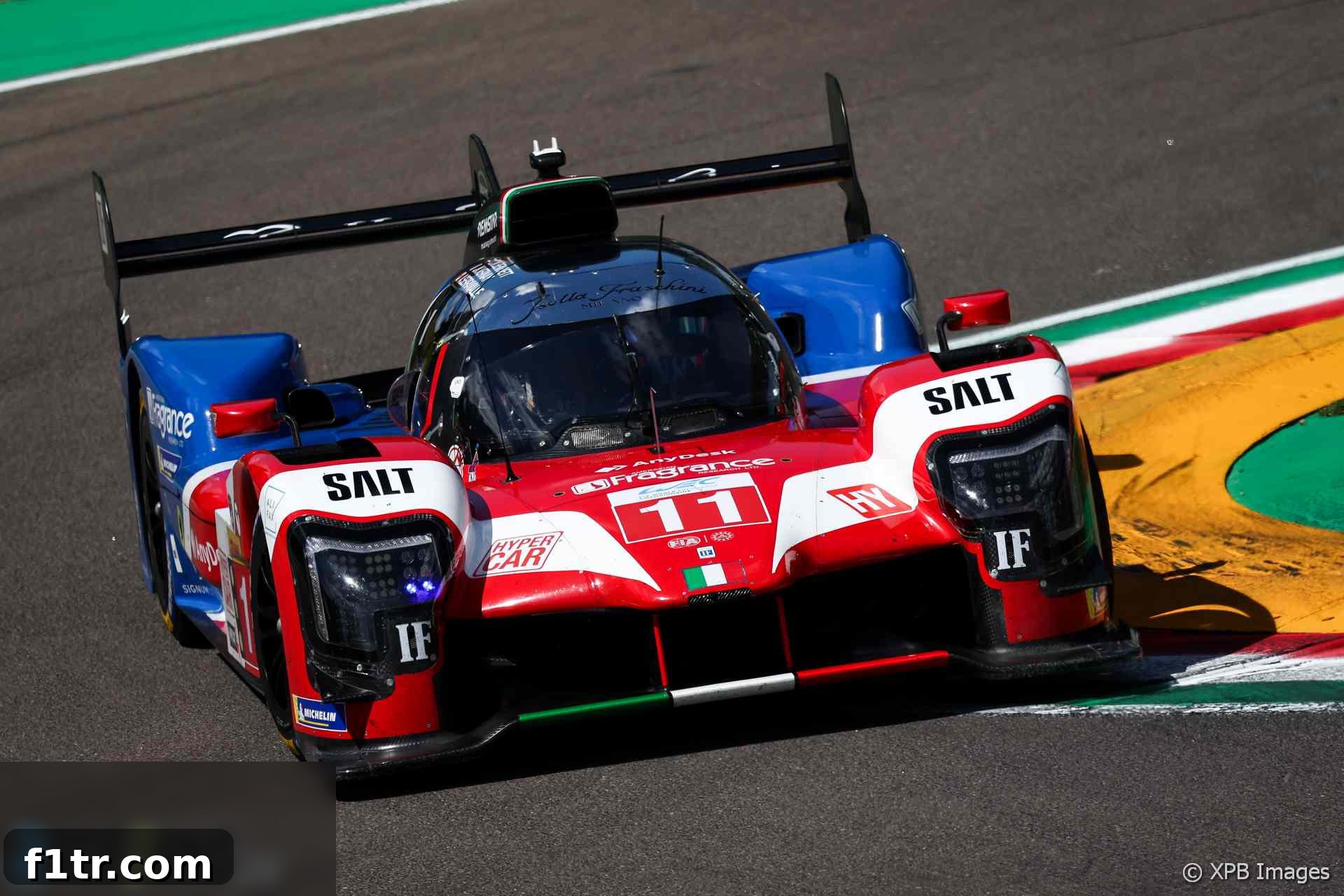
Isotta Fraschini has officially announced its immediate departure from the 2024 World Endurance Championship (WEC) season, citing irreconcilable difficulties and a breakdown in the partnership with the French team Duqueine, which was tasked with operating its revolutionary Tipo6-C Le Mans Hypercar.
Advert | Become a Supporter & go ad-free
This strategic withdrawal marks an abrupt end to the Italian manufacturer’s ambitious foray into the pinnacle of endurance racing, a journey that, while brief, included a notable finish at the legendary 24 Hours of Le Mans. The decision underscores the immense challenges faced by new entrants in the highly competitive and technologically demanding Hypercar category.
Isotta Fraschini’s Official Statement on WEC Departure
In a formal statement released to the public, Isotta Fraschini Milano Fabbrica Automobili articulated the primary reason for its exit: “Isotta Fraschini Milano Fabbrica Automobili has announced its immediate withdrawal from the 2024 World Endurance Championship season as there are no longer any conditions to continue the partnership with the French team Duqueine.” This candid admission points to underlying operational or strategic disagreements that ultimately proved insurmountable, forcing the Italian marque to re-evaluate its immediate motorsport objectives.
The statement further detailed the company’s future direction and reflected on its inaugural season: “Following a productive debut season, highlighted by a successful finish at the iconic 24 Hours of Le Mans, the car brand has decided to redirect its resources toward restructuring its motorsports program and expanding its track and road car initiatives.” This suggests a strategic pivot, leveraging the experience gained in WEC to bolster other areas of the business, particularly in the development of both racing and consumer-focused high-performance vehicles.
Despite the premature end to its WEC campaign, Isotta Fraschini extended its appreciation: “Isotta Fraschini extends its heartfelt gratitude to sponsors, drivers, partners, and fans for their unwavering support throughout this inaugural season. The company also thanks the WEC and the Automobile Club de l’Ouest (ACO) for their support and hopes for a possible return in the near future.” This sentiment leaves the door open for a potential return to the championship should conditions and strategic alignment improve in the future, highlighting that the brand’s long-term motorsport aspirations remain intact.
A Challenging Debut Season in the Hypercar Class
Isotta Fraschini entered the prestigious World Endurance Championship this season with a single Tipo6-C Le Mans Hypercar, driven by a dedicated trio of racers: Jean-Karl Vernay, Antonio Serravalle, and Carl Bennett. The team faced a steep learning curve in a class dominated by established automotive giants like Toyota, Ferrari, Porsche, and Cadillac, alongside other ambitious newcomers such as Alpine and BMW.
The highlight of their short WEC tenure was undoubtedly the 24 Hours of Le Mans, where the Tipo6-C achieved a respectable 14th-place finish overall. This achievement, at one of the world’s most grueling endurance races, demonstrated the inherent potential and robustness of their Hypercar prototype. However, the rest of the season proved to be a significant challenge. The team struggled to consistently match the pace and reliability of its more seasoned competitors. Their most recent outing at Interlagos last month saw the car retire from the race due to an electrical problem, further compounding their difficulties. At the time of their withdrawal, Isotta Fraschini held ninth place in the Hypercar constructors’ championship, having yet to score any points, underscoring the immense competitiveness of the class.
The decision to pull out comes at a critical juncture, reflecting not just the immediate performance struggles but also a broader reassessment of the resources required to compete effectively at this level.
Internal Restructuring and Future Regulatory Compliance
The challenges faced by Isotta Fraschini were not limited to on-track performance or external partnerships. The team had undergone significant internal changes earlier in the year, with team boss Claudio Berro being replaced by CEO Miguel Valldecabres. Such leadership transitions often signal a period of strategic re-evaluation and can impact a team’s direction and operational stability.
Adding to the pressure, the struggling team was also confronting a crucial regulatory hurdle: the need to expand to a two-car effort for the following season. The WEC mandates a minimum of two cars for manufacturers competing in the Hypercar category from their second year onwards, a rule designed to ensure a robust grid and demonstrate a deep commitment from manufacturers. For a relatively small manufacturer like Isotta Fraschini, doubling its program represented a substantial financial and logistical undertaking. This requirement involves significant investment in additional chassis, personnel, spare parts, and operational infrastructure, making the prospect of continued participation increasingly difficult under the existing circumstances.
Advert | Become a RaceFans supporter andgo ad-free
Strategic Vision: Conserving Resources and Expanding Brand
Miguel Valldecabres, the CEO of Isotta Fraschini, elaborated on the difficult but necessary decision, emphasizing a long-term strategic perspective. He expressed immense pride in the achievements made during the initial five races of the season, recognizing the effort and dedication invested in their WEC campaign.
“This very difficult decision has not been made lightly, but it allows us to build on our successes, fostering the growth of our brand and the development of our products in both the racing and Hypercar markets,” Valldecabres stated. This highlights a clear intent to translate the technological advancements and brand exposure gained from WEC into tangible benefits for their broader product portfolio. The Hypercar program, despite its WEC exit, is seen as a crucial testbed for future innovations that could find their way into high-performance road cars.
Valldecabres further explained the strategic imperative: “As a new manufacturer with great ambitions, not continuing in the WEC 2024 season is a strategic obligation to conserve our resources and ensure the continuity of our project.” This statement is key. Competing in the Hypercar class is exceptionally costly, demanding vast financial and human resources. For a nascent manufacturer like Isotta Fraschini, continuing a financially draining and logistically complex WEC program without a fully aligned and stable partnership risked jeopardizing the entire project. By withdrawing, the company aims to safeguard its core ambitions, reallocate resources more effectively, and ensure the long-term viability of its motorsport and road car development plans.
Despite the setback, Valldecabres conveyed optimism for the future: “Despite this difficult setback, we are excited about the future. Our journey as a performance brand continues, and we are eager to achieve new milestones.” This message reinforces Isotta Fraschini’s commitment to its identity as a performance-oriented brand, suggesting that while their WEC chapter is closed for now, their motorsport journey and quest for innovation are far from over.
Implications for Isotta Fraschini and the WEC
For Isotta Fraschini, this withdrawal represents a significant recalibration. The “restructuring its motorsports program” phrase implies a deep dive into alternative racing categories, a re-evaluation of partnerships, or even a temporary hiatus from top-tier endurance racing to consolidate their technical and operational capabilities. The focus on “expanding its track and road car initiatives” suggests that the Tipo6-C platform, or elements derived from it, could still see life in other racing series or as the foundation for an exclusive line of high-performance road vehicles. This strategic shift allows the brand to control its narrative and development trajectory more effectively, free from the immediate pressures of WEC competition.
For the World Endurance Championship, the departure of Isotta Fraschini, while regrettable, is unlikely to significantly destabilize the burgeoning Hypercar class. The category has seen an impressive influx of manufacturers in recent years, demonstrating its appeal and growing stature in global motorsport. With established giants and new heavyweights continuing to commit, the WEC grid remains robust and highly competitive. However, the challenges faced by Isotta Fraschini serve as a reminder of the immense commitment required to succeed in the Hypercar category, particularly for smaller, independent manufacturers. The ACO and WEC will undoubtedly continue to monitor the landscape, ensuring that the regulations and support structures are conducive to attracting and retaining a diverse field of competitors.
The door remains ajar for a potential return of Isotta Fraschini to the WEC in the future. Such a return would likely depend on a more stable financial footing, a fully integrated and robust factory program, and a clear path to complying with all WEC regulations, including the two-car mandate. It would also necessitate a strong, stable partnership or an entirely in-house operation capable of meeting the rigorous demands of Hypercar racing.
Looking Ahead: A New Chapter for Isotta Fraschini
The withdrawal of Isotta Fraschini from the World Endurance Championship marks a definitive end to one chapter, but simultaneously signals the opening of a new one. The brand is poised to leverage the valuable experience gained from its WEC campaign, channeling resources into strengthening its core identity as a manufacturer of high-performance vehicles, both for the track and the road.
While the immediate future for Isotta Fraschini in top-tier endurance racing remains uncertain, the commitment from CEO Miguel Valldecabres to building on successes and achieving new milestones speaks volumes about the brand’s enduring ambition. The journey of the Tipo6-C Le Mans Hypercar may have concluded prematurely in the WEC, but its legacy and technological advancements are set to influence Isotta Fraschini’s future endeavors, promising exciting developments for enthusiasts and the automotive world alike. The WEC will continue its thrilling competition, with its eye on welcoming back innovative manufacturers like Isotta Fraschini when the conditions are right for a sustainable and competitive return.
Miss nothing from RaceFans
Get a daily email with all our latest stories – and nothing else. No marketing, no ads. Sign up here:
World Endurance Championship
- WEC cancels its Qatar season-opener due to US-Iran war
- Porsche to end WEC Hypercar programme after just three seasons
- Mercedes won’t return to Le Mans because “we don’t like Balance of Performance” – Wolff
- “Luck” needed to win Le Mans because of Balance of Performance – Verstappen
- McLaren finally confirms it will enter the World Endurance Championship in 2027
Browse all World Endurance Championship articles