Formula 1 was poised for an electrifying start to its season, with the Bahrain Grand Prix originally slated to kick off a thrilling doubleheader this weekend, immediately followed by the Saudi Arabian Grand Prix. However, the meticulously planned 2026 F1 calendar has faced an unprecedented disruption, as both highly anticipated rounds have been called off. This cancellation emerges as a direct, albeit less severe, consequence of a deepening geopolitical conflict in the Middle East, involving major global powers like America, Israel, and Iran. This conflict has already led to the tragic loss of thousands of lives, including countless civilians, and poses a significant threat to global economic stability, potentially triggering one of the most profound economic crises in decades.
Advert | Become a Supporter & go ad-free
Naturally, when faced with such grave humanitarian and geopolitical concerns, the alteration of a sporting calendar pales in comparison. Those deeply involved in Formula 1 have been quick to acknowledge this stark reality, emphasizing that the human cost of the conflict far outweighs any inconvenience to the sport. While the immediate focus remains on the unfolding crisis, for F1 enthusiasts and participants, this unforeseen pause introduces a significant and unusual waiting period, prompting reflection on how the sport has navigated similar challenges throughout its rich history.
The Unforeseen Pause: How Global Events Impact the F1 Calendar
In an era where Formula 1 fans have grown accustomed to a relentless schedule, often featuring back-to-back race weekends or even demanding triple-headers, a five-week hiatus between Grands Prix feels strikingly anachronistic. Such extended breaks are a rarity in the modern F1 landscape, designed for maximum global exposure and continuous momentum. The last comparable mid-season gap occurred over a decade ago, during the traditional summer break in 2012, highlighting just how unusual this current pause truly is.
The Bahrain and Saudi Arabian Grands Prix have become cornerstone events in Formula 1’s expanding global footprint, particularly in the strategically important Middle East. Their position as early-season races often sets the tone for the championship, making their cancellation particularly impactful. For teams, this unexpected downtime disrupts carefully calibrated logistical plans, affecting everything from freight movements to car development schedules. While it might offer drivers an unplanned period of rest, it also means an extended wait to return to competitive action, potentially affecting their rhythm and focus. The economic implications for local economies that host these major events, and for the sport itself, though secondary to the human tragedy, cannot be ignored.
A Rare Lull: Understanding the Modern Five-Week Break
The contemporary Formula 1 calendar is a testament to the sport’s global ambition and commercial drive. With races spanning continents and often scheduled in rapid succession, the logistical challenges for teams are immense, demanding peak efficiency and meticulous planning. Drivers, too, operate under intense pressure, maintaining peak physical and mental condition for an ever-expanding number of races. Against this backdrop, a five-week gap is a stark deviation from the norm. It forces teams to rethink their development cycles, providing an unexpected window for analysis and refinement, or, conversely, a period of stagnation if resources are already stretched.
The last instance of such a protracted interval during an F1 season, outside of the official summer shutdown, underscores its rarity. In 2012, the extended break was a planned summer interlude, allowing teams and drivers to recharge midway through the championship. This current, unscheduled pause, however, carries a different weight, shaped by external global crises rather than internal sporting considerations. It raises questions about the adaptability of F1’s global schedule in the face of unpredictable world events, a challenge that the sport, despite its advanced technological prowess, must still contend with.
Echoes of the Past: Five-Week Gaps in Recent F1 History
While a five-week gap feels unusual today, it’s not entirely without precedent in Formula 1’s more recent past. Seasons like 1999, 1998, and 1991 also featured similar pauses between races. The 1998 season, in particular, offers a fascinating parallel. That year, the final two rounds of the championship were separated by five weeks, dramatically heightening the tension and anticipation for the climactic showdown between two legendary figures: Michael Schumacher and Mika Hakkinen. Such a gap would have provided both camps with ample time to strategize, develop their cars, and prepare mentally for the ultimate title decider, making the eventual race all the more impactful.
Similarly, the two rounds that opened the 1999 season were separated by a comparable interval. In those days, while the calendar was certainly expanding, the relentless pace of modern F1 was not yet fully established. These breaks, while not common, were also not as jarring as they are perceived today, allowing for a different rhythm to the championship. They offered a chance for reflection, for teams to regroup after initial races, and for narratives to build without the constant bombardment of consecutive weekends. This historical context reminds us that while the sport continuously evolves, some patterns, albeit infrequent, do recur.
The Legendary Lulls: When Rivalries Burned Brighter Over Weeks of Waiting (Early 90s)
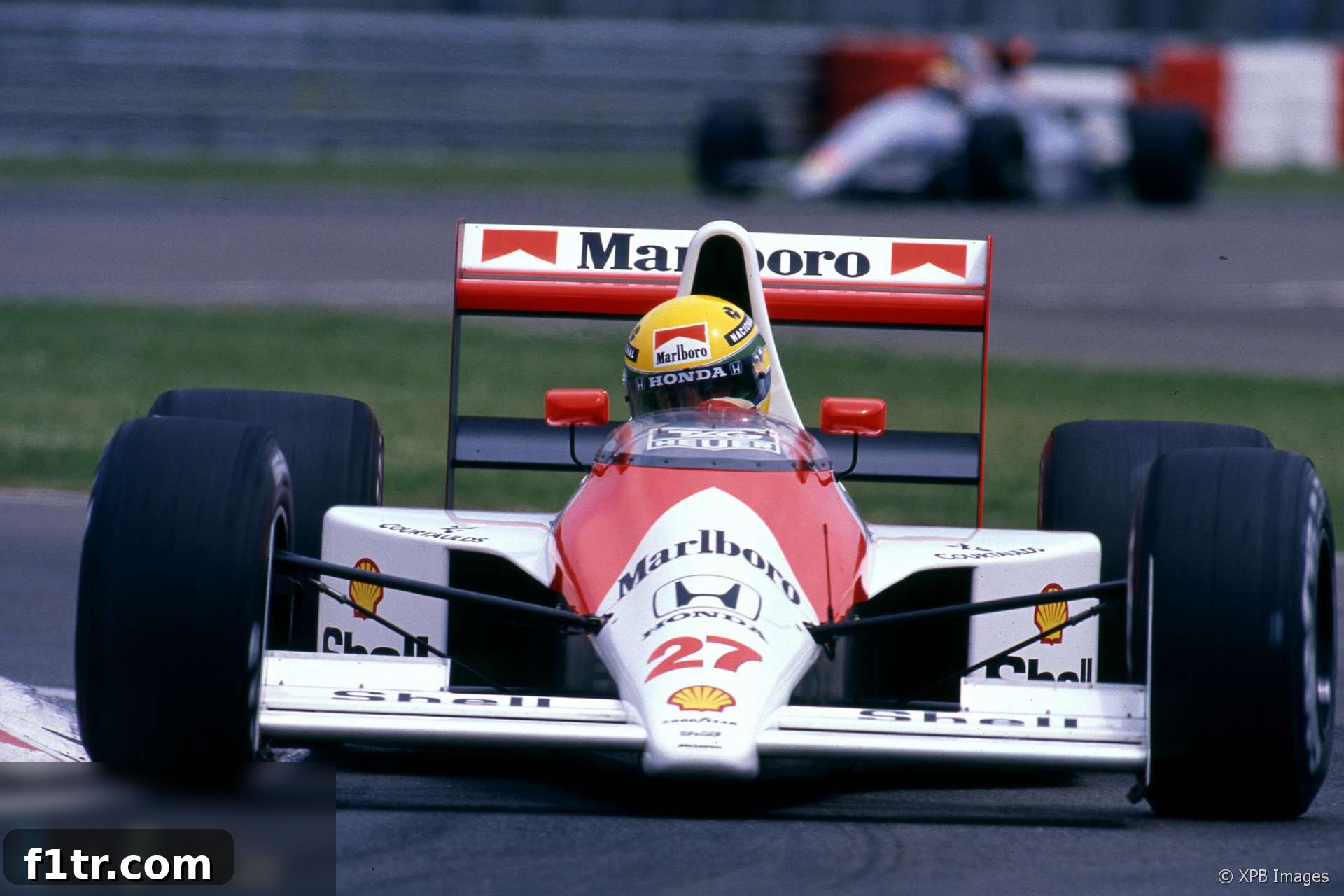
To find an instance where two Formula 1 rounds were separated by an even longer period—more than five weeks—we must delve further back into the sport’s vibrant history, specifically to the early 1990s. This era was defined by one of the most intense and captivating rivalries the sport has ever seen: that between Ayrton Senna and Alain Prost, often battling at the pinnacle of Ferrari and McLaren respectively. The 1990 season provided a memorable example of such a hiatus.
Advert | Become a RaceFans supporter andgo ad-free
Senna kicked off the 1990 season with a spectacular victory for McLaren in Phoenix, following a thrilling duel with Jean Alesi’s Tyrrell. He was on course to follow this up with a triumphant win at home in Interlagos, marking his first F1 race in his native city, until an unfortunate tangle with Alesi’s teammate, Satoru Nakajima, while attempting to lap him. This opened the door for his arch-rival, Alain Prost, who capitalised decisively to secure a victory for Ferrari. Prost then had a remarkable seven long weeks to relish his hard-fought triumph, while Senna endured an equally long period to ruminate over the circumstances of his defeat and prepare for revenge. The series finally reconvened at Imola for round three, with no races taking place at all throughout April. Unlike the current situation, however, in 1990, this extended break was simply how the season had been scheduled, reflecting a different approach to championship pacing and logistics.
Epochal Pauses: The Grand Prix Schedule of F1’s Early Decades
Even the seven-week interlude of 1990 is dwarfed by the staggering gaps between consecutive rounds in the earlier chapters of the Formula 1 World Championship. In the formative decades of the sport, particularly in the 1950s and 1960s, it was not uncommon for the season to commence in January, only to resume several months later. Travel was more arduous, logistics more complex, and the concept of a tightly packed, global calendar was still nascent. These long breaks were simply part of the championship’s fabric, offering a distinctly different rhythm to the season.
The longest such gap within a single season occurred in 1965. The legendary Jim Clark, a titan of motorsport, dominated the season-opener at the East London circuit in South Africa on New Year’s Day. The subsequent round of the championship, however, did not take place until nearly five months later, when Graham Hill clinched victory at the iconic Monaco Grand Prix on May 30th. For modern F1 fans, who might find today’s 35-day wait dragging, imagining the 149-day endurance between those first two races in 1965 offers a profound perspective on patience.
Despite these extensive championship breaks, the appetite for high-octane racing was often satisfied by a vibrant ecosystem of non-championship F1 races during those intervals. Additionally, the highly competitive seven-round Tasman Series, featuring many top F1 drivers in formidable single-seater cars, provided plenty of action to bridge the championship gaps. This allowed drivers to maintain their competitive edge and fans to follow their heroes, even when the official World Championship was on pause. It speaks to a different era of motorsport, where championship rounds were fewer but often interspersed with other significant events.
Beyond the Season: Longest Gaps Between F1 Campaigns
It’s also important to distinguish between gaps *between* consecutive rounds within a single season and gaps *between* entire F1 seasons. Historically, the longest period between championship rounds occurred after the inaugural 1950 season, with the second championship beginning a remarkable 266 days later. This immense gap reflects the nascent stages of the world championship, as the sport gradually established its calendar and infrastructure.
In a more recent and stark comparison, the unprecedented delay to the start of the 2020 season due to the global Covid-19 pandemic resulted in a staggering 217-day gap between rounds, marking it as the third-longest inter-race period in F1 history. This period was a testament to the sport’s resilience and adaptability, as it navigated lockdowns, travel restrictions, and health protocols to eventually deliver a revised, albeit condensed, championship. While the current situation in the Middle East remains dire and its full impact on Formula 1’s future calendar planning is still unfolding, it does not yet appear likely to rival the profound and systemic disruption caused by the global pandemic. Nonetheless, the full economic repercussions of the ongoing geopolitical conflict remain to be seen, potentially casting a long shadow over global sports and beyond.
Looking Ahead: F1’s Resilience Amidst Global Challenges
The current unforeseen pause in the Formula 1 calendar serves as a potent reminder of the sport’s inherent vulnerability to global events, whether they are pandemics, economic crises, or geopolitical conflicts. While the immediate concerns are humanitarian, the disruption undoubtedly impacts the intricate machinery of Formula 1. However, F1 has a deep-rooted history of adaptability and resilience. From the logistical challenges of its early days to navigating modern global crises, the sport has consistently found ways to persevere, innovate, and continue delivering the spectacle its fans crave.
Miss nothing from RaceFans
Get a daily email with all our latest stories – and nothing else. No marketing, no ads. Sign up here:
Advert | Become a RaceFans supporter andgo ad-free
As the world watches the unfolding events, Formula 1 will undoubtedly continue to adapt its strategies, balancing its global ambitions with the realities of an interconnected and sometimes turbulent world. The current five-week hiatus is a moment for reflection, for both the sport and its passionate fanbase, on its enduring journey through history and its capacity to navigate future challenges, always striving for the next exhilarating Grand Prix.
F1 history
- When did F1 last have a mid-season break longer than five weeks? 1990
- Did Norris actually win Formula 1’s closest championship fight of all time?
- Hamilton is Ferrari’s first new driver in 44 years to complete season without a podium
- Ferrari are on course to lose an F1 record they’ve held since 2004
- Red Bull in 2010 or Ferrari in 1979? Past title fights illustrate McLaren’s current dilemma
Browse all history articles