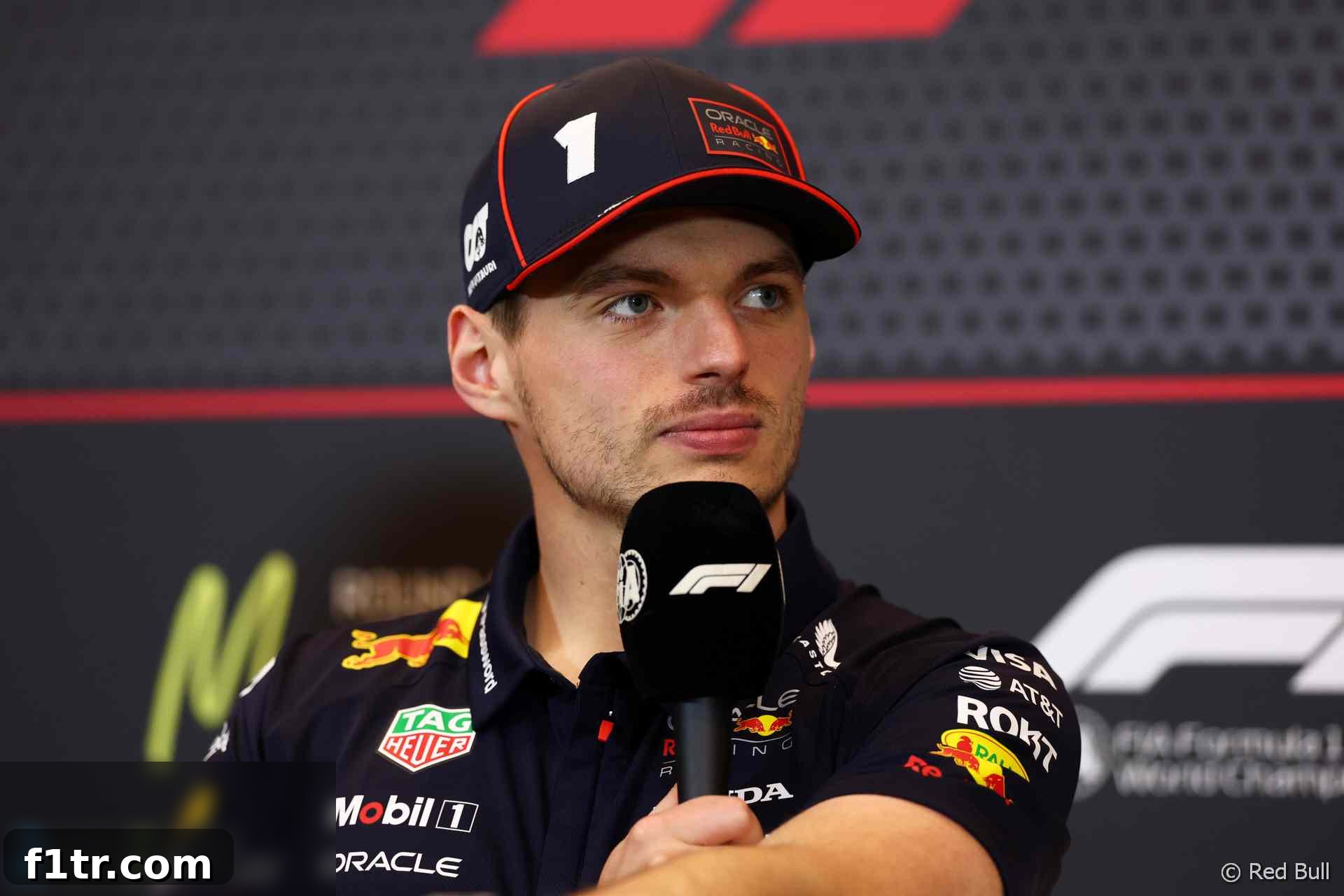
The legendary streets of Monte Carlo, synonymous with glamour, precision, and unparalleled challenge, are set to witness a significant strategic shake-up in the upcoming Formula 1 Monaco Grand Prix. This year, the sport introduces a novel tyre regulation specifically for the iconic event, promising to transform what has historically been a largely predictable one-stop race into a thrilling spectacle of tactical gambles and split-second decisions. Red Bull Racing’s reigning world champion, Max Verstappen, has been quick to highlight the potential for drivers to engage in high-stakes wagers on their pit stop timings, a notion that could dramatically alter the race’s outcome.
For the 2025 Monaco Grand Prix, Formula 1 mandates that drivers must utilise at least three different tyre compounds during the race, a stark departure from the usual requirement of two. This seemingly minor adjustment carries monumental implications for the strategists on the pit wall and the drivers in the cockpit. By necessitating an additional pit stop, the rule directly challenges the long-held strategic orthodoxy of Monaco, where track position is paramount and overtaking opportunities are virtually non-existent. An extra visit to the pits means losing precious track time, creating intense pressure to optimise every aspect of the stop and the subsequent strategy.
Verstappen, a two-time winner of the prestigious Monaco Grand Prix, acknowledges the dual nature of this rule change. He suggests its impact could range from being remarkably straightforward to descending into outright chaos, heavily influenced by external factors such as the deployment of Safety Cars. “I guess it can go both ways, where it could be quite straightforward or it could go completely crazy because of Safety Cars coming into play or not, making the right calls,” he remarked. This sentiment perfectly encapsulates the inherent unpredictability that the new regulation introduces to an event renowned for its calculated precision. The presence, or absence, of a Safety Car or Virtual Safety Car can completely redefine a team’s strategy, turning a seemingly disadvantageous pit stop into a golden opportunity for those who make the ‘right calls’ at crucial moments.
The Dutch champion anticipates that the revised tyre rules will inject a considerable dose of drama into the race. His expectation stems from the fundamental shift in strategic thinking; teams will no longer be able to rely on a straightforward one-stop approach. Instead, they will be forced into a complex dance of second-guessing their rivals, constantly monitoring pit windows, tyre degradation, and potential Safety Car periods. This dynamic creates a strategic chess match where every decision is scrutinised, and the consequences of an error are magnified on the narrow, unforgiving streets of Monaco.
Verstappen further elaborated on the shift in race dynamics. “Normally when you have that one stop, once you have a good pit stop and everything is fine, then you drive to the end,” he explained. “You just have to stay focused and not hit the barrier.” This traditional approach places immense emphasis on qualifying performance and a clean, error-free drive, with strategy playing a relatively minor role after the initial pit window. However, the introduction of a mandatory second stop – or even a third in total if drivers opt for more – fundamentally changes this paradigm. “But maybe with a two-stop it can create something different, people gambling, guessing when the right time is to box.” This “gambling” aspect is precisely what could ignite the race, forcing teams to make bold, calculated risks rather than simply following a predetermined optimal path.
The strategic challenge is multifaceted. Teams must decide which three out of the available soft, medium, and hard compounds to use, and crucially, in what sequence and for how long each stint will last. Tyre degradation in Monaco is generally low, but managing the optimal performance windows of three different compounds will be critical. Do teams run a short, aggressive stint on softs early on, hoping for an undercut? Or do they conserve harder compounds for longer runs, anticipating late-race Safety Cars? These are the kinds of complex questions that will occupy strategists in the lead-up to and during the race.
Beyond the front-runners, the new rule also presents intriguing possibilities for teams and drivers in the midfield. Alpine’s Pierre Gasly, for instance, views the change with hopeful anticipation, seeing it as a potential gateway to securing valuable championship points – a feat he’s only achieved once so far this year. “I always see things from the bright angle, so I see opportunities,” Gasly stated, reflecting an optimistic outlook on the tactical unknown. His perspective is shared by many drivers and strategists outside the top teams, who often find themselves at a disadvantage in a straightforward race. The introduction of more variables, more potential for error among competitors, and more opportunities for clever strategy could be exactly what they need to disrupt the pecking order.
Gasly embraces the element of uncertainty that the new regulation brings. “I see some unknown which we should embrace rather than being afraid of,” he affirmed. This sentiment highlights the adventurous spirit required to tackle such a unique strategic puzzle. Unlike other circuits where extensive data and simulations might offer a clear optimal strategy, Monaco’s new tyre rule creates a scenario where every team enters the weekend with a degree of doubt, fostering an environment where innovation and adaptability could triumph. While simulations will undoubtedly be run exhaustively, the real-time dynamics of the race, particularly the timing of Safety Cars, will ultimately dictate the most effective approach.
Despite the potential for strategic upheaval, Gasly acknowledges that the fundamental importance of qualifying in Monaco remains steadfast. “At the end of the day, I’m not too sure everybody knows what this is going to do. It might actually not change much. I think what remains extremely important is the qualifying so we know if you know you get it right in quali at least you do a big part of the of the job.” His point is well-founded: securing a strong grid position at Monaco is historically half the battle, given the notoriously difficult nature of overtaking. However, he quickly adds, “But I’m sure it’s going to open up some potential strategy which will have to be on top of it.” This nuanced view suggests that while qualifying is crucial, the new rules introduce a vital second layer of strategic depth that could either amplify a strong qualifying performance or provide a lifeline for those starting further down the grid.
The “potential strategy” that Gasly refers to will be a complex web of decisions involving tyre choice, stint length, and reacting to competitors. For instance, a team might choose to run a medium-hard-soft strategy, or perhaps a soft-medium-hard, depending on their car’s characteristics and the weather conditions. The key will be understanding the precise crossover points where one compound becomes less efficient than another, and when the opportune moment arises to make a pit stop without losing too much track position. The pit lane itself, with its unique entry and exit characteristics at Monaco, adds another layer of complexity, making quick, efficient stops even more vital.
Historically, the Monaco Grand Prix has often been criticised for its processional nature, with qualifying being the primary determinant of the race winner. The one-stop strategy, combined with the difficulty of overtaking, meant that drivers would often manage their tyres conservatively, leading to races with little on-track action. The new mandatory three-compound rule is a direct response to this, aiming to inject more strategic variety and unpredictability. By forcing teams into an extra stop, it inherently creates more opportunities for overtakes through the pits (undercuts or overcuts) and greater variance in tyre performance throughout the race distance.
The influence of Safety Cars cannot be overstated in this scenario. Monaco has a high probability of Safety Car deployments due to its tight confines and the risk of driver error. A perfectly timed Safety Car can allow a driver to pit without losing significant track position, effectively gaining a “free” pit stop. This element introduces a high degree of luck and quick thinking; teams will have to be prepared to alter their entire race plan at a moment’s notice, adapting to the ever-changing track conditions and Safety Car periods. This dynamic alone could turn a seemingly dull race into a thrilling strategic rollercoaster.
Ultimately, the 2025 Formula 1 Monaco Grand Prix is poised to be an event unlike any other in recent memory. The new tyre regulations are a bold experiment designed to reinvigorate the strategic element of a race that sometimes lacked it. From Max Verstappen’s calculated predictions of “gambling” to Pierre Gasly’s embrace of the “unknown,” the paddock is buzzing with anticipation. While qualifying will undoubtedly retain its critical importance, the race itself promises to be a captivating display of strategic acumen, real-time decision-making, and perhaps, a touch of fortunate timing. Fans can look forward to a Grand Prix where the outcome could truly hang in the balance until the very final lap, making it a must-watch event for any motorsport enthusiast.
Advert | Become a RaceFans supporter andgo ad-free
Miss nothing from RaceFans
Get a daily email with all our latest stories – and nothing else. No marketing, no ads. Sign up here:
2025 Monaco Grand Prix
- Norris predicts his Monaco pole record should stand “for a very long time”
- Bearman is right: Formula 1 should let Monaco be Monaco
- Wurz’s proposed Monaco track changes would make ‘1 to 5%’ difference – Sainz
- Bortoleto claims his “put him in the wall” radio message was taken out of context
- I deserved penalty, deliberate rule breaking ‘should never be allowed’ – Russell
Browse all 2025 Monaco Grand Prix articles