The intense world of Formula 1 is not only defined by fierce competition on track but also by heated debates off it, particularly concerning the regulations that govern the sport. One such long-standing and contentious issue revolves around the concept of ‘B-teams’ or ‘customer teams’ and their relationship with larger, manufacturer-backed outfits. This debate resurfaced with vigor during the 2019 season, igniting a verbal clash between key figures within the paddock.
At the heart of this controversy was Renault team principal Cyril Abiteboul, who openly voiced his frustrations regarding the perceived unfair advantage enjoyed by teams like Toro Rosso (now AlphaTauri, and previously Scuderia AlphaTauri), due to their close ties with a leading constructor. Abiteboul’s criticisms were aimed at what he considered a structural imbalance in the sport, advocating for stricter limitations on how much technical collaboration and component sharing is permitted between teams.
Advert | Become a Supporter & go ad-free
During the excitement of the 2019 Australian Grand Prix weekend, Abiteboul singled out Toro Rosso as a prime example of this “problem.” His argument was straightforward: by acquiring significant parts from their sister team, Red Bull Racing, Toro Rosso could achieve a level of competitiveness that independent teams, who design and build almost all their own components, found difficult to match. This, he suggested, distorted the competitive landscape and undermined the spirit of independent innovation within Formula 1.
Abiteboul didn’t mince words in Melbourne, citing Toro Rosso’s operational structure as evidence. “Toro Rosso had no technical director for most of last season,” he noted, implying that the team’s ability to perform strongly without a dedicated technical head was a direct consequence of their reliance on Red Bull’s designs and components. “It’s very clear what went on. So we don’t even need a technical director to produce what is a very competitive car. For us that’s a problem.” This statement underscored his belief that the current regulations allowed B-teams to circumvent the extensive and costly development processes traditionally required to build a competitive Formula 1 car.
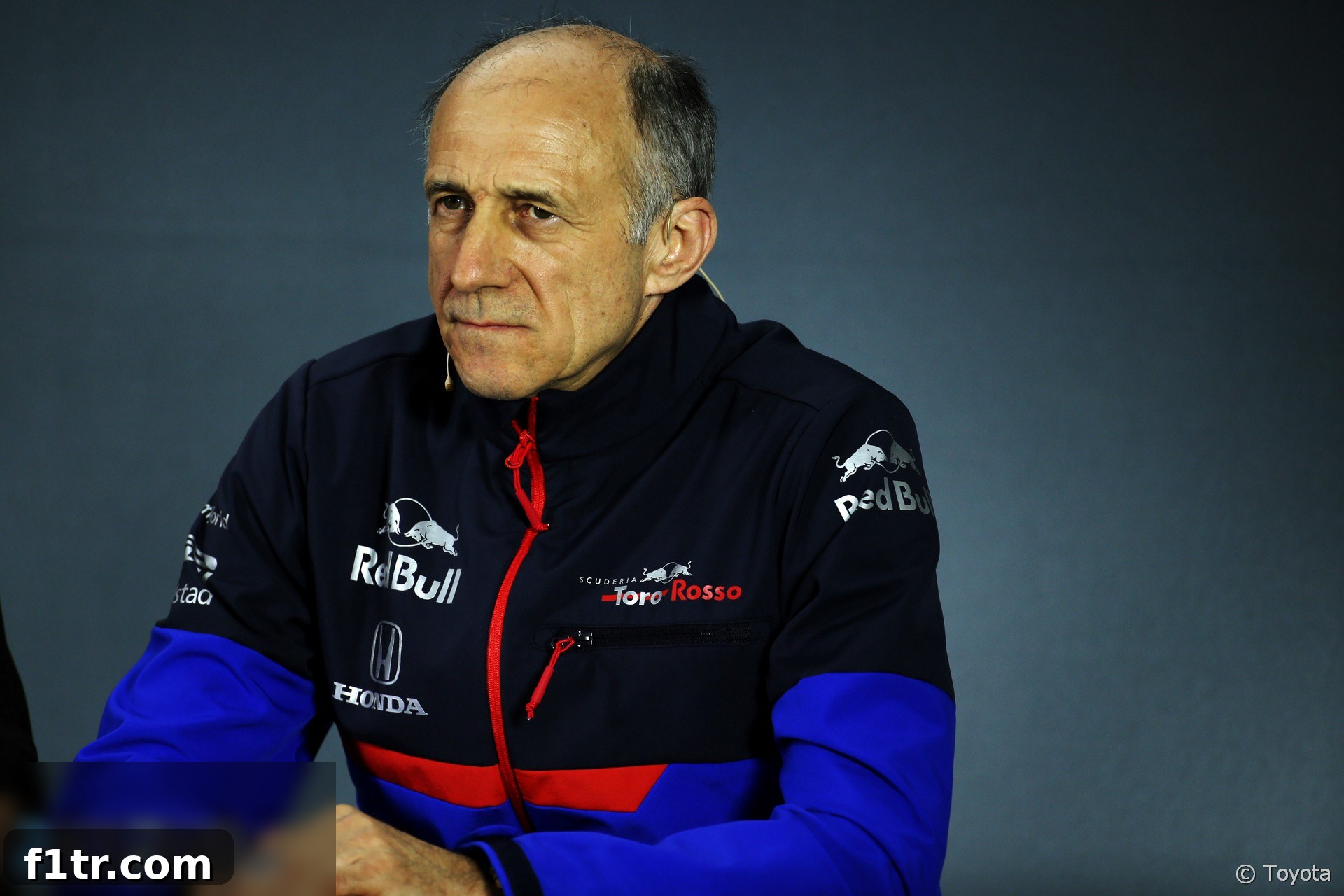
However, this viewpoint was met with a robust and unreserved counter-argument from Toro Rosso team principal Franz Tost. Unwilling to accept Abiteboul’s critique, Tost urged his Renault counterpart to shift his focus from complaining about others to improving his own team’s performance. Tost’s response highlighted a fundamental divide in philosophy: whether a team’s struggles should be attributed to external factors like rival teams’ operational models or internal shortcomings in their own design and development processes.
“If someone who runs a manufacturer team is complaining that the small teams are faster, better than him, then he hasn’t simply done the homework properly,” Tost declared in an interview with RaceFans. His cutting remarks suggested that Abiteboul’s grievances were less about regulatory fairness and more about Renault’s own lack of success. Tost emphasized that Toro Rosso’s competitiveness was a result of a cohesive strategy, strong partnerships, and efficient execution, rather than merely relying on hand-me-down parts.
Tost elaborated on the specific components Toro Rosso received from Red Bull Racing, stating, “Because we at Toro Rosso – I can only talk about Toro Rosso – we have from Red Bull Racing the gearbox from last year, the rear suspension from last year and parts from the front suspension.” He openly acknowledged the component sharing but firmly asserted that these parts alone were not the sole determinant of their performance. Instead, he attributed a significant portion of their success to their power unit supplier.
He continued, “The reason why Toro Rosso is so competitive is mainly because of the fantastic power unit we have from Honda. It seems that others are not doing such a good job.” This was a direct jab at Renault, implying that their own power unit – which they supplied to their factory team – was inferior to Honda’s offering. Tost stressed that a strong, reliable, and powerful engine is a cornerstone of any competitive Formula 1 car, and Honda’s contribution was paramount. “Therefore they should not complain. They just should do their job. We have a good package together with the car, fantastic drivers and a fantastic power unit from Honda. That’s the reason why we are competitive.” This comprehensive rebuttal highlighted the synergy of various elements – chassis components, engine performance, and driver talent – as the true drivers of Toro Rosso’s on-track success.
Adding another influential voice to the debate, Haas team principal Guenther Steiner offered a staunch defense of the B-team model. Haas, like Toro Rosso, operates on a similar principle, sourcing a considerable number of components from Ferrari. Steiner argued that far from being detrimental, component sharing is vital for the overall health and competitiveness of the Formula 1 grid. His perspective brought an economic dimension to the discussion, emphasizing the practicality and necessity of such arrangements for smaller, privately run teams.
“At the moment the teams which have this affiliations with the big teams they are getting closer to the top teams and that’s what it should be,” Steiner explained. He posited that without the ability to acquire parts from established manufacturers, the performance gap between the elite teams and the midfield would become even wider. This would lead to a less engaging and more predictable sport, diminishing the spectacle for fans and the viability for independent teams. For teams like Haas, the opportunity to purchase proven, high-performance components significantly reduces their research and development burden, allowing them to participate and contend within a reasonable budget.
Steiner further elaborated on the potential negative consequences if B-teams were restricted. “If we are knocked down then instead of having a two-tier society it will be a three-tier. It will be the works teams, the good ones, then we’ll have the bad works teams, and then it will be us. So what have they achieved then for the sport? That is our principle.” His argument was that removing the B-team model would not level the playing field but instead create an even more stratified championship, pushing smaller independent teams further down the pecking order and potentially out of the sport entirely. This would contradict the stated goals of Formula 1 to promote closer racing and a more competitive grid.
He concluded by emphasizing the legitimacy and consensus surrounding the current regulations. “We don’t like to take anything away from anybody. It was there, it was decided democratically years ago that this is a model which can work, we read the rules, some other people didn’t and here we are. I think it’s a model which is really good to go forward.” Steiner highlighted that the current rules regarding component sharing were not unilaterally imposed but were the outcome of collective decisions made by stakeholders years prior. For teams like Haas and Toro Rosso, they were simply operating within the established regulatory framework, leveraging the opportunities it presented to maximize their performance and sustain their presence in Formula 1.
Advert | Become a RaceFans supporter andgo ad-free
The debate surrounding B-teams and component sharing remains a crucial one for Formula 1’s future. On one side, concerns about fairness, independent innovation, and the integrity of a ‘constructor’s championship’ are raised. Critics argue that extensive sharing stifles creativity, reduces the distinct identity of teams, and creates a de facto two-car entry for a single manufacturer, potentially impacting sporting fairness in scenarios like strategic team orders. On the other side, proponents highlight the economic viability, competitive uplift, and enhanced grid depth that such models provide. For smaller teams, acquiring non-listed parts from larger constructors is an effective way to control costs, attract talent, and maintain a competitive edge, which is essential for their survival and for keeping the grid well-populated and diverse. The FIA and Formula 1 management continue to grapple with finding the optimal balance in regulations that promote both innovation and accessibility, ensuring a fair and thrilling spectacle for years to come.
2019 F1 season
- Crying in the Melbourne car park at 2019 grand prix was my career low – Ocon
- McLaren Racing reports reduced £71 million loss in 2019
- Kvyat: Hockenheim podium last year was “my biggest achievement” so far
- How the FIA’s new encrypted fuel flow meter targets Ferrari’s suspected ‘aliasing’ trick
- “He smashed my office door”: 23 must-see moments from ‘Drive to Survive’ season two
Browse all 2019 F1 season articles