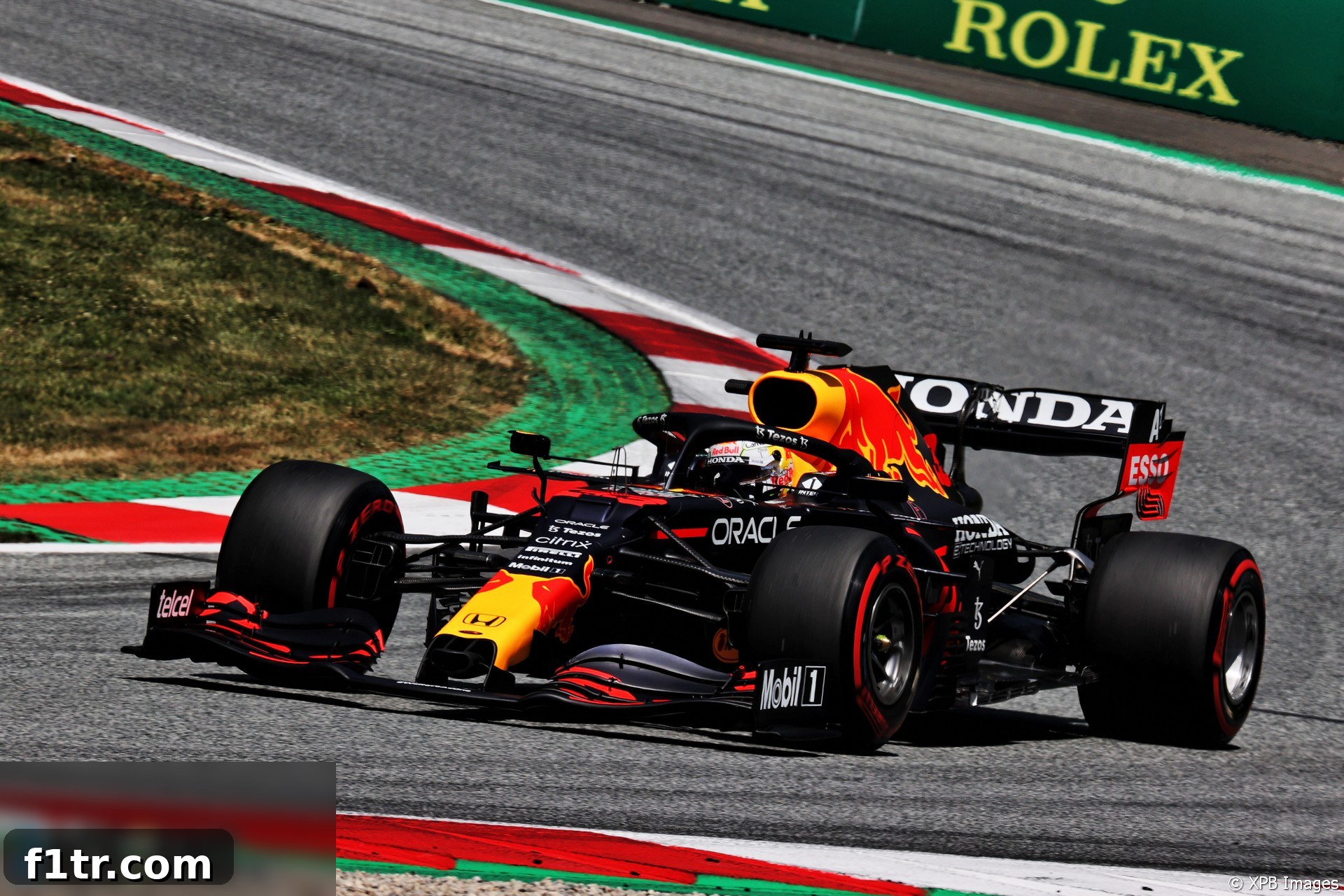
Max Verstappen Seals Dominant Pole Position for 2021 Austrian Grand Prix
The 2021 Formula 1 Austrian Grand Prix qualifying session at the picturesque Red Bull Ring delivered an exhilarating display of speed and precision, culminating in Max Verstappen securing a commanding pole position. The home circuit for Red Bull Racing saw the Dutch superstar underline his championship credentials with an exceptional performance. This comprehensive report delves into the full qualifying results, highlighting key driver achievements, team performances, and the crucial grid positions that will shape Sunday’s race.
From the outset, the session was charged with anticipation, as drivers pushed their machines to the absolute limit on the challenging Spielberg track. With its demanding corners and elevation changes, precision was paramount, and any mistake could prove costly. The battle for supremacy unfolded across Q1, Q2, and Q3, showcasing both established front-runners and rising talents vying for prime starting spots.
Verstappen’s Masterclass and Norris’s Sensational Front Row
Max Verstappen’s pursuit of pole position was unwavering. He laid down a blistering lap time of 1’03.720, a testament to his supreme confidence and the formidable pace of his Red Bull Racing Honda. This performance not only secured him the top spot but also cemented Red Bull’s strong form on their own ground, positioning them perfectly for a potential victory.
However, the biggest surprise and arguably the most talked-about performance came from McLaren’s Lando Norris. The young British driver delivered an absolutely stunning lap, qualifying second with a time of 1’03.768, just a hair’s breadth — 0.048 seconds — behind Verstappen. Norris’s P2 on the grid was a career-best qualifying result at the time, underscoring McLaren’s significant progress and his own growing maturity and speed. His presence on the front row promises an electrifying start to the Grand Prix, as he challenges Verstappen directly.
The Intense Battle: Mercedes, Red Bull, and the Midfield Contenders
The fight for the remaining top positions was equally fierce. Sergio Perez, in the second Red Bull, ensured a strong team presence at the sharp end of the grid, qualifying third with a time of 1’03.990. This strategic positioning gives Red Bull a significant advantage for managing the race against their rivals.
Mercedes-AMG Petronas F1 Team, who had dominated previous seasons, found themselves in an unfamiliar chase position. Lewis Hamilton, the reigning champion, qualified fourth with a 1’04.014 lap, while his teammate Valtteri Bottas was just fractions slower, securing fifth place at 1’04.049. While not their ideal outcome, starting within the top five still provides a strong platform for Mercedes to fight for podium finishes.
The midfield proved to be incredibly competitive, with AlphaTauri drivers particularly impressing. Pierre Gasly placed his car in an excellent sixth position (1’04.107), demonstrating strong one-lap pace. His teammate, Yuki Tsunoda, also had a commendable session, qualifying seventh with a time of 1’04.273, marking a strong double performance for the Red Bull junior team. This set AlphaTauri up as a serious contender for significant points.
George Russell continued to impress in the Williams, once again outperforming his machinery to secure a remarkable eighth place (1’04.591). His ability to consistently extract maximum performance from the Williams FW43B highlighted his burgeoning talent and provided a morale boost for the Grove-based team. Aston Martin’s Lance Stroll qualified ninth (1’04.618), while Carlos Sainz Jnr, driving for Ferrari, completed the top ten with a time of 1’04.559. Sainz’s strong finish into Q3 after initial struggles showed his adaptability and determination.
Official 2021 Austrian Grand Prix Qualifying Results Table
Here is the complete breakdown of the qualifying session, detailing each driver’s final position, team, and best lap time:
| Position | Driver | Team | Lap Time |
|---|---|---|---|
| 1 | Max Verstappen | Red Bull | 1’03.720 |
| 2 | Lando Norris | McLaren | 1’03.768 |
| 3 | Sergio Perez | Red Bull | 1’03.990 |
| 4 | Lewis Hamilton | Mercedes | 1’04.014 |
| 5 | Valtteri Bottas | Mercedes | 1’04.049 |
| 6 | Pierre Gasly | AlphaTauri | 1’04.107 |
| 7 | Yuki Tsunoda | AlphaTauri | 1’04.273 |
| 8 | George Russell | Williams | 1’04.591 |
| 9 | Lance Stroll | Aston Martin | 1’04.618 |
| 10 | Carlos Sainz Jnr | Ferrari | 1’04.559 |
| 11 | Sebastian Vettel | Aston Martin | 1’04.570 |
| 12 | Charles Leclerc | Ferrari | 1’04.600 |
| 13 | Daniel Ricciardo | McLaren | 1’04.719 |
| 14 | Fernando Alonso | Alpine | 1’04.856 |
| 15 | Antonio Giovinazzi | Alfa Romeo | 1’05.083 |
| 16 | Kimi Raikkonen | Alfa Romeo | 1’05.009 |
| 17 | Esteban Ocon | Alpine | 1’05.051 |
| 18 | Nicholas Latifi | Williams | 1’05.195 |
| 19 | Mick Schumacher | Haas | 1’05.427 |
| 20 | Nikita Mazepin”>Nikita Mazepin | Haas | 1’05.951 |
The Crucial Impact of Penalties: Sebastian Vettel’s Grid Drop
While the qualifying times paint one picture, the final grid can often be altered by race stewards. A significant penalty was issued to Sebastian Vettel of Aston Martin. The four-time world champion received a three-place grid penalty for impeding Fernando Alonso during a crucial moment in the session. This infringement, despite its potentially minor nature in real-time, led to a tangible consequence, pushing Vettel further down the starting order.
Penalties such as these highlight the stringent regulations within Formula 1, which are designed to ensure fair competition and driver safety across the grid. For Vettel and Aston Martin, this penalty meant an even tougher challenge to recover positions and score points in the race, adding a layer of strategic complexity to their weekend.
Midfield Mavericks and Backmarker Battles
Beyond the top contenders, the midfield provided its usual share of drama and intriguing storylines. Ferrari’s Charles Leclerc, despite his immense talent, qualified 12th, a position he would undoubtedly be eager to improve upon in the race. His teammate Carlos Sainz’s top-ten finish showcased Ferrari’s potential, indicating that Leclerc might have more in the car than his qualifying position suggested.
Daniel Ricciardo, in the second McLaren, qualified 13th. This was a challenging result for the Australian, especially in contrast to his teammate Lando Norris’s heroic P2. Alpine, with Fernando Alonso in 14th and Esteban Ocon in 17th, faced a tough qualifying session and would be looking for better race pace and strategic opportunities.
Alfa Romeo saw Antonio Giovinazzi and Kimi Raikkonen qualify 15th and 16th respectively. While they showed flashes of competitiveness, Q3 remained just out of reach. Williams’ Nicholas Latifi qualified 18th, while the Haas duo of Mick Schumacher and Nikita Mazepin occupied the final row, 19th and 20th. For these teams, the race will be a test of endurance, tire management, and capitalizing on any chaos or opportunities that arise, hoping to challenge their immediate rivals and gain valuable experience.
The vast differences in lap times across the grid underscore the competitive hierarchy in Formula 1. However, the unexpected performances, like that of Lando Norris and George Russell, serve as a reminder that raw talent and team execution can still create magic, regardless of car performance.
Race Day Anticipation: Strategy, Setup, and Potential Surprises
With Max Verstappen on pole, the atmosphere at the Red Bull Ring will be electric, with fans hoping to witness their hero claim victory. However, Lando Norris’s presence on the front row, combined with the strategic threat of Sergio Perez and the raw pace of the Mercedes pair, sets the stage for a truly captivating Grand Prix. The run down to Turn 1 will be critical, as will tire strategy over the course of the race.
The Red Bull Ring’s unique characteristics, combined with Pirelli’s tire compounds, mean that managing degradation and finding the optimal pit window will be paramount for all teams. Furthermore, the unpredictable Austrian weather could always throw a curveball, with any unexpected rain or fluctuating temperatures potentially reshuffling the competitive order and opening up opportunities for drivers starting further down the grid. The 2021 Austrian Grand Prix is poised to be a tactical masterpiece and a thrilling spectacle, as teams and drivers push the absolute limits for championship glory.
Further Reading: Dive Deeper into the 2021 Austrian Grand Prix
Explore More: 2021 Austrian Grand Prix Articles
- Vasseur on Alfa’s “huge step forward” and why he’s vexed by technical directives
- How Ricciardo “got some enjoyment back” after “really low” first race in Austria
- F1’s penalty points are not “harsh” and won’t be reviewed this year – Masi
- Austrian double showed Sainz found his feet faster than 2021’s other big-name moves
- 2021 Austrian Grand Prix Star Performers
Browse all 2021 Austrian Grand Prix articles
More from the 2021 F1 Season Grids
- Discover how other F1 qualifying sessions shaped the starting order throughout the exciting 2021 championship.
- Stay updated with driver performances and grid analyses from various circuits.
Browse all 2021 F1 grids