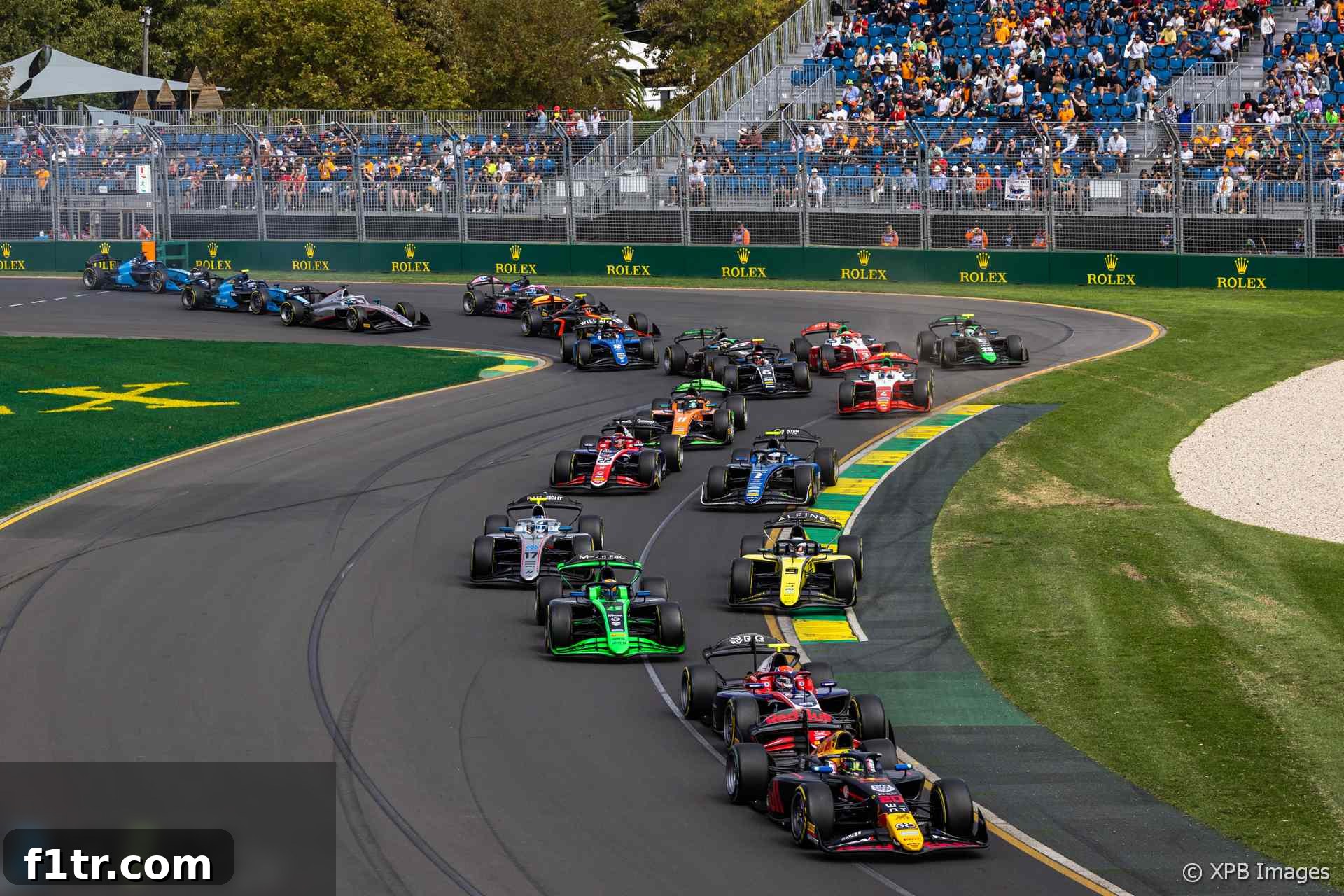
The motorsport world eagerly anticipates the 2025 season, and with it, the thrilling return of Formula 2 and Formula 3, the premier feeder series for aspiring Formula 1 stars. A significant calendar shift has been announced, promising an exhilarating start to the championship year. Both Formula 2 and Formula 3 will kick off their 2025 campaigns alongside the pinnacle of motorsport, Formula 1, at the prestigious Australian Grand Prix. This strategic alignment marks a notable departure from the previous season’s schedule, where the junior categories commenced their races in Bahrain.
This move to Albert Park, Melbourne, as the season opener for all three championships, underscores a unified approach to the global motorsport calendar. For fans, this means an unparalleled weekend of racing action right from the start, experiencing the full spectrum of single-seater excellence. For teams and drivers, the logistical synergy of beginning in Australia with F1 offers streamlined operations and amplified exposure on one of the sport’s biggest stages. This change sets a dynamic tone for the entire 2025 season, promising a more integrated and exciting experience for everyone involved.
Formula 2: A Stepping Stone to Stardom
The 2025 Formula 2 calendar maintains a consistent and challenging structure, featuring 14 captivating double-header rounds. These races will unfold at the same world-renowned venues as the 2024 season, ensuring continuity and familiarity while delivering intense competition. This meticulously crafted schedule strikes a crucial balance between iconic European circuits and thrilling fly-away events across three continents, a strategy designed to test drivers on a diverse range of track layouts and conditions, truly preparing them for the demands of Formula 1.
From the high-speed thrills of the Jeddah Corniche Circuit to the historic curves of Silverstone and the strategic challenges of Monaco, the Formula 2 championship offers a comprehensive proving ground. Each double-header weekend comprises a sprint race and a feature race, demanding versatility, strategic prowess, and raw speed from the young contenders. The continuity in venues not only helps teams manage costs effectively but also allows for continuous development and refinement, pushing the boundaries of performance in this highly competitive series.
A key highlight of the Formula 2 season is its unwavering commitment to shadowing Formula 1. The championship will culminate on the same dramatic weekend as F1 in Abu Dhabi, at the Yas Marina Circuit. This ensures that the potential future stars of Formula 1 are always in the spotlight, performing directly before the eyes of F1 team principals, scouts, and a global audience. The Abu Dhabi finale is traditionally a high-stakes affair, often deciding championship titles in nail-biting fashion, providing a fitting conclusion to a season-long battle for supremacy.
Formula 3: Nurturing Emerging Talent
The Formula 3 championship, a vital rung on the single-seater ladder, will again feature 10 double-header events in its 2025 season. While sharing many circuits with Formula 1 and Formula 2, F3’s calendar is strategically tailored to the needs of its younger drivers and teams. Notably, Formula 3 will not accompany Formula 2 to the longer-haul fly-away rounds in Jeddah, Baku, Losail, and Yas Marina. This decision is primarily driven by cost considerations and logistical complexities, ensuring the championship remains accessible and sustainable for emerging talent.
Despite a more condensed schedule, the F3 season is no less demanding, challenging drivers on some of Europe’s most revered tracks, alongside a crucial overseas event in Australia and Bahrain. Circuits like Imola, Monaco, Circuit de Catalunya, and Spa-Francorchamps will push drivers to their limits, honing their race craft, qualifying speed, and car control. The intensity of a shorter, more concentrated season means every point is critical, forcing drivers to perform at their peak consistently from the opening race.
The Formula 3 season will conclude significantly earlier than F2’s, wrapping up in Monza, Italy, approximately three months before the F2 finale. This earlier conclusion allows drivers and teams ample time for reflection, planning, and preparation for the following season, whether it’s moving up to Formula 2 or exploring other opportunities. The high-octane racing and fierce competition in F3 consistently produce thrilling moments and identify true future champions, making it an essential part of the motorsport development pathway.
Strategic Vision Behind the 2025 Calendars
F2 CEO Bruno Michel provided valuable insight into the philosophy underpinning the 2025 calendars, emphasizing a thoughtful approach to balancing various critical factors. “It’s also a good mixture between old-school tracks and more modern layouts, which both have seen thrilling F2 races in recent years,” Michel stated, highlighting the dual benefits of racing on diverse circuit types. This blend exposes drivers to different challenges – from the unforgiving street circuits of Monaco to the technical demands of modern Tilke designs – which is crucial for their holistic development.
Michel further elaborated on the careful consideration given to the financial implications for teams and drivers: “We have the right balance between European rounds and fly-aways, across three continents, and keeping in mind the costs for our teams and drivers.” This cost-conscious approach is vital for the sustainability of these feeder series, ensuring that raw talent, rather than solely financial backing, remains the primary determinant of success. By managing travel and logistical expenses, F2 and F3 aim to cultivate an environment where young racers can thrive without undue financial pressure.
The strategic distribution of races across Europe, the Middle East, and Asia not only broadens the global appeal of F2 and F3 but also allows drivers to gain international experience, preparing them for the worldwide travel demands of Formula 1. Each venue offers unique characteristics, from the high-grip surfaces of modern circuits to the undulating terrains of classic tracks, all contributing to a comprehensive education in competitive motorsport. This carefully curated calendar underscores the commitment to nurturing the next generation of motorsport heroes.
The Symbiotic Relationship with Formula 1
The decision to align the Formula 2 and Formula 3 seasons more closely with Formula 1’s schedule, particularly by starting together in Australia, reinforces the intrinsic link between these categories. F2 and F3 are not merely support races; they are integral components of the Formula 1 ecosystem, serving as the primary talent pipeline. Racing on the same weekends and at the same venues as F1 provides unparalleled opportunities for young drivers to showcase their abilities directly to F1 teams, sponsors, and a massive global fanbase.
This symbiotic relationship benefits all parties. For F1, it ensures a constant supply of highly skilled and race-ready drivers, many of whom have honed their craft competing fiercely in the junior categories. For F2 and F3, the association with F1 brings prestige, media coverage, and commercial opportunities that would be unattainable otherwise. Fans, in turn, are treated to a full day of motorsport entertainment, witnessing the journey of tomorrow’s champions unfold right before their eyes, making each Grand Prix weekend a truly immersive spectacle.
The integration also creates a powerful narrative: the visible path from junior racing to the pinnacle of motorsport. Aspiring drivers can clearly see the steps they need to take, making the dream of reaching F1 feel tangible. The pressure of performing under the F1 paddock’s watchful eye, managing media attention, and adapting to the intense atmosphere of an F1 Grand Prix weekend are all invaluable experiences gained long before a driver might ever sit in an F1 car.
The Path Ahead for Aspiring Champions
For the young drivers embarking on their 2025 F2 and F3 campaigns, these calendars represent a roadmap to their dreams. Every race weekend is an audition, a chance to impress and demonstrate the potential to become a Formula 1 star. The competitive intensity is immense, with a grid full of talented individuals all vying for the same ultimate goal. The challenges presented by diverse tracks, varying conditions, and the relentless pressure to perform will forge the character and skills required for the elite level of motorsport.
Fans around the world will be following these championships with keen interest, eager to spot the next Max Verstappen, Charles Leclerc, or Lando Norris emerging from the junior ranks. The 2025 seasons of Formula 2 and Formula 3 are poised to deliver unforgettable moments, dramatic overtakes, and the discovery of future legends. The journey through these feeder series is tough, but for those who succeed, the rewards are immeasurable, culminating in the chance to compete at the highest level of international motor racing.
2025 Formula 2 and Formula 3 Calendars
Below is the confirmed schedule for the 2025 Formula 2 and Formula 3 championships, detailing the dates, venues, circuits, and the series participating at each event. This calendar highlights the extensive and challenging season ahead for both categories.
| Dates | Venue | Circuit | Series | |
|---|---|---|---|---|
| 14-16th March | Australia | Albert Park | Formula 2 | Formula 3 |
| 11-13th April | Bahrain | Bahrain International Circuit | Formula 2 | Formula 3 |
| 18-20th April | Saudi Arabia | Jeddah Corniche Circuit | Formula 2 | |
| 16-18th May | Italy | Imola | Formula 2 | Formula 3 |
| 22nd-25th May | Monaco | Monaco | Formula 2 | Formula 3 |
| 30th May–1st June | Spain | Circuit de Catalunya | Formula 2 | Formula 3 |
| 27-29th June | Austria | Red Bull Ring | Formula 2 | Formula 3 |
| 4-6th July | Great Britain | Silverstone | Formula 2 | Formula 3 |
| 25-27th July | Belgium | Spa-Francorchamps | Formula 2 | Formula 3 |
| 1st- 03rd August | Hungary | Hungaroring | Formula 2 | Formula 3 |
| 5-7th September | Italy | Monza | Formula 2 | Formula 3 |
| 19th-21st September | Azerbaijan | Baku City Circuit | Formula 2 | |
| 28-30th November | Qatar | Losail International Circuit | Formula 2 | |
| 5-7th December | United Arab Emirates | Yas Marina | Formula 2 |
Formula 1 Insights & Related Articles
For those keenly following the world of Formula 1, here are some recent articles that delve into the latest developments and discussions within the sport, providing broader context to the motorsport landscape that Formula 2 and Formula 3 drivers aspire to join:
- One of F1’s greatest races happened 15 years ago today. Or did it?
- “Overtaking is overtaking”: Domenicali denies F1’s yo-yo racing is “artificial”
- The crashes F1 is trying to prevent may be rare – but the danger is obvious
- F1 returning to India soon after 2027 sounds like wishful thinking
- Verstappen loathes F1’s new generation of cars – but what do his rivals reckon?
Browse all Formula 1 articles