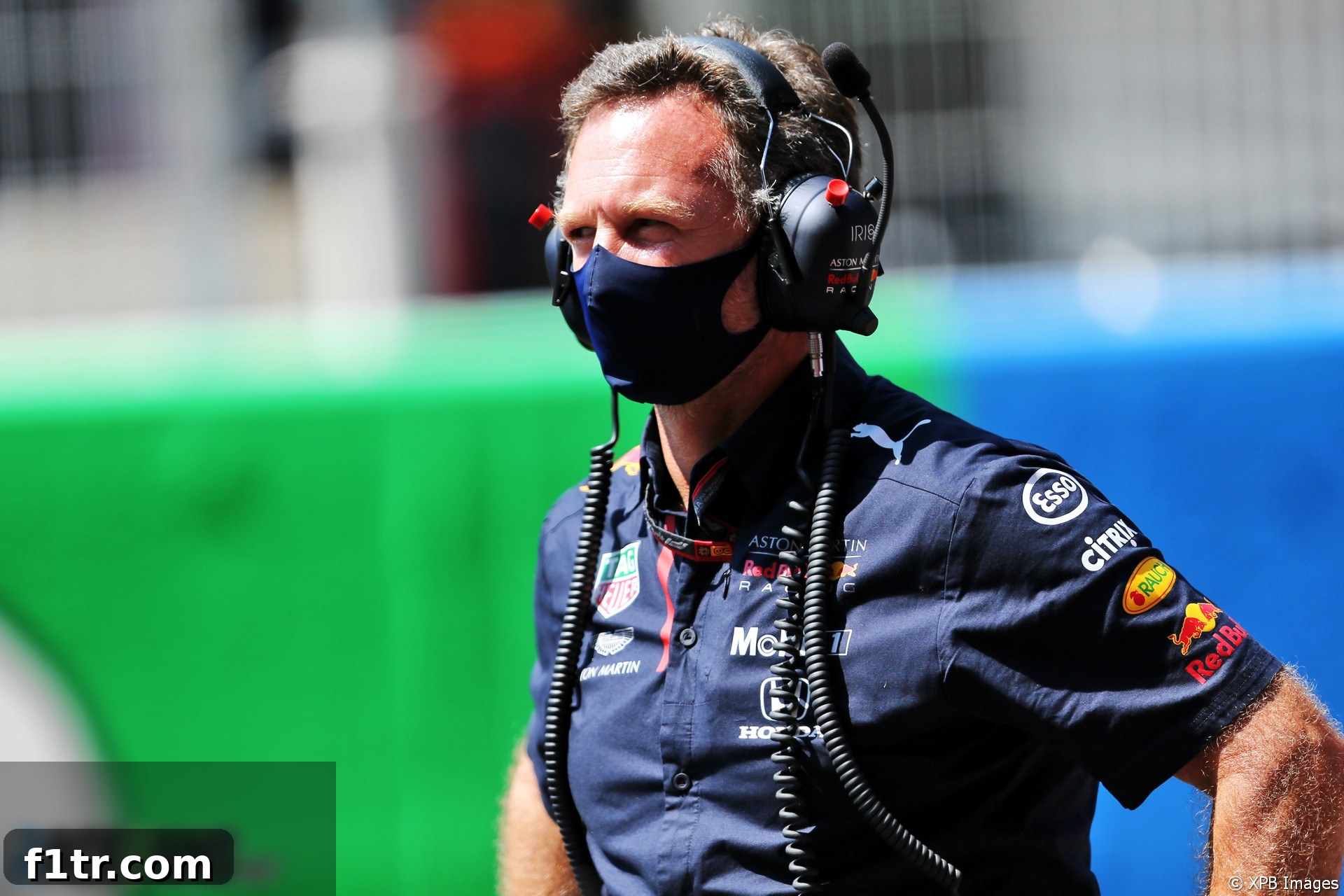
Red Bull’s Crucial F1 Engine Decision: Christian Horner Advocates for Honda Takeover Amidst Freeze Demands
As the 2021 F1 season draws to a close, Red Bull Racing faces a pivotal decision regarding its future engine supply. With Honda’s planned departure from Formula 1 at the end of the season, the energy drink giant’s premier team, along with its sister outfit AlphaTauri, is scrambling to secure a competitive power unit for 2022 and beyond. In a definitive statement, Red Bull team principal Christian Horner has made it unequivocally clear that the most viable path forward involves taking over Honda’s engine supply, an option that hinges critically on the sport agreeing to an engine development freeze.
The “Only Option That Works”: Acquiring Honda’s Intellectual Property
Horner emphasized the urgency and the careful consideration being given to this complex situation. Speaking to Sky, he revealed, “We’ve got just under 18 months to get ourselves sorted. But the more we look, there really only is one option that works.” This preferred “Plan A” involves a detailed agreement with Honda to acquire the intellectual property (IP) for their formidable engine. Such a move would allow Red Bull to continue utilizing the power unit they have meticulously developed with Honda over recent seasons, avoiding a disruptive switch to an entirely new supplier. This continuity is vital for Red Bull, which has forged a strong, championship-challenging partnership with Honda, resulting in significant on-track success.
The prospect of an independent engine operation, managed by Red Bull, is not without its significant challenges, particularly financial ones. Horner stressed that for this ambitious undertaking to be feasible, a fundamental shift in F1 regulations is necessary: an engine development freeze. “It would only make sense for an independent engine supplier, as Red Bull would effectively be, if there was a freeze because it would just be impossible to fund the kind of development spend that goes on with these engines,” he explained. The astronomical costs associated with continuous research, development, and upgrades for modern hybrid power units are simply unsustainable for a single team without manufacturer-level backing. This financial burden, coupled with the technical complexity, makes an engine freeze an existential requirement for Red Bull’s proposed solution.
Why an Engine Development Freeze is Absolutely Fundamental
The call for an engine freeze is not merely a preference for Red Bull; it is presented as an absolute prerequisite for their proposed solution. The current V6 turbo-hybrid engines are among the most complex and expensive pieces of technology in motorsport. Without a freeze, Red Bull would be forced into an arms race against established automotive giants like Mercedes, Ferrari, and Renault, who possess far greater financial and technical resources dedicated to engine development. Such an uneven playing field would quickly render Red Bull’s independent engine program uncompetitive, undermining their investment and jeopardizing their championship aspirations. A freeze would effectively cap development, allowing Red Bull to operate the Honda unit without the constant pressure of matching multi-million-euro upgrades from rival manufacturers.
“All that details needs to be fixed with Honda’s senior management,” Horner acknowledged, highlighting the ongoing negotiations. “But it’s so dependent on what the regulations are going to be. It’s absolutely fundamental that there has to be an engine freeze with these power units until the introduction of the new engines.” This freeze would act as a crucial bridge, allowing Red Bull to operate Honda’s engines effectively until the next generation of F1 power units, expected around 2025 or 2026, comes into play. This interim period would provide stability and a level playing field, preventing an independent Red Bull engine division from being immediately outpaced by rivals’ constant upgrades. It would also give the sport time to carefully craft new engine regulations that promote sustainability, cost-efficiency, and potentially attract new manufacturers, thereby avoiding a similar crisis in the future.
A Wake-Up Call for Formula 1: The Precarious State of Engine Supply
Horner’s concerns extend beyond Red Bull’s immediate future, touching upon the broader health and sustainability of Formula 1 itself. Honda’s departure, a major automotive manufacturer with a rich history in the sport, serves as a stark warning. “It’s a big wake-up call for Formula 1 to have a major engine manufacturer like Honda walk away from the sport at the end of ’21,” he asserted. This exit leaves F1 with just three engine suppliers: Mercedes, Ferrari, and Renault. This significantly reduced pool of manufacturers creates a “very precarious place for the sport to be,” according to Horner, raising serious questions about long-term stability and competitive diversity. A sport heavily reliant on cutting-edge technology risks becoming stagnant or overly dependent on a handful of players if the supplier base shrinks further.
The Red Bull team principal believes that governing bodies, specifically the FIA and the commercial rights holder, must intervene proactively to address this shrinking landscape. “The FIA, the commercial rights holder, they need to step up and do their bit,” he urged. “I think that for Formula 1 to lose an engine manufacturer is not a good thing. It would be criminal to see those engines just on a shelf somewhere in a Japanese warehouse.” This poignant statement underscores the immense value of Honda’s engineering legacy and the potential waste of cutting-edge technology if it’s simply abandoned. Preserving access to such technology, even through a client team like Red Bull, could benefit the sport by maintaining a higher level of innovation and competition. It also highlights the responsibility of the sport’s leadership to ensure a robust and diverse supply chain for its most critical component.
Exploring Limited Alternatives: Why Other Suppliers Are Not Viable
While Red Bull’s focus remains firmly on its “Plan A” with Honda, the team has naturally assessed other available options among the current F1 engine suppliers. However, the field is remarkably limited, and each alternative presents significant hurdles, reinforcing the perceived necessity of the Honda takeover.
Mercedes: A Firm “No” from a Direct Rival
Mercedes, currently the dominant force in the sport and set to supply four customer teams next year, has unequivocally ruled out providing power units to either Red Bull or AlphaTauri. Toto Wolff, Mercedes team principal, has made their position “very clear,” as Horner stated. The reasons are evident: Mercedes would be unwilling to supply a direct competitor with the very technology that underpins their own success. Providing engines to Red Bull, a team known for its chassis expertise and ability to challenge for championships, would be akin to arming a rival, a strategic move Mercedes has consistently avoided. Furthermore, their existing customer commitments likely stretch their capacity, making an additional high-demand customer like Red Bull impractical, both logistically and strategically.
Ferrari: Battling Their Own Issues
Ferrari, another legendary name in F1, presents a different set of challenges. Horner noted that “Ferrari have got their own issues that they’re dealing with.” The Scuderia has been grappling with performance struggles, particularly with their power unit, in recent seasons. Embroiled in their own internal restructuring and fighting to regain competitive form, Ferrari would likely be hesitant to take on an additional high-profile customer like Red Bull. Their focus remains squarely on their own works team, and integrating Red Bull’s demands could divert precious resources and attention from their primary objective of returning to championship contention. The political dynamics of such a partnership, given Red Bull’s strong competitive drive, would also be a significant consideration for the Maranello outfit.
Renault: An Unwilling and Inconvenient Partner
The prospect of a reunion with Renault, Red Bull’s former engine partner with whom they achieved four consecutive double championships, appears equally fraught. Horner candidly admitted, “Renault don’t really want to supply us. Their aspirations as a team obviously have changed.” Renault’s evolving identity as a factory team, now operating under the Alpine F1 brand, means they prioritize their own competitiveness. Supplying Red Bull, a team capable of beating them, would be “inconvenient,” as Horner put it. Red Bull is not a “standard customer team” or a “small team”; they are a championship contender who demands a high level of support and technical integration, something Renault might be reluctant to provide to a direct rival, particularly after their sometimes contentious past relationship.
The Mandated Supplier Rule: A Last Resort?
Formula 1 regulations include a contingency for teams unable to secure an engine supply. Under these rules, if Red Bull or AlphaTauri fail to agree on a power unit supply for 2022 by June 1st of next year, then the manufacturer currently supplying the fewest teams would be mandated to provide engines. As it stands, Renault would be the likely candidate for this obligation, given Mercedes and Ferrari’s larger customer base or stated disinterest in Red Bull.
During the Eifel Grand Prix, Renault managing director Cyril Abiteboul addressed this possibility, confirming their awareness of the regulations. “I don’t think it’s a question of whether we are open or not open,” he stated. “We know the regulation. When you are a participant to the sport you have to accept the rules. It’s part of the sporting regulation. So, we know what that is.” However, Abiteboul also hinted at the protracted timeline and the expectation that Red Bull would explore all other avenues first. “I can’t imagine that they don’t have a ‘Plan A’ or ‘Plan B’ and I think we are very far in the pecking order of the alphabet before they call us again.” This sentiment underscores Renault’s general reluctance, suggesting that a mandated supply would be far from an ideal partnership for either party, likely lacking the collaborative synergy required for championship success and potentially leading to a strained and suboptimal technical relationship.
Red Bull’s Future and the Quest for Stability
Red Bull’s pursuit of the Honda engine IP and the insistence on a development freeze are deeply intertwined with their long-term strategic vision for Formula 1. The team has invested heavily in its infrastructure and personnel, consistently producing championship-contending chassis. Ensuring a stable, competitive, and ideally, integrated power unit solution is paramount to maintaining their status at the pinnacle of motorsport. This decision will not only impact Red Bull Racing but also its junior team, AlphaTauri, which relies on the same power unit supply and serves as a crucial proving ground for young talent. The stability of their engine program directly affects their ability to attract and retain top drivers and engineers, making this period of decision-making exceptionally critical for the entire Red Bull motorsport empire.
The successful execution of “Plan A” — taking over the Honda engine IP under an engine freeze — would grant Red Bull an unprecedented level of control over its entire car package. It would transform them into a de facto engine manufacturer, albeit one that initially relies on existing technology. This move could empower them to shape their own destiny, reduce reliance on external suppliers, and potentially even influence the direction of future F1 engine regulations. The coming months will be critical as Christian Horner and Red Bull navigate these complex negotiations and push for a regulatory framework that safeguards their competitive future in Formula 1, ensuring that their formidable chassis development capabilities are always matched by an equally powerful and reliable engine.
2020 Portuguese Grand Prix Insights
Browse all 2020 Portuguese Grand Prix articles