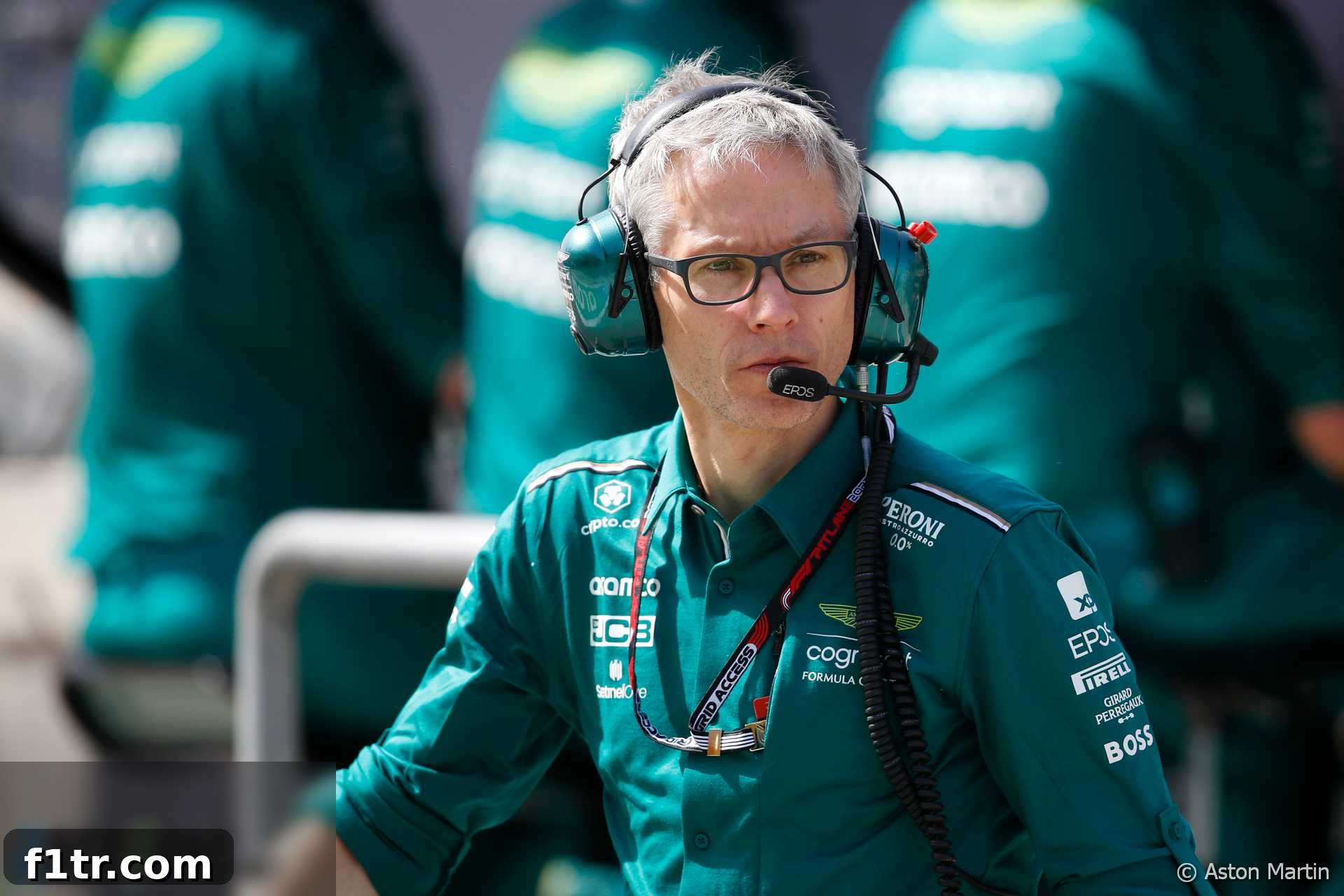
The impending overhaul of Formula 1’s power unit regulations for the 2026 season has ignited a crucial debate within the paddock, with key figures expressing significant concerns about their potential impact on the sport. Aston Martin team principal Mike Krack has publicly aligned himself with Red Bull counterpart Christian Horner, acknowledging the shared anxieties regarding the drastic technical shifts on the horizon.
Fears Over F1’s 2026 Power Unit Regulations: A Shared Concern
Christian Horner, a prominent voice among team principals, has been vocal throughout the year about his apprehension concerning the 2026 power unit regulations. While the familiar 1.6-litre V6 engine architecture will remain, the new designs will introduce profound modifications. A central change involves the removal of the MGU-H (Motor Generator Unit – Heat) element, a complex and highly efficient component that recovers energy from exhaust gases. Concurrently, the proportion of electrical power within the overall output will be substantially increased, marking a significant step towards greater electrification in Formula 1.
Horner’s stark warning of “Frankenstein” cars underlines the gravity of these proposed changes. His concerns extend to the potential for undesirable driving scenarios, such as drivers having to downshift on long straights to optimize power unit performance – a concept that clashes with the conventional understanding of F1 racing. Reigning world champion Max Verstappen has echoed these sentiments, labeling the cars produced under the current regulation drafts as “terrible,” based on Red Bull’s early simulator analysis. Such strong condemnations from leading figures underscore the deep-seated worry about the fundamental character of racing being altered in unforeseen ways.
In an exclusive conversation, Mike Krack was directly asked if the 2026 regulations were a source of concern for him and his team. His unequivocal response – “Yes, it is” – highlighted the widespread nature of these anxieties across the paddock. Krack elaborated, emphasizing that this is a collective apprehension affecting “all of us” within the sport. He acknowledged that the engine manufacturers, now referred to as Power Unit (PU) manufacturers, collaborated with the FIA in formulating these regulations, operating under the premise that the chassis design could adapt accordingly.
However, subsequent developments have revealed that “we have to take some drastic steps on the chassis regulations to make it work.” This indicates a complex interplay between power unit and chassis design, where fundamental changes to one necessitate significant adjustments to the other. Despite these challenges, Krack expressed a pragmatic optimism, stating, “But it is technically possible.” He advocated for a collaborative approach, urging all stakeholders to “work together in the interests of the whole thing to make it work.” Krack concluded with confidence, believing that “we can find a set of regs that will make it work and that everybody will be happy with,” underscoring the industry’s commitment to finding viable solutions despite the formidable technical hurdles.
Aston Martin’s Strategic Pivot: Partnering with Honda for 2026
The 2026 power unit formula represents a pivotal moment for Aston Martin, as the team prepares to transition from a long-standing partnership with Mercedes. This collaboration has spanned an era predating the current 1.6L V6 hybrid regulations, marking a significant chapter in the team’s history. For 2026, Aston Martin will embark on a new strategic alliance, switching its power unit supplier to Honda. This move is more than just a change of engine provider; it signifies a deeper, integrated technical partnership aiming to leverage Honda’s expertise in hybrid power systems as the sport enters its next era.
Krack revealed that his team is already deeply entrenched in discussions with the Japanese manufacturer regarding the intricate details of the new power units. These dialogues are multi-faceted, covering a comprehensive range of aspects crucial for a successful integration and competitive performance. “There is a dialogue on all fronts,” Krack affirmed, detailing the breadth of these collaborative efforts.
The discussions extend from the purely sporting implications, such as “how many passes do you need” – referring to the strategic considerations of power deployment and overtaking capabilities under the new rules – to the fundamental structural requirements within the paddock. This includes logistical and operational considerations such as “what structure you need in the paddock, do we sit together, do we do separate,” highlighting the need to define the working relationship and shared infrastructure for a seamless operation. These organizational aspects are critical, as they also “have long, long lead times” and require meticulous planning well in advance of the new regulations taking effect.
Crucially, the technical discussions are already in full swing, focusing on the highly complex challenge of “how is the packaging of the engine in a ’26 chassis from what we know so far.” The intricate integration of the power unit within the chassis is a critical determinant of a car’s aerodynamic efficiency, weight distribution, and overall performance. These “preliminary talks” encompass a holistic view, delving into “basically from sporting, finance, technical, the whole areas.” Krack emphasized that both entities have “defined partners or business partners,” and that “the collaboration has started there with discussions regularly. We try to see each other here and there,” indicating a proactive and engaged partnership building phase.
Confidence in Honda’s Prowess Despite Past Challenges
Honda’s return to Formula 1 as a power unit supplier in 2015 was famously fraught with difficulties during the early years of the hybrid turbo V6 era. The Japanese manufacturer encountered significant reliability and performance struggles, particularly during its partnership with McLaren, a period often cited as one of the most challenging in modern F1 history for both parties. However, since those initial hurdles, Honda has made a remarkable resurgence, ultimately powering Red Bull Racing to multiple world championships, showcasing their formidable engineering capabilities and relentless pursuit of excellence.
Despite the memories of those early struggles, Mike Krack exudes immense confidence in Honda’s ability to deliver a strong, competitive power unit for 2026. “I’m very confident because from what I see Honda is fantastic, they are real racers,” Krack declared. This conviction stems from Honda’s current performance and their deeply ingrained racing philosophy. He pointed directly to their contemporary success, stating, “They push everything and you see, they are giving the world championship engine,” acknowledging their role in Red Bull’s recent dominance.
Krack’s perspective also carries a sense of humility and a clear understanding of Aston Martin’s role in this partnership. “It is more about being humble, like how can we cope and how can we maintain a high level with them,” he explained. This suggests that Aston Martin views the collaboration as a two-way street, where the team must also elevate its own standards and integrate effectively with Honda’s top-tier engineering to maximize the partnership’s potential. He firmly dismissed any lingering prejudices from Honda’s past F1 challenges, asserting, “But there is no prejudice at all, from what I have seen so far I’m very impressed.” This strong endorsement from Krack underlines the trust and belief Aston Martin places in Honda’s technical prowess and their commitment to success in the highly competitive world of Formula 1.
The Broader Implications of F1’s Regulatory Evolution
The concerns raised by Krack, Horner, and Verstappen are not isolated incidents but reflect a broader pattern in Formula 1 whenever significant regulatory shifts are introduced. The sport has a rich history of dramatic rule changes leading to unintended consequences, sometimes creating competitive disparities or altering the fundamental racing spectacle in unexpected ways. The move to increased electrical power and the removal of the MGU-H are driven by noble aims: promoting sustainability, attracting new manufacturers like Audi, and increasing the relevance of F1 technology to road car development. However, balancing these objectives with the core tenets of thrilling, competitive racing is an immense challenge.
The technical complexity of these new regulations cannot be overstated. The MGU-H, while expensive and technically challenging, was also incredibly efficient at energy recovery. Its removal necessitates a complete rethinking of energy management strategies and car design. The increased electrical componentry will require innovative solutions for battery technology, energy deployment, and power harvesting, placing enormous strain on both power unit and chassis designers. The “Frankenstein car” analogy highlights fears that the pursuit of maximum electrical power might lead to compromises in aerodynamic efficiency or weight distribution, potentially resulting in cars that are challenging to drive at the limit or produce less engaging racing.
The dialogue between the FIA, teams, and power unit manufacturers is therefore critical. Finding a regulatory framework that encourages innovation, enhances sustainability, attracts new entrants, and preserves the racing spectacle is a delicate balancing act. Mike Krack’s call for collaboration underscores the necessity of a united front to address these challenges. The F1 community must work collectively to refine the regulations, ensuring that the 2026 season ushers in an era of compelling racing, not one marred by technical limitations or undesirable on-track scenarios.
The strategic partnership between Aston Martin and Honda exemplifies the high stakes involved for individual teams. A successful engine partnership is paramount to championship aspirations, and the early, intensive discussions between Krack’s team and Honda are indicative of the proactive approach required to navigate this complex transition. Their collaboration, much like the broader efforts within F1, will be key to shaping the future landscape of the sport.
2026 F1 season
- What must Formula 1 fix with its new rules – and what should it leave unchanged?
- Alpine denies “sabotaging” Colapinto and criticises social media “hate” posts
- Verstappen starts season with lowest score over three rounds since his debut in F1
- Poor starts a ‘very high priority’ for Mercedes as drivers lose 21 places in four races
- “Two balls of steel!” How Leclerc won his battery battle with Hamilton and Russell
Browse all 2026 F1 season articles