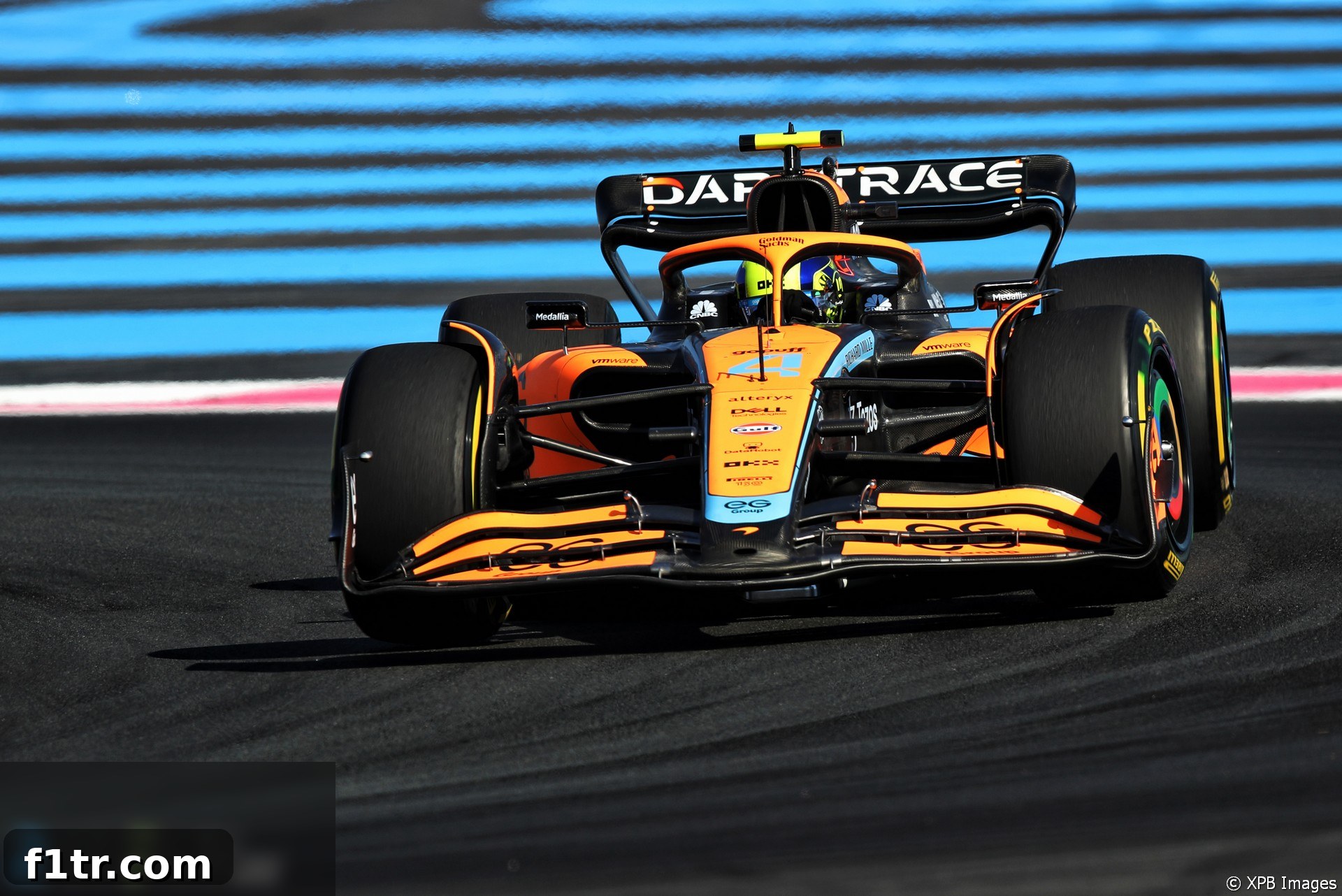
A recent incident during the final practice session of the French Grand Prix saw Lando Norris successfully avoid a penalty for impeding Lance Stroll. The McLaren driver’s clearance came after the stewards accepted that Norris simply could not see his rival as he prepared for a crucial practice start at the Paul Ricard circuit.
Understanding the Paul Ricard Pit Lane Incident
The incident unfolded during the high-stakes environment of Formula 1’s final practice session, a critical period where teams fine-tune their setups and drivers prepare for qualifying. Lando Norris was positioned at the very end of the pit lane, an authorized area, to perform a practice start – a routine yet vital procedure for optimizing race-day performance. At the same time, Aston Martin’s Lance Stroll was just exiting his garage, entering the fast lane of the pit lane with the intention of joining the circuit.
The designated practice start area at Paul Ricard is notably situated in close proximity to the pit lane exit. This geographical detail would later become central to the stewards’ decision. As Norris prepared to launch, his race engineer, Will Joseph, provided him with updates on other drivers already on the circuit. Joseph diligently informed Norris about the positions of drivers like Pierre Gasly and Daniel Ricciardo, noting their intentions for timed or cool-down laps. However, crucially, there was no mention of Lance Stroll, who was rapidly approaching in the pit lane’s fast lane.
“Gasly is approaching turn 14 now, he will open a timed lap,” Joseph communicated to Norris. “Behind him is Daniel, he’ll do another cool-down lap.” This information, while accurate for on-track traffic, left a critical blind spot for Norris regarding the immediate pit lane environment. Moments later, as Norris executed his practice start, pulling away from his stationary position, Stroll’s Aston Martin appeared. The Canadian driver was forced to react quickly, slowing his car significantly to prevent a potential collision with Norris.
The Stewards’ Investigation and Decision
Following the session, the stewards initiated a thorough investigation into the matter, recognizing the paramount importance of pit lane safety. Their process involved a meticulous review of all available video evidence from multiple angles, telemetry data from both cars, and, critically, direct conversations with both Lando Norris and Lance Stroll. This comprehensive approach is standard in Formula 1 to ensure a fair and just assessment of any on-track or pit lane transgression.
After carefully weighing all the facts and testimonies, the stewards ultimately decided against penalizing Lando Norris. This decision was largely based on their acceptance of both drivers’ perspectives, who independently concurred that the situation, while requiring Stroll to take evasive action, had not actually been dangerous in terms of immediate risk of collision or serious harm.
In their official report, the stewards provided a detailed explanation of their findings: “Norris was stopped in the slow lane at pit exit preparing for a practice start from that position as permitted by the race director’s Event Notes. Stroll was traversing the fast lane approaching Pit Exit when Norris performed his practice start in the path of Stroll. Stroll braked to avoid a collision with Norris. There was no contact between the cars.” This concise summary established the sequence of events without attributing blame immediately.
Driver Agreement and Visibility Challenges
A significant factor in the stewards’ non-action was the agreement between both drivers. “Stroll and Norris were in agreement that what occurred did not endanger Stroll,” the report highlighted. This mutual understanding underscored the professional judgment of the two competitors. Stroll himself acknowledged that he could see Norris stopped, preparing for the practice start, and was therefore prepared for the possibility that Norris might not see him approaching. This anticipatory driving is a testament to the instincts of F1 drivers.
Norris further clarified the specific challenge he faced at the Paul Ricard pit exit. He explained that due to the downhill gradient of the practice start area, it is physically impossible for a driver in his position to see a car approaching from behind in their mirrors. This critical detail revealed a fundamental visibility limitation inherent to that particular section of the pit lane, rather than a lapse in Norris’s attention or awareness. Such localized topographical features often pose unique challenges in motorsport venues globally, requiring careful consideration in regulatory oversight.
F1 Regulations, Safety Protocols, and Precedent
The investigation also brought to light a gap in the existing regulatory framework. The stewards noted, “There is no specific rule which dictates protocol for performing practice starts other than that they can only be done from the position Norris was in at the time.” This lack of a precise guideline meant the decision had to be made based on broader principles of safety and fair conduct, rather than a clear-cut violation of a specific article.
Despite the absence of a specific rule, the stewards emphatically stated their overarching safety principle: “Nevertheless, the stewards consider that a car performing a practice start must give way to a car in the fast lane approaching pit exit in the interests of safety.” This statement serves as a clear directive for future incidents, reinforcing the priority of safety in the high-speed, dynamic environment of a Formula 1 pit lane. While Norris was cleared in this instance, this clarification ensures that drivers and teams are fully aware of their responsibilities moving forward, encouraging an extra layer of caution during practice starts.
The decision in this case, to take no action because both drivers agreed it was not dangerous, could be seen as a nuanced application of the rules. It acknowledges the specific circumstances of poor visibility and the immediate judgment of the professionals involved, while simultaneously setting a precedent for increased vigilance regarding pit lane conduct. Such incidents, even without a penalty, serve as valuable lessons for all teams and the FIA in refining safety protocols and communication strategies.
Advert | Become a RaceFans supporter andgo ad-free
The Importance of Pit Lane Discipline in Formula 1
The pit lane in Formula 1 is often described as the most dangerous part of a race track. It’s a hive of activity, with cars entering and exiting at various speeds, mechanics working furiously, and team personnel moving about. Incidents, even minor ones, can have significant consequences, not just for the drivers involved but also for team members. This is why stringent regulations and constant vigilance are non-negotiable. The episode involving Norris and Stroll, while not resulting in a collision or penalty, highlights the fine margins within which F1 operates and the critical need for clear communication and situational awareness from all parties.
Race engineers play an indispensable role in ensuring driver safety, acting as a driver’s eyes and ears beyond the confines of the cockpit. The momentary communication gap regarding Stroll’s approach underscores the immense pressure and rapid decision-making required in the pit lane, even for seasoned professionals. Continuous improvements in radio protocols and real-time tracking systems are always being sought to minimize such occurrences.
Ultimately, the stewards’ ruling demonstrated a balanced approach. It acknowledged the specific challenges faced by Norris at Paul Ricard, the absence of a clear-cut rule, and the professional assessment of danger by both drivers. At the same time, it re-emphasized the fundamental principle that safety must always take precedence, especially in the high-traffic, high-risk environment of the pit lane. This incident serves as a crucial reminder for all participants in Formula 1 about the continuous need for caution, precise communication, and adherence to safety guidelines, even during what might seem like routine practice sessions.
2022 French Grand Prix Coverage
- Ferrari’s season of missed chances led to “difficult” criticism for Binotto
- McLaren looking into why their starts are “more inconsistent” this year
- Mercedes expect Hungarian GP will ‘expose our qualifying weakness’
- Hamilton and Russell ‘out-performing a car that’s not good enough’ – Wolff
- “We need to decide now”: Inside Sainz and Ferrari’s French GP strategy dilemma
Browse all 2022 French Grand Prix articles