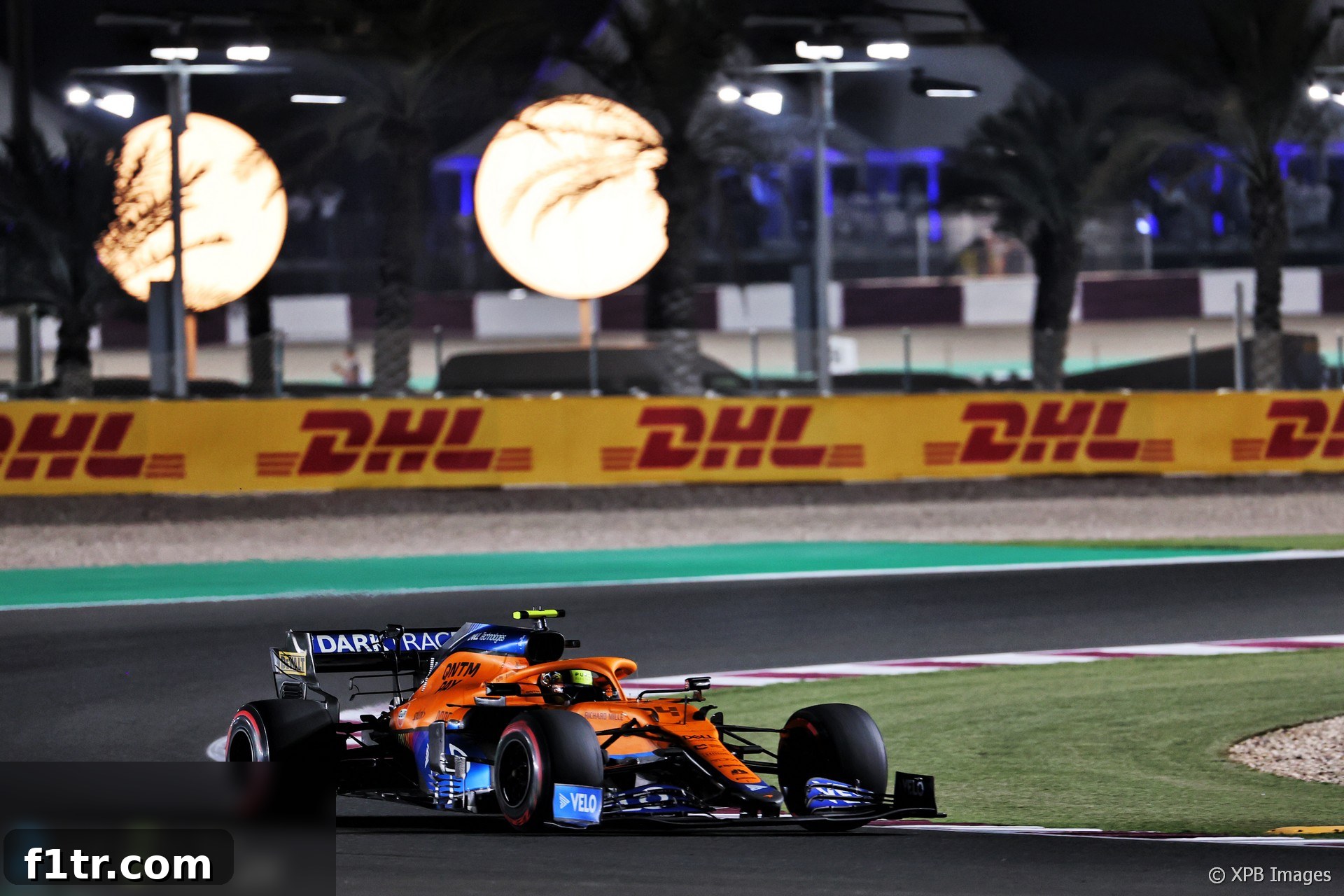
In a sport where precision, speed, and safety are paramount, the sudden and unexpected tyre failures experienced by several drivers at the Qatar Grand Prix sent a ripple of concern through the Formula 1 paddock. McLaren driver Lando Norris, one of the most prominent voices on the grid, did not mince words, labeling the punctures as potentially “dangerous” and issuing a clear call to tyre supplier Pirelli to “make the tyres better.” These incidents cast a shadow over an otherwise thrilling race weekend at the Losail International Circuit, raising critical questions about driver safety and the reliability of crucial components under extreme racing conditions.
Advert | Become a Supporter & go ad-free
Norris’s race was dramatically impacted on lap 49 while he was comfortably running in fourth position. A front-left tyre puncture forced him to make an unscheduled pit stop, severely compromising his chances of a strong finish. What made the incident particularly alarming was that Norris was on a set of hard compound tyres, which had completed a relatively modest 24 laps at the time. Hard tyres are designed for durability and extended stints, making their sudden failure all the more perplexing and concerning for both drivers and teams. The inherent expectation is that the hardest compound would withstand the rigors of a Formula 1 race for a significant duration, far beyond what Norris’s tyres managed.
When pressed for an explanation regarding the unforeseen failure, Norris’s response was telling, “It’s obvious what it is. I just can’t say it.” This statement underscored a palpable frustration and an implied understanding among drivers about potential underlying issues, though perhaps bound by contractual or team obligations from publicly detailing his suspicions. The compound in question was the hardest offered by Pirelli for any Formula 1 Grand Prix, reinforcing Norris’s belief that it should have comfortably outlasted its performance before failing so abruptly.
“You don’t expect the tyre to blow up,” Norris emphasized, expressing the universal sentiment among his peers. “Especially not on the hard tyre, we weren’t even that far into the stint.” He elaborated on the common practice of tyre management inherent in Formula 1, where drivers constantly monitor and preserve their tyres due to wear and degradation. However, he stressed the distinction between gradual wear and sudden, catastrophic failure. “Every track, you look after the tyres because the tyres wear out a bit. But you don’t expect it to suddenly let go completely.” This distinction highlights the difference between an expected performance drop-off and a dangerous structural failure, which presents a significant safety hazard.
The McLaren driver was unequivocal in his assessment of the failures, deeming them “quite dangerous” and asserting that they “just shouldn’t happen.” While fortunate that all four drivers who experienced punctures managed to avoid high-speed crashes and some even completed the race, Norris pointed out the perilous ‘what if’ scenario. “If there was a wall there it could have been much, much more dangerous.” This hypothetical yet very real threat at speeds exceeding 200 mph underscores the severe risks associated with unpredictable tyre blowouts in motorsport. The margin for error in Formula 1 is razor-thin, and any unforeseen mechanical failure, especially involving a critical component like a tyre, can have catastrophic consequences for the driver and potentially other competitors.
Norris continued his plea, “They should make the tyres better. It’s dangerous for us as drivers, right? So we risk a lot every time.” His words resonated with the collective voice of drivers who put their lives on the line with every lap. The fundamental trust in the equipment, particularly the tyres, is a cornerstone of racing safety. “If we just can’t drive a Formula 1 car around the circuit, then what can you do? I didn’t even do a very long stint – 20 laps, 25 laps, whatever – I should still be able to drive the circuit.” This statement encapsulates the profound disappointment and concern that performance limitations should be the only factors determining a stint’s length, not the unexpected structural integrity of a tyre.
The timing of Norris’s tyre failure was particularly frustrating for McLaren. The team was strategically poised at the Qatar Grand Prix to gain crucial ground on their championship rivals, Ferrari, for the first time in four races. McLaren had demonstrated strong race pace around the demanding Losail circuit, a performance that filled Norris with confidence. “I was very happy about that and I could push a lot with the car and we should have been P4,” he reflected. He even entertained the possibility of challenging for a podium finish, acknowledging the formidable Fernando Alonso in P3. “I think if we’d got everything right, maybe we could have challenged for P3, but that’s a challenge, it’s Fernando [Alonso] in P3, so I don’t expect an easy overtake if I tried.”
Advert | Become a RaceFans supporter andgo ad-free
The lost points were a bitter pill to swallow for McLaren, impacting their fiercely contested battle for third place in the Constructors’ Championship. “But we should have a lot more points than Ferrari today and at least got something back. I know they are a long way ahead and even further away now. But they did that because they deserved it and they were their own performance. But when you have days like today, there’s just nothing you can do and it just really sucks.” Norris’s lament highlights the profound impact such unforeseen issues can have on a team’s championship aspirations, undermining their genuine on-track performance with factors beyond their control.
Lando Norris was not the only driver to suffer from a sudden tyre failure at the Qatar Grand Prix. George Russell, driving for Williams at the time, was another of the four drivers who experienced a puncture. Russell’s explanation for his incident, however, offered a slightly different perspective, linking it to the extreme demands he was placing on his car to compensate for Williams’s inherent lack of pace. This nuanced view adds another layer to the complex issue of tyre durability in Formula 1.
Like Norris, Russell also reported “no warning” before his tyre gave way. However, he admitted, “to be honest, we actually anticipated that, prior to the race.” This pre-race anticipation points to a known vulnerability for the Williams car in certain conditions, forcing Russell into a challenging predicament. He elaborated on the specific point of failure: “It was literally just the outside shoulder of that front-left that was the limitation. So probably 10 centimetres of the outside front-left and it would literally just go at some point if we kept pushing it.” This detailed description suggests a specific point of stress unique to his car’s setup or driving style to compensate for competitive disadvantages.
Russell further explained the dilemma he faced on track: “But the reason for it is because we just didn’t have enough pace today. The high-speed corners where you need to manage, the corners leading onto the straights, the guys were already right behind me up in the high-speed corners. So if I managed anymore, they would have just overtaken me, regardless.” This illustrates the relentless pressure on drivers in uncompetitive machinery. To stay in contention, Russell had to push the limits, knowing that backing off would lead to losing positions. His focus wasn’t on tyre longevity but on maintaining track position, even at the cost of tyre integrity. “So nothing to be disappointed about regarding the puncture. It was just a factor of just not having enough speed around the rest of the lap.” While accepting the outcome, Russell’s comments highlight the extreme demands placed on F1 tyres, especially when drivers are forced to extract every ounce of performance from their machinery, often beyond its intended optimal operating window.
The incidents at the Qatar Grand Prix served as a stark reminder of the inherent dangers in Formula 1 and the critical role of component reliability. While drivers push the boundaries of physics, they must do so with unwavering confidence in their equipment. Lando Norris’s passionate call for improved tyres resonates beyond a single race incident; it speaks to the fundamental expectation of safety and fairness in top-tier motorsport. Pirelli, as the sole tyre supplier, faces the immense challenge of developing tyres that are not only performant but also robust enough to withstand the diverse and extreme conditions of Formula 1 circuits, as well as the varying demands placed upon them by different car designs and driving styles. The subsequent investigation into these failures, which later indicated that the circuit’s aggressive kerbs were a significant contributing factor, further emphasizes the intricate interplay between track design, tyre construction, and race strategy. Ultimately, the Qatar Grand Prix tyre failures underscored the ongoing need for continuous evaluation and improvement to ensure the pinnacle of motorsport remains both exhilarating and, above all, safe for its gladiatorial drivers.
Advert | Become a RaceFans supporter andgo ad-free
2021 Qatar Grand Prix Related Articles
- Pirelli’s investigation into Qatar tyre failures indicates kerbs caused punctures
- Horner rejects talk of title fight pressure after criticism over marshal comment
- “I don’t know how much slower I can go”: Inside Ricciardo’s unnecessary economy run
- ‘No regulator in the world will be popular’ with a title fight this intense – Masi
- Why drivers backed Hamilton’s call for clarity after meeting over Verstappen incident
Browse all 2021 Qatar Grand Prix articles