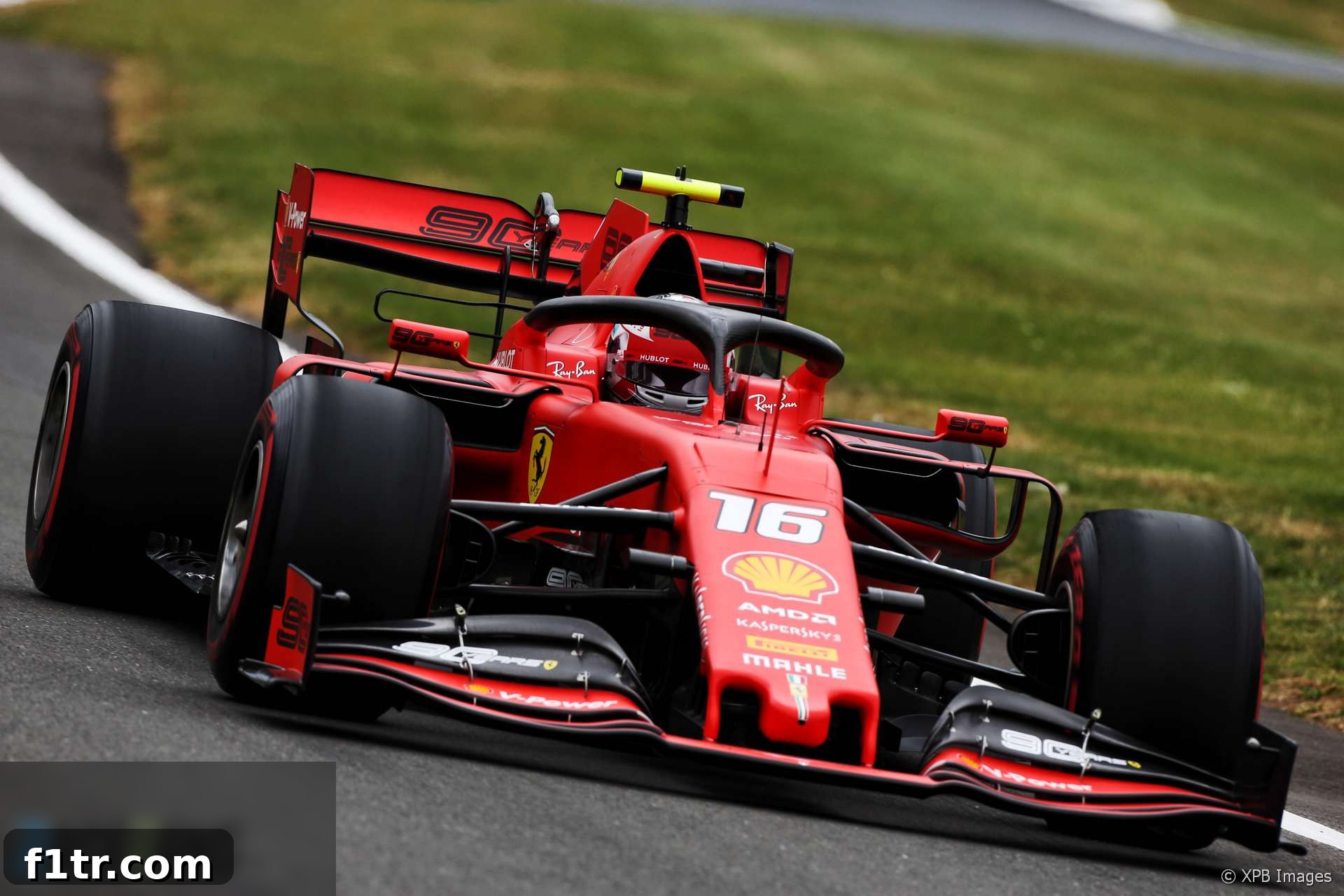
Leclerc’s Cautious Optimism: Ferrari Surprises with Pace at British Grand Prix Qualifying
Charles Leclerc, the talented Ferrari driver, has expressed a measured blend of surprise and realism regarding his team’s performance leading up to the British Grand Prix. While acknowledging that Ferrari demonstrated unexpected proximity to Mercedes during qualifying, he maintains a pragmatic perspective on their chances for outright victory at the iconic Silverstone circuit. This sentiment sets the stage for what promises to be a thrilling and strategically complex race weekend, with Ferrari positioned to challenge but aware of the formidable obstacles ahead.
Advert | Become a Supporter & go ad-free
A Glimmer of Hope: Ferrari’s Unexpected Proximity to Mercedes
Leclerc’s candid comments underscore a significant shift in expectations for Scuderia Ferrari heading into the British Grand Prix. The Monegasque driver admitted that the team found themselves unexpectedly close to the dominant Mercedes outfit during qualifying, a scenario they hadn’t fully anticipated given their struggles earlier in the weekend. “We did not expect it, we thought we would be struggling more this weekend,” Leclerc stated, highlighting the team’s pleasant surprise. This unexpected surge in performance, particularly in the crucial qualifying session, provides a much-needed morale boost for the Italian team, which has often found itself playing catch-up to the Silver Arrows throughout the season. Silverstone, with its high-speed corners and demanding layout, typically favors cars with strong aerodynamic efficiency and stability, areas where Mercedes has historically excelled. Ferrari’s ability to narrow the gap suggests either a significant improvement in their understanding of the car or a track characteristic that unexpectedly played into their hands. This closeness, even if it doesn’t translate to a direct fight for victory, promises to add an exciting dimension to the race, keeping fans on the edge of their seats and providing a strategic headache for Mercedes, who usually enjoy a comfortable buffer.
The Race Day Challenge: Mercedes’ Formidable Race Pace
Despite the encouraging qualifying result, Leclerc remains pragmatic about Ferrari’s prospects on race day, particularly when comparing their long-run pace to that of their principal rivals. “If we look at the Friday race simulations I think it’s going to be very difficult to fight with [them],” Leclerc conceded. He specifically pointed to the exceptional performance of Lewis Hamilton’s race run, which indicated a formidable pace advantage for Mercedes over a sustained period. Race simulations, conducted during Friday’s free practice sessions, are crucial for teams to understand how their cars and tyres will perform over a full race distance under varying fuel loads. A strong race run from Hamilton suggests superior tyre management, consistent lap times, and perhaps a better overall car balance for the conditions expected on Sunday. This stark reality means Ferrari will likely face an uphill battle to maintain their grid position, let alone challenge for the top step of the podium. Mercedes’ ability to consistently extract maximum performance from their car and tyres during long stints has been a hallmark of their recent dominance, making them a daunting opponent when the lights go out. The key for Ferrari will be to manage their own race, capitalize on any Mercedes slip-ups, and leverage their potential strategic advantages.
Grid Dynamics and the Red Bull Threat
Leclerc will line up third on the grid, a commendable position that offers a clean run into the first corner. However, this promising starting spot also places him in a precarious strategic situation. The two Red Bull cars will start immediately behind him, effectively separating him from his Ferrari teammate, Sebastian Vettel. This grid configuration presents both opportunities and threats. While Leclerc has a clear view ahead from third, he will be acutely aware of the potent Red Bull machines breathing down his neck. Max Verstappen and Pierre Gasly, particularly Verstappen, have demonstrated strong race pace and an aggressive approach, making them immediate threats for position, especially in the opening stages. “Red Bull seems to be very quick also in the race run so it’s going to be tricky,” Leclerc noted, acknowledging the formidable challenge they pose. The presence of Red Bulls between the Ferraris also complicates potential team strategy, as Vettel might not be able to offer direct support or participate in strategic plays as easily if he’s battling other cars for position. The opening laps of the British Grand Prix will be critical, as any loss of position to the Red Bulls could severely impact Ferrari’s ability to execute their race plan and potentially isolate Leclerc further from the front-running Mercedes. Maintaining track position against these fast-charging rivals will be paramount.
The Tyre Gamble: Soft vs. Medium Strategy
A pivotal strategic decision that will significantly influence the outcome of the British Grand Prix is the choice of starting tyres. Ferrari has opted for the softer compound tyres for both Leclerc and Vettel, while their immediate rivals – Mercedes and Red Bull – have chosen to start on the more durable medium compounds. This divergence in strategy sets the stage for a fascinating tactical battle that could define the race.
The soft tyres offer a distinct advantage in terms of initial grip and acceleration off the line, potentially allowing Leclerc to make a strong getaway and defend his third position, or even challenge the Mercedes ahead into Turn 1. This superior initial performance is crucial on a circuit where overtaking can be challenging. However, this benefit comes at a cost: soft tyres are known for their higher degradation rates, meaning they wear out more quickly and are more susceptible to overheating, especially on a demanding track like Silverstone with its high-speed corners that exert immense lateral forces. This accelerated wear could force Ferrari into an earlier pit stop, potentially compromising their track position later in the race if they emerge into traffic.
Conversely, the medium tyres, chosen by Mercedes and Red Bull, provide greater durability and a longer stint length. While they may not offer the same explosive start, they allow drivers to run for more laps before pitting, offering greater flexibility in pit stop windows and potentially enabling a strategic undercut or overcut later on. Drivers on mediums might be able to push harder for longer without significant performance drop-off, giving them an advantage as the race progresses into its middle and later stints. Their ability to extend a stint could allow them to react to Ferrari’s strategy or gain an advantage if a safety car intervenes at a crucial moment.
The success of Ferrari’s soft tyre gamble will depend heavily on Leclerc’s ability to meticulously manage tyre degradation in the early laps and convert any initial track position advantage into a significant gap. If he can maintain a strong pace without excessively punishing the tyres, it could open up a two-stop strategy that allows for faster overall race time. However, if the softs degrade too quickly, Ferrari might find themselves vulnerable to being undercut by cars on mediums who can run longer and pit into clearer air. Track temperature, which can fluctuate throughout the day, and potential safety car periods will also play crucial roles in how this strategic chess match unfolds, adding layers of complexity to an already high-stakes race where every decision can be critical.
Conquering Silverstone: Overtaking and Track Characteristics
Silverstone is revered by drivers and fans alike for its challenging and high-speed layout, but it’s also a track notoriously difficult for overtaking. “It’s a track where it’s quite hard to overtake so then we have some chances to keep them. But if not I guess it’s going to be very difficult to fight with them,” Leclerc explained, emphasizing the paramount importance of track position. The circuit’s fast-flowing nature, characterized by iconic corners like Copse, Maggotts, Becketts, and Chapel, means cars are often at or near their aerodynamic limits, making it incredibly hard to follow closely in another car’s wake and launch a successful attack. The turbulent air generated by the car ahead significantly reduces downforce for the trailing car, making it harder to maintain speed through the quick sections.
While DRS (Drag Reduction System) zones provide some opportunities on the Hangar Straight and the Wellington Straight, overtakes often require significant tyre advantage, a daring move under heavy braking, or a superior exit from the preceding corner to get a run on the car in front. The start, therefore, becomes paramount. Gaining positions in the first few corners can be decisive, as drivers then settle into a rhythm where defending track position is often easier than trying to reclaim it. Leclerc’s third-place start gives him an excellent platform to potentially gain ground or consolidate his position, but he’ll need to maximize his initial getaway and maintain defensive lines against the pursuing Red Bulls to preserve his advantage. The strategic interplay of tyre choices and pit stop timing will further dictate how battles unfold, potentially creating crucial windows for overtakes that might otherwise be impossible. Driver skill, courage, and tactical acumen will be tested to their limits on this legendary circuit.
Leclerc’s Qualifying Masterclass: Pushing the Limits
Leclerc expressed immense satisfaction with his performance in Q3, describing his final qualifying lap as one he was “very happy” with. While acknowledging a minor imperfection in the very last corner (“In the last corner I maybe could have done a little bit better but not much”), he firmly believes he extracted the maximum possible from his Ferrari SF90. This relentless pursuit of perfection, even down to the smallest detail and marginal gains, is a hallmark of elite Formula 1 drivers, constantly striving to shave off milliseconds. “Overall I think we are very happy with the performance, very close to Mercedes,” he reiterated, reinforcing the team’s positive mood despite not securing pole position.
The pressure of Q3, where drivers have only one or two attempts to lay down their absolute fastest time, is immense. To perform under such high-stakes conditions and feel that one has pushed the car to its absolute limit is a significant achievement, speaking volumes about a driver’s mental fortitude and technical ability. Leclerc’s ability to deliver a lap that put him so tantalizingly close to the seemingly untouchable Mercedes demonstrates not only his individual skill but also the collective effort of the Ferrari team in extracting every ounce of performance from the package. It was a qualifying session where the driver truly made the difference, maximizing the potential of a car that had initially shown signs of struggle earlier in the weekend, turning potential weaknesses into a competitive edge.
Overcoming Technical Hurdles: Ferrari’s Front-End Struggles
Ferrari’s path to a strong qualifying performance was not without its challenges. Leclerc revealed that the team had been “struggling since FP1 with the front end of the car,” an issue that persisted, albeit to a lesser extent, into qualifying. Front-end issues typically refer to a lack of grip or stability at the front of the car, often manifesting as understeer – where the car doesn’t want to turn into corners as much as the driver intends, pushing wide at the apex. This can make the car feel unpredictable, erode driver confidence in committing to high-speed entries, and ultimately cost precious lap time, particularly on a track like Silverstone which demands precise front-end response.
Diagnosing and rectifying such complex issues in a short timeframe during a race weekend is a testament to the engineering prowess and collaborative spirit of an F1 team. From FP1 to qualifying, engineers and drivers work tirelessly, analyzing telemetry data, experimenting with setup changes – making adjustments to suspension stiffness, aerodynamic rake, wing angles, and balance distribution. Overcoming these front-end struggles to deliver a competitive qualifying lap suggests that Ferrari made significant progress in understanding and mitigating the car’s inherent balance issues. This constant battle against technical imperfections, and the incremental gains made through meticulous adjustments and driver feedback, is a critical component of Formula 1 success and contributes significantly to the narrative of Ferrari’s unexpected competitiveness at Silverstone. It showcases the team’s ability to adapt and improve under pressure.
Conclusion: A Cautious Optimism for a Thrilling British Grand Prix
Charles Leclerc’s assessment ahead of the British Grand Prix paints a picture of cautious optimism, tempered with a clear understanding of the challenges that lie ahead. While the unexpected proximity to Mercedes in qualifying has undoubtedly buoyed spirits within the Ferrari camp, the undeniable reality of Mercedes’ formidable race pace, the strategic threat from the aggressive Red Bull team, and the critical implications of differing tyre choices ensure that the race will be anything but straightforward. Leclerc’s profound satisfaction with his qualifying performance, despite acknowledging minor imperfections, underscores his belief in having extracted the absolute maximum from the SF90, even as the team grappled with persistent front-end balance issues earlier in the weekend. The unique and demanding characteristics of Silverstone, with its high-speed corners and limited overtaking opportunities, will place an even greater emphasis on impeccable strategy, meticulous tyre management, and the crucial dynamics of the opening laps. Ferrari’s bold decision to start on the softer compound tyres against their rivals’ mediums adds an intriguing layer to the tactical battle, promising a compelling and unpredictable race. While a direct, consistent fight for victory against the dominant Mercedes may still be a tall order, Ferrari’s improved performance suggests they are now firmly in a position to capitalize on any opportunity that arises, making the British Grand Prix a truly must-watch event for all motorsport enthusiasts. The stage is set for a strategic chess match and an intense on-track battle.
Further Reading from the World of Formula 1
- Understanding F1 Tyre Strategy: Soft vs. Medium vs. Hard Compounds Explained
- The Art of Overtaking at Silverstone: A Driver’s Perspective on Key Zones
- Inside the Mind of an F1 Engineer: Resolving Car Balance Issues and Setup Challenges
- Greatest Moments from Past British Grand Prix Races: Legendary Battles and Victories
- The Mercedes-Ferrari Rivalry: A Season-Long Battle for Supremacy
Explore More F1 Season Analyses and News