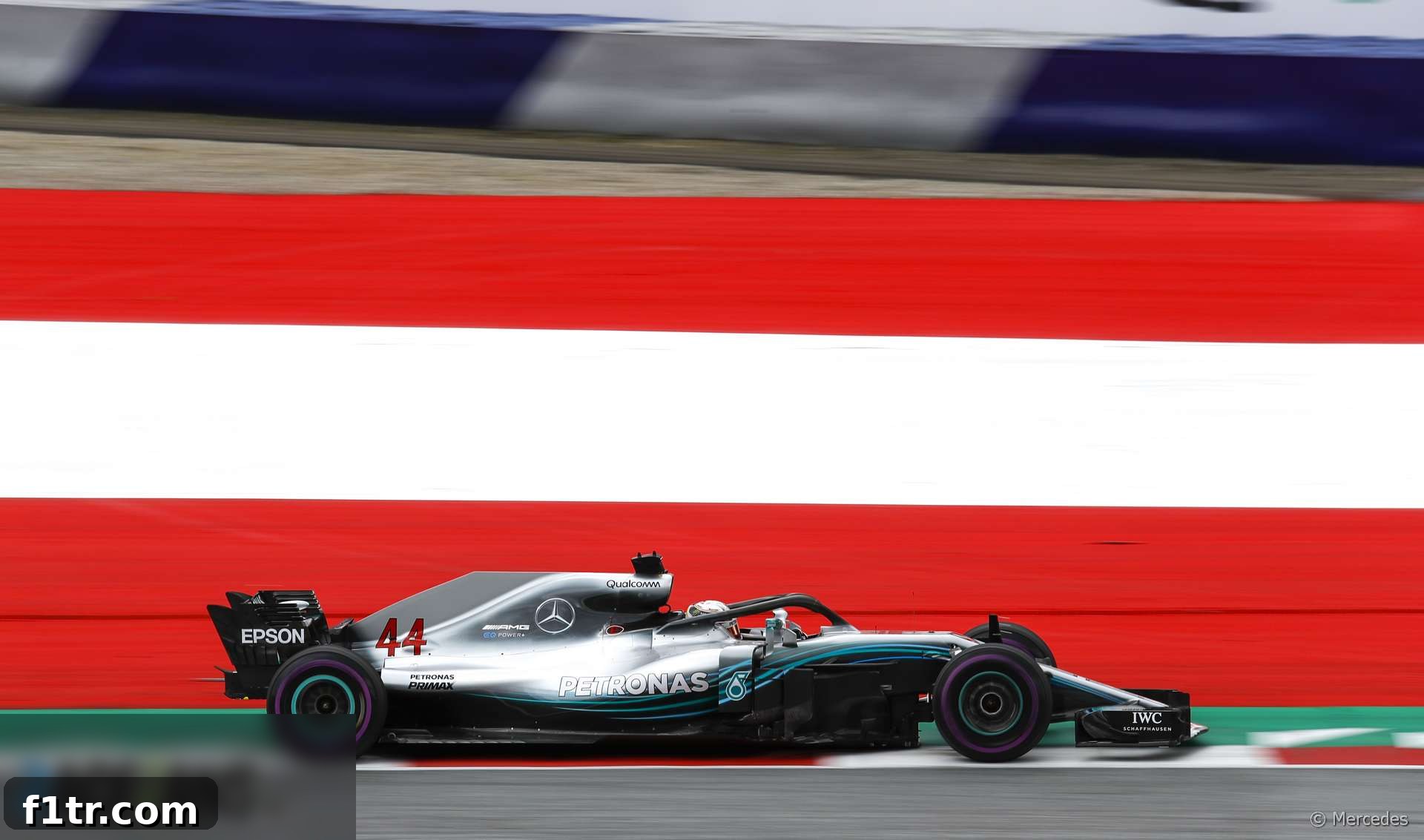
In the high-stakes world of Formula 1, where split-second decisions can dictate the outcome of a championship, even the most dominant teams are not immune to strategic missteps. The 2018 Austrian Grand Prix provided a stark reminder of this reality when the Mercedes-AMG Petronas Formula 1 Team made a critical pit stop decision that significantly hampered Lewis Hamilton’s race. This incident, initially a source of frustration, later evolved into a powerful demonstration of leadership and accountability within the team, offering invaluable insights into the complexities of F1 strategy and team dynamics.
Mercedes’ technical director, James Allison, candidly addressed the error, revealing the strategic rationale behind the decision not to pit Hamilton when a Virtual Safety Car (VSC) period was deployed. The team’s expectation that the VSC would last for an extended duration proved to be their undoing, a gamble that ultimately backfired with considerable consequences for the championship leader.
Advert | Become a Supporter & go ad-free
“It was a mistake,” Allison confessed in a team video debrief, acknowledging the clear error in judgment. “We made an error, we should have stopped him.” This admission highlights the constant tension between real-time decision-making under immense pressure and the clarity that only hindsight can provide. Allison eloquently described the unique challenge faced by strategists: “Strategy’s one of those really odd things where it’s incredibly obvious in hindsight what you should have done. Even my mum could do the right thing if she had the benefit of all the hindsight we have after the decision was taken.” This statement perfectly encapsulates the strategist’s dilemma, where incomplete information and the need for immediate action create an environment ripe for potential miscalculations.
The Virtual Safety Car Dilemma: A Leader’s Burden
The incident unfolded during the 2018 Austrian Grand Prix when a car stopped on track, prompting the deployment of the Virtual Safety Car. Under VSC conditions, all cars must reduce their speed to a predetermined delta time, effectively neutralizing the gaps between competitors without requiring a full Safety Car deployment. This period presents a golden opportunity for teams to make a ‘cheap’ pit stop, as the time lost entering and exiting the pits is significantly reduced compared to a pit stop under green flag conditions. For those not in the lead, pitting under a VSC can offer a substantial strategic advantage, allowing them to change tires without losing as much track position.
However, for the race leader, the decision is fraught with peril. As Allison explained, “The person who is in the lead of the race always has the biggest dilemma of all because they have the most to lose.” The fear is of being the only car to pit and then finding rivals behind staying out, thus ceding track position and potentially getting caught in traffic. Mercedes’ strategists, observing their competitors, believed the VSC period would be sufficiently long to allow them to monitor the actions of the cars behind Hamilton. Their plan was to wait for a second lap under VSC to see if others pitted, and then make their own informed decision.
“We thought the Virtual Safety Car would last for more than one lap,” Allison elaborated. “So we thought we would see what happened to the guys behind us, see whether they stopped or didn’t stop, and then make our decision on the second lap.” This calculated risk was based on a reasonable, yet ultimately incorrect, assessment of the situation. The VSC, contrary to their expectation, ended after just one lap. This abrupt conclusion meant that while all their key rivals behind Hamilton seized the opportunity for a ‘cheap stop,’ Mercedes was left with no choice but to pit Hamilton under green flag conditions, resulting in a significantly more ‘expensive stop’ and a substantial loss of track position. “It all happened in just one, everybody behind us stopped. We lost out hugely because they had a cheap stop, we had an expensive stop, and it was a big mistake,” Allison concluded, underscoring the severity of the misjudgment. The strategic blunder represented a significant setback, one that Mercedes would have “paid a significant price for had we not subsequently had a DNF” – a subsequent retirement due to mechanical issues for Hamilton, which, ironically, somewhat overshadowed the initial strategic error in terms of final race result, but not in terms of lessons learned.
Advert | Become a RaceFans supporter andgo ad-free
James Vowles’ Unprecedented Apology: A Hallmark of Leadership
Amidst the race, an extraordinary moment unfolded as Mercedes’ Chief Strategist, James Vowles, took the unusual step of communicating directly with Lewis Hamilton over the team radio, not once, but twice, to offer a profound apology for the strategic error. This direct interaction, bypassing the usual communication channel of the race engineer, caught many by surprise and underscored the gravity of the situation.
James Allison provided crucial context for Vowles’ unconventional intervention. He explained that direct communication from the strategist to the driver is reserved for specific, often sensitive, circumstances. “You do sometimes hear James and it’s normally under unusual circumstances where we have a message that’s either subtle or difficult, where we need to get a message to the driver without the intermediary of the race engineer.” The standard protocol involves the strategist relaying information to the race engineer, who then communicates it to the driver. This layered approach ensures clarity and allows the race engineer to contextualize messages for their driver.
However, certain situations demand a more direct approach to avoid any potential misinterpretation or “Chinese whisper.” Allison elaborated on the specific reasons for Vowles’ personal outreach: “Sometimes you want to avoid the ‘Chinese whisper’ of that, or the message is very, very important, or in this particular instance it was extremely personal.” In this case, the message was not just critical to the race but carried a deep personal weight. It was an act of genuine accountability from Vowles, directly addressing the driver who had been most impacted by the team’s miscalculation.
Allison highlighted the personal nature of the apology, describing it as James Vowles “showing an extremely broad pair of shoulders, standing up and saying ‘that was my mistake, Lewis, and I’m sorry for it’.” This public (though internal to the team radio) admission of fault is a rare and powerful display of leadership in a high-pressure, elite sporting environment. It demonstrates not only personal integrity but also a profound respect for the driver and the entire team.
Fostering a Culture of Learning and Accountability
Vowles’ actions were not merely an individual act of contrition but a reflection of the deeply ingrained culture within the Mercedes-AMG Petronas F1 Team. Allison emphasized that this approach to managing mistakes is characteristic of how the team operates: “It was, I think, very characteristic of James, but also a measure of how this team operates, where people will hold up their hand when they make a mistake, knowing that the teams’ attitude to mistake is that they are things that we learn from rather than things that we then throw blame around or cause great polemics within the team.”
This philosophy is fundamental to Mercedes’ sustained success in Formula 1. Instead of fostering a blame culture that stifles initiative and promotes defensiveness, Mercedes encourages an environment where errors are acknowledged, dissected, and used as catalysts for improvement. When individuals like James Vowles demonstrate such transparent accountability, it reinforces trust, strengthens team cohesion, and ultimately leads to better performance. It empowers team members to take calculated risks without the paralyzing fear of disproportionate blame, knowing that the focus will always be on collective learning and progress.
The act of James Vowles giving the message personally to Lewis Hamilton was paramount. It conveyed not just information, but empathy and solidarity. In the high-octane world of F1, where the bond between driver and team is crucial, such gestures reinforce the understanding that they are united in their pursuit of victory, and equally united in overcoming setbacks. This strong leadership from Vowles, in explaining precisely what had happened and taking personal responsibility, served as a powerful example for every member of the team, showcasing how to manage adversity with integrity and a forward-looking mindset.
Advert | Become a RaceFans supporter andgo ad-free
The Evolving Landscape of F1 Strategy
The incident at the Austrian Grand Prix serves as a compelling case study in the ever-evolving landscape of Formula 1 strategy. Every race is a complex interplay of engineering prowess, driver skill, and strategic acumen. The Virtual Safety Car rules, while designed to improve safety, introduce unique strategic complexities that challenge even the most experienced strategists. Teams continuously analyze past events, leveraging vast amounts of data to refine their predictive models and decision-making algorithms, yet the human element – the anticipation of rival moves, the assessment of risk, and the ability to adapt in real-time – remains paramount.
Mercedes’ strategic error, though costly, ultimately reinforced their organizational strength. It highlighted that even world-championship-winning teams will falter, but their true strength lies not in avoiding mistakes, but in how they respond to them. The transparency of James Allison and the exemplary leadership of James Vowles demonstrated a mature and effective approach to accountability, solidifying trust and commitment within the team. This incident, therefore, transcended a mere pit-stop blunder, becoming a valuable lesson in leadership, team culture, and the relentless pursuit of perfection in the pinnacle of motorsport.
Related F1 Insights from the 2018 Season
- F1 feared “death knell” for Drive to Survive after Ferrari and Mercedes snub
- McLaren staff told us we were “totally crazy” to take Honda engines in 2018 – Tost
- ‘It doesn’t matter if we start last’: How Red Bull’s junior team aided Honda’s leap forward
- Honda’s jet division helped F1 engineers solve power unit problem
- McLaren Racing losses rise after Honda split
Browse all 2018 F1 season articles