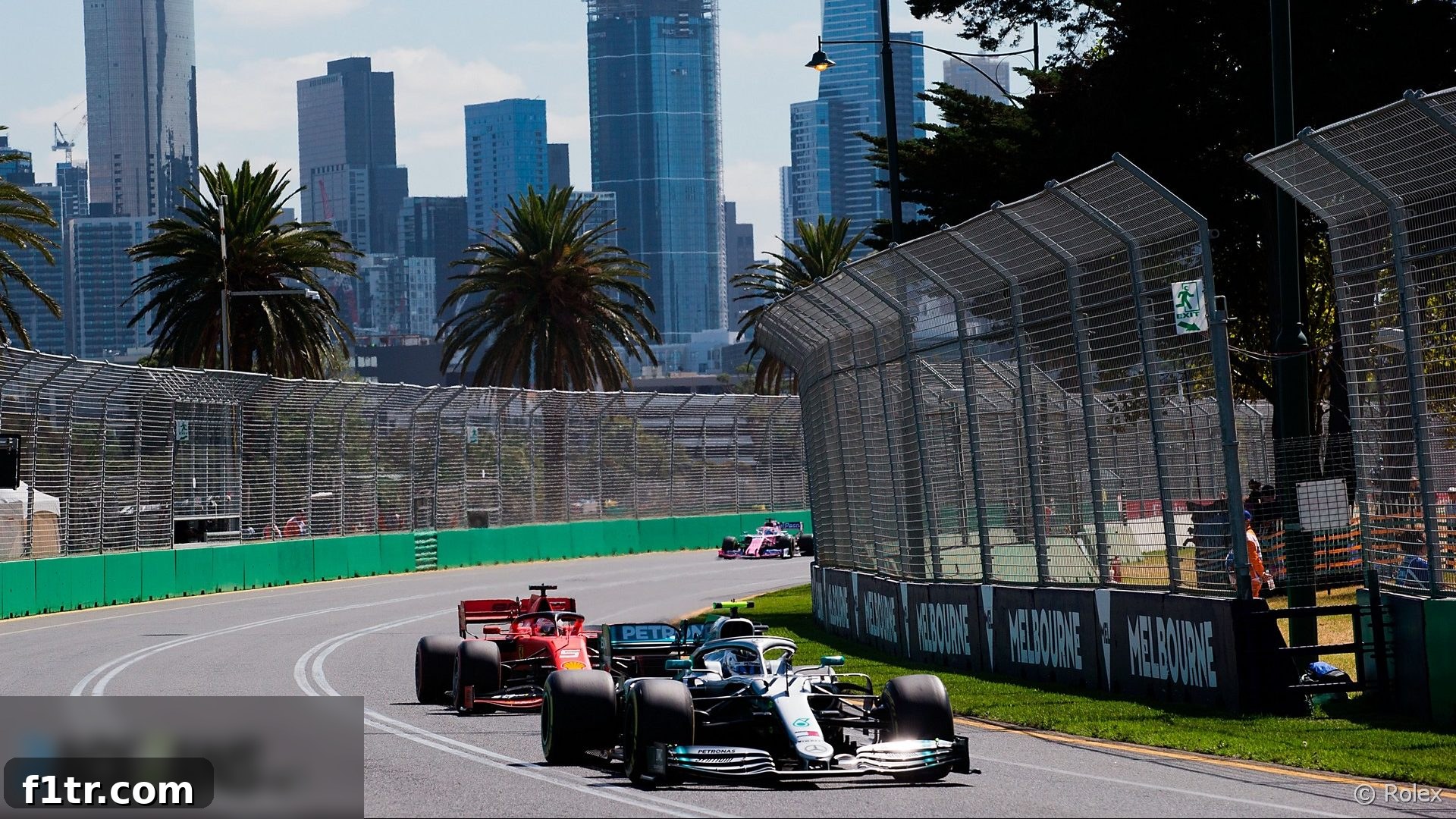
As the Formula 1 circus prepared for the second round of the 2019 F1 season, all eyes turned to the desert oasis of the Bahrain Grand Prix. A crucial element of any Grand Prix weekend, particularly at a demanding circuit like Bahrain, is tyre strategy. Pirelli, the official sole tyre supplier for Formula 1, meticulously announced the teams’ tyre selections, providing a fascinating glimpse into the strategic thinking that would underpin the race weekend.
The 2019 F1 season had just begun, and teams were still refining their understanding of their new cars and how they interacted with Pirelli’s latest generation of compounds. Bahrain, with its unique characteristics, high temperatures, and abrasive track surface, presented an early test of this understanding. The tyre choices made by each team and driver were not merely arbitrary selections but carefully calculated decisions designed to maximise performance in qualifying, optimise race strategy, and manage the inherent challenge of tyre degradation.
Pirelli’s selection for the Bahrain Grand Prix comprised its hardest available compounds for the season: the C1 as the Hard, the C2 as the Medium, and the C3 as the Soft. This specific choice of compounds (C1, C2, C3) is a strategic decision by Pirelli to ensure a challenging yet manageable range for the teams. The C1 compound is the hardest and most durable, offering excellent longevity but less outright grip. Conversely, the C3, designated as the Soft tyre for this event, provides superior grip and speed, making it ideal for qualifying and early race stints, but at the cost of faster degradation. The C2, positioned in the middle, offers a balanced compromise between performance and durability, often becoming a pivotal tyre for various race strategies.
Unpacking the Strategic Intent: Dominance of the Softs
A striking trend immediately evident from Pirelli’s announcement was the overwhelming preference for the C3 (Soft) tyre. Almost every team on the grid, with the sole exception of Williams, opted for a minimum of nine sets of the C3 compound for their drivers. This aggressive leaning towards the softest compound available for the Bahrain Grand Prix underscored the perceived importance of outright pace, particularly in the crucial qualifying sessions. Teams aimed to ensure they had sufficient fresh soft tyres to push for optimal grid positions, which are often vital for a strong race performance.
The decision to load up on soft tyres is typically driven by several factors. Firstly, the pursuit of single-lap pace in qualifying is paramount. The C3 offers the fastest lap times, allowing drivers to extract maximum performance. Secondly, while degradation is higher, a strong early stint on the softs can help a driver gain track position. Teams with confidence in their car’s ability to manage tyre wear or execute efficient pit stops might lean into this strategy more heavily, accepting the shorter lifespan of the C3 for its performance benefits.
Aggressive Gambits: Renault and Toro Rosso Lead the Charge
Taking the aggressive strategy to an even higher level were Renault and Toro Rosso, with both teams selecting a remarkable 10 sets of the C3 (Soft) compound for each of their drivers. This bold choice indicated a strong belief in their ability to make the soft tyres work effectively, perhaps banking on their car’s setup, driver style, or an anticipated race scenario that would favour short, sharp stints on the softest rubber. For Renault, with Daniel Ricciardo and Nico Hulkenberg, and Toro Rosso, with Daniil Kvyat and Alexander Albon, this could have been an attempt to gain a crucial edge over their midfield rivals in qualifying and potentially through early race pace. However, such an aggressive approach also carries risks, including potentially needing more pit stops or struggling with tyre management if track temperatures or race conditions prove more challenging than expected.
The Front-Runner Consensus: Mercedes, Ferrari, and Verstappen
Intriguingly, the leading teams, Mercedes and Ferrari, alongside Red Bull’s star driver Max Verstappen, converged on an identical tyre allocation: one set of C1 (Hard), three sets of C2 (Medium), and nine sets of C3 (Soft). This unanimity among the championship contenders is highly significant. It suggests that these top teams, after extensive simulations and data analysis, arrived at a near-optimal strategy that offers both outright performance and tactical flexibility.
This balanced approach allows them to maximise qualifying performance with ample soft tyres, while the three sets of mediums provide a strong option for longer race stints or for adapting to unexpected race developments such as safety cars. The single hard compound provides a safety net or a niche strategic option, though it is often the least favoured for its slower pace unless extreme conditions or unique strategies dictate its use. The fact that Lewis Hamilton, Valtteri Bottas, Sebastian Vettel, Charles Leclerc, and Max Verstappen all settled on this precise combination speaks volumes about the collective intelligence and strategic alignment at the pinnacle of Formula 1.
Williams’ Unique Path: A Glimpse into Challenges and Alternatives
In contrast to the prevailing trends, Williams adopted a notably different tyre strategy, particularly for Robert Kubica. Both George Russell and Robert Kubica were allocated eight sets of the C3 (Soft) tyre – one fewer than most of the grid. More strikingly, Robert Kubica’s selection included four sets of C2 (Medium) tyres, the highest number among all drivers, paired with a single C1 (Hard) tyre. George Russell also had three sets of mediums and two sets of hards, differing from the top teams.
This distinct approach from Williams likely stemmed from their unique challenges during the 2019 season. Struggling with overall car performance, Williams might have prioritised durability and strategic flexibility over outright single-lap pace. Kubica’s emphasis on medium tyres could indicate a plan for longer stints, aiming to minimise pit stops and manage the race in a different window compared to their faster rivals. It reflects a pragmatic strategy, perhaps acknowledging that their car might not be able to fully exploit the softer tyres over a race distance or that an alternative, less aggressive strategy could offer their best chance to compete, even if only within their own battles.
The Bahrain International Circuit: A Tyre-Eating Track
To fully appreciate the significance of these tyre selections, it’s essential to understand the characteristics of the Bahrain International Circuit (BIC). The track, located in Sakhir, is known for its abrasive asphalt, which places high demands on the tyres and leads to significant degradation. The high ambient temperatures, especially during the day, further exacerbate this issue, though the race itself takes place at night under floodlights, which can bring track temperatures down slightly. However, the track remains aggressive on tyres due to its layout, featuring heavy braking zones, fast corners, and long straights that require strong traction. This combination of factors often results in a multi-stop race, making tyre management and strategic pit stops absolutely critical to success.
The chosen compounds – C1, C2, C3 – were therefore a thoughtful selection by Pirelli to challenge teams while still providing strategic options. The C1 (Hard) offers maximum durability for potential one-stop strategies, though less likely. The C2 (Medium) is the workhorse, offering a good balance, and the C3 (Soft) is for attacking performance. Teams had to balance the desire for speed with the necessity of endurance on a circuit that punishes tyre abuse.
Individual Driver Selections: A Detailed Breakdown
The full table of driver selections highlights the nuances within teams and across the grid:
2019 Bahrain Grand Prix drivers’ tyre selections
| Driver | Team | Hard (C1) | Medium (C2) | Soft (C3) |
|---|---|---|---|---|
| Lewis Hamilton | Mercedes | 1 | 3 | 9 |
| Valtteri Bottas | Mercedes | 1 | 3 | 9 |
| Sebastian Vettel | Ferrari | 1 | 3 | 9 |
| Charles Leclerc | Ferrari | 1 | 3 | 9 |
| Max Verstappen | Red Bull | 1 | 3 | 9 |
| Pierre Gasly | Red Bull | 2 | 3 | 8 |
| Daniel Ricciardo | Renault | 2 | 1 | 10 |
| Nico Hulkenberg | Renault | 1 | 2 | 10 |
| Kevin Magnussen | Haas | 1 | 3 | 9 |
| Romain Grosjean | Haas | 2 | 2 | 9 |
| Carlos Sainz Jnr | McLaren | 2 | 3 | 8 |
| Lando Norris | McLaren | 2 | 3 | 8 |
| Sergio Perez | Racing Point | 1 | 3 | 9 |
| Lance Stroll | Racing Point | 1 | 3 | 9 |
| Kimi Raikkonen | Alfa Romeo | 1 | 3 | 9 |
| Antonio Giovinazzi | Alfa Romeo | 1 | 3 | 9 |
| Daniil Kvyat | Toro Rosso | 1 | 2 | 10 |
| Alexander Albon | Toro Rosso | 1 | 2 | 10 |
| George Russell | Williams | 2 | 3 | 8 |
| Robert Kubica | Williams | 1 | 4 | 8 |
Examining the table reveals further fascinating details. For instance, within Red Bull, Pierre Gasly’s selection diverged from Max Verstappen’s, with Gasly opting for two hard tyres and eight softs, compared to Verstappen’s single hard and nine softs. This could indicate a difference in driver preference, a team strategy to test different approaches, or a response to individual car feel. Similarly, within Haas, Romain Grosjean chose two hards and two mediums, while Kevin Magnussen stuck to the prevalent one hard and three mediums. These intra-team variations underscore the complexity of F1 strategy, where even small adjustments can have significant implications.
Implications for the Race: One-Stop or Two-Stop?
The tire selections for the 2019 Bahrain Grand Prix pointed towards a likely two-stop strategy for most teams, especially those heavily reliant on the C3 (Soft) tyre. While a one-stop might be attempted by some, particularly those with more C1 (Hard) or C2 (Medium) compounds and excellent tyre management, the high degradation at BIC typically makes two stops the faster option. The number of soft tyres available allowed teams to use them generously in qualifying and potentially for multiple short stints in the race, perhaps starting on softs, switching to mediums, and then back to softs, or a combination depending on race circumstances.
Ultimately, the Pirelli tyre selection for the 2019 Bahrain Grand Prix offered a compelling prelude to what promised to be a strategically rich race. The aggressive lean towards soft tyres, the front-runner consensus, and the unique choices of teams like Williams all contributed to a mosaic of potential strategies. As always in Formula 1, the optimal strategy would only become clear as the lights went out and the intense battle unfolded on the challenging desert track.
2019 F1 season
- Crying in the Melbourne car park at 2019 grand prix was my career low – Ocon
- McLaren Racing reports reduced £71 million loss in 2019
- Kvyat: Hockenheim podium last year was “my biggest achievement” so far
- How the FIA’s new encrypted fuel flow meter targets Ferrari’s suspected ‘aliasing’ trick
- “He smashed my office door”: 23 must-see moments from ‘Drive to Survive’ season two
Browse all 2019 F1 season articles