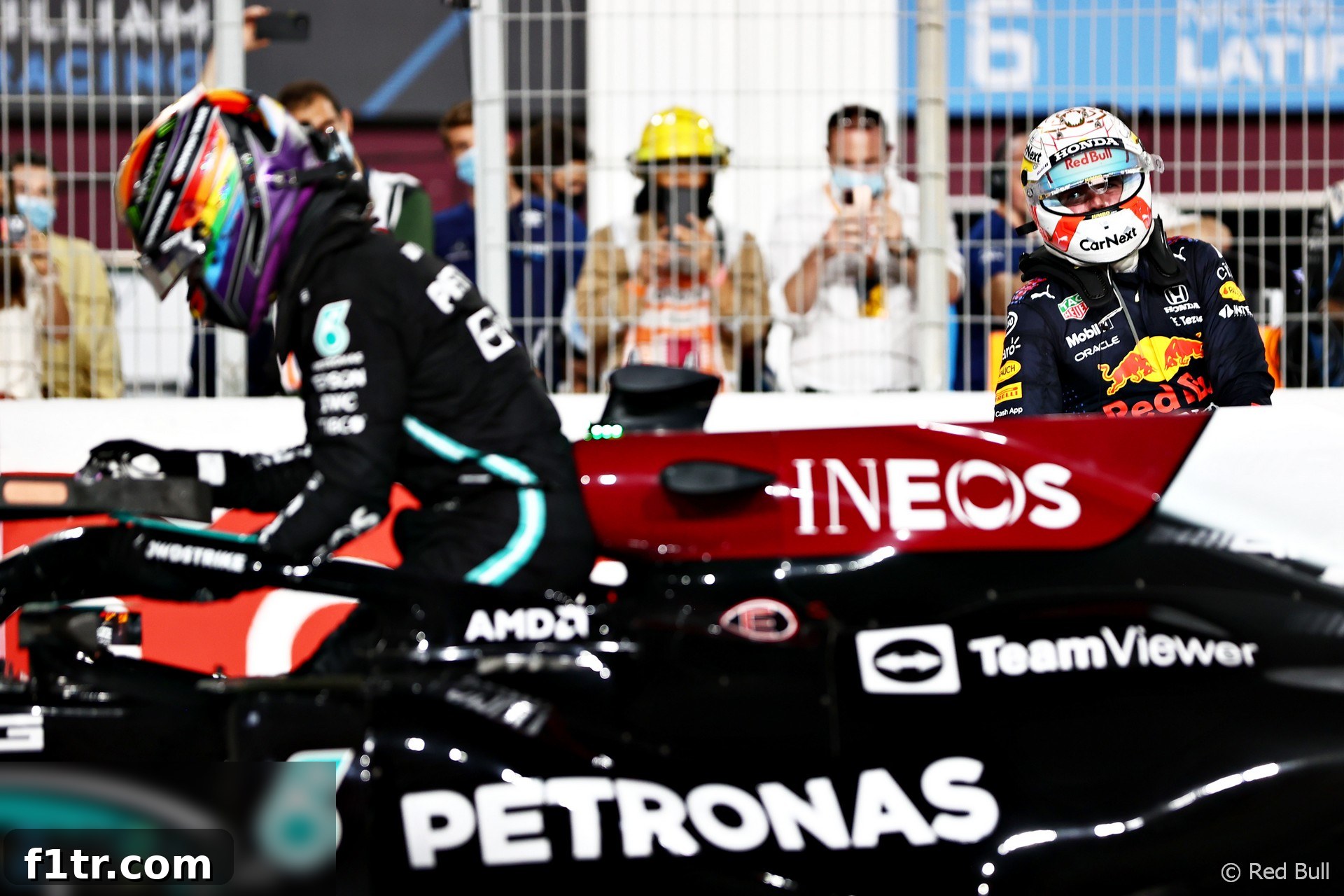
Unpacking the F1 Stewarding Debates: Masi’s Defense Amidst Title Fight Intensity
The exhilarating intensity of the Formula 1 World Championship battle between Red Bull Racing’s Max Verstappen and Mercedes-AMG Petronas F1 Team’s Lewis Hamilton has undeniably brought an unprecedented level of scrutiny upon the decisions made by the sport’s stewards. FIA Formula 1 Race Director Michael Masi firmly believes that this fierce rivalry is the primary catalyst behind the recent wave of controversies and public discontent surrounding their rulings. As the season reached its nail-biting climax, every call, every penalty, and every investigation became amplified, not just by the competitors but by a global fanbase deeply invested in the outcome.
Advert | Become a Supporter & go ad-free
The stewards, a vital and often unsung component of Formula 1’s regulatory framework, have been tasked with making a series of high-stakes calls that directly influenced the championship narrative. These incidents, often occurring in rapid succession, have fueled widespread debate among fans, pundits, and team personnel alike. A pivotal moment came when Hamilton faced exclusion from qualifying in Brazil after his rear wing was found to be non-compliant with technical regulations. This decision, though strictly by the book, ignited a firestorm of discussion regarding technical tolerances and the interpretation of rules. Later in the same race, a contentious on-track incident involving both title protagonists went uninvestigated by the stewards, a decision that prompted Mercedes to request a review. However, Mercedes’ request for a review was subsequently denied, further deepening the sense of contention. In Qatar, Verstappen himself incurred a five-place grid penalty for failing to adequately slow down under double yellow flags, a ruling that highlighted the critical importance of safety protocols but also drew criticism from his team.
The Debate: Rotating vs. Permanent Stewards
These recurrent controversies have naturally led to a broader conversation within the Formula 1 community regarding the very structure of stewarding. One prominent suggestion proposes replacing F1’s current rotating group of stewards with a single, permanent body. Proponents of this idea argue that a permanent panel would foster greater consistency in decision-making, allowing for a more uniform application of rules and penalties across different Grand Prix weekends. They believe that familiarity with past rulings and an evolving understanding of on-track dynamics would lead to clearer, more predictable outcomes, reducing the likelihood of public and team disagreements.
However, Michael Masi remains unconvinced that such a structural change would inherently lead to decisions being viewed more favorably. He points out a historical perspective, suggesting that a permanent stewarding panel has, in the past, faced its own set of challenges, particularly concerning perceptions of bias. “There were some wise words about those that operated under a permanent stewards panel that thought that there was perceived bias when there was a permanent stewards,” Masi explained. This highlights a critical dilemma: while consistency is desired, the perception of impartiality is equally paramount. A permanent panel, despite its potential for uniformity, could inadvertently become susceptible to accusations of favoring certain teams or drivers over time, or simply becoming too familiar with recurring situations.
Masi’s Confidence in the Current System
Despite the heightened scrutiny, Masi expressed unwavering confidence in the current stewarding system. He highlighted the structure in place, which involves a diverse pool of four chairman stewards, complimented by a rotation of driver stewards. This combination, Masi argues, brings a broad range of experience and perspectives to the decision-making table. The regular meetings among the chairman stewards ensure a degree of alignment and shared understanding, aiming to mitigate significant discrepancies in interpretation from one race to another. The inclusion of former racing drivers as stewards is particularly crucial, as their first-hand experience on track provides invaluable insight into race incidents, allowing for a nuanced understanding of driver intentions, car capabilities, and the practicalities of racing maneuvers.
Masi reiterated his core belief that the unprecedented intensity of the current championship fight is the fundamental reason behind the increased scrutiny and criticism directed at the stewards’ decisions. The current title battle, he notes, is the closest and most dramatic in many years, predating his tenure as race director which began at the start of the 2019 season. This tight competition means that every single point, every position, and indeed, every penalty holds immense significance, directly impacting the destiny of the world championship.
“We need to take a step back and remember it’s the first time in a long time we are in a real championship fight between two amazing drivers, two fantastic teams,” Masi stated, emphasizing the unique circumstances driving the current debates. He then drew a parallel to other sports and regulatory bodies: “As a regulator, last time I saw, there’s no regulator in the world that’s going to be popular. So regardless, if you’re a referee, if you’re a regulator of any sport, that’s part of the role that we fulfil and from our perspective that there will always be slight differences. But at the end of the day, the stewards are there to make those.” This analogy underscores the inherent challenge faced by any regulatory body: their role necessitates making difficult, often unpopular, decisions that inevitably displease one side or another. In the high-octane, emotionally charged environment of Formula 1, this unpopularity is amplified.
Christian Horner’s Perspective: Delays and Scrutiny
The intense pressure on the stewards is not lost on team principals either. Red Bull team principal Christian Horner, who himself received a formal warning after publicly criticizing a marshal following Verstappen’s yellow flag penalty, offered his perspective on the often-lengthy delays in some recent stewarding decisions. While these delays have been a point of frustration for teams and viewers awaiting clarification, Horner believes they are a direct consequence of the immense stakes involved and the desire for unimpeachable rulings.
“It is an unusual amount of time but I think they’re simply with what’s at stake I think there’s huge scrutiny going into each of these decisions,” Horner commented. He suggested that the stewards are acutely aware that their conclusions will be dissected from every angle by teams, media, and millions of fans. This awareness, he argues, leads them to take extra care, spending considerable time meticulously reviewing all available evidence – telemetry, multiple camera angles, radio communications, and witness statements – to ensure their rulings are as robust and defensible as possible. “So I think they’re very conscious they want to make the right decision that doesn’t leave themselves open to scrutiny, so therefore they’re taking the time to come to these conclusions.” This perspective highlights the heavy burden of responsibility placed on the stewards, who are expected to deliver justice in real-time or near real-time, under immense public pressure.
The Evolution of Stewarding in Modern F1
Modern Formula 1 stewarding is a far cry from its earlier iterations. The sheer volume of data, high-definition video evidence from dozens of cameras, and sophisticated telemetry systems available to the stewards today mean that decisions are, in theory, based on more objective evidence than ever before. However, this wealth of information also adds layers of complexity. Interpreting subjective elements like “avoidable contact” or “gaining a lasting advantage” in the context of milliseconds and millimeters, with all the available data, can be incredibly time-consuming and challenging. The sport’s rapid pace and the constant evolution of car performance also mean that precedents set in one era may not be entirely applicable in another, necessitating constant adaptation and careful consideration of each unique incident.
Furthermore, the global reach of Formula 1, amplified by social media, means that every contentious decision is immediately subjected to intense public debate. Fans, often aligning fiercely with their preferred driver or team, engage in heated discussions, creating echo chambers that can intensify criticism regardless of the factual basis of a steward’s decision. This public pressure, while not directly influencing the stewards’ process, undoubtedly contributes to the overall environment of scrutiny and urgency surrounding their work. The FIA, through its stewards, strives to uphold the integrity of the sport, ensuring fair competition and adherence to safety regulations. This overarching responsibility means they must often prioritize the letter of the law and sporting principles over immediate popularity or convenience.
Conclusion: Navigating the Crossroads of Competition and Regulation
In conclusion, the current period of intense debate surrounding Formula 1 stewarding is a direct reflection of the epic championship battle between Max Verstappen and Lewis Hamilton. While suggestions for structural changes, such as implementing a permanent panel of stewards, are continuously discussed, Michael Masi maintains that the core issue lies in the heightened stakes rather than a fundamental flaw in the current system. He defends the existing rotating panel and driver steward system, citing its ability to bring diverse perspectives and ensure regular alignment among decision-makers. Christian Horner’s observation about the protracted decision-making process highlights the extraordinary pressure on stewards to deliver thoroughly scrutinized and indisputable rulings.
Ultimately, the role of a regulator in any high-stakes sport is inherently challenging and often unpopular. Formula 1 is no exception. As the sport continues to evolve, finding the optimal balance between consistent rule application, perceived impartiality, and the inevitable pressures of fierce competition will remain a crucial ongoing task for the FIA and its dedicated team of stewards. The pursuit of clarity, fairness, and transparent communication will be key to maintaining the integrity and appeal of this thrilling global spectacle.
Advert | Become a RaceFans supporter andgo ad-free
2021 Qatar Grand Prix: Further Insights
- Pirelli’s investigation into Qatar tyre failures indicates kerbs caused punctures
- Horner rejects talk of title fight pressure after criticism over marshal comment
- “I don’t know how much slower I can go”: Inside Ricciardo’s unnecessary economy run
- ‘No regulator in the world will be popular’ with a title fight this intense – Masi
- Why drivers backed Hamilton’s call for clarity after meeting over Verstappen incident
Browse all 2021 Qatar Grand Prix articles