Ferrari’s Controversial Singapore Strategy: Leclerc’s Frustration and Vettel’s Resurgent Victory
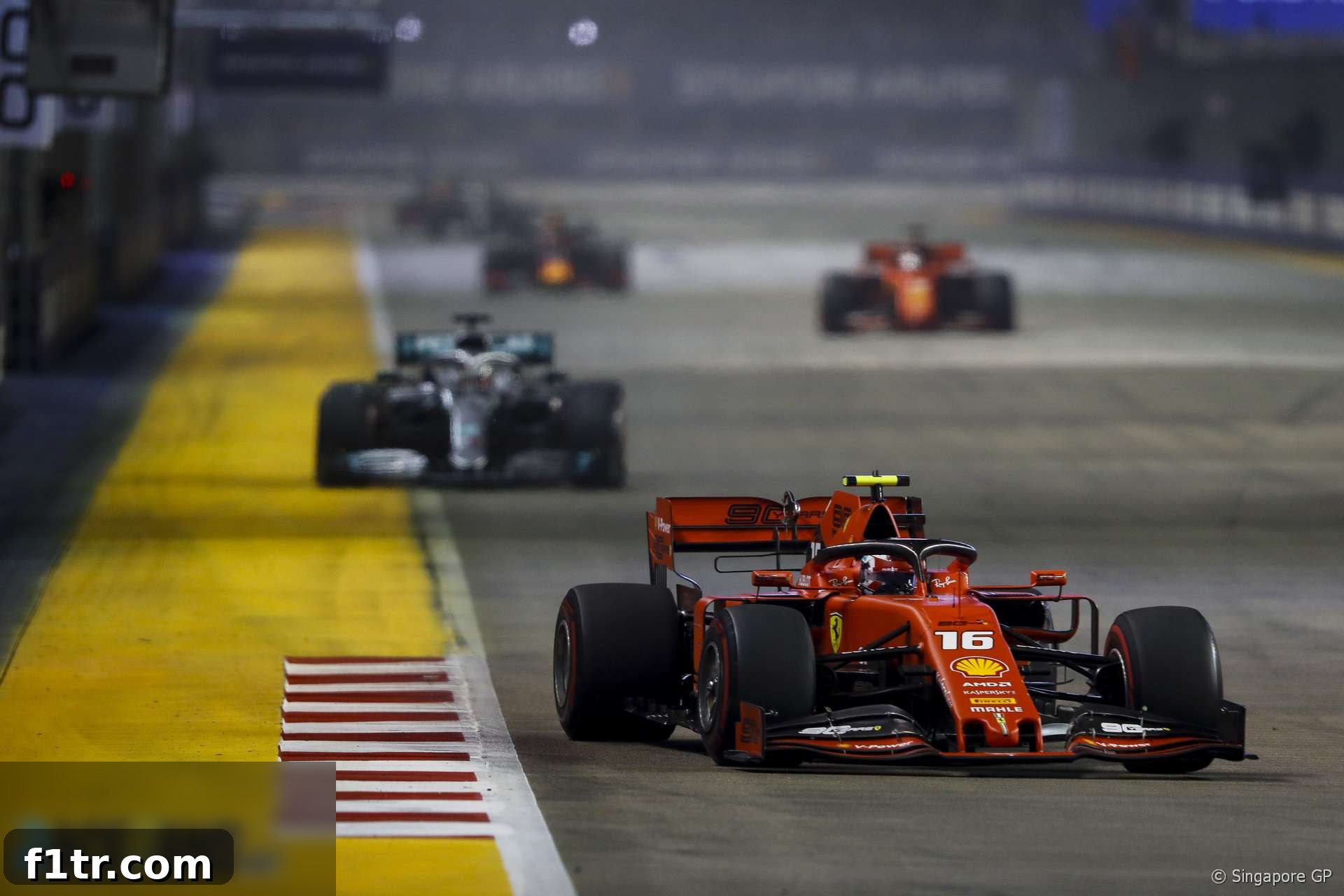
The 2019 Singapore Grand Prix delivered one of the most talked-about and contentious team orders scenarios in recent Formula 1 history, leaving Charles Leclerc expressing profound disappointment and labeling his team’s tactics as “not fair.” While Ferrari celebrated a much-needed one-two finish, the manner of Sebastian Vettel’s victory over his younger, in-form teammate ignited a fierce debate about strategy, driver hierarchy, and the delicate balance within a top F1 team.
Entering the Singapore weekend, the narrative surrounding Ferrari was complex. Leclerc had been on a sensational run, securing pole position in the previous three races and converting two of those into victories at Spa and Monza – Ferrari’s first wins of the season. His ascendance had challenged Sebastian Vettel’s long-held number one status, creating a palpable tension within the Scuderia. Singapore, a circuit known for its challenging street layout and high probability of Safety Cars, presented another opportunity for Ferrari, especially after their strong qualifying performance.
Qualifying saw Leclerc once again demonstrating his exceptional one-lap pace, clinching pole position, with Lewis Hamilton alongside him on the front row. Sebastian Vettel, despite showing good speed, started in third. Expectations were high for Ferrari, particularly given their recent upturn in performance. The race, however, would unfold in a way that left one driver elated and the other deeply frustrated.
Advert | Become a Supporter & go ad-free
As the lights went out at the Marina Bay Street Circuit, Charles Leclerc made a clean getaway, maintaining his lead through the opening corners ahead of Lewis Hamilton and Sebastian Vettel. The initial laps saw the top three holding station, managing their tires and pace under the hot, humid conditions. Pit stop strategy was always going to be crucial on this demanding street circuit, with teams constantly monitoring tire degradation and looking for any advantage.
The pivotal moment arrived early in the race. Ferrari made the audacious call to pit Sebastian Vettel on lap 19, opting for a relatively early stop. This decision, in hindsight, proved to be a masterstroke for Vettel but a significant blow to Leclerc. By pitting Vettel first, Ferrari effectively utilized the “undercut” strategy. An undercut works by pitting a driver earlier than the car ahead, allowing them to utilize the superior grip of fresh tires to complete a faster out-lap. If the following car pits on the next lap or shortly after, the time gained on the out-lap with new tires can be enough to leapfrog the car that stayed out longer.
True to form, Vettel’s early pit stop allowed him to unleash blistering pace on his fresh tires. When Charles Leclerc was brought in for his own pit stop on the following lap, the damage was already done. Despite his strong pace before pitting, Leclerc emerged from the pit lane not only behind his teammate, Sebastian Vettel, but also behind Max Verstappen, who had also benefited from an early stop. This strategic maneuver by Ferrari completely altered the complexion of the race, demoting Leclerc from a commanding lead to third place.
The pair, Sebastian Vettel and Charles Leclerc, remained in the same order until the checkered flag, securing Ferrari’s first one-two finish of the 2019 season. While a team one-two is typically a cause for unbridled celebration, the mood within the Ferrari camp, particularly in Leclerc’s cockpit, was notably subdued. Leclerc’s radio communications throughout the latter half of the race conveyed his profound disappointment and sense of injustice regarding the pit stop strategy that had, in his view, robbed him of a deserved victory.
During one of the several Safety Car restarts that punctuated the second half of the Singapore Grand Prix, a period often used for drivers to optimize their car settings, Leclerc was instructed to make a specific power unit settings change. His immediate response betrayed his frustration and hunger for victory: “I want everything. Even engine mode.” This was a clear indication that he felt he had the pace to challenge Vettel and was unwilling to settle for second place, especially given the circumstances that had put him there.
Ferrari, however, was intent on managing the situation and securing the one-two. Their response to Leclerc was a cautious reminder: “We need to bring the car home. We need to manage the PU [power unit] and bring the car home.” The team’s priority seemed to be consolidating the valuable championship points and ensuring both cars crossed the finish line without incident. For Leclerc, however, this instruction likely felt like a curtailment of his ambitions.
Leclerc, ever the professional, acknowledged the team’s directive but made his feelings abundantly clear. “I won’t do anything stupid,” he replied, attempting to reassure his engineers while simultaneously voicing his displeasure. “It’s not my goal. I want us to finish one-two. I just think it’s not fair. But this won’t change, I won’t be stupid, don’t worry.” This poignant exchange highlighted the internal conflict: his desire for a personal victory pitted against his loyalty to the team and the broader objective of a strong team result. Despite his strong words, Leclerc followed his teammate home, demonstrating his commitment to the Scuderia even in the face of personal disappointment.
For Sebastian Vettel, this victory was immensely significant. It marked his first win in over a year, ending a prolonged drought and providing a much-needed boost to his confidence and his position within the team. After a challenging period marked by errors and a perceived loss of form compared to his ascendant teammate, Singapore provided a crucial redemption. The win undoubtedly solidified his standing and demonstrated that he could still deliver race victories when the strategy played into his hands.
The strategic call in Singapore ignited a widespread debate among Formula 1 fans and pundits. Was it a calculated risk that paid off for the team? Or was it a deliberate move to aid Vettel, who was arguably struggling more than Leclerc at that point in the season? Ferrari insisted it was purely a strategic decision aimed at maximizing the team’s chances, especially with the threat from other competitors looming. Regardless of the intent, the outcome profoundly impacted the dynamic between their two drivers and fueled discussions about team orders and fairness in motorsport. The numerous Safety Car periods further complicated the narrative, as they often have the potential to either mitigate or amplify the effects of early pit stops, adding another layer of unpredictability to the race’s strategic flow.
Ultimately, the 2019 Singapore Grand Prix remains a memorable chapter in Ferrari’s recent history, a race where strategy dictated the outcome and left a lasting impression on one of its rising stars. While it delivered a crucial one-two for the team, it also showcased the intricate and often emotionally charged relationship between drivers and their teams in the high-stakes world of Formula 1.
Don’t miss anything new from RaceFans
Follow RaceFans on social media to stay updated with the latest news, analyses, and exclusive content from the world of Formula 1:
- Join RaceFans on Facebook for community discussions and updates
- Follow RaceFans on Twitter for real-time news and insights
- Get daily email updates from RaceFans directly to your inbox
Advert | Become a RaceFans supporter andgo ad-free
Explore More from the 2019 F1 Season
Delve deeper into the events and stories that shaped the exciting 2019 Formula 1 season with these related articles:
- Crying in the Melbourne car park at 2019 grand prix was my career low – Ocon
- McLaren Racing reports reduced £71 million loss in 2019
- Kvyat: Hockenheim podium last year was “my biggest achievement” so far
- How the FIA’s new encrypted fuel flow meter targets Ferrari’s suspected ‘aliasing’ trick
- “He smashed my office door”: 23 must-see moments from ‘Drive to Survive’ season two
Browse all 2019 F1 season articles