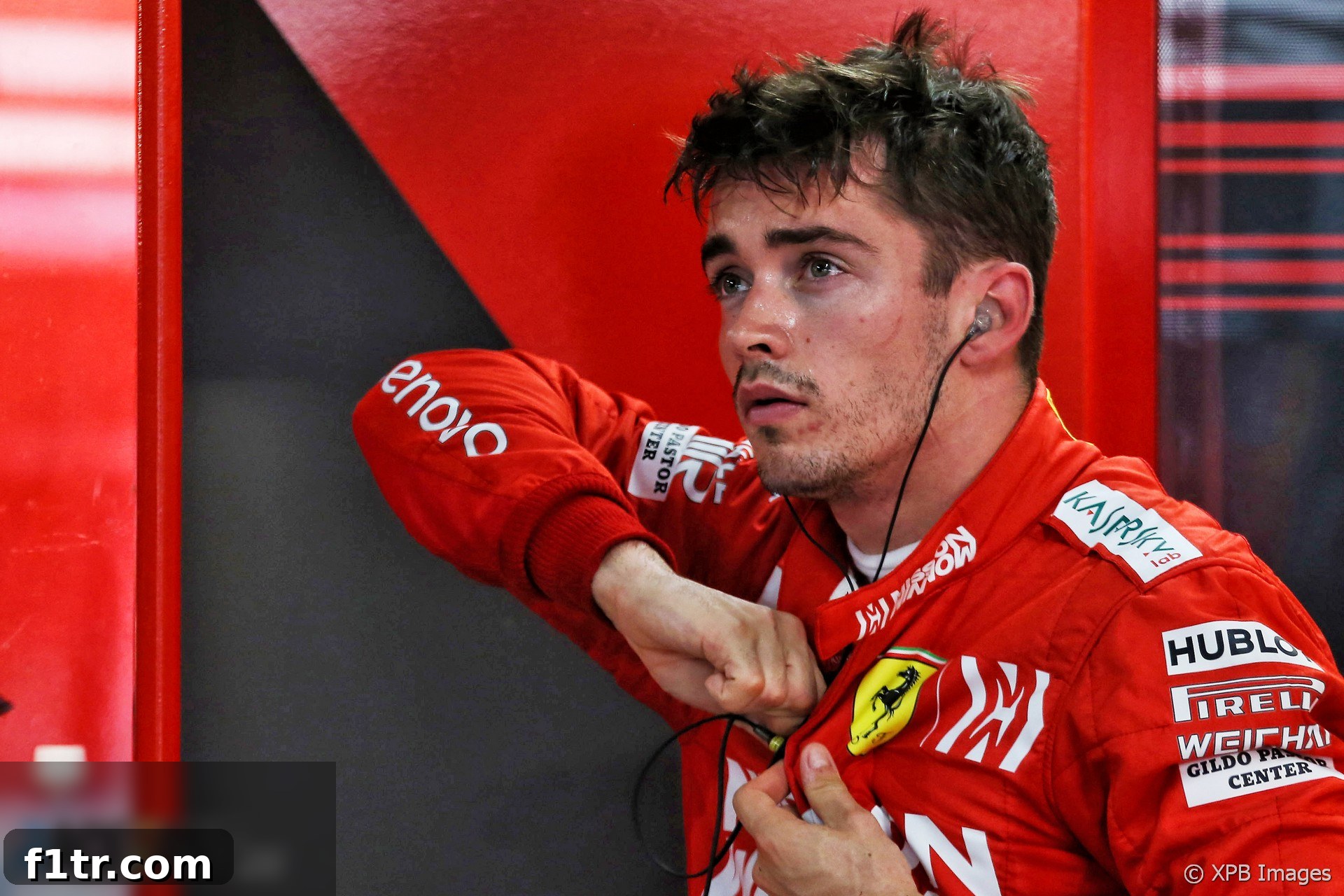
The exhilarating world of Formula 1 racing often delivers moments of breathtaking skill, strategic genius, and, occasionally, high-stakes drama. The 2019 Japanese Grand Prix at the iconic Suzuka Circuit was no exception, particularly during its tumultuous opening lap. At the heart of one of the most significant incidents of the race was a collision between two of the sport’s brightest young stars: Charles Leclerc of Ferrari and Max Verstappen of Red Bull Racing. This early-race entanglement not only shaped the outcome for both drivers but also had ripple effects across the field, igniting discussions about racing etiquette, driver accountability, and the unforgiving nature of F1.
Leclerc Accepts Blame for Japanese GP Collision with Verstappen
In a candid display of sportsmanship and self-reflection, Charles Leclerc unequivocally accepted full responsibility for the first-lap collision that dramatically impacted both his and Max Verstappen’s races. The incident occurred in the challenging opening sequence of corners at Suzuka, a circuit renowned for its high-speed sweeps and demanding technical sections. Initially, following the heat of the moment, Leclerc described the clash as “just a tricky situation,” reflecting the intensity and split-second decisions inherent in Formula 1 starts. However, upon reflection and a clearer understanding of the events, the Monegasque driver took to social media to offer a heartfelt apology and assume full accountability for his actions.
Leclerc’s public statement was direct and without equivocation: “My mistake in turn one,” he declared. He further elaborated on the immediate and lasting consequences of his error, acknowledging, “It ruined Max’s race and put [ourselves] in a bad position for the remaining of the race.” This mature admission, coming from a driver still early in his F1 career, was widely praised and underscored a commitment to racing integrity and respect among competitors. Such a forthright acceptance of blame is a testament to the character of the young Ferrari driver, setting a precedent for professional conduct in a sport where every fraction of a second and every inch of track space is fiercely contested.
A Deep Dive into the First-Lap Mayhem
The catalyst for the incident was Leclerc’s aggressive maneuvering as the pack surged through the opening corners. Coming out of Turn 1, a critical point for gaining track position, Leclerc lost control, causing his Ferrari SF90 to skid into Verstappen’s Red Bull RB15 on the outside of Turn 2. The contact was significant, resulting in immediate and visible damage to both cars. For Verstappen, who had been attempting to hold a clean line on the outside, the collision was an unavoidable outcome of Leclerc’s errant trajectory.
Verstappen’s perspective on the incident painted a picture of helplessness. “I stayed on the outside at turn two but Charles drove into the side of my car,” he recounted, expressing his frustration at being an innocent party in the melee. He speculated on Leclerc’s intentions, suggesting, “I guess Charles was trying to recover places after the start but it’s a long race so there was no need to risk so much so early.” This sentiment highlighted a common dilemma in F1: the balance between aggressive early-race gains and preserving the car for the entirety of a Grand Prix. Verstappen’s observation underscored the high-stakes nature of the Japanese Grand Prix, where a single misjudgment could unravel an entire race strategy.
The immediate aftermath saw both drivers severely compromised. Leclerc, despite the damage, managed to continue, albeit needing a front wing replacement. Verstappen, however, was not so fortunate. Rejoining the field at the very back, it quickly became apparent that his Red Bull had suffered substantial damage beyond a quick fix. “My car was severely damaged and we had to retire on Lap 15,” Verstappen confirmed, bringing a premature and disappointing end to his race. His definitive statement, “From my side I don’t think I could have done anything different,” further solidified the perception that Leclerc was solely at fault for the incident. The contrast between Leclerc’s ability to limp on and Verstappen’s forced retirement further amplified the impact of the early contact, profoundly affecting the competitive landscape for both constructors.
Penalties and Persistent Problems for Leclerc
The stewards’ review of the incident quickly led to consequences for Charles Leclerc. He was handed a five-second time penalty for causing the collision, a standard punishment for such an infraction. While this penalty alone would not have altered his finishing position in the race, it was not the only sanction he faced. A more significant penalty followed: a ten-second time penalty for failing to pit with a dangerously damaged car. This second penalty underscored the FIA’s stringent regulations regarding safety and the integrity of the race. Racing with significant debris or structural damage poses a risk not only to the driver of the damaged car but also to competitors and marshals on track due to potential component failure or shed parts. Leclerc’s delayed pit stop to address his front wing damage, which was visibly shedding pieces, drew the ire of the race officials, demonstrating the critical importance of immediate action when a car’s safety or track cleanliness is compromised.
Collateral Damage: Hamilton and Norris Also Affected
The ramifications of the Leclerc-Verstappen collision extended beyond the immediate protagonists, impacting other high-profile drivers further down the field. Lewis Hamilton, navigating his Mercedes through the early chaos, became an unwitting victim when debris from Leclerc’s damaged Ferrari struck his car, shattering its right-hand mirror. While seemingly minor, the loss of a rearview mirror can significantly hinder a driver’s situational awareness and safety, especially in high-speed, close-quarters racing. Hamilton, despite this inconvenience, was able to continue his race largely unimpeded, a testament to the robust design of modern F1 cars, yet it served as a stark reminder of the potential dangers of loose debris on track.
Even more dramatically, Lando Norris of McLaren also bore the brunt of the flying debris. Fragments from the collision found their way into his car’s crucial brake ducts, causing a critical overheating issue. Brake ducts are vital for cooling the high-performance carbon-ceramic brakes, and blockages can quickly lead to dangerous temperature spikes and reduced braking efficiency. The overheating became so severe that Norris was forced to pit prematurely, and in a alarming moment, the front-right brake briefly caught fire as he pulled into the pit lane. This incident vividly illustrated how a single mistake by one driver can cascade through the field, creating unforeseen challenges and even safety hazards for others. Norris’s team had to work quickly to clear the debris and manage the brake temperatures, significantly disrupting his race strategy and costing him valuable track position and time. Such incidents highlight the delicate balance of engineering and performance that defines Formula 1, where even the smallest piece of debris can have monumental consequences.
Reflecting on the 2019 Japanese Grand Prix Incident
The first-lap collision at the 2019 Japanese Grand Prix involving Charles Leclerc and Max Verstappen was more than just a racing incident; it was a microcosm of the intense competition, high stakes, and rapid-fire decision-making that defines Formula 1. Leclerc’s mature and prompt acceptance of blame, a quality highly valued in motorsport, stood out amidst the controversy. Verstappen’s frustration was understandable, given his race was curtailed by an incident he couldn’t avoid. The ripple effects on Lewis Hamilton and Lando Norris further underscored the chain reaction that can ensue from a single moment of misjudgment on the track.
This event served as a crucial lesson for all involved, emphasizing the fine line between aggressive driving and reckless maneuvers, especially in the opening stages of a race. It also highlighted the FIA’s unwavering commitment to safety, as demonstrated by the penalties issued for racing with a damaged car. As the 2019 F1 season unfolded, incidents like these contributed to the evolving narratives and rivalries that captivate fans globally, reminding everyone that Formula 1 is not just about speed, but also about precision, responsibility, and the unpredictable drama that unfolds at every Grand Prix circuit around the world.
2019 F1 season
- Crying in the Melbourne car park at 2019 grand prix was my career low – Ocon
- McLaren Racing reports reduced £71 million loss in 2019
- Kvyat: Hockenheim podium last year was “my biggest achievement” so far
- How the FIA’s new encrypted fuel flow meter targets Ferrari’s suspected ‘aliasing’ trick
- “He smashed my office door”: 23 must-see moments from ‘Drive to Survive’ season two
Browse all 2019 F1 season articles