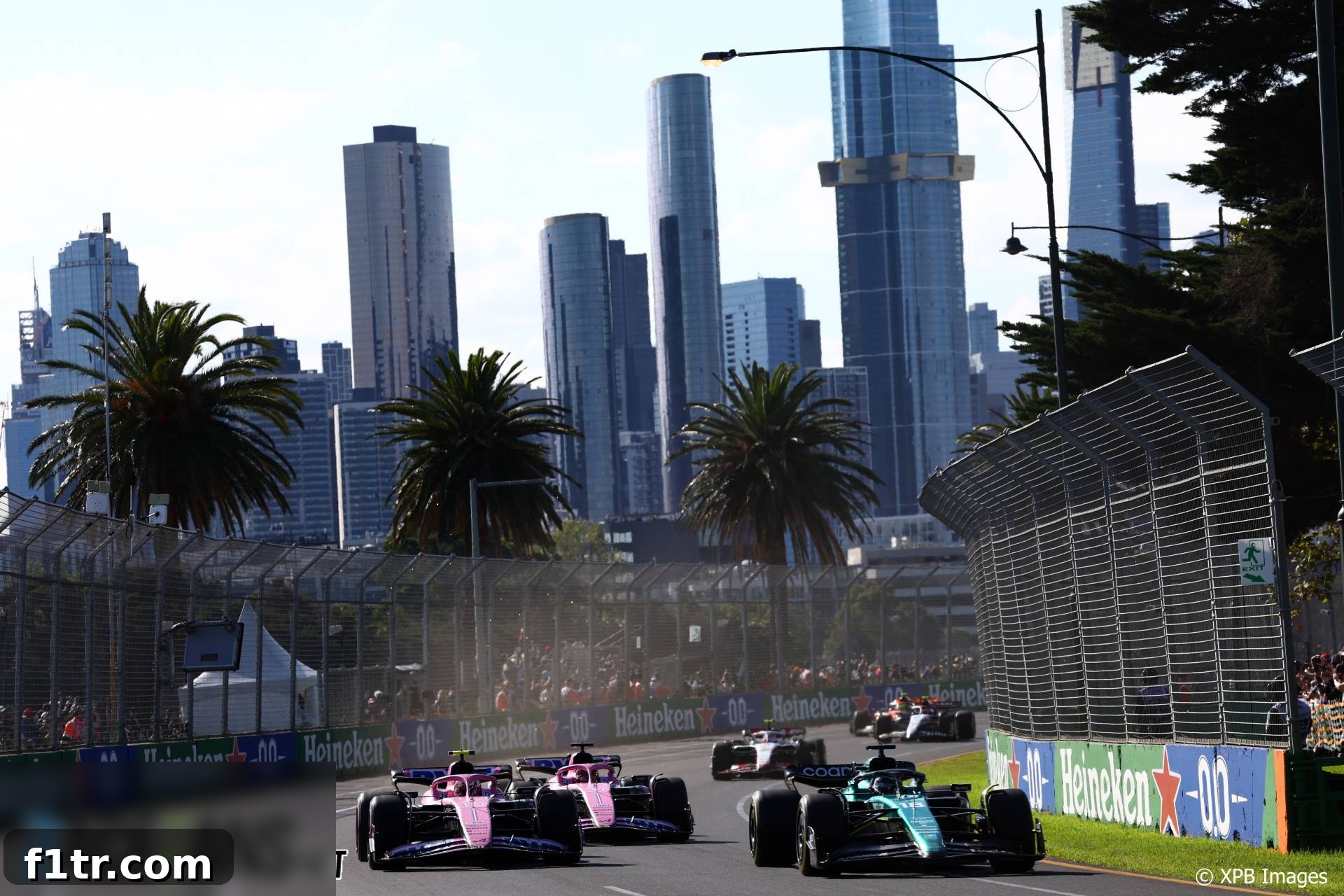
When Formula 1 proudly unveiled its radical redesign of the sport’s technical regulations for the 2021 season, a culmination of years of intensive research and development, then-CEO Chase Carey articulated the ambitious core purpose behind the significant shakeup.
“The goal has always been to improve the competition and action on the track,” Carey stated with clear conviction. “And, at the same time, make the sport a healthier and attractive business for all stakeholders.” This dual ambition – to invigorate the spectacle of racing and fortify the sport’s economic foundations – laid the groundwork for what was promised to be a transformative era.
Coupled with the pivotal introduction of the budget cap, which aimed to level the playing field by restricting team expenditure, and various other progressive measures designed to make the sport more environmentally sustainable, fans were primed to expect nothing less than a revolution. The eagerly anticipated new regulations, originally slated for 2021, were eventually introduced in 2022, a year later than planned due to the unforeseen global impact of the COVID-19 pandemic, amplifying the sense of anticipation for a new chapter in Formula 1 history.
The Return of Ground Effect: A Technical Deep Dive
At the heart of these transformed regulations was the dramatic reintroduction of ground effect aerodynamics, a principle that had been largely absent from Formula 1 since the early 1980s. This fundamental shift put an unprecedented emphasis on the design of car floors to generate downforce, moving away from the previous reliance on complex front and rear wings and intricate bodywork elements. The engineering philosophy behind this change was profound: by altering the fundamental manner in which cars created aerodynamic grip, the objective was to drastically diminish the notorious ‘dirty air’ effect. This phenomenon, where the turbulent air disturbed by a leading car severely compromises the aerodynamic performance of a following car, had long plagued the sport, robbing attacking drivers of crucial grip and making close, wheel-to-wheel racing a rare and challenging feat.
The vision was clear: cars designed with the new ground effect principles would be able to follow each other much more closely without losing significant performance, thereby enabling more natural overtaking opportunities and sustained battles throughout a race. This promised a renaissance of exhilarating on-track action, where driver skill and strategic prowess could shine brighter, unhampered by aerodynamic limitations.
As of now, the Formula 1 circus has completed over 25 Grands Prix under this new ground effect era, complemented by three intense sprint races. This translates to an extensive period of evaluation, encompassing well over 1,500 laps and approximately 7,700 kilometres of competitive racing under the belts of F1’s newest generation of cars. The critical question therefore stands: have these meticulously crafted regulations genuinely delivered on their promise of making racing better, or has the reality proven to be more complex than the initial blueprint suggested?
For the Regulations: A Renewed Competitive Landscape
The immediate and most pertinent question surrounding the new regulations – ‘do F1’s new cars allow drivers to follow closer?’ – appeared to receive a resounding affirmation even before the first competitive race began. Early pre-season testing ahead of the 2022 season saw drivers universally reporting a noticeable improvement. They confirmed that they could indeed run significantly closer to rivals without experiencing the debilitating performance loss characteristic of the 2021 cars. This crucial feedback from the cockpit seemed to translate effectively onto the race track, with various performance metrics and statistical analyses suggesting a discernible increase in overtaking manoeuvres during the 2022 season compared to its predecessor. This initial data offered strong encouragement that the ground effect concept was working as intended, laying the foundation for more engaging races.
Beyond the raw numbers of overtakes, another compelling argument in favor of the regulations is the undeniable relative closeness of the competitive field. A truly unprecedented milestone was achieved in the opening three rounds of the 2023 season, where all ten teams successfully scored at least a point. Such a collective performance across the entire grid had never before been witnessed in the sport’s illustrious history. This points towards a healthier, more competitive environment where even smaller teams have a tangible chance to fight for recognition. The midfield, in particular, is arguably as fiercely contested as it has ever been, with multiple teams capable of challenging for strong points finishes on any given weekend. Furthermore, the overall gap between the very front and the very rear of the grid has been historically narrow, signalling a positive endorsement of the major systemic changes, including the crucial budget cap, that were strategically introduced to the sport alongside the technical rule overhaul. This overall tightening of the field suggests a more vibrant and unpredictable championship, offering battles throughout the grid.
Against the Regulations: The Shadow of Dominance
Despite the positive indicators of closer following and a tighter midfield, a significant counter-argument casts a long shadow over the success of the 2022 regulations. If these rules were truly meant to revolutionize competition, their immediate impact appears to have been the establishment of Red Bull Racing and Max Verstappen as the clear, overwhelming, and undisputed dominant force in Formula 1. Since the introduction of the new ground effect cars, Red Bull has claimed a staggering 20 of the 25 race victories in this new era. This level of supremacy is not merely about the frequency of their wins; it’s the sheer margin of victory they have often enjoyed, echoing the almost untouchable dominance observed during the peak years of Michael Schumacher and Ferrari in the early 2000s. Such an overwhelming performance from a single team inevitably raises questions about whether the regulations have truly fostered widespread competition or simply shifted the balance of power decisively in one direction.
A more concerning development emerged with the 2023 season, where drivers began to report that various rule adjustments implemented to curb the prevalent aerodynamic porpoising issue might inadvertently be making it harder for them to follow rivals as closely as they could in the inaugural 2022 ground effect season. This potential regression in close-quarters racing is particularly troubling, given that one of the primary objectives of the entire regulation change was to facilitate precisely that. When the regulations were initially conceived, Formula 1 had even floated the ambitious idea of potentially reducing the reliance on the Drag Reduction System (DRS) if the new car designs genuinely made overtaking more viable and natural. However, the reality is starkly different; DRS remains just as prevalent and arguably as critical for initiating overtakes now as it ever was, undermining the initial promise of more organic racing battles.
My Perspective: A Complex Equation for Racing Excellence
Have Formula 1’s ground effect regulations truly succeeded in improving racing within the championship? Like most multifaceted issues in this incredibly complex sport, the honest and nuanced answer is unequivocally, ‘it’s complicated.’
The undeniable domination by a single team and driver, particularly when that team is consistently outpacing all others by a significant margin of 20-30 seconds over a race distance, will always inevitably taint the public perception of the overall quality of racing. Human nature dictates that a lack of direct competition at the very front dulls the excitement for many spectators. However, if one were to hypothetically remove Red Bull Racing from the equation, and focus solely on the battles unfolding throughout the rest of the grid, the competition in Formula 1 has, arguably, been just as exciting, if not more so, than it was prior to the 2022 regulation changes.
Rarely do we now witness prolonged lulls in races without some form of action, strategic intrigue, or intense battles unfolding somewhere through the field. While DRS undeniably continues to play an all-too-frequent and sometimes decisive role in facilitating overtakes, particularly on circuits with long straights, it’s crucial to remember that overtaking is not, and has never been, the sole determinant of what constitutes truly good racing. If it were, then categories like IndyCar oval races or Formula E, which often feature a higher volume of passes, would arguably be the most universally popular forms of single-seater formula racing on the planet. Yet, the appeal of F1 endures, built on a richer tapestry of elements.
Instead, what truly elevates racing to an exciting and captivating spectacle is a delicate combination of factors: genuine close competition throughout the field, a variety of potential winners and podium finishers, and the viability for drivers to attempt overtakes on the track through skill and daring, rather than merely through pit lane strategies or mandated passing zones. The significant financial constraints imposed by the budget cap, alongside other non-technical sporting regulations, have undoubtedly contributed to a closer overall field. This structural change has created a more level playing field where resource disparity is somewhat mitigated. Therefore, arguably, all Formula 1 needs to fully realize the promise of its new era is for the other nine formidable teams to discover some breakthrough solution, or find sufficient performance gains, to bridge the gap and effectively challenge the all-conquering Red Bulls. Once that competitive balance at the very apex of the sport is achieved, most of the complaints and discussions surrounding the perceived quality of racing in Formula 1 would likely begin to subside, revealing a truly competitive and thrilling championship.
Community Voice: Fan Sentiment on the New Regulations
The question of whether F1’s technical regulations introduced in 2022 have improved racing remains a topic of passionate debate among fans. A recent poll conducted within the RaceFans community, involving 127 voters, revealed a divided but largely optimistic sentiment:
- No opinion: 0%
- Strongly disagree: 9%
- Slightly disagree: 9%
- Neither agree nor disagree: 5%
- Slightly agree: 45%
- Strongly agree: 33%
These results indicate that a significant majority of fans (78%) believe, to varying degrees, that the regulations have had a positive impact on the sport, with a combined 78% expressing some level of agreement. However, a notable minority (18%) still hold reservations or outright disagree, reflecting the complexity and subjective nature of evaluating “good racing.” The complete absence of “no opinion” votes highlights the strong engagement and clear views within the F1 fanbase on such a critical issue.
An active RaceFans account is typically required in order to participate in such polls, fostering a community-driven discourse on key developments in Formula 1.
Related Debates and Polls
Dive deeper into the ongoing discussions shaping Formula 1’s future:
- What must Formula 1 fix with its new rules – and what should it leave unchanged?
- ADUO: Do F1 teams who fall behind deserve to get help to catch up?
- F1 is considering doubling its sprint races. Do you want more or fewer?
- Will this be a fight or a rout? 20 questions for the 2026 Formula 1 season
- Which Formula 1 team has the best-looking car – and the worst – for the 2026 season?
Browse all debates and polls