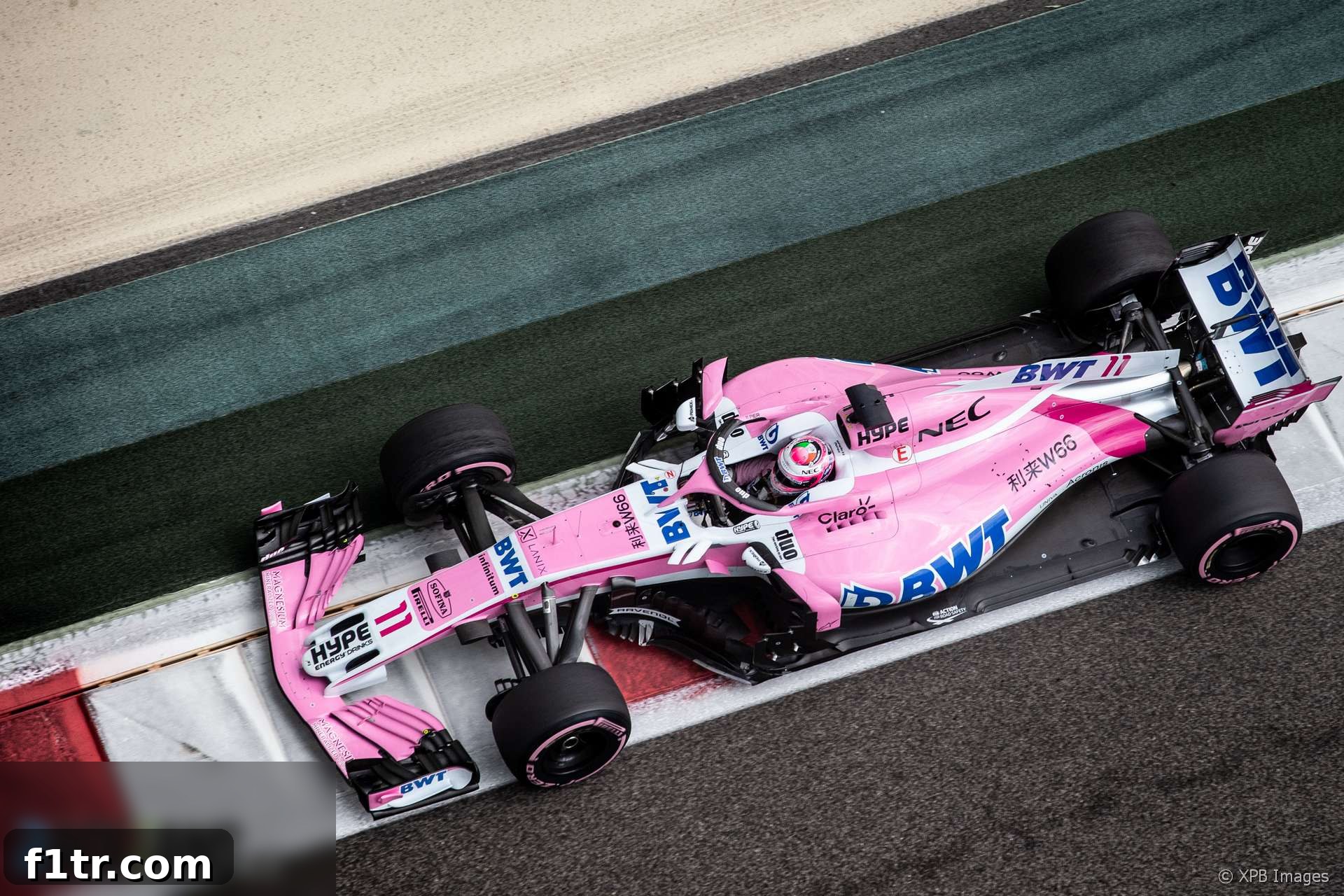
Unresolved F1 Prize Money Dispute: Haas F1 Team Principal Guenther Steiner on Racing Point’s Financial Future
As the Formula 1 pre-season buzz builds, a significant financial dispute continues to simmer beneath the surface, threatening to disrupt the sport’s delicate economic ecosystem. At the heart of this controversy is the prize money eligibility of the Racing Point F1 team, formerly known as Force India. Haas team principal Guenther Steiner recently confirmed that no discernible progress has been made in resolving this complex issue, leaving a cloud of uncertainty over one of the grid’s independent outfits.
This ongoing disagreement highlights the intricate financial regulations governing Formula 1, particularly concerning how prize money is distributed among competing teams. For smaller teams like Haas, who operate on tighter budgets compared to manufacturer-backed giants, every dollar of prize money is crucial for their survival and competitive aspirations. The outcome of this dispute could set a significant precedent for future team entries and acquisitions in the sport.
The Heart of the Dispute: Racing Point’s Prize Money Eligibility Under Scrutiny
The genesis of this prize money debate dates back to the challenging summer of 2018. Force India, a team known for consistently punching above its weight despite chronic financial difficulties, entered administration mid-season. A consortium led by Canadian businessman Lawrence Stroll stepped in to acquire the team’s assets, effectively saving it from collapse. This acquisition led to the creation of a new entity, Racing Point Force India, which later became simply Racing Point. However, this transition, while preserving jobs and a competitive car on the grid, triggered a significant regulatory challenge.
Following a protest by the Haas F1 Team at the Abu Dhabi Grand Prix that year, the FIA stewards made a crucial determination: Racing Point, despite inheriting all of Force India’s operational assets, was officially deemed a new entry to Formula 1. This classification is not merely semantic; it carries profound implications for the team’s entitlement to historical prize money. Under F1’s complex revenue distribution model, established teams receive what is known as ‘Column One’ prize money – a share of the sport’s revenues guaranteed to teams that have finished in the top 10 in two out of three seasons. New teams, by contrast, are typically ineligible for this substantial portion of the prize fund until they meet the qualifying criteria after a few seasons of competition.
This rule created a direct parallel with Haas F1 Team’s own entry into the sport in 2016. As a genuinely new constructor, Haas had to wait two full seasons before becoming eligible for Column One payments, putting them at an immediate financial disadvantage against established competitors. The core of the dispute lies in the perceived unfairness that Racing Point, essentially a continuation of a long-standing F1 entrant with its infrastructure and intellectual property, would be able to bypass this waiting period, potentially retaining prize money earned by its predecessor, Force India.
Guenther Steiner’s Stance: No Progress in Crucial Talks
When asked at the launch of the new Haas livery on Friday whether any progress had been made with Formula 1’s commercial rights holder, Liberty Media, in the ten weeks since the stewards’ decision, Guenther Steiner offered a stark and concise update, highlighting the enduring stalemate:
No, not yet. Nothing. No discussions.
Not talking about that one today. That’s for another day.
Steiner’s terse response underscores the frustration among teams like Haas, who believe a clear resolution is imperative for the financial integrity and fair competition within Formula 1. The lack of discussions or progress indicates that the stakeholders, including Racing Point, Haas, and Liberty Media, have yet to find common ground. This dispute is not just about a single team’s finances; it’s a test case for how F1 handles team transitions and ensures equitable distribution of its substantial revenues. For teams outside the sport’s wealthiest echelons, the prize money structure is a lifeline, and any perceived inequity can lead to significant competitive disadvantages and exacerbate the financial disparities on the grid. The longer this issue remains unresolved, the more it adds a layer of uncertainty to the sport’s commercial landscape as teams prepare for the upcoming season.
Quotes courtesy of Dieter Rencken
Advert | Become a RaceFans supporter andgo ad-free
Beyond the Track: F1 Social Media Highlights and Fan Engagement
In the lead-up to the highly anticipated Formula 1 season, social media platforms become a vibrant hub for teams to connect with fans, offering glimpses into their preparations and building excitement. From factory tours to driver training updates, these snippets provide valuable insight into the intense work happening behind the scenes. One such moment that captured the attention of enthusiasts was the traditional “fire-up” of a new car, a sound that signals the true beginning of a new chapter in the team’s journey.
In case you missed it overnight, we fired up the STR14!
Take a listen! 🔊👇 pic.twitter.com/cJpa6zp6rA
— Visa Cash App RB F1 Team (@visacashapprb) February 9, 2019
The firing up of a new Formula 1 car is more than just an engine test; it’s a ceremonial moment for the team and a thrilling sound for the fans. It marks the culmination of months of design, engineering, and manufacturing, signalling that the car is alive and ready for track action. For teams like the then-Toro Rosso (now Visa Cash App RB F1 Team), these social media posts generate significant engagement, allowing supporters worldwide to feel closer to the team and share in their excitement as they embark on another competitive season. It’s a reminder of the raw power and intricate machinery that defines Formula 1.
- Find more official F1 accounts to follow in the F1 Twitter Directory
More from the World of Motor Racing: Key Headlines and Insights
Beyond the immediate headlines, the motorsport world is constantly buzzing with developments, discussions, and preparations for upcoming races and seasons. Here’s a curated selection of notable links offering deeper dives into current affairs, driver perspectives, and future regulations from across the F1 and IndyCar landscapes.
Advert | Become a Supporter & go ad-free
Ricciardo Doubts Hamilton or Vettel Interference (Sky Sports F1)
“Seb and Lewis I’m sure have power, but not enough to say ‘guys, you’re not going in this direction.'”
Daniel Ricciardo, known for his candid insights, offers a fascinating perspective on the alleged influence of Formula 1’s most dominant drivers, Lewis Hamilton and Sebastian Vettel, within their respective teams. While acknowledging the significant stature and valuable input that multi-world champions bring, Ricciardo suggests there are inherent limits to their power when it comes to fundamental team strategy or technical direction. This highlights the complex dynamic between star drivers and the engineering/management structures of top F1 teams, where collective decision-making and long-term vision often supersede individual preferences, ensuring the team’s overall trajectory remains consistent and objective.
Pre-Season Preparations: Seat Fitting for Sebastian Vettel at Ferrari (Ferrari.com)
“Just as Charles Leclerc did on Thursday, Sebastian met with Team Principal and Managing Director, Mattia Binotto, as well the engineers, with whom he had preliminary talks about the upcoming season, prior to the test sessions that get the track action underway in Barcelona from 18 to 21 February and again from 26 February to 1 March.”
The pre-season period is a hive of activity, and a crucial step for every F1 driver is the bespoke seat fitting. This seemingly minor detail is fundamental for driver comfort, safety, and ultimately, performance, ensuring perfect ergonomics for optimal control during high-speed racing. Sebastian Vettel’s visit to the Ferrari factory, including meetings with then-new Team Principal Mattia Binotto and engineers, underscores the meticulous preparation involved. These early discussions are vital for establishing rapport, aligning on developmental goals, and setting the tone for the season, all before the cars even hit the track for the rigorous winter testing in Barcelona, which is critical for refining the machinery and driver feedback loops.
F1’s Future Vision: 2021 Regulations Hailed as Biggest Change ‘Since Ground Effect’ (Autosport)
“It’s infinitely more researched than any other regulations ever, but that’s not difficult, because there was zero done before.”
The eagerly anticipated 2021 Formula 1 regulations were touted as a paradigm shift, promising closer racing, increased sustainability, and a more level playing field. Autosport’s report at the time captured the scale of this ambition, comparing it to the transformative “ground effect” era of the late 1970s and early 1980s. This period saw radical aerodynamic innovations that dramatically reshaped car design and performance. The quote emphasizes the unprecedented level of scientific research and simulation invested in the 2021 rules, a stark contrast to previous regulatory changes which were often more reactive or less comprehensively studied. The goal was to overcome the inherent challenges of modern F1 aerodynamics, where cars struggle to follow closely, by designing regulations from the ground up to promote tighter wheel-to-wheel action and create a more exciting spectacle for fans.
Ganassi Motorsport Gears Up to Defend Championship in IndyCar (IndyCar.com)
“(Rosenqvist) has a lot of history in formula cars in Europe. I think he’ll make a smooth transition into IndyCar.”
Beyond Formula 1, the world of open-wheel racing offers exhilarating competition, with IndyCar standing as a premier series in North America. Chip Ganassi Racing, a powerhouse in IndyCar, consistently fields competitive entries and anticipates defending its championship title. The team’s confidence in new recruit Felix Rosenqvist, particularly highlighted by his extensive background in European formula racing categories, speaks to the adaptability and skill required for drivers transitioning between different racing disciplines. European junior formula series often serve as a rigorous training ground, equipping drivers with the foundational skills necessary to adapt to the unique demands of IndyCar’s diverse tracks, including ovals, road courses, and street circuits, promising a thrilling addition to the grid.
We always endeavour to credit original sources. If you have a tip for a link to feature in the next RaceFans round-up please send it in via the contact form.
Advert | Become a RaceFans supporter andgo ad-free
F1 Fan Debate: Is Dominance Inevitable, or a Flaw in the Sport?
One of the most enduring and passionately debated topics among Formula 1 enthusiasts revolves around the prevalence of team dominance. While some argue that periods of sustained success by a single team detract from the excitement, others contend that it’s an inherent and even desirable aspect of a sport that pushes the boundaries of engineering and human performance. A particular comment from a reader eloquently articulated the latter viewpoint, challenging the notion that dominance equates to dullness.
Somebody winning by a large margin or a team dominating a race/season/period is only ‘dull’ to those who don’t understand the purpose of the sport.
It was never supposed to be ‘a show’, it was supposed to be a showcase of the auto industry and bravery/skill of the drivers. That people ended up finding it entertaining was a byproduct, it was never the purpose and it’s the push towards changing the ‘purpose’ that has done more harm to the sport than anything else (circuits ruined, new circuits terrible, artificial gimmicks, cars slowed down among more) and is the primary reason for its decline and will be the thing that eventually ends F1.
This perspective posits that F1’s fundamental identity is rooted in its role as a technological crucible and a test of peak human skill, rather than a purely entertainment-driven spectacle. Historically, Formula 1 has been a battleground for automotive innovation, with manufacturers striving to out-engineer their rivals. Periods of dominance, from Mercedes’ hybrid era to Ferrari’s Schumacher years or McLaren-Honda’s reign, often represent the pinnacle of a team’s engineering prowess and strategic execution. For purists, appreciating this relentless pursuit of excellence is central to the F1 experience. The argument suggests that attempts to artificially ‘level the playing field’ through contrived rules, such as DRS (Drag Reduction System) or specific tyre regulations, or by altering track designs for ‘better racing’, undermine the sport’s authentic purpose. This ongoing tension between F1 as a technological marvel and F1 as a commercial entertainment product remains a core philosophical struggle for its leadership and fanbase alike.
From the Community Forum: Join the Discussion
Engage with fellow Formula 1 enthusiasts and share your plans for the upcoming season’s biggest events. Our vibrant forum is the perfect place to connect with the RaceFans community and discuss all things F1. Are you planning to attend one of the most iconic races on the calendar this year?
- Will you be at Silverstone for this year’s British Grand Prix?
Join the conversation now and let us know if we’ll see you at Silverstone, or share your thoughts on attending other Grand Prix events!
Community News: Happy Birthday to Our Readers!
A very special shout-out to our incredible RaceFans community members celebrating their birthdays! We love making your special day a little brighter by acknowledging you. Sharing these moments helps foster the strong sense of community that makes RaceFans so unique.
Happy birthday to Aqeel!
If you want a birthday shout-out for yourself or a friend, simply tell us when yours is via the contact form or by adding your details to our comprehensive list here. We look forward to celebrating with you!
F1 History: On This Day in Formula 1
Formula 1 is a sport rich in history, with a legacy built on the remarkable achievements and compelling stories of its past. Each day offers a chance to look back and remember individuals who contributed to this vibrant tapestry, even if their F1 careers were brief. Today, we mark the birthday of a driver who once graced the grid.
- Born on this day in 1923: Theo Fitzau, one-time German Grand Prix starter
Theo Fitzau, a German racer, made a single start in the German Grand Prix during the 1953 season. While his Formula 1 career was limited, his participation is a testament to the many talented individuals who competed in the sport’s formative years, each adding their chapter to the Grand Prix narrative.