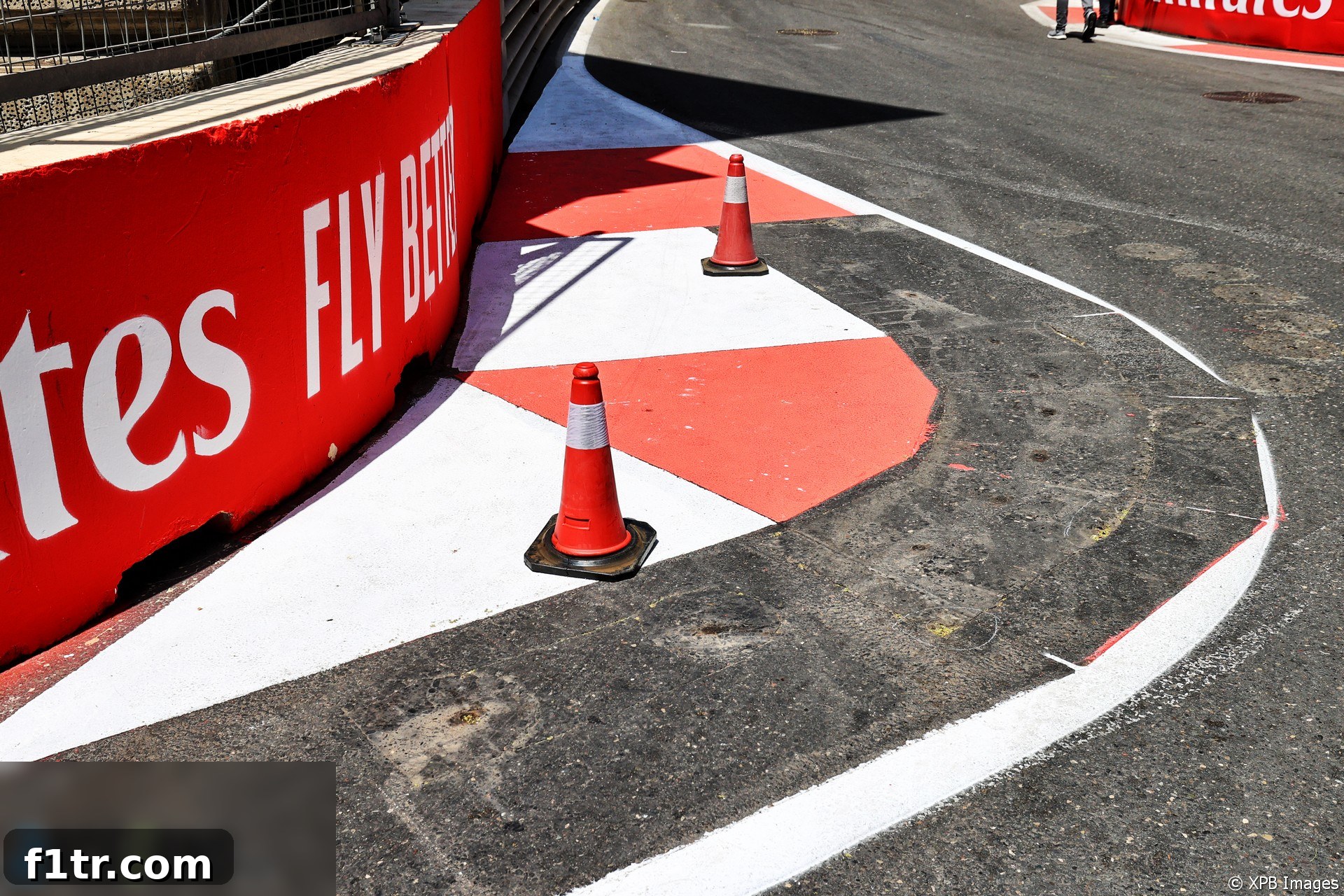
The highly anticipated return to the high-speed streets of the Baku City Circuit for another exhilarating Formula 1 spectacle has brought with it significant updates to a circuit already renowned for its dramatic racing and unforgiving nature. Among the most talked-about modifications is a subtle yet impactful change at Turn 8, a notoriously tight and challenging section that played a pivotal role in Charles Leclerc’s qualifying fortunes in 2019. This strategic alteration, along with other circuit enhancements, promises to reshape the dynamic of the upcoming Azerbaijan Grand Prix, potentially influencing lap times, race strategies, and the overall driver experience.
Leclerc, the charismatic Ferrari driver, was among the first to acknowledge the changes, specifically at the scene of his dramatic 2019 qualifying crash. Back then, his hopes of securing pole position were abruptly curtailed when his car made contact with the barrier at the apex of Turn 8 during Q2. For the forthcoming race, the physical apex kerb that once defined the inside line of this demanding corner has been replaced by a lower, painted kerb. This seemingly minor adjustment is engineered to create a faster, more flowing entry into the corner, allowing drivers to carry greater speed through a section that previously demanded extreme precision and caution. The implications of such a change extend beyond mere milliseconds, affecting car setup, tyre management, and ultimately, a driver’s confidence in pushing the limits.
Leclerc’s Perspective: Embracing Speed and Addressing Past Challenges at Turn 8
For Charles Leclerc, the redesign of Turn 8 holds a particular significance given his history with the corner. While he readily approves of the modification, he maintains a nuanced perspective on its impact, especially concerning his memorable 2019 incident. “It’s the same for everyone,” Leclerc stated, emphasizing the equal playing field the change creates for all competitors. He went on to clarify that, in his view, the original physical kerb was not the root cause of his qualifying crash two years prior. “I don’t think it was the reason for the crash, actually. I locked up the front-right on my crash and went into the wall mostly because of this. I don’t think it would have changed much for me whether there was the kerb or not.”
This candid assessment from Leclerc highlights the fine margins and complex factors that contribute to incidents in Formula 1. A locked front-right wheel suggests a braking error or an issue with tyre grip under extreme pressure, rather than the kerb itself dictating the trajectory into the wall. Nonetheless, the redesigned corner is expected to offer a more forgiving and potentially quicker line. Leclerc expressed his eagerness to tackle the revised section, anticipating a tangible increase in speed. “I think it will be quite a bit quicker there because the car will obviously be jumping a lot less and seeing how straight it is, it’s going to be quite nice so I’m looking forward to that part.” The reduction in the car “jumping” implies greater stability and predictability, allowing drivers to commit more aggressively to the corner entry and exit, ultimately shaving crucial tenths off their lap times around the challenging Baku City Circuit.
The Technical Implications of a Painted Kerb
The distinction between a physical apex kerb and a painted one, though subtle, carries significant technical implications for Formula 1 cars. A raised physical kerb, while designed to define the track limits, also acts as an obstacle. Drivers must either avoid it completely or ride over it with extreme care, as hitting it incorrectly can unsettle the car, damage the suspension, or even lead to a loss of control, as seen in many incidents across various circuits. The aggressive downforce generated by F1 cars can press them into the ground, and encountering a sudden rise can cause the car to become airborne or lose crucial aerodynamic grip.
By replacing this with a lower, painted kerb, race organizers aim to achieve several objectives. Firstly, it provides a visual reference for the apex without physically impeding the car. This allows drivers to ‘straighten’ the corner more effectively, taking a wider, faster line on entry and a tighter, more direct line through the apex. Secondly, it reduces the risk of mechanical damage or sudden loss of control. A car less prone to “jumping” translates to higher average speeds through the corner and, consequently, faster overall lap times. This change at Turn 8 is a testament to the ongoing evolution of track safety and performance, constantly seeking to balance the thrill of challenging corners with the imperative of driver safety and competitive racing.
Verstappen’s Unconventional Approach to Track Reconnaissance
While some drivers meticulously examine every inch of a revamped circuit, others, like Max Verstappen, adopt a more minimalist approach to track reconnaissance. The Red Bull Racing star admitted with a characteristic laugh that he had skipped the traditional track walk for the Baku City Circuit. “I can’t be arsed to walk,” he quipped during a press conference, highlighting his preference for on-track learning over pre-race strolls. His philosophy is straightforward: “I have a few more minutes in bed and if I want to know the track, I’ll drive my out-lap a bit slower and look around.”
Verstappen’s confident, almost nonchalant, attitude towards track walks reflects a certain breed of F1 driver who relies heavily on instinct, simulator preparation, and immediate feedback from the car. While many drivers use track walks to identify subtle changes in tarmac, kerb profiles, and barrier positions, Verstappen believes the real-time experience in the cockpit is paramount. He humorously acknowledged that he receives updates from his peers, citing Esteban Ocon as one who had briefed him on some of the circuit alterations. “I’ll just brake a few metres earlier on the first lap,” Verstappen continued, outlining his pragmatic strategy for adapting to new conditions. “Everyone, of course, has a different approach. At one point I was like, I just can’t be arsed to walk any more to see it. I know the track is going left or right at one point. You have your margins in FP1 or whatever, so you try out the laps you do and you will see where you have to go.”
Divergent Driver Methodologies: The Track Walk Debate
The contrast between Leclerc’s detailed understanding of the specific kerb changes and Verstappen’s more laid-back approach highlights a fascinating divergence in driver methodologies. For some, a track walk is an essential ritual, allowing them to visualize racing lines, identify braking points, and mentally prepare for every corner. It’s an opportunity to feel the gradient of the tarmac, spot potential hazards, and understand how recent changes might affect grip levels or runoff areas. This meticulous preparation can build crucial confidence, especially on challenging street circuits like Baku, where mistakes are often punished severely.
Conversely, drivers like Verstappen, who are known for their exceptional car control and adaptability, might find the physical act of walking less beneficial than the immediate feedback from the car itself. Modern F1 simulators are incredibly sophisticated, allowing drivers to experience circuits with remarkable accuracy, including detailed track models and dynamic grip simulations. For them, the initial laps of Free Practice 1 serve as their real-world “track walk,” where they can adjust their braking points and racing lines in real-time, leveraging the car’s sensors and telemetry data. This approach emphasizes flexibility and on-the-fly decision-making, trusting their innate talent and the car’s capabilities to navigate the circuit’s challenges. Both approaches have proven successful, underscoring the diverse skill sets and psychological frameworks within the elite world of Formula 1.
Wider Circuit Enhancements and Safety Measures at Baku
Beyond the high-profile modification at Turn 8, the Baku City Circuit has undergone several other strategic changes since its last event, all aimed at enhancing driver safety and potentially improving the flow of racing. Among these are critical alterations to the barriers at Turns 2 to 5. This section of the circuit, characterized by its long straights leading into tight, often incident-prone corners, has historically been a hotbed for contact and safety car deployments. Reinforcing or adjusting these barriers is a proactive measure to absorb impacts more effectively, minimizing the severity of crashes and better protecting both drivers and marshals.
Furthermore, modifications have been made to some of the debris fences around the track. Debris fences are crucial safety installations designed to contain car fragments and other dangerous debris within the track boundaries, preventing them from reaching spectators or other vulnerable areas. Upgrading these fences reflects an ongoing commitment to spectator safety and operational efficiency, ensuring that incidents, should they occur, are managed with the highest level of protection. Another notable change is the removal of a painted kerb at Turn 12. Similar to the logic applied at Turn 8, removing this kerb is likely intended to provide a smoother, potentially faster line through the corner, reducing the risk of unsettling the car and allowing for a more consistent driving trajectory. These comprehensive adjustments across various sections of the circuit collectively contribute to a safer, more dynamic racing environment, promising another thrilling instalment of the Azerbaijan Grand Prix.
The Pursuit of Safety and Spectacle in Formula 1 Track Design
The continuous evolution of circuit design, exemplified by the changes at Baku City Circuit, is a testament to Formula 1’s unwavering commitment to balancing safety with spectacle. Every modification, whether it’s adjusting a kerb, reinforcing a barrier, or upgrading debris fences, is meticulously planned and executed by circuit engineers and motorsport governing bodies. These changes are not arbitrary; they often stem from post-race analysis of incidents, driver feedback, and advancements in safety technology.
The goal is always twofold: to minimize the risks associated with high-speed motorsport and to optimize the racing experience for both competitors and fans. Faster corners, when designed safely, can lead to more challenging and exciting racing, promoting closer battles and demanding higher levels of skill from the drivers. Improved safety infrastructure, such as enhanced barriers and debris fences, ensures that when the inevitable happens, the consequences are contained and minimized. The Azerbaijan Grand Prix, with its unique blend of ancient city walls and modern high-speed sections, embodies this delicate balance. These latest modifications ensure that Baku continues to offer one of the most unpredictable and thrilling races on the Formula 1 calendar, pushing the boundaries of what is possible on a street circuit while upholding the highest standards of safety.
Pictures: Turn eight changes at Baku
2021 Azerbaijan Grand Prix Coverage
- Aston Martin also confirms it followed Pirelli’s tyre restrictions before crash
- Pirelli confirm teams not to blame for Baku tyre failures following investigation
- “Tyres should not explode like that” says Villeneuve as Pirelli prepares to reveal findings
- Why Alonso is able to enjoy F1 more now than when he left
- Penalty for Safety Car error was just one of Latifi’s frustrations in Baku
Browse all 2021 Azerbaijan Grand Prix articles