In the high-octane world of Formula 1, where rivalries simmer both on and off the track, a recent war of words between reigning world champion Max Verstappen and Mercedes driver George Russell has captured headlines. This burgeoning feud escalated following a dramatic Qatar Grand Prix, prompting Red Bull team principal Christian Horner to publicly throw his unequivocal support behind his star driver, Verstappen. The incident, which saw Russell accuse Verstappen of making threatening remarks, has added another layer of intrigue to the already intense competition at the pinnacle of motorsport, setting the stage for future confrontations and psychological battles.
Advert | Become a Supporter & go ad-free
The genesis of this verbal sparring can be traced back to the chaotic Qatar Grand Prix weekend. Following a grid penalty that saw him lose pole position to Verstappen in the sprint race, George Russell made a startling claim: Verstappen had threatened to intentionally crash into him. Russell recounted the alleged exchange, stating Verstappen told him, “I’m going to purposefully crash into you, I’m going to put you on your fucking head in the wall.” This explosive accusation immediately sent shockwaves through the paddock, igniting a fervent debate about sportsmanship, competitive spirit, and the immense pressures drivers face. While the exact wording and context of the alleged threat remain subject to interpretation and differing accounts, Russell’s public revelation certainly painted a vivid picture of the friction between the two young titans.
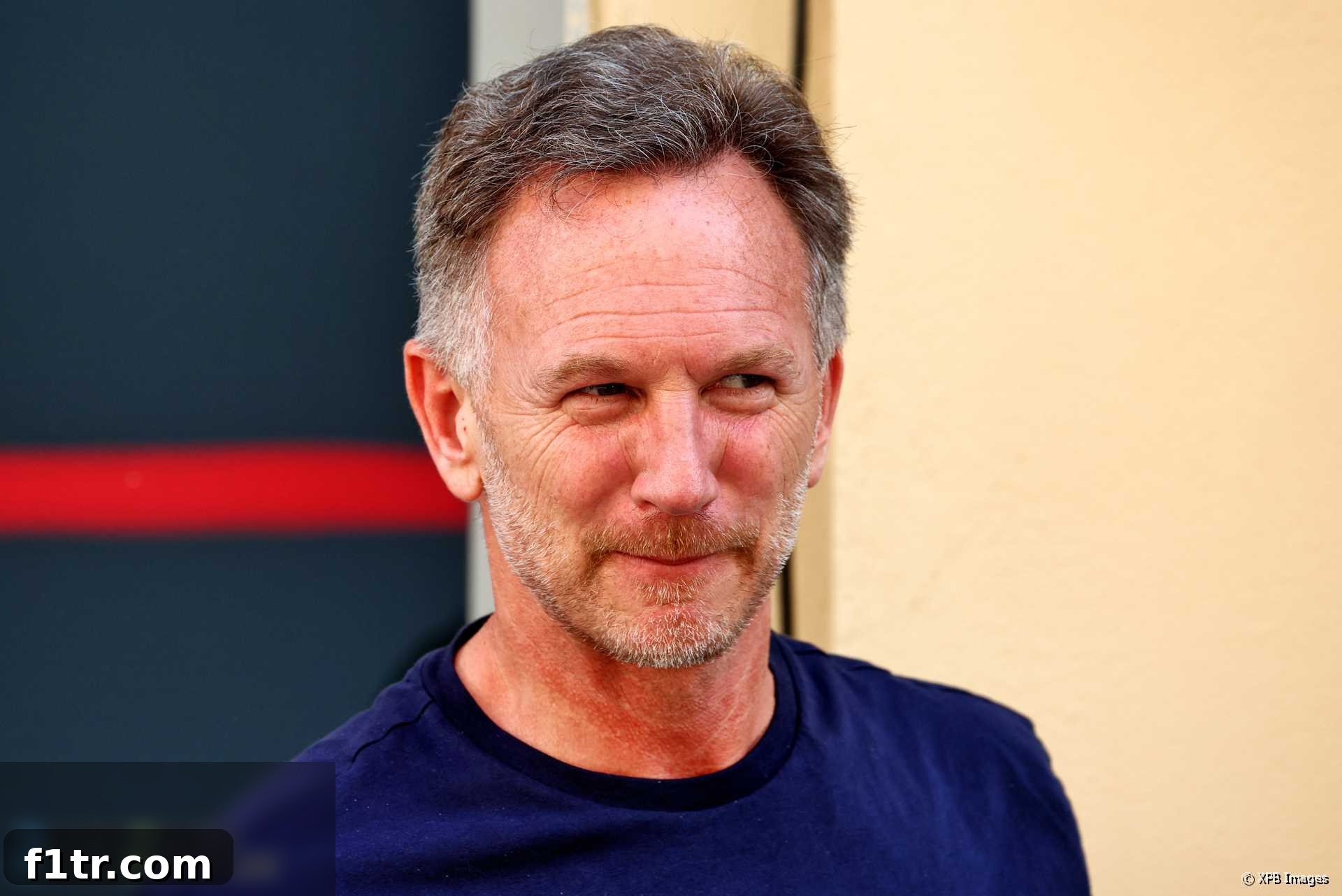
Amidst the swirling controversy, Max Verstappen reportedly denied making such comments. His team principal, Christian Horner, wasted no time in offering a staunch defense of his driver. Speaking at a subsequent FIA press conference, Horner’s backing was resolute and unambiguous. “Max does nothing but tell the truth,” Horner declared, leaving no room for doubt regarding his stance. “So I believe 100% what he said to be accurate.” This firm declaration not only reaffirmed Red Bull’s faith in Verstappen but also served as a clear message to rivals, emphasizing the team’s unified front in the face of external criticism and scrutiny.
Horner further contextualized Verstappen’s actions and mindset during the challenging Qatar weekend. He acknowledged the immense frustration that gripped Verstappen after the sprint race grid penalty, a scenario that was unprecedented and undeniably vexing for a driver of his calibre. “Obviously he had a large amount of frustration last weekend, the way things played out in a scenario that we haven’t seen before and subsequent penalty,” Horner explained. However, Horner highlighted Verstappen’s remarkable ability to channel this frustration into a powerful, race-winning motivation. “He turned that into motivation and made a blinding start, led the race into the first corner and won the grand prix, which was the best possible response.” This narrative not only vindicated Verstappen but also underscored his championship-winning mentality: to overcome adversity and respond on the track where it truly matters.
Despite the heated exchange and the lingering tension, Horner expressed confidence that the rivalry would not spill over into a physical clash in upcoming races. He believes that both drivers, despite their competitive fire and occasional verbal spats, maintain a professional understanding of the boundaries on track. This sentiment suggests that while verbal sparring is part of the F1 spectacle, the drivers ultimately respect the safety and integrity of the sport, even if their words might suggest otherwise in the heat of the moment. The competitive edge is undeniable, but it typically remains within the confines of fair racing, driven by a mutual respect for the danger and skill involved.
The verbal sparring wasn’t limited to the drivers. The team principals themselves became embroiled in their own war of words, adding another layer of theatricality to the F1 narrative. Mercedes team principal Toto Wolff had previously criticised Horner for referring to George Russell as “hysterical” in the aftermath of the Qatar sprint race. Horner, however, clarified his earlier remarks, asserting that his choice of word was not intended as a judgment of Russell’s mental state or composure. Instead, he offered a fascinating insight into team communications and the often-unheard radio exchanges that occur during a race weekend.
Advert | Become a RaceFans supporter andgo ad-free
“I wasn’t talking about the psychology of his driver,” Horner clarified, keen to dispel any misinterpretations. “When I was referring to ‘hysterics’ I was more referring to the roasting that he gave his team when they fitted a set of hards on the car when he asked for a set of mediums and expressed his displeasure for the tyre choice that they put on the car.” This explanation shed new light on the incident, suggesting that Horner’s comment was a reference to Russell’s passionate, albeit frustrated, radio communications with his own team regarding a strategic error during the race. It highlighted the raw emotion that can surface under pressure and the often-blunt nature of driver-team dialogue behind the scenes. Horner even quipped about the intensity of Russell’s language in that moment: “I’d get fined if were to use the language that was used in this press conference.” This humorous yet pointed remark highlighted the difference in how drivers and team principals communicate, and the potential consequences of publicly airing such frustrations, particularly when microphones are always listening.
The exchange between the team principals escalated further when Toto Wolff, in a colorful retort, described Christian Horner as a “yapping little terrier.” Never one to shy away from a verbal jab, Horner embraced the analogy with characteristic wit and defiance. “To be called a terrier, is that such a bad thing?” he mused, turning a potential insult into a badge of honor. He elaborated on the symbolism: “They’re not afraid of having a go at the bigger dogs. I’d rather be a terrier than a wolf, maybe.” This response was quintessential Horner – feisty, competitive, and always ready to stand his ground against the perceived “bigger dogs” of the paddock. The “terrier vs. wolf” metaphor beautifully encapsulates the enduring rivalry between Red Bull and Mercedes, and the distinct leadership styles of their respective principals. It’s a battle of philosophies and approaches, played out not just on the track, but also through clever media interactions.
This episode serves as a potent reminder that Formula 1 is not just about the milliseconds gained on track or the strategic prowess in the pit lane. It is also a theatre of personalities, where psychological warfare and verbal sparring are as much a part of the spectacle as the racing itself. The drama surrounding the Qatar Grand Prix, from the on-track incidents to the fiery exchanges off it, adds significant depth to the F1 narrative, captivating fans and creating anticipation for every subsequent race weekend. Such controversies, while sometimes appearing to be petty, are an integral part of the sport’s appeal, showcasing the immense pressure, raw emotion, and competitive drive that define Formula 1 drivers and their teams. They fuel discussion, drive fan engagement, and underscore the fierce desire to win that permeates every level of the sport.
The enduring rivalry between Red Bull and Mercedes, though perhaps not as intensely focused on a championship battle this year given Verstappen’s dominance, continues to provide compelling storylines. The interaction between Verstappen and Russell, both young drivers with immense talent and ambition, represents the future of the sport. Their competitive spirit, combined with the seasoned leadership and sharp rhetoric of Horner and Wolff, ensures that the F1 paddock remains a hotbed of intrigue and high drama. As the season progresses, fans will undoubtedly be watching closely for any further developments in these personal and team-based rivalries, eagerly awaiting the next chapter in this thrilling saga. Each word, each gesture, each on-track manoeuvre contributes to a rich tapestry of competition that defines Formula 1.
Never Miss a Moment: Subscribe for Exclusive F1 Updates
Stay ahead of the curve with our daily email updates, delivering all the latest stories directly to your inbox. No marketing, no ads – just pure F1 content. Sign up today:
Experience F1 Ad-Free: Support Our Work!>> Discover how to become a supporter and enjoy an ad-free experience.
Related Coverage: Qatar Grand Prix 2024
Delve deeper into the events and discussions surrounding the Qatar Grand Prix with these related articles:
- Horner “100% Confident” Verstappen Didn’t Threaten Russell
- Russell and Verstappen Shed Light on Fiery Pre-Race Clash
- Mercedes Confirms Hamilton’s Puncture Not Due to Mirror Debris
- Qatar GP: A Processional Race Despite Start-to-Finish Victory
- “Am I Dead Last Now?” Unheard Radio from Hamilton’s Catastrophic Qatar GP
Explore All Articles from the 2024 Qatar Grand Prix