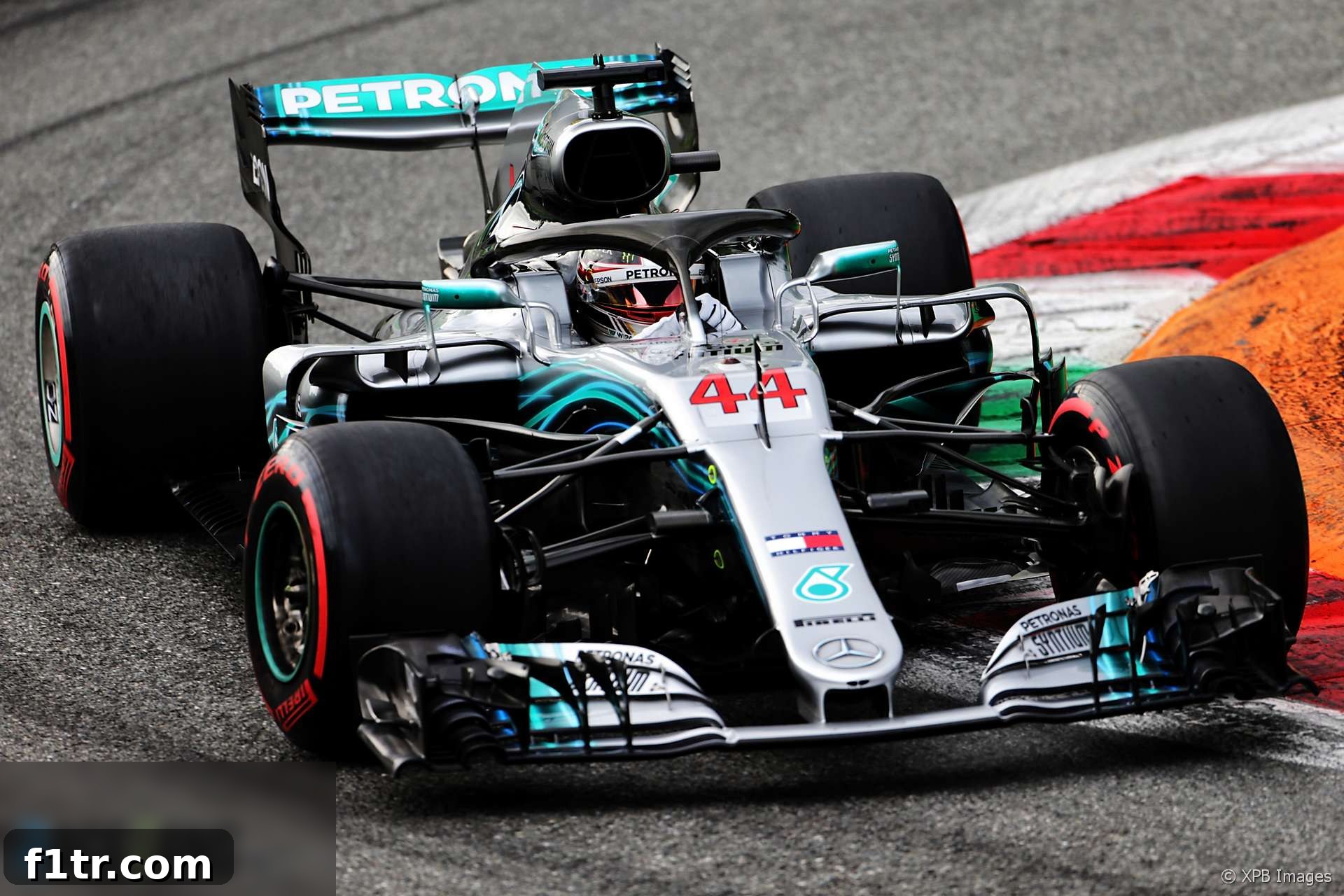
Lewis Hamilton’s commanding victory at the iconic Italian Grand Prix not only solidified his position at the pinnacle of Formula 1 but also propelled him to a substantial 30-point lead in the intensely competitive Drivers’ Championship. This crucial win at Monza, the spiritual home of Ferrari, delivered a significant psychological blow to his closest rival, Sebastian Vettel, and marked a pivotal moment in the 2018 Formula 1 season. The atmosphere at Monza is always electric, brimming with the passionate Tifosi, making any victory there, especially over Ferrari, an even more profound statement of intent. Hamilton’s performance was a masterclass in strategic racing and unwavering composure under immense pressure, converting what could have been a challenging race into a triumph that significantly bolstered his championship aspirations. This result wasn’t just another win; it was a testament to Mercedes’ strategic prowess and Hamilton’s exceptional driving skill, demonstrating their combined ability to perform under the most scrutinizing conditions. The implications of this race extended far beyond the checkered flag, setting the stage for a thrilling climax to the season.
Drivers’ Championship: Hamilton’s Dominance and Vettel’s Challenge
The 2018 Formula 1 Drivers’ Championship has been a captivating narrative of ebb and flow, primarily featuring a fierce rivalry between Mercedes’ Lewis Hamilton and Ferrari’s Sebastian Vettel. Hamilton’s triumph at the Italian Grand Prix was a monumental step, extending his lead to a comfortable 30 points and shifting the momentum firmly in his favor. This significant advantage placed immense pressure on Vettel, who, despite Ferrari’s strong car, found himself needing to chase points more aggressively in the remaining races. The battle between these two titans of the sport has defined the season, with each driver pushing their limits and showcasing extraordinary talent.
Hamilton’s consistent performance throughout the season, characterized by strategic brilliance and flawless execution, has been the cornerstone of his championship charge. His ability to extract maximum performance from his Mercedes W09, coupled with the team’s impeccable race strategies, has often allowed him to convert challenging situations into podium finishes or crucial victories. Monza, a track historically favoring the raw power of Ferrari, became another testament to Hamilton’s adaptability and sheer racing acumen, as he expertly navigated the high-speed circuit to claim a vital win.
Sebastian Vettel, on the other hand, faced a tougher challenge. While Ferrari demonstrated impressive speed and technical prowess, a series of strategic missteps and individual errors in crucial races hampered his bid for the title. The Italian Grand Prix, in particular, was a bitter pill for the Tifosi and Vettel alike, as a collision early in the race compromised his chances, forcing him into a recovery drive rather than a direct fight for victory. Despite these setbacks, Vettel’s fighting spirit remained undimmed, recognizing that the championship was still within reach, albeit requiring a monumental effort in the races to come. The points gap, while substantial, left room for an epic comeback, provided Vettel and Ferrari could iron out their inconsistencies.
| Driver | Total | |
|---|---|---|
| 1 | Lewis Hamilton | 256 |
| 2 | Sebastian Vettel | 224 |
| 3 | Kimi Raikkonen | 164 |
| 4 | Valtteri Bottas | 156 |
| 5 | Max Verstappen | 135 |
| 6 | Daniel Ricciardo | 118 |
| 7 | Nico Hulkenberg | 52 |
| 8 | Kevin Magnussen | 49 |
| 9 | Sergio Perez | 46 |
| 10 | Esteban Ocon | 45 |
| 11 | Fernando Alonso | 44 |
| 12 | Carlos Sainz Jnr | 34 |
| 13 | Pierre Gasly | 28 |
| 14 | Romain Grosjean | 27 |
| 15 | Charles Leclerc | 13 |
| 16 | Stoffel Vandoorne | 8 |
| 17 | Lance Stroll | 6 |
| 17 | Marcus Ericsson | 6 |
| 19 | Brendon Hartley | 2 |
| 20 | Sergey Sirotkin | 1 |
Beyond the top two contenders, Kimi Räikkönen’s consistent presence on the podium, including a spectacular pole position and a strong race performance at Monza, highlighted Ferrari’s overall car performance and his valuable contribution to the Constructors’ battle. Valtteri Bottas, despite being in the shadow of his illustrious teammate, often played a crucial supporting role for Mercedes, battling hard for points and executing team strategies effectively to bolster the team’s championship aspirations. The dynamic Red Bull drivers, Max Verstappen and Daniel Ricciardo, though often spectacular, sometimes saw their efforts marred by reliability issues or racing incidents, preventing them from consistently challenging the top two teams. Nevertheless, their individual brilliance added significant flair and unpredictability to many races.
Further down the grid, the “best of the rest” battle was incredibly tight and fiercely contested. Drivers like Nico Hülkenberg, Kevin Magnussen, Sergio Pérez, Esteban Ocon, and Fernando Alonso consistently fought for valuable points, showcasing the depth of talent and competitiveness across the entire Formula 1 grid. Each point earned by these midfield teams was critical for their standing, reflecting intense battles not just for individual glory but for team pride, crucial prize money, and future development budgets. The championship standings clearly illustrate the hierarchy but also hint at the incredible efforts put in by every driver and team member to climb the ranks and make their mark in the demanding world of Formula 1. The sheer determination and skill required to score even a single point in this elite competition cannot be overstated.
Constructors’ Championship: Mercedes’ Resilience Against Ferrari’s Might
The Constructors’ Championship is equally, if not more, a testament to a team’s collective strength, engineering excellence, and strategic acumen. Following the Italian Grand Prix, Mercedes extended their lead over Ferrari, further emphasizing their formidable presence in the 2018 season. This battle for team supremacy between the German giants and the Italian powerhouse has been a defining feature of the year, with both outfits pushing the boundaries of technological innovation and tactical execution to their absolute limits. The Constructors’ title not only signifies unparalleled engineering but also consistent driver performance and flawless team operations.
Mercedes’ consistent double-points finishes, spearheaded by Hamilton’s crucial victories and Bottas’s solid, often selfless, performances, have been instrumental in building their championship lead. Their ability to deliver a robust and reliable package, coupled with strategic brilliance from the pit wall, has often given them the decisive edge. The Monza win, secured on Ferrari’s home turf, was not just a driver’s victory but a clear demonstration of Mercedes’ overall team strength and resilience under immense pressure. The team’s engineers and strategists have been flawless in many instances, allowing their drivers to capitalize on every opportunity and execute intricate race plans with precision.
Ferrari, despite having a car that was arguably the fastest at several points in the season, faced challenges that prevented them from fully capitalizing on their potential in the Constructors’ Championship. While their drivers often secured front-row starts and delivered impressive qualifying pace, race day incidents, strategic errors, and occasional reliability issues meant they couldn’t consistently convert raw speed into maximum points. The Italian Grand Prix, where they started strongly but finished behind Mercedes, underscored these difficulties, highlighting the urgent need for flawless execution in the remaining races to close the rapidly widening gap. The passionate support of the Tifosi at every home race underlines the immense pressure and expectation on the Maranello team to deliver on their immense promise.
| Team | Total | |
|---|---|---|
| 1 | Mercedes | 412 |
| 2 | Ferrari | 388 |
| 3 | Red Bull | 253 |
| 4 | Renault | 86 |
| 5 | Haas | 76 |
| 6 | McLaren | 52 |
| 7 | Force India | 32 |
| 8 | Toro Rosso | 30 |
| 9 | Sauber | 19 |
| 10 | Williams | 7 |
Further down the Constructors’ standings, Red Bull Racing maintained a solid third position, showcasing their consistent performance and the potent combination of Max Verstappen and Daniel Ricciardo. Despite not being able to consistently challenge Mercedes and Ferrari for the championship, Red Bull often played the role of disruptor, snatching podiums and crucial points whenever opportunities arose, particularly on high-downforce tracks. The midfield battle was equally intense, with teams like Renault, Haas, McLaren, and a revitalized Force India (which underwent significant changes during the season) locked in a fierce contest for “best of the rest.” Each position in the Constructors’ Championship carries significant financial implications and prestige, making every point invaluable for funding future development and attracting top talent. Toro Rosso, Sauber, and Williams also battled hard throughout the season, demonstrating the incredible engineering and competitive spirit present throughout the entire Formula 1 paddock, even if their points tallies were modest in comparison. The fight for constructor points often dictated team development and resource allocation for future seasons, proving that every race, every point, truly matters.
2018 Italian Grand Prix: A Race of High Drama and Strategic Brilliance
The 2018 Italian Grand Prix at Monza will be remembered as one of the most thrilling and strategically charged races of the season, a true spectacle that highlighted the incredible drama inherent in Formula 1. For Ferrari, their home race, a sacred event for the Tifosi, turned into a heartbreaking affair despite starting from pole position with Kimi Räikkönen. The race was an embodiment of the challenges Ferrari faced throughout the 2018 campaign, extending what became their longest-ever home race victory drought – a source of palpable frustration for their devoted fanbase.
The atmosphere before the race was electric, with the passionate Italian fans dreaming of a Ferrari triumph on home soil. Räikkönen started from pole, having delivered a sensational qualifying lap, with Sebastian Vettel alongside him on the front row, promising a dominant display from the Scuderia. However, the race quickly turned on its head. In an early, pivotal moment, Sebastian Vettel made contact with Lewis Hamilton in the chicane, spinning off track and forcing him to embark on a recovery drive from the back of the field. This incident dramatically reshaped the dynamics of the race and the championship battle, putting immense pressure on Ferrari’s remaining car to salvage a victory.
Meanwhile, Lewis Hamilton, starting from second, demonstrated why he is a multi-time world champion. After the initial chaos, Hamilton engaged in a relentless pursuit of Räikkönen, employing a masterful strategy and showcasing exceptional tire management. Mercedes’ pit wall made a bold call, extending Hamilton’s first stint on the soft tires, allowing him to put crucial pressure on Räikkönen who had pitted earlier. This strategic gamble paid off handsomely, allowing Hamilton to close the gap and eventually overtake the Finn with a decisive move towards the end of the race, much to the dismay of the Tifosi. It was a classic display of Hamilton’s ability to maximize every opportunity and deliver under the most intense pressure, turning a potentially difficult scenario into a resounding victory.
The “Star Performers” of the Italian Grand Prix included, undoubtedly, Lewis Hamilton for his superb race craft, strategic patience, and clinical execution. Kimi Räikkönen also deserves immense credit for his valiant defense, holding off Hamilton for a significant portion of the race despite tire degradation and ultimately securing a strong second place. Valtteri Bottas played a critical team role for Mercedes, effectively holding up Räikkönen after his pit stop, which allowed Hamilton to close in and execute his winning overtake. While not for victory, Sebastian Vettel’s determined recovery drive from the back of the pack to finish fourth showcased his resilience and fighting spirit, limiting the damage to his championship hopes despite the early setback. The race was a compelling example of how a combination of driver skill, team strategy, and a touch of drama can create an unforgettable Formula 1 spectacle.
This Grand Prix was a microcosm of the entire 2018 season: a fierce contest between two giants, Mercedes and Ferrari, often decided by fine margins, courageous strategic gambles, and moments of individual driver brilliance under immense pressure. Hamilton’s victory at Monza wasn’t just another win; it was a psychological blow to Ferrari on their home soil, effectively “breaking their hearts at home,” as many commentators noted. It underscored Mercedes’ ability to outperform their rivals even when starting from a disadvantaged position, proving their championship mettle and unwavering focus.
Looking ahead, the momentum clearly shifted towards Lewis Hamilton and Mercedes after Monza. The 30-point lead provided a crucial buffer as the season entered its final phase, giving Hamilton a strong position to manage his championship charge. Ferrari and Sebastian Vettel knew they had to respond decisively in the remaining races to reignite their championship challenge, making every subsequent Grand Prix a must-win scenario for the Scuderia. The battles for both the Drivers’ and Constructors’ titles were far from over, but the Italian Grand Prix undeniably marked a significant turning point, setting the stage for an exhilarating conclusion to the 2018 Formula 1 season. Fans eagerly anticipated how Ferrari would regroup and if Vettel could mount a comeback against a seemingly unstoppable Hamilton. The drama, passion, and high stakes of Formula 1 were never more evident than after this pivotal race.
For a more in-depth exploration of the race statistics, detailed driver performances, and comprehensive reviews of this thrilling event, you can delve into further articles related to the 2018 Italian Grand Prix.
Browse all 2018 Italian Grand Prix articles