The world of Formula 1, a sport synonymous with speed, innovation, and global spectacle, stands at a pivotal juncture. As Liberty Media, the commercial rights holder, prepares for crucial investor meetings, reports of new races in Vietnam and potential venues in the Netherlands offer a glimmer of optimism. However, beneath this promising surface, a re-emerging alliance of race promoters demanding more favorable terms casts a long shadow, highlighting the complex financial and political challenges inherent in managing the pinnacle of motorsport.
Scheduled for November 8th, Liberty Media will unveil its Q3 2018 financial results, followed by an all-important Investor Meeting on November 14th. This latter gathering, where stakeholders and analysts will directly engage with Liberty executives, is paramount. Investors are keen to understand the fluctuations in share prices, which have swung between $30 and $39 over the past six months, especially in the absence of significant breakthroughs in key performance indicators such as new venues, an effective Over-The-Top (OTT) streaming strategy, or major new corporate sponsorships.
Beyond immediate financial performance, savvy investors are acutely aware of the December 31, 2020 deadline, marking the expiration of F1’s current covenants and regulations. Alarmingly, tangible progress on critical issues such as sporting and technical regulations, the implementation of budget caps, a more equitable revenue distribution model, and robust governance structures remains elusive. This lack of clarity on F1’s future operating framework is a significant point of concern for those evaluating Liberty Media’s stewardship.
Indeed, the specter of Bernie Ecclestone, the sport’s long-serving former supremo, reportedly continues to influence these intricate discussions. Following his ousting, Ecclestone, who cultivated deep loyalties among race promoters, team principals, sponsors, and even former staff within the Formula One Group, is believed to harbor lingering grievances. His historical influence, having created many millionaires within the F1 ecosystem, still commands respect and allegiance, making any “reset” of F1 inherently challenging.
Undertaking a comprehensive “reset” of Formula 1 was always destined to be an arduous task, even without internal opposition. It proved particularly demanding for a group like Liberty Media, whose roots lie in entertainment rather than the intricate specifics of motorsport business. In F1, Liberty acts as a facilitator, not the primary entertainer; the championship fundamentally relies on the collective efforts of the teams and circuits. Without them, Liberty could not stage a single Grand Prix.
Recognizing the sport’s inherent complexities, Liberty Media made a strategic move by enlisting Ross Brawn, a proven motorsport veteran who famously guided Ferrari, Benetton, and his eponymous team to multiple championships, as its motorsport chief. Brawn, in turn, assembled a team of professionals tasked with deciphering F1’s multi-layered challenges. Yet, even with this expertise, achieving swift, decisive change remains difficult when negotiating with ten powerful teams and twenty-one race promoters, each fiercely protecting their entrenched positions and diverse interests.
This intricate dynamic explains the slow visible progress over the past two years, underscoring the critical importance of the upcoming investor activities. In a timely boost, Formula One Management (FOM) officially announced the inclusion of the Vietnamese Grand Prix on the 2020 calendar. This new event, set to take place in Hanoi, represents Liberty Media’s first entirely new addition to the F1 schedule, signaling expansion into a key growth market.
Intriguing reports from Channel News Asia had previously hinted at this development, citing invitations for the circuit’s unveiling gala that stated: “The city of Hanoi managed to conclude the cooperation to be entitled as the official host of a race of the FIA Formula 1 World Championship (from) April 2020.” However, a significant detail emerged regarding the financing: authorities specified that while Hanoi supported the idea, government funds would not be used. As quoted in August, Mai Tien Dung, head of the government office, stated, “The prime minister said if Hanoi hosts (a race), the budget should be from the private sector.” This private funding model could set a precedent for future expansions.
While Hanoi marks a new frontier, Liberty Media has also secured contract renewals for existing, iconic circuits. Spa-Francorchamps, Suzuka, and Hockenheim all extended their agreements in the preceding twelve months. Notably, the Hockenheim deal was for a single year only, and even Spa’s renewal, described by Wallonia’s Economy Minister Pierre-Yves Jeholet as “a good deal,” came with a clear directive for the promoter “to further trim costs.” This strongly suggests significant pressure on Liberty Media to reduce hosting fees, a recurring theme in promoter negotiations.
Furthermore, both Suzuka and Hockenheim secured renewals only after receiving pledges of commercial support from Honda and Mercedes, respectively. Despite the cost pressures, Liberty Media’s ability to strike deals with three established venues—two of which are highly regarded—this year is certainly positive news that should resonate well with investors in Englewood, Colorado.
However, a forward-looking question from a sharp investor might be, “Which key contracts are due to expire next year?” The answer reveals the extent of the upcoming challenges. According to available information, the agreements for Catalunya (Spain), Silverstone (UK), Hockenheim (Germany), Monza (Italy), and Mexico are all set to conclude next year, with Abu Dhabi’s contractual status currently unclear. This amounts to a minimum of five, and potentially six, looming renewals—roughly double the number handled in 2018.
Consider Hockenheim’s situation: its recent one-year deal was contingent on commercial backing from Mercedes-Benz. The future of the German Grand Prix is now tied to the corporate strategy of Daimler, particularly with current CEO Dieter Zetsche stepping aside, to be replaced by Ola Källenius, who is known for his focus on hybrid vehicles. The question arises: Will a German Grand Prix, or even Formula 1 itself, remain a priority for Källenius amidst broader corporate pressures? Daimler’s share price has depreciated by a quarter this year, and investors are pushing for radical changes, all while their Mercedes C-Class struggles against Tesla’s Model 3 in the crucial U.S. market, despite Tesla’s well-documented production challenges.
Monza, another legendary circuit, faces its own set of hurdles. Will Ferrari, or its parent company FCA (Fiat Chrysler Automobiles), step in to underwrite the Italian Grand Prix? In June, a circuit director indicated they were seeking a substantial $9 million reduction in hosting fees, from $24 million to $15 million, or the deal would be off. This considerable sum comes at a time when FCA is regrouping after the death of its influential architect, Sergio Marchionne, and given the somewhat arms-length relationship between Fiat and Ferrari.
Ferrari itself, under its new CEO Louis C Camilleri (a former Marlboro executive) who is still navigating his role post-Marchionne, has recently missed its Q3 2018 targets. Moreover, the company’s ambitious 2022 entry into the lucrative luxury SUV market with the “Purosangue” will undoubtedly absorb significant financial resources, potentially limiting its capacity to subsidize Monza. While these factors do not definitively spell “no” from Germany or Italy, they highlight the immense challenges accompanying these expiring race contracts.
Renewals in the Hispanic-speaking regions of Spain and Mexico are likely to be equally complex. Both countries are currently undergoing periods of political upheaval: Spain due to ongoing Catalan secession demands, and Mexico following a significant leftist shift in its recent elections.
The Mexican Grand Prix has historically benefited from substantial government funding, with paddock rumors suggesting state coffers have underwritten the hosting fee under a five-year deal expiring in 2019, while promoter costs were covered by gate income. However, this could drastically change after next year’s race, which will be the first staged under the incoming administration of president-elect Andres Manuel Lopez Obrador, set to take office next month.
In Spain, while the political situation is less volatile than a year ago—when Catalonia briefly fell under direct central government rule after a unilateral independence declaration—the Catalan administration is still reassessing its priorities, all of which strain regional finances. MotoGP clearly enjoys greater popularity than F1 in the region, and with Fernando Alonso’s retirement, the question remains whether Carlos Sainz Jr. can generate sufficient box office appeal to justify the investment.
During Alonso’s peak, the Spanish Grand Prix attracted over 120,000 spectators on race day. As his career waned, so did attendance, with this year’s numbers roughly half that, despite the added presence of Sainz. Against this backdrop, and with Sainz’s move from Renault to McLaren in 2019, Liberty Media faces challenging negotiations. A deal can undoubtedly be struck, but at what cost to the commercial rights holder?
This leaves Silverstone and potentially Abu Dhabi. The Yas Marina circuit, if its contract is indeed up for renewal, is unlikely to present significant difficulties. Regional pride and the abundant availability of petro-dollars mean that a compelling business case for hosting F1 can almost always be made. The presence of Bahrain on the calendar, despite the region not being over-populated for two Grands Prix, further illustrates this.
The prospect of Qatar, with its existing MotoGP-hosting circuit and stated aspirations for F1, also plays a role. Neither Bahrain nor Abu Dhabi would likely cede a Grand Prix to a country with which they are currently embroiled in political stand-offs. Thus, Abu Dhabi represents a relatively straightforward renewal, should the opportunity arise.
Silverstone, however, is a different story. In 2017, the circuit triggered an exit clause for 2019, rather than continuing with what it deemed an “unsustainable contract” through to 2026. John Grant, chairman of the circuit-owning British Racing Drivers’ Club (BRDC), stated at the time, “We’ve reached the tipping point where we can no longer let our passion for the sport rule our heads. Put simply, it is no longer financially viable for us to deliver the British Grand Prix under the terms of our current contract.”
As the ‘Home of British Motor Racing’ and the venue for the first-ever World Championship Grand Prix in 1950, Silverstone clearly does not wish to lose F1. Equally, it cannot risk financial ruin due to astronomical hosting fees. Liberty Media faces a tough choice: significantly reduce Silverstone’s fee (perhaps by around 30%, or $10 million) or risk alienating fans in F1’s heartland and the home base for approximately 70% of the teams. This is far from an easy decision.
While $10 million might seem a pittance against Liberty Media’s $1.8 billion turnover, multiplying that reduction across 21 races quickly spirals to $200 million. This figure represents a substantial 50% of Liberty’s share of F1’s retained revenues. Therefore, any concessions made in one area must be recouped elsewhere, perhaps through new, higher-paying races. Yet, as discussed, new venue acquisitions are proving challenging.
Aside from Hanoi’s announced entry, discussions for a Miami Grand Prix were “indefinitely postponed,” often industry-speak for “off the table.” Copenhagen has receded from the immediate radar due to political considerations, though Las Vegas remains a “possibility.” While Kyalami in South Africa has confirmed negotiations with FOM, specific terms regarding family trusts that own and resurrected the venue are reportedly non-negotiable, adding another layer of complexity.
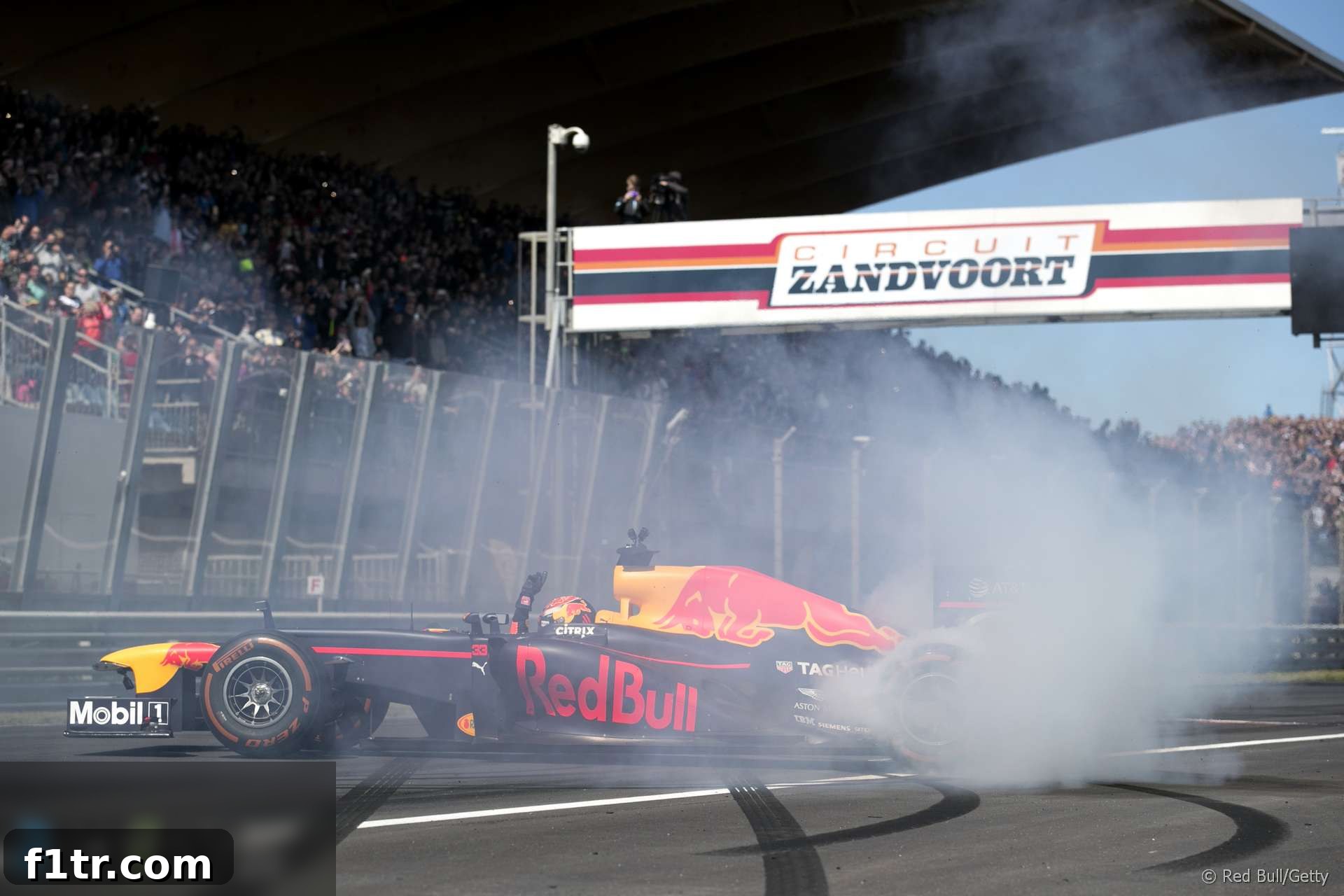
In the Netherlands, Liberty Media holds two potential venues: Zandvoort and Assen. However, contrary to some reports, a deal with either venue is far from finalized. FOM is reportedly leveraging competition between the two circuits. The situation is further complicated by the fact that both require a degree of state support – potentially up to $10 million, a figure that is becoming increasingly familiar in these negotiations. This places the fate of any Dutch Grand Prix firmly in the hands of civil servants and local government.
Overarching all these discussions is the re-formed Formula One Promoters Association (FOPA). Initially established in Switzerland in 2012 by Ecclestone to counterbalance growing team influence, FOPA has been revived under the presidency of Silverstone CEO Stuart Pringle, with Brazilian Grand Prix promoter Tamas Rohonyi Ketesz and Singapore’s Colin Syn Wai Hung serving as co-board members.
Much like regular team principal meetings during Grand Prix weekends, FOPA provides a forum for promoters. While Pringle vehemently denies any militant intentions, asserting FOPA’s role in fostering good relations and facilitating discussions on common issues among promoters – who primarily compete with external entertainment options rather than each other – their collective strength is undeniable. In essence, they meet to “spice up F1’s spectacle,” mirroring the objectives of team bosses.
Yet, when like-minded individuals gather, a primary topic of discussion inevitably emerges: money. FOPA currently comprises roughly half of the F1 promoters as members but has generously shared its findings and information with all peers as a gesture of goodwill. The unifying message is clear: they all intend to extend their contracts, but not at any cost. Crucially, most are seeking some form of revenue-share agreement with Liberty Media, a logical demand from a promoter’s perspective, though challenging for the commercial rights holder.
Therein lies Liberty Media’s central challenge over the next two weeks: to present sufficient positive news, both retrospective and forward-looking, to satisfy shareholders and maintain investor confidence. As the past two years have vividly demonstrated, this will be no easy feat for the stewards of Formula 1.
Follow Dieter on Twitter: @RacingLines