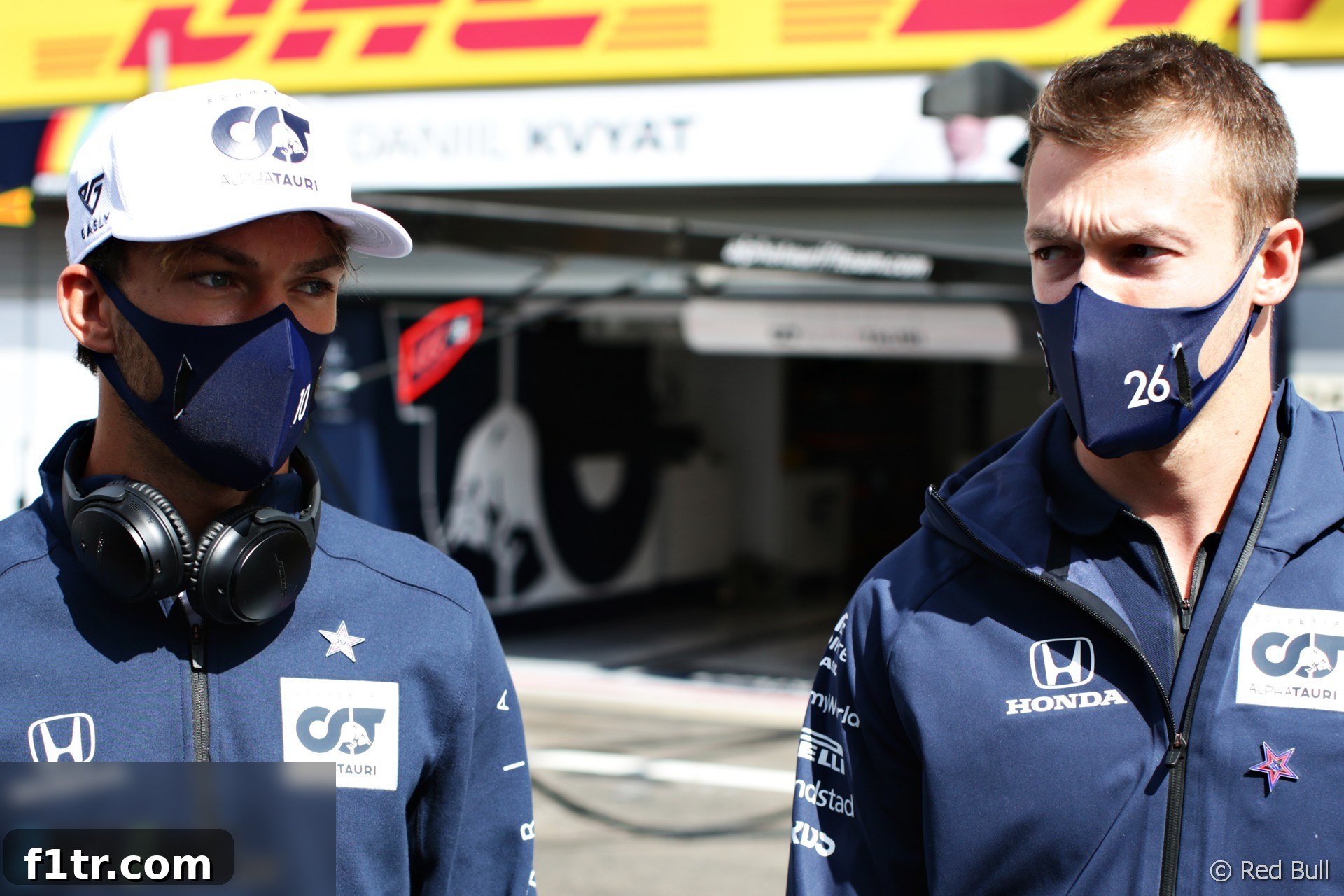
Honda’s Shock F1 Exit: AlphaTauri Drivers Gasly and Kvyat Reflect on a Changing Landscape
The world of Formula 1 was recently rocked by the surprising announcement that Honda, a pivotal power unit supplier, will withdraw from the sport at the end of the 2021 season. This decision sent ripples through the paddock, particularly impacting teams like AlphaTauri and Red Bull Racing, both of whom currently rely on Honda’s meticulously developed power units. For AlphaTauri drivers Pierre Gasly and Daniil Kvyat, the news was met with a mix of sadness, surprise, and a deep appreciation for the Japanese manufacturer’s unwavering commitment and the successful partnership forged over recent years. Their reactions underscore the profound personal and professional connections often developed between drivers and their engine suppliers in the intensely competitive world of Grand Prix racing.
Honda’s Resurgent F1 Journey: From Challenges to Triumph
Honda’s most recent foray into Formula 1, which began in 2015, has been a journey characterized by immense dedication, resilience, and ultimately, significant success. Their return, initially with McLaren, was fraught with technical challenges and performance deficits that tested the resolve of both parties. However, a strategic shift saw Honda partner with Toro Rosso (now AlphaTauri) in 2018, marking a turning point. This collaboration allowed Honda to refine its power unit in a less pressurized environment, fostering a stronger engineering relationship and accelerating development. It was during this period that Honda began to showcase its true potential, steadily closing the gap to the established engine manufacturers.
The progress made with Toro Rosso paved the way for a full Red Bull Racing partnership in 2019, where Honda engines powered Max Verstappen to several Grand Prix victories. Yet, the foundations of this success were undoubtedly laid with AlphaTauri. Gasly’s second-place finish at the 2018 Bahrain Grand Prix with Toro Rosso stands as a poignant reminder of Honda’s accelerating comeback, representing their best result since re-entering the sport and hinting at the glories that were yet to come. This period was crucial for rebuilding confidence and demonstrating the power unit’s competitive edge, establishing Honda as a formidable force on the grid once again.
Pierre Gasly: A Deep-Rooted Partnership Forged in Success
Few drivers on the current grid have as intertwined a history with Honda’s modern F1 efforts as Pierre Gasly. From his full-time F1 debut with Toro Rosso in 2018, Gasly has almost exclusively campaigned with Honda power, experiencing firsthand the manufacturer’s evolution from a challenging returnee to a race-winning contender. His career highlights, in particular, are inextricably linked to Honda’s progress. Beyond the significant 2018 Bahrain podium, Gasly delivered an unexpected and emotional victory for Honda at the Monza circuit in September, just weeks before the withdrawal announcement. This triumph was not only a career-defining moment for Gasly but also a historic achievement for Honda, marking them as the first engine manufacturer in the V6 hybrid turbo era to win races with two different teams (Red Bull and AlphaTauri).
Reflecting on Honda’s impending departure, Gasly conveyed his profound sadness and appreciation for the relationship built over years. “I have to admit I’m sad that Honda is leaving Formula 1 after the experiences we shared together over the past four years,” Gasly stated. He emphasized the personal aspect of this professional bond, adding, “The people at Honda have played an important role in my career and I have always loved working with them.” This sentiment highlights the close-knit nature of F1 teams, where technical partners often become an extended family. For Gasly, Honda’s influence stretches beyond mere horsepower; it’s about shared ambition, mutual trust, and a collective pursuit of excellence. His hope remains steadfast for the upcoming season: “But we will still be together until the end of next year and I hope we can try and fight for more wins together before then, and that Honda will be in a position to fight for the championship title.” This expresses a clear ambition to finish their partnership on the highest possible note, a testament to the strong fighting spirit Honda has instilled.
Daniil Kvyat: Expressing Disappointment and Admiration for the Engineering Drive
Gasly’s teammate, Daniil Kvyat, echoed similar sentiments of surprise and disappointment regarding Honda’s decision. Kvyat, who rejoined Toro Rosso in 2019 after a period away from F1, has also been a beneficiary of Honda’s increasingly competitive power units. His perspective sheds light on the dedication and hard work that often goes unseen by the wider public, focusing on the engineers at the track who form the backbone of any successful racing operation.
“I was surprised to hear the news that Honda will leave F1 at the end of next year,” Kvyat admitted. He articulated the dual impact of the news, touching on both the personal and professional ramifications. “It is sad on a human level as I enjoy working with their engineers, and disappointing from a racing point of view because they have worked so hard to give us the best possible power unit and we have seen it deliver some excellent results so far.” Kvyat’s comments underscore the immense effort and passion poured into the sport by the technical personnel. These relationships extend beyond mere professional interaction; they are built on trust, shared goals, and the intense pressure of Grand Prix weekends. He further praised their dedication: “The Honda guys at the track are really committed and I’m sure they will continue to push while they are still in the sport.” This provides reassurance that despite the impending departure, Honda’s commitment to success for the remainder of their F1 tenure will not wane.
The Broader Impact: AlphaTauri and Red Bull’s Future Uncertainties
Honda’s withdrawal creates significant strategic challenges not only for AlphaTauri but also for its senior team, Red Bull Racing. Both outfits currently benefit from bespoke Honda power units, meticulously integrated into their chassis designs. For AlphaTauri, a team that has found a strong identity and competitive edge with Honda power, the search for a new engine supplier for the 2021 F1 season and beyond becomes a critical priority. While options exist within the current F1 landscape—namely Renault, Ferrari, and Mercedes—each comes with its own set of complexities, including differing power unit philosophies, supply logistics, and potential competitive disadvantages if they were to become a customer team of a direct rival. The decision will undoubtedly shape AlphaTauri’s long-term performance trajectory and its role within the Red Bull family.
The repercussions are arguably even more profound for Red Bull Racing. With championship ambitions and a superstar driver in Max Verstappen, securing a competitive power unit beyond 2021 is paramount. Honda’s departure potentially leaves Red Bull in a precarious position, facing the daunting prospect of either re-establishing a relationship with a former supplier like Renault, or pursuing an ambitious, in-house engine program. This strategic puzzle will dominate discussions within the Red Bull camp, influencing everything from car design to driver contracts and long-term team sustainability. The ideal scenario for Red Bull would be to find a partner capable of delivering a power unit that allows them to challenge for the championship consistently, a feat Honda was increasingly enabling.
Honda’s Rationale: A Glimpse into the Future of Mobility
Honda’s decision to exit Formula 1 was not taken lightly, especially given their recent resurgence and competitive standing. The company cited a strategic shift towards achieving carbon neutrality by 2050 as the primary driver behind their withdrawal. Reallocating resources from Formula 1 to future research and development in areas such as fuel cell vehicle (FCV) technology and battery electric vehicle (BEV) technology aligns with their broader corporate goals for environmental sustainability. This move underscores a growing trend among global automotive manufacturers to prioritize ecological initiatives and invest heavily in the future of electric and hydrogen-powered mobility. While regrettable for motorsport enthusiasts, it reflects a pragmatic and forward-thinking business strategy from one of the world’s largest engine manufacturers, choosing to focus on technologies that will define the next era of personal transport.
What Lies Ahead: The F1 Engine Landscape Post-2021
The departure of Honda injects a degree of uncertainty into the Formula 1 engine supplier landscape, particularly regarding the future of Red Bull and AlphaTauri. F1 regulations stipulate that no team can be left without an engine supplier, which provides a safety net. However, the quality and competitiveness of that supply are crucial. Red Bull’s history with Renault, while yielding championship success in the past, ended acrimoniously. A return to Renault would require mending fences and ensuring a level playing field compared to the manufacturer’s own works team. Alternatively, the daunting task of developing an independent “Red Bull Powertrains” project, potentially utilizing Honda’s intellectual property, has also been discussed. This would be an immense undertaking, requiring significant investment and expertise.
Regardless of the path taken, the post-Honda era will present significant technical and logistical challenges for both Red Bull teams. Adapting to a new power unit architecture, optimizing chassis aerodynamics around different engine cooling requirements, and integrating new hybrid systems will demand considerable engineering effort. This situation highlights the intricate relationship between engine suppliers and chassis designers in modern Formula 1, where every component is meticulously optimized for performance. The sport itself will need to consider how to attract new engine manufacturers or support existing ones to ensure a robust and competitive grid in the coming years, especially with new engine regulations expected around 2025.
A Legacy to Uphold in Their Final Season
Despite the bittersweet news of their impending departure, Honda’s commitment to Formula 1 remains undiminished for the duration of the 2021 F1 season. Both Pierre Gasly and Daniil Kvyat, along with their Red Bull counterparts, expressed confidence in Honda’s continued push for performance. The Japanese manufacturer has demonstrated a relentless drive for improvement throughout its recent F1 tenure, and there is every expectation that this will continue until the very last race. The opportunity to secure more wins, and potentially even challenge for a championship, serves as a powerful motivator for both the teams and Honda engineers. Their final season will undoubtedly be watched with keen interest, as Honda aims to conclude its latest F1 chapter with a legacy of success, resilience, and groundbreaking engineering achievements. The memories of their triumphant return, culminating in spectacular victories, will undoubtedly endure long after their engines fall silent on the F1 grid.
2020 F1 season
- Grosjean to make F1 test return tomorrow for first time since Bahrain horror crash
- Pictures: Wrecked chassis from Grosjean’s Bahrain fireball crash to go on display
- Bottas vs Rosberg: Hamilton’s Mercedes team mates compared after 78 races each
- F1 revenues fell by $877 million in Covid-struck 2020 season
- Hamilton and Mercedes finally announce new deal for 2021 season
Browse all 2020 F1 season articles