Mercedes 2019 Parts Key to Racing Point Copying Probe
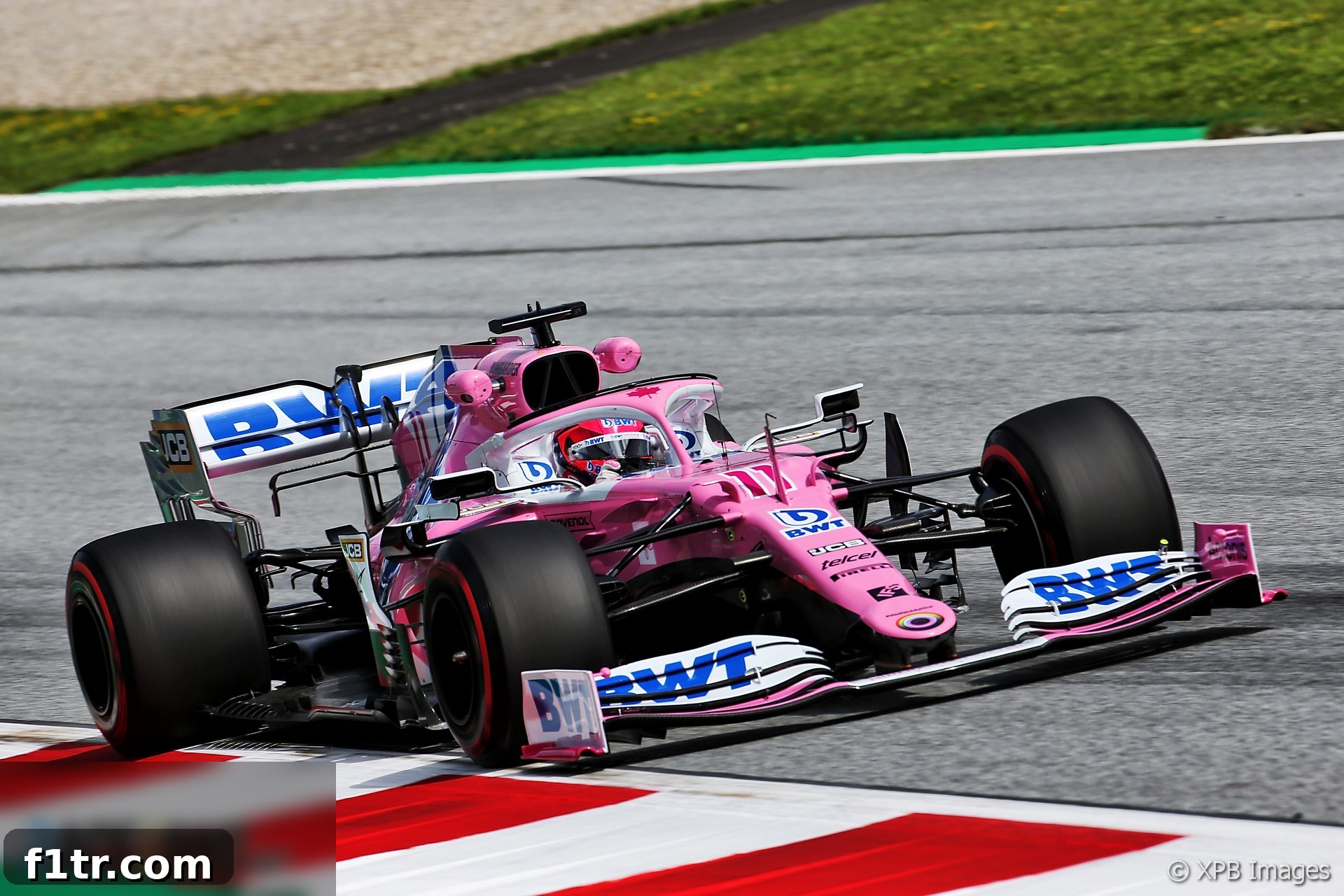
The exhilarating finishes of the Styrian Grand Prix, where Racing Point secured impressive sixth and seventh places, have been cast under a substantial cloud of uncertainty. These results currently remain provisional, following the FIA stewards’ decision to uphold the validity of a protest lodged by rival team Renault. The protest focuses on critical components of the Racing Point RP20, specifically its front and rear brake ducts, igniting a significant controversy within the Formula 1 paddock.
Renault’s formal complaint to the stewards raised serious queries regarding the legality of these brake ducts. At the core of the protest is the allegation that Racing Point’s car does not comply with the stringent rules governing “listed parts” within Formula 1. This particular regulation dictates which components teams must design and manufacture themselves, or have designed and manufactured on their behalf by a third party, ensuring that such parts are not directly supplied or designed by another competitor.
In a subsequent statement, the stewards provided the first official confirmation of Mercedes-AMG Petronas F1 Team’s involvement in Renault’s complaint. The reigning world champions have been formally requested to supply examples of the front and rear brake ducts from their championship-winning 2019 Formula 1 car, the W10. These crucial components are to be thoroughly examined by the FIA technical department, serving as comparative evidence in relation to the ongoing protest.
Further demonstrating the gravity of the situation, the stewards have taken decisive action by sealing and impounding “relevant parts” from both Racing Point cars, driven by Sergio Perez and Lance Stroll, immediately after the race. This procedure is standard practice in technical protests, ensuring the integrity of the evidence for a comprehensive investigation.
The designated representative of the FIA technical department has been granted comprehensive authority to solicit technical assistance from all three implicated teams: Renault, Racing Point, and Mercedes. This collaborative approach aims to facilitate the production of a detailed and unbiased report for the stewards, delving into the technical substance of Renault’s protest. Once this exhaustive technical assessment is completed, a formal meeting will be arranged to discuss the findings and determine the next course of action.
The Core of the Controversy: “Pink Mercedes” and Listed Parts Regulations
The “Pink Mercedes” moniker, informally adopted by fans and media alike, refers to the striking visual resemblance of the Racing Point RP20 to the championship-winning Mercedes W10 from the 2019 season. This similarity has fueled discussions and speculation since the car’s unveiling, culminating in Renault’s official protest. At the heart of this dispute lies Appendix 6 of the FIA Formula 1 Sporting Regulations, specifically concerning “listed parts.”
Listed parts are components that Formula 1 teams are mandated to design, manufacture, and own themselves. The intention behind this rule is to preserve the unique identity and intellectual property of each constructor, preventing the wholesale replication of another team’s designs. Historically, brake ducts were not included on this list, meaning teams could purchase them or acquire their designs from other suppliers, including rival teams. However, for the 2020 season, a significant regulatory change brought brake ducts onto the list of components that must be designed and owned by the competing constructor.
Brake ducts, while seemingly mundane, are incredibly complex and aerodynamically critical components in modern Formula 1 cars. They not only manage the temperature of the braking system but also play a vital role in directing airflow around the wheels, influencing overall aerodynamic performance, downforce generation, and even suspension kinematics. A sophisticated brake duct design can yield significant performance advantages, making them a high-value asset in car development.
Renault’s protest essentially alleges that Racing Point’s 2020 brake ducts are either directly copied from the 2019 Mercedes W10 or were designed using intellectual property acquired from Mercedes in a manner that contravenes the spirit and letter of the new 2020 listed parts regulation. This forms a crucial distinction: while acquiring design information for non-listed parts in 2019 might have been permissible, using that information to design *new* 2020 listed parts could be deemed a breach if the process is interpreted as merely implementing another team’s design rather than developing one’s own.
Stewards’ Response to Renault Protest: A Deep Dive into the Procedural Steps
Mercedes must supply the brake ducts from their 2019 car for FIA examination.
Having received a protest from Renault DP World F1 Team against BWT Racing Point F1 Team concerning an alleged breach of the following Articles of the FIA Formula One Sporting Regulations 2020:
– Article 2.1: General obligation regarding cars (ensuring cars are safe and do not prejudice competition)
– Article 3.2: General obligation regarding cars (ensuring cars are within technical regulations)
– Appendix 6, Paragraph 1: Definition of listed parts and their scope
– Appendix 6, Paragraph 2(a): Requirements for design and manufacture of listed parts
– Appendix 6, Paragraph 2(c): Prohibitions on acquiring listed parts from competitors
With regards to front and rear brake ducts used on cars 11 (Sergio Perez) and 18 (Lance Stroll), the Stewards summoned and heard from the team representatives of both teams (Renault and Racing Point) and a representative of the FIA Technical Department. After careful deliberation, the Stewards determined that the protest met all requirements specified in Article 13 of the FIA International Sporting Code and is, therefore, admissible. This initial ruling means the protest is legitimate and warrants a full investigation.
The FIA Technical Department representative was directed to immediately seal and impound the relevant front and rear brake duct parts of cars 11 and 18. This action is critical for preserving the evidence in its original state, in preparation for conducting a detailed forensic analysis of those pieces. The representative is further directed to provide a comprehensive and detailed report to the Stewards with the precise findings from their examination. This report must explicitly include an assessment that matches those findings against the alleged infringements outlined in Renault’s protest, thereby directly addressing each specific article cited.
The ‘rise of the clones’ discussion has been a hot topic since the RP20’s launch.
The representative is authorized, in the name of the Stewards, to call upon such outside technical assistance as deemed necessary for the conduct of their thorough assessment. This provision includes the involvement of representatives from the following teams, ensuring all relevant technical expertise and perspectives can be considered:
– Renault DP World F1 Team (the protesting party)
– BWT Racing Point F1 Team (the protested party)
– Mercedes-AMG Petronas F1 Team (whose 2019 parts are central to the comparison)
Furthermore, in a critical step to gather comparative evidence, the Stewards ordered the Mercedes-AMG Petronas F1 Team to provide the front and rear brake air ducts of the Mercedes-AMG F1 W10 EQ Power+ car, as used by the team during the entire 2019 season, to the FIA Technical Department for examination. This direct comparison will be instrumental in determining the extent of any alleged copying or design influence.
When the likely submission date of this comprehensive technical assessment can be accurately determined, the FIA Technical Department representative will communicate that timeframe to the Chairman of the Stewards. This will allow for the efficient scheduling of the next meeting, where the full assessment will be presented, and a final decision on the claims can be reached.
The “Grey Area” of Design and Intellectual Property in Formula 1
This protest shines a spotlight on one of the most contentious “grey areas” in Formula 1: the delicate balance between legitimate inspiration and outright illegal replication. Teams constantly scrutinize their rivals’ cars, analyzing every detail to understand performance advantages. Visual copying – where teams observe rival designs and attempt to recreate similar concepts using their own design processes – has always been a part of F1 development. However, the introduction of brake ducts as listed parts for 2020 complicates this significantly.
Racing Point’s likely defense hinges on the fact that brake ducts were not listed parts in 2019. They could argue that any design data or parts acquired from Mercedes prior to the 2020 regulation change was entirely legal. They might claim that while they undoubtedly drew heavily on the 2019 Mercedes W10 as inspiration, their 2020 brake ducts were ultimately designed and manufactured internally, fulfilling the spirit of the listed parts rule, even if the inspiration was profound. The challenge for the FIA will be to ascertain whether Racing Point merely ‘copied’ the *concept* of the W10’s brake ducts (which might be legal if done independently) or whether they directly copied the *design files/CAD data* for a listed part, essentially skipping the required independent design process.
The FIA’s ruling will establish a crucial precedent for the future of car design in Formula 1, particularly as budget caps and tighter regulations encourage teams to seek efficiencies and potentially re-evaluate their design philosophies. The outcome could dictate how closely teams are permitted to follow the design lead of a dominant competitor and how intellectual property is protected within the sport. This decision will have far-reaching implications, influencing team strategies for years to come.
Potential Outcomes and Far-Reaching Implications
The potential outcomes of Renault’s protest against Racing Point are varied, each carrying significant implications for both teams and the wider Formula 1 championship. If the FIA stewards find Racing Point guilty of breaching the listed parts regulations, the penalties could range from a simple reprimand or fine to a more severe points deduction in the Constructors’ Championship. In the most extreme scenario, a disqualification from the Styrian Grand Prix results, or even multiple races, could be imposed, significantly impacting Racing Point’s standing and financial prospects.
Conversely, if Racing Point successfully defends their design process and the FIA rules in their favor, it would vindicate their approach and potentially pave the way for other teams to adopt similar strategies of “visual copying” or leveraging legally acquired data, especially concerning components that change their regulatory status. This could lead to a less diverse grid in terms of car design, with more teams converging on optimal solutions pioneered by others.
Beyond the immediate sporting consequences, the controversy could strain relationships within the F1 paddock, particularly between teams like Renault (and potentially others who support their stance) and those perceived to be pushing the boundaries of the rules. It also tests the FIA’s ability to enforce its own regulations effectively and transparently, especially when dealing with complex technical grey areas and intellectual property rights.
Ultimately, the Formula 1 community, teams, drivers, and fans alike, await the FIA’s definitive judgment on this matter. The decision will not only resolve the fate of Racing Point’s Styrian Grand Prix results but will also shape the understanding and application of critical design regulations for seasons to come, emphasizing the ongoing commitment to fair play and innovation within the pinnacle of motorsport.