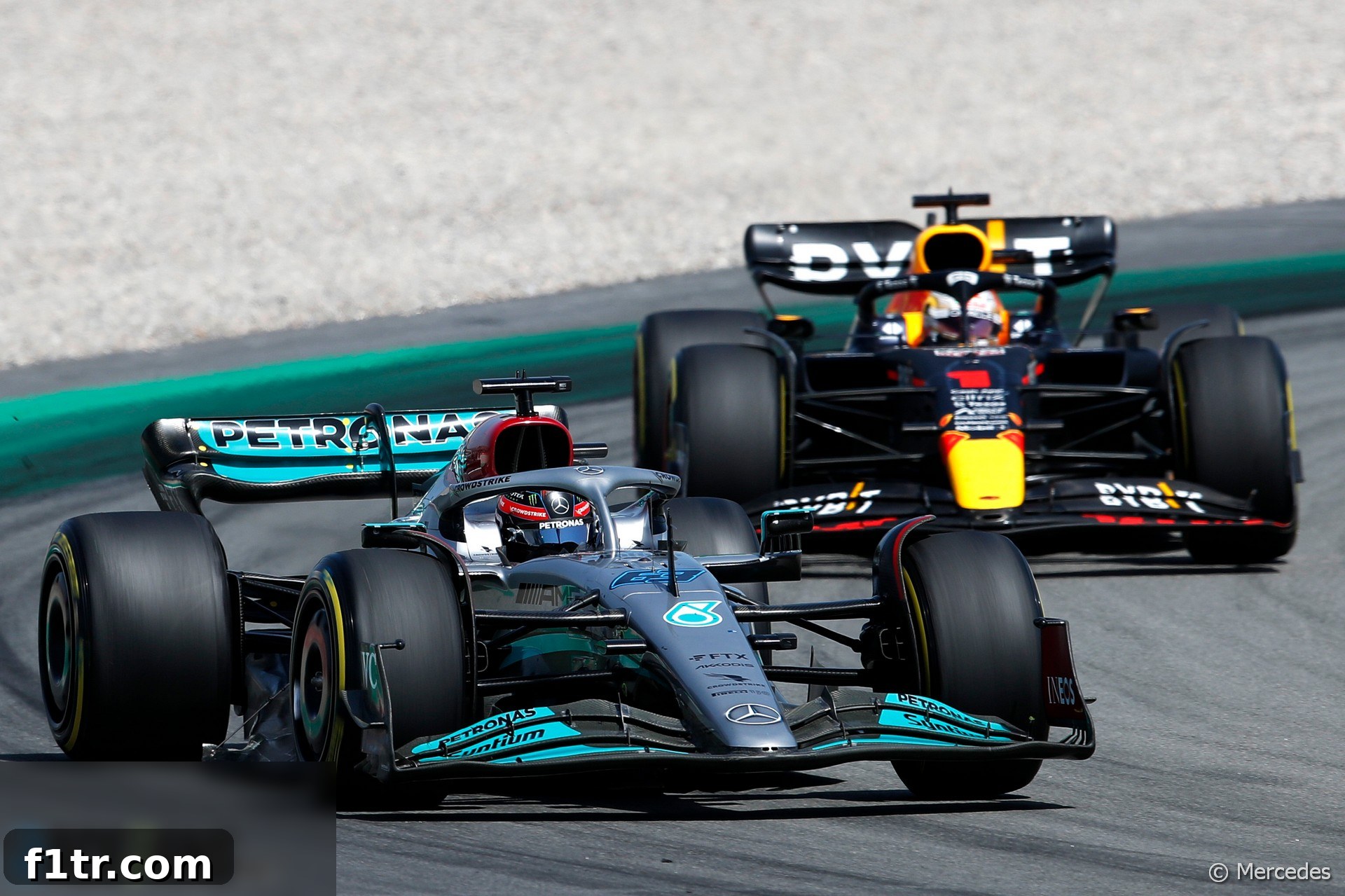
The Mercedes-AMG Petronas Formula 1 team, fresh from a promising and highly anticipated performance at the Spanish Grand Prix, has expressed a cautious outlook regarding their prospects for the upcoming round in Monaco. Following a significant upgrade package for their W13 challenger, which propelled them closer to the front-running pace of rivals, team principal Toto Wolff indicated that the unique characteristics of the iconic street circuit might not play to their renewed strengths.
The Spanish Grand Prix represented a crucial turning point for Mercedes. The team introduced a comprehensive upgrade suite for their W13 car, designed to address the persistent porpoising issues and unlock more of the car’s inherent performance. This evolution proved largely successful at the Circuit de Catalunya, allowing both Lewis Hamilton and George Russell to demonstrate a competitive pace that had been elusive in the earlier races of the 2022 season. The team’s engineers had worked tirelessly to implement aerodynamic refinements and chassis adjustments, which visibly improved the car’s stability and overall balance, bringing them within striking distance of the pace-setters and reigniting hopes for podium finishes and even future victories.
However, despite this breakthrough in Spain, a degree of apprehension hangs over their Monaco preparations. Mercedes’ internal analysis suggested that their improved performance in Spain might have come at a cost, specifically impacting their competitiveness through slower corners. This insight is particularly concerning given that Monaco is renowned for its labyrinthine, low-speed turns and chicanes, where slow-corner prowess is paramount. Wolff highlighted that during the Spanish Grand Prix, the W13 exhibited a noticeable dip in performance through the tight final sector of the Circuit de Catalunya, an area characterized by its slow-speed chicanes and technical demands. This observation prompted questions about how the updated package might behave on a track composed almost entirely of such challenging sections.
The Paradox of Performance: Slow Corners and Circuit Demands
Toto Wolff articulated his concerns in response to media inquiries, stating, “We have been particularly off-pace this weekend in the slow corners in the last sector.” This assessment points to a potential trade-off with the new upgrade package. While it brought significant gains in overall downforce and high-speed stability, it might have inadvertently shifted the car’s performance envelope away from the precise, low-speed handling required on a street circuit like Monaco. The W13 had previously shown some strength in slower corners before the extensive upgrades, making this recent observation a new challenge for the Silver Arrows.
However, Wolff also offered a crucial caveat, noting that the slow-corner struggles in Spain were partly attributable to the extreme conditions. “That might be different in Monaco,” he acknowledged. The Spanish Grand Prix weekend was characterized by exceptionally high ambient and track temperatures, with asphalt temperatures soaring above 50 degrees Celsius on one of the most tyre-demanding circuits on the calendar. Such intense heat can significantly alter tyre behaviour, leading to overheating and a subsequent loss of grip, especially in slow, traction-limited corners where the tyres are heavily worked. Monaco, while still demanding, typically presents a less punishing environment for tyres, and Pirelli will be supplying their softest compounds (C3, C4, C5) for the event, a departure from the harder compounds used in Spain. The cooler temperatures and softer rubber could potentially alleviate some of the tyre overheating issues experienced in Catalunya, offering a glimmer of hope for Mercedes.
Monaco’s Historical Challenges for Mercedes
Beyond the immediate concerns stemming from the Spanish Grand Prix, Mercedes has historically found Monaco to be a particularly challenging venue. Wolff candidly admitted, “Monaco in the past wasn’t our most happy place, maybe because the car had the size of an elephant.” This evocative analogy speaks volumes about the inherent design philosophy of Mercedes’ dominant F1 cars over recent years. Their cars, often characterized by a longer wheelbase for aerodynamic stability and efficiency on high-speed tracks, tend to struggle on the tight, twisty, and unforgiving confines of the Monte Carlo street circuit. A longer car, while beneficial for sweeping corners and maximizing downforce at speed, can be cumbersome to manoeuvre through the hairpin bends and narrow sections of Monaco, making it harder to extract optimal performance. The precise and agile nature of a shorter, nimbler car often proves more advantageous here, a trait that Mercedes has not always prioritised in its championship-winning designs.
The compact nature of the Monaco track also means that outright engine power, a traditional Mercedes strength, becomes less of a differentiator compared to other circuits. Instead, mechanical grip, sharp turn-in, and exceptional traction out of slow corners are the keys to lap time. This shift in performance metrics often levels the playing field, allowing teams with strong low-speed characteristics to shine, even if they lack the raw pace on more conventional circuits. For Mercedes, this has meant that their considerable advantages in aerodynamics and power unit performance have been somewhat negated in the Principality, leading to results that often fall below their usual high standards.
Tyre Warm-Up and the Unpredictability of a Street Circuit
Adding to the complexity for Mercedes is their ongoing struggle with tyre warm-up, a factor that becomes profoundly critical in Monaco. “We still struggled with the warm-up a little bit,” Wolff noted, highlighting a persistent issue for the W13. On a street circuit where qualifying position is paramount due to the difficulty of overtaking, getting the tyres into their optimal operating window on the out-lap is absolutely vital. Any delay in reaching peak tyre temperature can mean a loss of crucial tenths of a second, which can easily translate to several grid positions in a fiercely competitive qualifying session. The cold, often dusty surface of Monaco, combined with the lack of high-speed corners to generate heat, exacerbates this challenge. Mercedes will need to find an optimal setup that not only provides mechanical grip but also allows the Pirelli soft compounds to come alive quickly and consistently.
The unforgiving nature of a street circuit also places immense pressure on drivers and car setup. There is no room for error; a slight misjudgment can lead to contact with the barriers, ending a session or even a race. Engineers must strike a delicate balance between maximizing downforce for grip and maintaining a compliant suspension setup to handle the bumps and kerbs without unsettling the car. The W13’s characteristics, especially its historical sensitivity to setup changes, will be thoroughly tested in this environment. A car that is less predictable or harder to warm up the tyres for could lead to a nervous qualifying session and a challenging race for both Lewis Hamilton and George Russell.
Looking Ahead: A Learning Opportunity for Mercedes
Given these multifaceted challenges, Toto Wolff has tempered expectations for the Monaco Grand Prix. “So my expectations for Monaco are lower than on any other circuit. I’m not sure I can explain scientifically why that is, but it’s going to be another learning point, at least, to bring us back into the game,” he concluded. This pragmatic approach underscores Mercedes’ current philosophy: to use every race weekend, especially those presenting unique obstacles, as an opportunity to deepen their understanding of the W13 and further refine its performance characteristics. Even if a strong result proves elusive in Monaco, the data and insights gathered from how the updated car performs on a low-speed, high-downforce street circuit will be invaluable for future developments.
The ultimate goal for Mercedes remains to return to consistent championship contention. Achieving this requires a car that performs optimally across a diverse range of tracks. Monaco, therefore, becomes a crucial diagnostic test for the W13’s versatility and its ability to adapt to varying circuit demands. While the focus remains on closing the gap to Red Bull and Ferrari, the immediate objective for the Monaco Grand Prix will be to learn as much as possible, minimize any potential weaknesses, and carry that knowledge forward to circuits where their updated package might be better suited. The journey back to the top is a marathon, not a sprint, and every “learning point” along the way contributes to building a stronger, more adaptable championship challenger.
2022 Monaco Grand Prix Related Articles
- Whatever triggered it, Verstappen’s defiance of his own team makes little sense
- Transcript: How Red Bull seized a win that ‘Ferrari looked like they had in the bag’
- Verstappen now has as many poles as Leclerc – but six times as many wins
- Schumacher’s chassis-splitting crash shows effects of rising car weight – Alonso
- Norris still can’t drive McLaren the way he wants to, despite strong results
Browse all 2022 Monaco Grand Prix articles