The Shifting Sands of 2021: Unpacking Red Bull’s Mid-Season Surge Against Mercedes
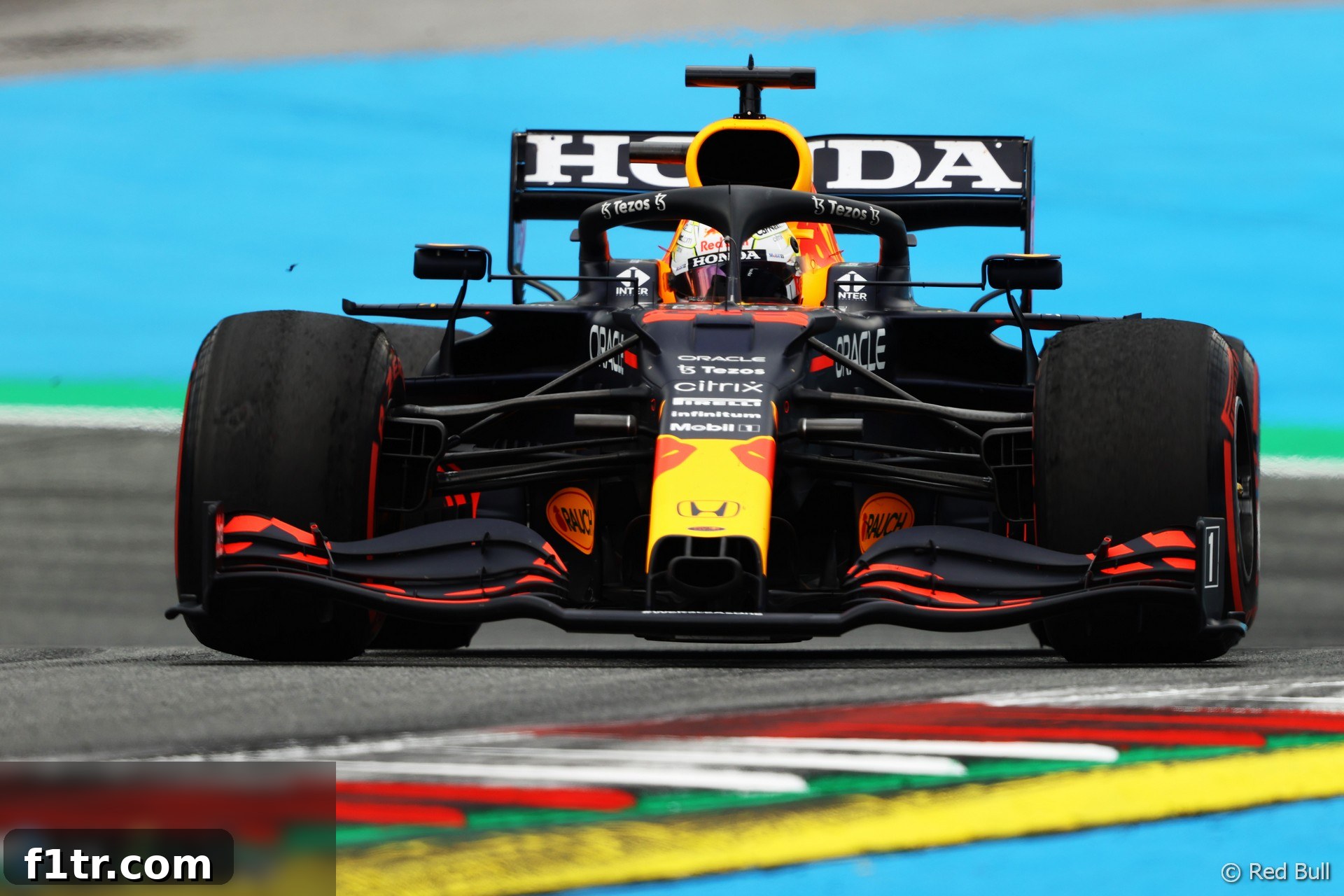
The opening rounds of the 2021 Formula 1 season delivered a clear, potent message from Red Bull Racing to their formidable rivals, Mercedes-AMG Petronas. From the very first race in Bahrain, a statement of intent was laid bare for all to see. Max Verstappen, at the wheel of his potent RB16B, seized pole position with a blistering lap, clocking a time 0.388 seconds faster than the reigning champion, Lewis Hamilton, could manage. This initial salvo hinted at a championship battle unlike any seen in recent years, promising an exhilarating contest between two titans of the sport.
Advert | Become a Supporter & go ad-free
While Mercedes responded with characteristic resilience, demonstrating strong competitiveness across the subsequent races, a discernible shift in momentum began to materialize. In the three rounds preceding the Austrian Grand Prix, Red Bull Racing meticulously clawed their way ahead, transforming a neck-and-neck contest into a period of distinct advantage. This swing in performance did not escape the keen eye of Lewis Hamilton, who publicly voiced his observations regarding Red Bull’s noticeable step forward.
Hamilton’s analysis pointed to a specific juncture: the introduction of Red Bull’s second power units at the French Grand Prix. This timing raised questions and eyebrows within the paddock. However, Toyoharu Tanabe, the technical director for Red Bull’s power unit supplier, Honda, swiftly refuted any suggestions that these new engines were the direct cause of their recent gains. Tanabe highlighted that in-season performance upgrades for power units are strictly forbidden under Formula 1 regulations, implying that any perceived increase in pace must stem from other factors.
The Early Duels: A Championship on a Knife-Edge
Despite Honda’s official stance, Hamilton remained steadfast in his conviction that Red Bull had indeed made a significant leap forward. Reflecting on the initial phases of the 2021 season, he remarked, “The start of this season, when the cars were so close in performance, pretty much equal, then it was really the most one of the most exciting times I’ve had for some time to be able to have this battle with Red Bull.” This sentiment underscored the sheer thrill and challenge of competing at the absolute limit, with both teams pushing each other to unprecedented heights.
The early races were a testament to the finely balanced rivalry. Each weekend presented a nuanced battle, with subtle track characteristics, weather conditions, and tire management often determining the victor. Fans were treated to wheel-to-wheel action and strategic masterclasses, as Max Verstappen and Lewis Hamilton traded blows, often separated by mere tenths of a second. The prospect of such a captivating championship unfolding throughout the entire year was a tantalizing one for both drivers and spectators alike. Yet, as the season progressed, the competitive landscape began to shift dramatically, leading Hamilton to conclude, “Honestly, I was really hoping that it would continue on like that through the rest of the year. But as you’ve seen, they’ve taken a huge leap forward.”
The French Grand Prix and the Power Unit Conundrum
The critical question emerged: how accurate was Hamilton’s assessment of Red Bull’s rapid progress? While performance upgrades to power units are indeed prohibited mid-season to ensure fairness and manage development costs, the introduction of a new power unit, even if technically of the same specification, can sometimes yield indirect benefits. These might include improved reliability, allowing teams to run more aggressive engine modes for longer periods, or perhaps marginal gains from new ancillary components or optimized integration within the chassis. Furthermore, developments in fuels and lubricants, which are not subject to the same strict freeze rules as the core engine architecture, can sometimes provide a measurable advantage.
Hamilton’s observations likely stemmed from a tangible difference felt on track, irrespective of the official explanations. The French Grand Prix, often highlighted as the pivotal moment, saw Red Bull seemingly unlock a new level of performance that Mercedes struggled to match. Before this race, the performance gap between the two teams, as measured by their fastest laps over the preceding five races, typically hovered around a marginal 0.1%. While there was a notable spike in Red Bull’s favor in Portugal, this was largely attributed to Max Verstappen having his best qualifying time deleted due to track limits, skewing the comparison.
However, after the French Grand Prix, a significant swing of approximately 0.3% in Red Bull’s favour became evident. This dramatic shift in relative pace could be attributed to a confluence of factors beyond just a “new” engine. It might have encompassed a refined power unit installation that allowed for better aero efficiency, optimized cooling, or the aforementioned advancements in lubricants. Additionally, subtle aerodynamic tweaks, even within the confines of permitted in-season development, can unlock significant lap time. The precision engineering and relentless pursuit of marginal gains are the hallmarks of Formula 1, and Red Bull demonstrated their mastery in this regard, seemingly finding solutions that allowed them to extract more performance from their package.
Decoding the Performance Gap: More Than Just an Engine?
In relative terms, the Austrian Grand Prix indeed showcased Red Bull’s greatest advantage over Mercedes that year. Mercedes’ best qualifying effort was 0.461% slower than Red Bull’s, a wider margin compared to the 0.436% deficit observed earlier in Bahrain. This widening gap highlighted a concerning trend for Mercedes, suggesting that Red Bull’s progress wasn’t a one-off but a sustained step forward across various track types and conditions. A 0.3% swing in Formula 1 is not insignificant; it translates to several tenths of a second per lap, which can be the difference between pole position and several rows back, or a comfortable victory versus a hard-fought struggle.
Beyond the power unit discussion, other elements undoubtedly played a role. Aerodynamic development is a continuous process in Formula 1, and teams are always seeking to optimize airflow, increase downforce, and reduce drag. Red Bull, known for their exceptional aerodynamic prowess, likely found significant gains through iterative design improvements and track-specific setups. Their high-rake concept, which they had perfected over many seasons, seemed particularly effective on certain circuits. Furthermore, chassis rigidity and suspension tuning, meticulously optimized over race weekends, contribute substantially to a car’s overall balance and ability to extract performance from the tires.
The combination of these elements created a formidable package that was particularly potent in Austria. The nature of the Red Bull Ring, with its elevation changes and medium-to-high speed corners, seemed to suit the RB16B perfectly. Moreover, the perceived amplification of Red Bull’s advantage during that weekend was partly due to Mercedes’ relative weakness on the softest compound tyres. This vulnerability allowed competitors, notably McLaren’s Lando Norris, to also capitalize, showcasing the extent of Mercedes’ struggles with tire degradation and optimal operating windows on the softer rubber.
Mercedes’ Struggles and the Silverstone Lifeline
Mercedes’ challenges with tire management, particularly on the softest compounds, became a recurring theme during Red Bull’s dominant phase. The W12, while a fundamentally strong car, appeared more sensitive to tire temperatures and wear, often struggling to maintain peak performance over long stints or extract maximum grip in qualifying on the softest available tires. This issue was starkly highlighted when drivers like Lando Norris could place their McLaren, a customer Mercedes engine team, ahead of or very close to the factory Mercedes cars, particularly on Saturday. Such scenarios underscored a fundamental setup or aerodynamic characteristic that made the Mercedes less compliant with specific tire conditions compared to their rivals.
The crucial question looming over the championship was whether this deficit was recoverable for Mercedes. A significant amount was riding on their planned upgrade package for the upcoming British Grand Prix at Silverstone. This upgrade was not just another development step; Mercedes had indicated it would be their last major upgrade of the season. This strategic decision was heavily influenced by the new cost cap regulations and the impending massive rule changes for the 2022 season, which required substantial resources to be diverted to next year’s car development. The pressure on the Mercedes technical team to deliver a package that could genuinely close the gap to Red Bull, or even surpass them, was immense, as their championship hopes arguably hinged on its success.
Advert | Become a RaceFans supporter andgo ad-free
Advert | Become a RaceFans supporter andgo ad-free
Go ad-free for just £1 per month>> Find out more and sign up
Conclusion: The Defining Battles Ahead
The 2021 Formula 1 season was a truly captivating spectacle, defined by an intense ebb and flow of performance between two of the sport’s greatest teams. Red Bull’s mid-season surge, spearheaded by Max Verstappen, undeniably altered the championship trajectory, shifting the advantage firmly into their court. While the exact causes of this dramatic step forward remained a subject of debate, a combination of refined power unit deployment, aerodynamic advancements, and optimal chassis setup, coupled with Mercedes’ temporary struggles on specific tire compounds, painted a clear picture of a team hitting its stride.
For Mercedes, the challenge was clear: respond or risk seeing their dominant era brought to an end. The impending Silverstone upgrade represented not just an engineering effort, but a psychological battle. It was a testament to the relentless competition at the pinnacle of motorsport, where every tenth of a second, every strategic decision, and every development step can mean the difference between championship glory and the agony of defeat. The defining battles of the 2021 season were far from over, promising an enthralling conclusion to one of Formula 1’s most memorable rivalries.
2021 Austrian Grand Prix Related Articles
- Vasseur on Alfa’s “huge step forward” and why he’s vexed by technical directives
- How Ricciardo “got some enjoyment back” after “really low” first race in Austria
- F1’s penalty points are not “harsh” and won’t be reviewed this year – Masi
- Austrian double showed Sainz found his feet faster than 2021’s other big-name moves
- 2021 Austrian Grand Prix Star Performers
Browse all 2021 Austrian Grand Prix articles