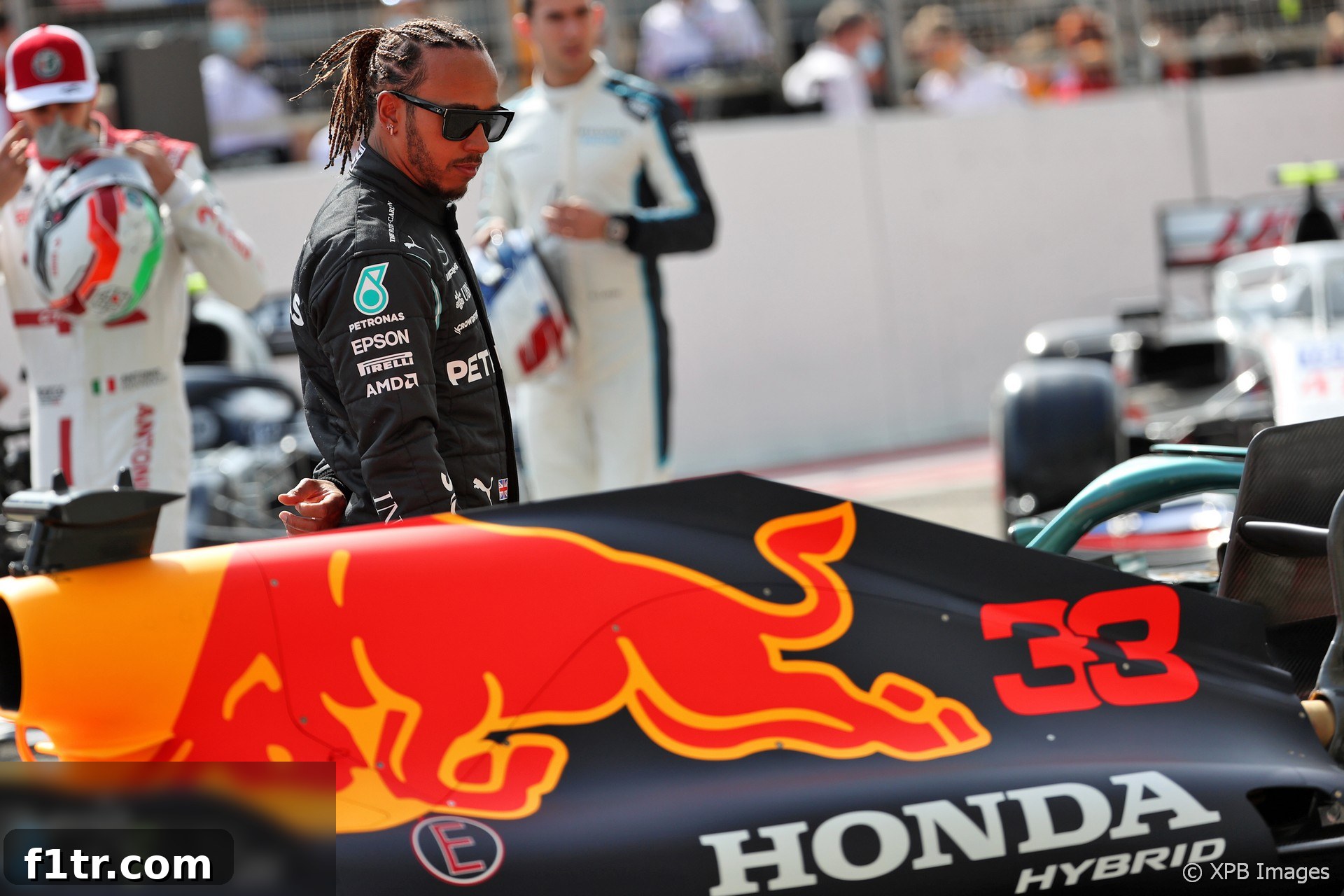
In a candid statement, Red Bull’s chief technical officer, Adrian Newey, has spoken out about the extraordinary level of scrutiny the team is facing in its fiercely contested Formula 1 title battle against Mercedes. Newey describes the current situation as unprecedented, highlighting a constant barrage of enquiries and challenges regarding their compliance with F1 regulations.
Red Bull Under Unprecedented Scrutiny in F1 Title Fight, Says Adrian Newey
Advert | Become a Supporter & go ad-free
The Intensifying Scrutiny: A Championship Test
Adrian Newey, one of Formula 1’s most revered designers, asserts that the “frequency and intensity” of enquiries into Red Bull’s compliance with the rules is “quite telling” in the context of their championship duel with Mercedes. This heightened level of examination reflects the cut-throat nature of elite motorsport, where even the slightest perceived advantage can draw intense focus from rivals and governing bodies alike.
Throughout the current season, the FIA has already issued significant revised technical directives. These have notably addressed areas where Red Bull was widely believed to hold a performance advantage, particularly concerning wing flexibility and pit stop procedures. While the latter was subsequently subject to further revision, the initial directives undeniably impacted the team and sparked widespread debate within the paddock.
The “Flexi-Wing” Saga and Technical Directives
Newey specifically pointed to Mercedes’ role in instigating the latest ‘flexi-wing’ controversy. He explained that while Red Bull was not the only team employing designs with a degree of flexibility, the scrutiny became disproportionately focused once Mercedes raised concerns. “If you take the issue with the flexible rear wing, we certainly weren’t the only team to have that issue but of course, when Mercedes started making noise about it, they weren’t worried about what Alfa were doing,” Newey told the team’s website. “They were only worried about whether we were getting a benefit, which we really weren’t, but there was a cost implication to changing that part which obviously hurt.”
This episode underscores the delicate balance between innovative design and strict regulatory compliance in F1. Teams constantly push the boundaries of the rules, seeking marginal gains, which often leads to rival teams questioning the legality of ingenious solutions. The FIA, as the sport’s governing body, then steps in to clarify or enforce regulations, sometimes through technical directives that mandate changes. The flexi-wing debate highlighted how perceived advantages, even if deemed marginal by the team employing them, can become major strategic battlegrounds off the track.
Pit Stop Procedures: Another Battleground
Beyond aerodynamic elements, Red Bull’s meticulously executed pit stops also came under the microscope. The team had consistently achieved some of the fastest pit stops in F1 history, a critical advantage in tight races. This performance led to a technical directive from the FIA that aimed to standardize and potentially slow down pit stop procedures by introducing new requirements for reaction times and sensor monitoring. Though the directive was later refined, its initial intent was clear: to ensure all teams operated within precise parameters, effectively removing what some perceived as an unfair advantage.
For Red Bull, adapting to such rapid changes mid-season presented a significant challenge. However, Newey emphasized the team’s resilience. “It is however a great testament to the depth of our team that we can respond to changes and is a great example of when our team is put in a corner we can come out fighting and continue to be just as competitive,” he stated. This demonstrates the immense engineering and operational capabilities required to remain at the pinnacle of Formula 1, where adaptability is as crucial as raw pace.
Adrian Newey: A Veteran’s Perspective on F1 Politics
The intensity of the pressure Red Bull is currently enduring resonates with Newey, reminding him of previous championship-winning campaigns from the early 2010s. This isn’t the first time his designs, or his teams, have faced such relentless scrutiny, highlighting a recurring theme in F1’s history of dominant constructors.
Echoes of Past Championship Campaigns
Newey views the current situation as a backhanded compliment to the team’s prowess. “In many ways it is a compliment to the team to find ourselves under such scrutiny from others,” he commented. He reflects on a long career marked by innovation and relentless competition, noting, “We have experienced this before but I can’t remember a time when we have received the same level of behind the scenes politicking and lobbying against our car.”
He drew parallels to Red Bull’s dominant years with Sebastian Vettel, specifically referencing the periods when the team was exploring “aeroelastics” in 2010 and 2011. During those seasons, Red Bull cars were under “constant scrutiny” for their innovative aerodynamic solutions, which often pushed the boundaries of what was considered legal. The team was forced to continually adapt to changing regulations and interpretations, a process that forged their championship-winning resilience. Similarly, past championship battles with Ferrari also involved heated rows over bodywork flexibility, illustrating a cyclical pattern in F1 where perceived technical advantages inevitably lead to regulatory challenges.
These historical precedents suggest that when a team begins to dominate, its rivals naturally intensify their efforts, not just on track, but also in the political arena, leveraging the FIA to challenge anything that might contribute to that dominance. This intricate dance between technical innovation, regulatory enforcement, and strategic lobbying is a core part of Formula 1’s competitive landscape.
The Art of Adapting to Regulatory Challenges
Newey’s experience highlights the constant cat-and-mouse game between F1 designers and the rulebook. His career has been defined by his ability to identify loopholes, develop ingenious solutions, and then adapt swiftly when those interpretations are challenged or regulations are tightened. This adaptability is not merely about making minor tweaks but often requires fundamental design changes under immense pressure and tight deadlines, all while maintaining competitive performance.
The fact that Red Bull has continued to be competitive despite the technical directives is a testament to the engineering depth and rapid response capabilities of the team, qualities that are essential for long-term success in Formula 1. It also underscores Newey’s enduring genius in guiding his engineering teams through complex technical and political challenges, reinforcing his legendary status in the sport.
Beyond the Track: The Unseen Battles of Formula 1
The F1 championship battle extends far beyond the asphalt. The garages, design offices, and even the FIA headquarters become critical battlegrounds where teams vie for advantage through regulatory interpretation, lobbying, and strategic pressure. Understanding these unseen battles provides crucial context to the on-track drama.
The Role of the FIA in Maintaining Fair Play
The FIA’s role as the sport’s governing body is to ensure fair competition and uphold the integrity of the regulations. However, their decisions often come under intense scrutiny, particularly when they involve dominant teams or controversial technical interpretations. Issuing technical directives is a common method for the FIA to clarify rules or address grey areas that teams might exploit. While intended to level the playing field, these directives can significantly impact team strategies, development budgets, and on-track performance.
The ongoing dialogue between teams and the FIA, often facilitated by “politicking and lobbying,” is a vital, albeit sometimes contentious, part of the sport. Teams constantly seek to influence regulatory decisions or draw attention to rivals’ perceived non-compliance, aiming to gain an edge. This dynamic interaction ensures that the rulebook is continuously tested and refined, contributing to the ever-evolving technical landscape of Formula 1.
Competitive Dynamics and the Pursuit of Advantage
The Red Bull-Mercedes rivalry in this championship is a prime example of how competitive dynamics manifest both on and off the track. When two teams are so closely matched, every fraction of a second, every design detail, and every rule interpretation becomes magnified. The pressure to find and exploit any legitimate advantage drives innovation, but also fuels the “behind-the-scenes politicking” Newey describes.
Ultimately, this intense scrutiny, while challenging, is a natural consequence of competing at the highest level of motorsport. It forces teams to be transparent, resilient, and perpetually innovative. For fans, it adds another layer of intrigue to the championship, highlighting that winning in Formula 1 is not just about having the fastest car or the best driver, but also about mastering the complex interplay of engineering, strategy, and politics.
Advert | Become a RaceFans supporter andgo ad-free
RaceFans Roundup: News and Insights from the Motorsport World
Social Media Highlights
Notable posts from Twitter, Instagram and more:
“You can’t wreck and not get penalised. It’s on me,” laughs Newgarden in his post-qualifying interview.
This ends a streak of three straight pole positions for Newgarden. #IndyCar
— RaceFans Live (@racefanslive) August 7, 2021
Colton Herta’s trophy for winning the pole for the @MusicCityGP , in honor of the late Bryan Clausen. #IndyCar #MusicCityGP pic.twitter.com/mBKtXuG6zL
— George Phillips (@Oilpressureblog) August 7, 2021
- Find more official F1 accounts to follow in the F1 Twitter Directory
Essential Motorsport Links
A selection of interesting motor racing links from across the web:
Over 2 million viewers watch F1’s first Sprint in UK (Motorsport Broadcasting)
“On Saturday, a combined audience of just over 2 million viewers watched Channel 4’s and Sky’s Sprint programming, including build-up and post-session analysis.”
- Domenicali wants more F1 sprint events in 2022 after “overwhelmingly positive feedback”
Junior single-seater case goes to High Court of Justice in UK (Formula Scout)
“A sum of £468,479.57 was asked for (plus interest) in accordance to two agreements from 2018 – when Hitech ran Ahmed in FIA European F3 – which the family were bound to. Hitech expected £367,148 direct from EMSL, and £101,331 from the family.”
How do you get 5,000 tech nerds to relocate to Miami? ‘Hack Week’ may have the answer (Miami Herald)
“At least two of the homes hosting ‘hackers’ were on Venetian Island, and sponsored events have included ones at upscale brunch spot Swan, courtesy of the Design District, parties at nightclubs and an after-party event sponsored by Formula 1.”
We always endeavour to credit original sources. If you have a tip for a link relating to single-seater motorsport to feature in the next RaceFans round-up please send it in via the contact form.
Advert | Become a RaceFans supporter andgo ad-free
Daily RaceFans Comment
The idea of compensating teams for crash damage they weren’t responsible for is not unheard of in sport, as highlighted by Gerrit:
In yacht racing we need to carry third party and public liability insurance to pay for damages to other boats and injuries to competitors/officials if in the wrong. Depending upon what class is sailed it is cover required is usually around US$2M for dinghy classes.
Remember in some countries (USA looking at you) you can be sued for damages or injuries if negligence can be proved in a sporting event. This goes for event organisers as well.
Your entry will not be accepted for racing unless you have insurance. Be you Corinthian or professional.
In the USA it would be unusual to not have third party and public liability insurance for motor racing entrants. I would suggest, like in yachting, this would be mandatory upon race entry.
Gerrit
Community Corner: Birthdays and Milestones
No RaceFans birthdays today.
If you want a birthday shout-out, tell us when yours is via the contact form or by adding to the list here.
Motorsport History: On This Day
- Born today in 1953: Future Formula 1 and CART Indycar champion Nigel Mansell