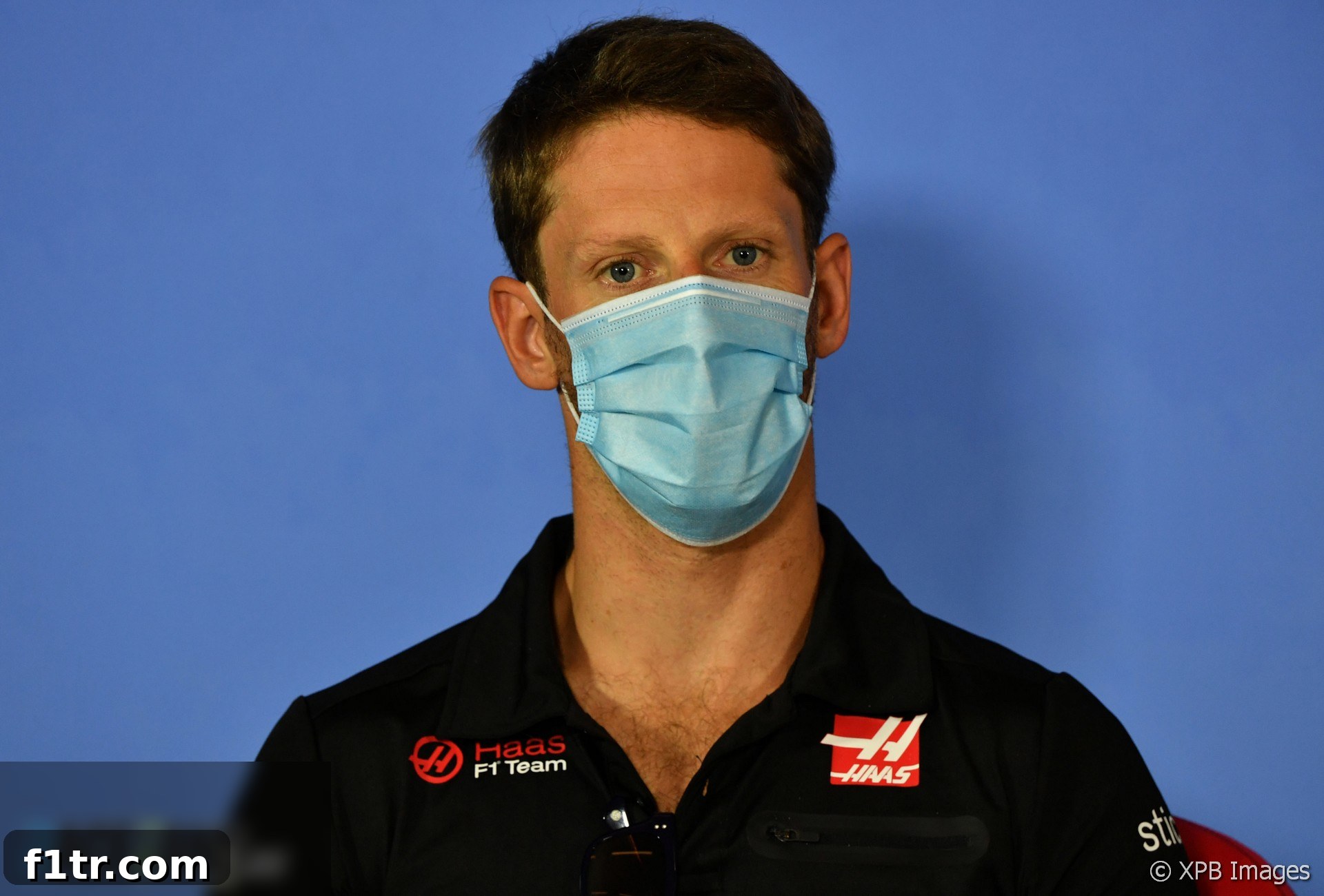
Following a profoundly challenging 2019 campaign, the Haas F1 Team is entering the delayed 2020 Formula 1 season with a renewed sense of purpose and confidence. Drivers Romain Grosjean and Kevin Magnussen have both expressed strong belief that the team has thoroughly diagnosed and addressed the underlying issues that plagued their previous season, promising a more responsive car and a more cohesive operational approach. The anticipation is palpable as the team prepares for the highly awaited opening rounds, eager to demonstrate their advancements on track.
The 2019 season proved to be one of the most difficult in the team’s history since joining Formula 1. The VF-19 chassis, while occasionally showing flashes of pace in qualifying, notably struggled with race performance, often plummeting down the order on Sundays. This inconsistency was a persistent source of frustration, culminating in the team finishing a disappointing ninth in the constructors’ championship standings. A particularly stark illustration of their struggles unfolded at the Red Bull Ring, the very venue hosting this weekend’s season opener. Despite impressive qualifying efforts that saw them secure the fifth and eleventh fastest times, the team’s race pace vanished, leading to a disheartening sixteenth and nineteenth place finish. This dramatic drop-off became a regrettable hallmark of their 2019 performance, highlighting a fundamental disconnect between their car’s potential and its ability to deliver over a full race distance.
However, Romain Grosjean, a veteran with the team, now exudes a palpable sense of optimism regarding Haas’s internal improvements. He stated with conviction, “I’m very confident” that the team has not only pinpointed and rectified these critical weaknesses but has also significantly enhanced its internal processes for integrating driver feedback. In a pre-Austrian Grand Prix FIA press conference, Grosjean elaborated, “I think everyone has had a very good look at everything. I believe now we’ve got better way of understanding issues and getting in line with the drivers’ comments. Because, at the end of the day, we are the ones driving the car.” This sentiment underscores a crucial shift in the team’s engineering philosophy, placing greater emphasis on the direct, on-track experience of its drivers.
The core of Haas’s 2019 predicament stemmed from an inability to consistently extract performance from their tires and to manage aerodynamic stability throughout a race. This led to a peculiar situation where the car could perform well over a single lap but struggled immensely with degradation and balance in longer stints. Grosjean noted that the drivers detected these issues early on, but the technical sensors and analytical tools took longer to confirm and diagnose the root causes. “Very early on we felt like something was a bit off and it took more time for the sensor to find out,” he explained. The team’s overhaul includes streamlining these diagnostic processes. “Now I think all our processes are done in the way that we can operate quicker, faster. We know where to look,” Grosjean added, stressing the newfound efficiency. This suggests a more robust feedback loop between drivers, engineers, and strategists, vital for addressing the intricate demands of modern Formula 1 machinery. The goal is clear: to react with greater agility and precision should any performance anomalies resurface.
Advert | Become a Supporter & go ad-free
Adding another layer of complexity to the 2020 season, particularly for teams like Haas operating on tighter budgets, is the unprecedented economic impact of the global pandemic. Team principal Guenther Steiner has openly communicated that Haas will not introduce any significant updates for its VF-20 chassis until the financial landscape becomes clearer, specifically until the team has a more accurate projection of its income for the year. This pragmatic approach reflects the severe financial pressures facing Formula 1 teams in this restructured season. However, Grosjean views this constraint not as a setback, but as an opportunity for intense optimization of the existing package. “We have a good baseline from winter testing,” he affirmed. The focus, therefore, shifts from rapid development to meticulous fine-tuning and maximizing every ounce of performance from the car as it stands. This strategy allows the engineering team to concentrate solely on understanding the VF-20’s characteristics and adapting it to different track conditions and temperatures, rather than dedicating resources to developing, manufacturing, and testing new parts. “The guys have been optimising everything we’ve learned from winter testing and that’s good and we don’t have to focus on trying to get new parts to work over a few races,” he noted, highlighting the potential benefit of this forced stability. This period of optimization is crucial, especially as the team heads into a radically different competitive environment than initially anticipated, with a condensed calendar and often back-to-back races.
Echoing Grosjean’s sentiments, Kevin Magnussen, the other half of the Haas driver lineup, believes that the team has emerged stronger and more resilient from the crucible of last year’s difficulties. Adversity, in his view, has forged a deeper sense of unity and purpose within the organization. “The whole process of going through last year, struggling all the way through the year, just made us stronger,” Magnussen reflected. He emphasized how the team was forced to collectively delve into unconventional areas of inquiry and problem-solving, exploring avenues they might otherwise have overlooked during more straightforward seasons. “It made us work together as a team better, made us look at different things, things that we wouldn’t normally probably look into. These hard times like last year will make you stronger overall as a team.” This profound experience has undoubtedly enhanced their collective problem-solving capabilities and reinforced their commitment to fighting through challenges, qualities that will be invaluable in the unpredictable 2020 season. Magnussen particularly praised the team’s unwavering spirit: “I think the positive thing is that the team kept fighting all the way through, made some good decisions, had difficult decisions, made them and stuck with it.”
Despite the palpable optimism, Magnussen remains a pragmatist, acknowledging that the true test of the VF-20’s progress will only come when it faces competitive conditions. He highlighted the significant changes from the 2019 model: “This car this year seems to be a very different car. At least that’s all we can say right now.” While early indications from winter testing were promising, and the car “feels good” to drive, he cautions against premature conclusions. Every team would have made improvements, and the relative performance only becomes clear once all cars are pushed to their limits in a race setting. “I hope tomorrow or maybe Saturday after qualifying we can say it was as good as we thought,” he commented, reflecting the universal uncertainty pervading the paddock. The excitement for the season opener, delayed by months, is immense for Magnussen, likening it to the traditional Australian Grand Prix curtain-raiser. “So it’s very exciting, this is the first race of the year and I have the same kind of feeling that I normally have going into Australia and it’s very exciting to see where everyone stacks up and where we’re going to be in the race.” This sentiment captures the unique thrill and apprehension of a new Formula 1 season, amplified by the unprecedented circumstances of 2020.
The 2020 Austrian Grand Prix at the Red Bull Ring serves as a critical initial benchmark for Haas. It will not only validate their winter testing data but also reveal the efficacy of their extensive efforts to overhaul their operational and technical shortcomings. With a robust understanding of their past issues, a commitment to optimizing their current package, and a team fortified by shared adversity, Haas is poised for a significant turnaround. The journey of redemption for the American team begins now, and all eyes will be on Grosjean and Magnussen to translate their renewed confidence into tangible results on the fiercely competitive Formula 1 grid.
Advert | Become a RaceFans supporter andgo ad-free
2020 F1 Season: Related Articles & Insights
Delve deeper into the 2020 Formula 1 season with these relevant articles, providing further context and analysis on key events and developments:
- Grosjean to make F1 test return tomorrow for first time since Bahrain horror crash
- Pictures: Wrecked chassis from Grosjean’s Bahrain fireball crash to go on display
- Bottas vs Rosberg: Hamilton’s Mercedes team mates compared after 78 races each
- F1 revenues fell by $877 million in Covid-struck 2020 season
- Hamilton and Mercedes finally announce new deal for 2021 season
Browse all 2020 F1 season articles