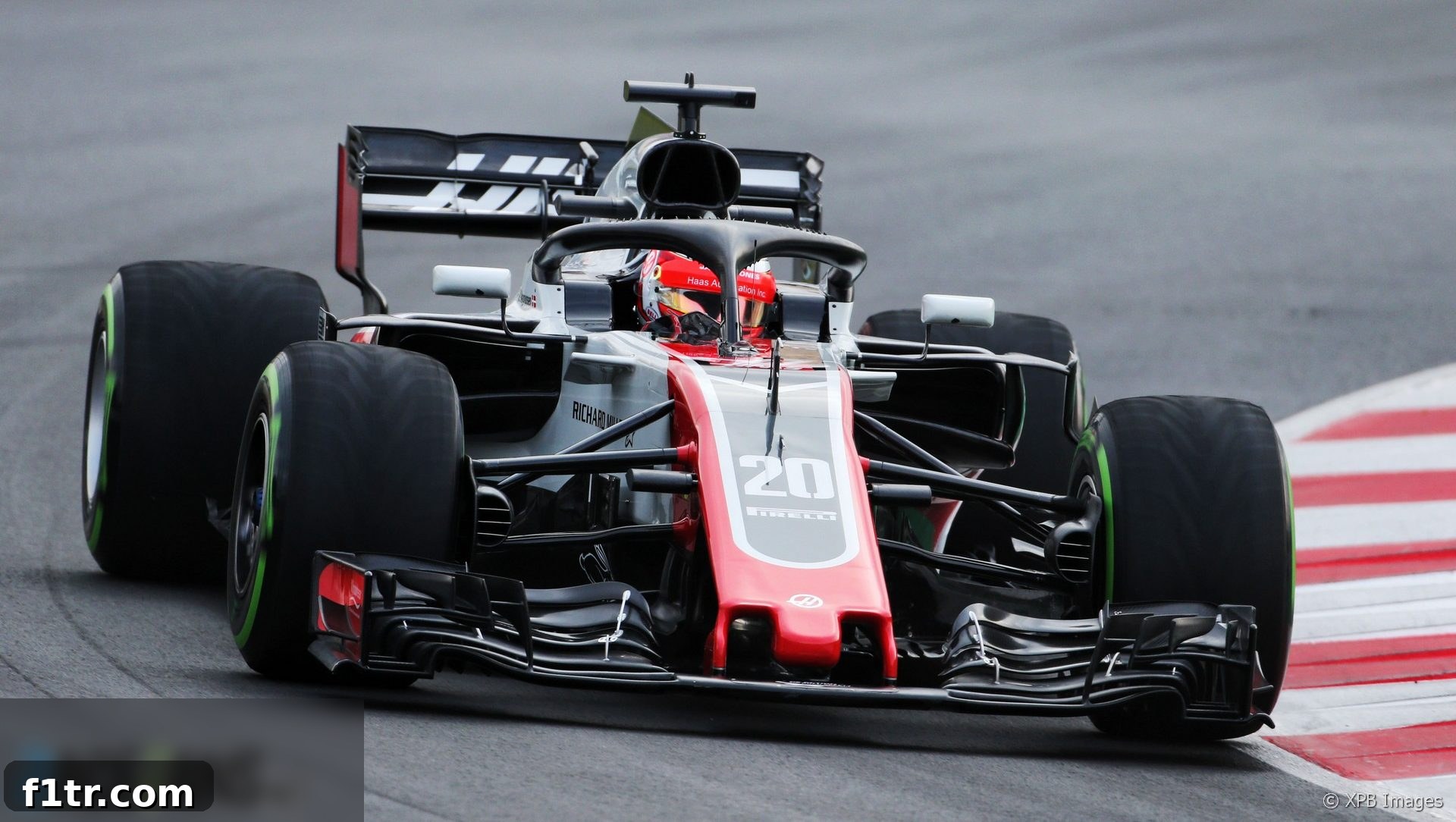
Haas Battles Through Challenging F1 Pre-Season Testing: Steiner Absolves Magnussen After Critical Issues
Formula 1 pre-season testing is a crucible where teams forge their hopes for the upcoming championship. It’s a critical period for evaluating new machinery, understanding tire dynamics, and fine-tuning every component before the competitive season begins. For the Haas F1 team during the 2018 Barcelona tests, this vital preparation phase proved to be exceptionally demanding, marked by technical glitches, car damage, and the unforgiving nature of winter track conditions.
Team principal Guenther Steiner, a figure known for his direct and often candid assessments, stepped forward to defend driver Kevin Magnussen following a significant spin during a challenging test session. Steiner unequivocally stated that the Danish driver was not to blame for the incident, pointing instead to a series of underlying issues with the car’s setup and the intricate dance of tire temperature management.
Understanding the Unseen Enemy: The Battle with Tire Temperature
“The first time in the car to get the tires to work is difficult,” Steiner explained, highlighting a fundamental challenge in modern Formula 1. He elaborated on the specific circumstances that led to Magnussen’s off-track excursion: “We didn’t get the confidence into Kevin, he went into a gravel trap. That was nothing to do with him, that was our fault.” This admission underscores the complex relationship between driver feel, car settings, and the notoriously narrow operating windows of Pirelli’s F1 tires.
The root cause, according to Steiner, was a “glitch in the settings” that severely hampered the VF-18’s ability to generate and maintain optimal tire temperature. Modern F1 tires require meticulous thermal management; they are designed to perform within a very specific temperature range. Outside of this window, their grip levels diminish dramatically, making the car exceptionally difficult to control. “It’s brutal out there if the tires are going down on temperature, when you take them out of the blankets, it’s like being on the ice,” Steiner vividly described. This lack of initial grip meant Magnussen couldn’t push the car hard enough to naturally heat the tires through friction and load, creating a vicious cycle where cold tires led to lower speeds, which in turn prevented tire heating. This precarious situation ultimately culminated in the spin, a direct consequence of the technical malfunction rather than driver error.
The incident served as a stark reminder of the delicate balance required to operate an F1 car at its limit, especially under challenging conditions. Teams spend countless hours attempting to understand and optimize tire behavior, as even a few degrees outside the ideal temperature range can cost precious tenths of a second or, worse, lead to costly accidents. For Haas, this early glitch meant valuable track time was lost, hindering their data collection and development schedule.
A Cascade of Frustrations: Technical Setbacks and Uncooperative Weather
Magnussen’s spin wasn’t an isolated incident but rather a continuation of the frustrations that plagued the Haas team throughout the opening days of testing. Steiner lamented, “We had a few issues and then, very similar to yesterday, we just had always our issues at a good time and then we’d get the car ready. It snowed or it rained or it was something.” This unfortunate confluence of mechanical problems and adverse weather conditions meant that whenever the car was prepared for running, the track conditions deteriorated, or vice-versa. This constant battle against the elements and internal technical gremlins made it incredibly difficult for the team to achieve any meaningful, consistent running, which is the cornerstone of effective pre-season preparation.
The unpredictable weather during winter testing in Barcelona – ranging from unexpected snow flurries to intermittent rain – only amplified the team’s woes. These conditions are far from ideal for evaluating aerodynamic performance or tire compounds designed for warmer race environments. Consequently, the data collected in such compromised circumstances often has limited relevance for the actual race season, further compounding the challenge for teams like Haas striving to maximize their efficiency.
The Downward Spiral: Car Damage and Costly Repairs
The immediate consequence of Magnussen’s spin was significant floor damage to the VF-18. In Formula 1, the floor is an incredibly complex and crucial aerodynamic component, responsible for generating a substantial portion of the car’s downforce. Any damage to it can severely compromise the car’s performance and balance. “We had to fix the car, it was not a good day,” said a visibly frustrated Steiner. He frankly admitted, “This was not what we are about, it was a day to write off to be honest. We learned something but it was not a lot.”
The extent of the damage went beyond just the floor. Steiner detailed the specific issues: “When we went off this morning we damaged the floor on the bottom, then you need to fix it. It’s a downward spiral. On the side of the barge board, the blinds, one of them on the left-hand side came loose.” Bargeboards, another intricate aerodynamic feature, are designed to manage airflow around the sidepods and generate vortices that enhance downforce. Even a seemingly minor component like a loose “blind” on a bargeboard can have a disproportionate impact on the car’s aero efficiency, requiring lengthy and often complex repairs. The challenge for a smaller team like Haas is often the availability of spare parts. “Normally they are small issues but they take a long time to fix if you don’t have a spare to put on straight away,” Steiner explained, highlighting how even minor damage can consume precious hours of track time during testing, time that is irreplaceable.
Logistics play a critical role here. While top teams might have an abundance of spare parts and even multiple chassis ready, smaller independent outfits often operate with tighter budgets and fewer immediate replacements. This necessitates careful strategic decisions regarding repairs versus replacement, particularly when dealing with bespoke aerodynamic components that require significant manufacturing time.
Strategic Decisions Amidst Uncertainty: The New Floor Dilemma
A new floor for the VF-18 was anticipated to arrive the following day, offering a potential boost in performance or at least a fresh start. However, with adverse weather conditions – particularly deteriorating track conditions due to rain or snow – still forecast, Steiner revealed a pragmatic and cost-conscious decision: to continue using the repaired floor rather than deploying the brand-new component. “We can still fix this one,” he stated, indicating the team’s capability to mend the damaged floor to a usable state. “Tomorrow I don’t want the new floor on if we go out, it’s the wrong day to put a new floor on.”
This decision reflects the inherent risks of testing expensive new parts in suboptimal conditions. Deploying a new, unproven component in wet or cold weather significantly increases the chance of further damage, which would not only incur additional repair costs but also delay the crucial validation process for the upgrade. Steiner’s approach prioritized protection of assets and strategic deployment, ensuring that the new floor would be introduced when conditions allowed for proper evaluation and minimized the risk of a premature write-off.
Another Technical Glitch: The DRS Failure
As if the day hadn’t been challenging enough for Kevin Magnussen, his session was capped by yet another mechanical failure towards the end of the long run. “The DRS we lost on the long run,” Steiner explained. The Drag Reduction System (DRS) is a crucial performance enhancer, allowing drivers to open a flap on the rear wing on designated straights to reduce drag and increase top speed for overtaking. A malfunctioning DRS can severely impact a car’s speed on the straightaways and, critically, can pose a safety risk if it fails to close properly.
“We called him in because it didn’t open any more. Then he came in and we had to change the complete rear wing because it was getting loose, the bonding. So we lost some time there. Then we just went out to do at the end a lap to see if the new one works.” The need to replace the entire rear wing due to “bonding” issues suggests a structural integrity problem with the DRS mechanism or the wing assembly itself. This type of failure is a serious concern during testing, as reliability is paramount. Replacing a complete rear wing is not a swift operation, consuming more valuable track time and adding to the team’s repair burden. This incident further emphasized the rigorous demands placed on F1 components and the exhaustive nature of pre-season testing, which aims to expose such weaknesses before the racing begins.
Looking Ahead: Driver Schedules and Contingency Planning
With Magnussen’s difficult day concluded, teammate Romain Grosjean was scheduled to take over driving duties for the following day. However, the recurring theme of adverse weather introduced uncertainty into the team’s plans. Steiner acknowledged that it was too early to decide whether the team would redistribute the remaining test days between its drivers if the upcoming session proved to be another wash-out. F1 teams meticulously plan their testing schedules to give both drivers equal time and to gather comprehensive data across different setups and scenarios. Disruptions can throw these plans into disarray, forcing difficult decisions regarding driver equity and development priorities.
“Today was a write-off,” Steiner reiterated, summarizing the sentiment of the entire team. “You cannot always speculate, you make a decision, the drivers buy into it. Both had a crappy day – Romain yesterday, Kevin today. So I don’t know what the next day’s looking like. If Romain can’t drive then we sort that problem out next week.” This pragmatic outlook underscores the reality of F1 testing: unforeseen circumstances are part of the game, and teams must remain flexible and adaptable. Despite the setbacks, the ultimate goal remains to learn as much as possible, identify weaknesses, and arrive at the first race of the season with a car that is both fast and reliable.
The initial days of pre-season testing for Haas F1 presented a tough learning curve, revealing vulnerabilities in the VF-18’s systems and highlighting the challenges of operating in changeable winter conditions. While frustrations ran high, these arduous days are crucial for teams to address problems away from the high-pressure environment of a race weekend, ultimately strengthening their readiness for the demanding Formula 1 season ahead.
Go ad-free for just £1 per month>> Find out more and sign up
2018 F1 season
- F1 feared “death knell” for Drive to Survive after Ferrari and Mercedes snub
- McLaren staff told us we were “totally crazy” to take Honda engines in 2018 – Tost
- ‘It doesn’t matter if we start last’: How Red Bull’s junior team aided Honda’s leap forward
- Honda’s jet division helped F1 engineers solve power unit problem
- McLaren Racing losses rise after Honda split
Browse all 2018 F1 season articles