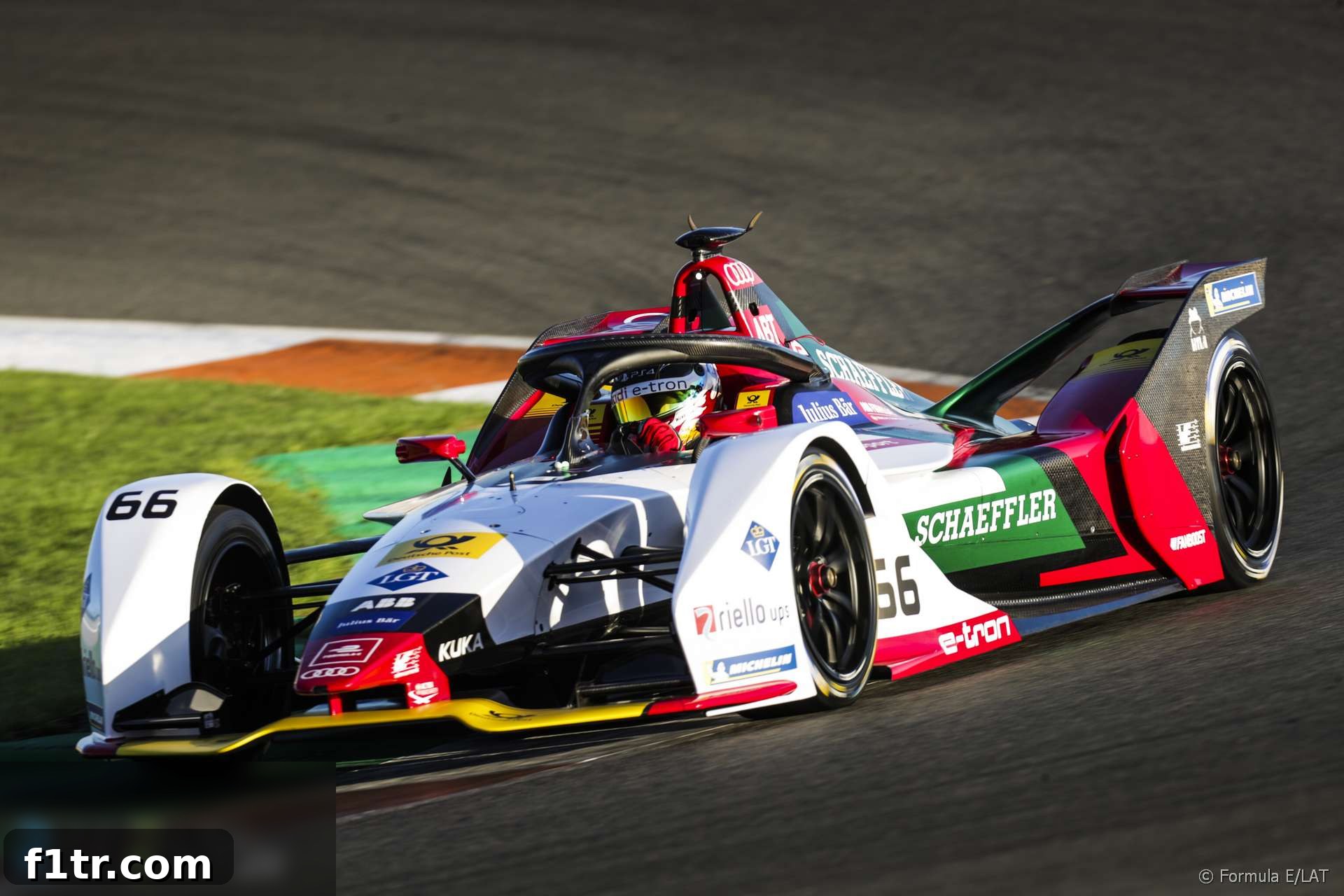
Lewis Hamilton Unwavering in Stance Against Formula E Transition
In a world increasingly shifting towards electric vehicles and sustainable technologies, the realm of motorsport is not immune to these transformative pressures. However, for a figure as prominent and successful as Lewis Hamilton, the allure of all-electric racing in Formula E remains distinctly unappealing. The five-time Formula 1 world champion has unequivocally stated his lack of interest in making such a switch, drawing a clear line between his passion for traditional F1 and the emerging electric series.
Advert | Become a Supporter & go ad-free
Hamilton’s primary reason for dismissing a future in Formula E centers on a fundamental aspect of racing: performance. He highlighted the significant disparity in speed and technological advancement between the two disciplines. “I don’t think you are ever going to compare Formula One and Formula E,” Hamilton asserted, underscoring the vast gulf in engineering and raw speed. He suggested that while Formula E might evolve, it has a substantial journey ahead to match the pinnacle of motorsport.
The Performance Divide: F1 vs. Formula E
The gap in performance, according to Hamilton, is not merely marginal but substantial. He pointed out that “the technology that we have, it’s quite far advanced compared to what they would be having and they’re slower than Formula Ford at the moment so they’ve got a long way to catch the speed of a Formula One car.” This direct comparison vividly illustrates the current limitations of Formula E cars when stacked against the technological marvels of Formula 1. F1 vehicles, with their sophisticated hybrid power units, aerodynamic mastery, and immense downforce, are designed to push the boundaries of speed and cornering capabilities. They represent the zenith of internal combustion engine development, augmented by powerful electrical systems.
Formula E, by contrast, operates with a different philosophy. Its cars are engineered for tighter, often street-based circuits, prioritizing efficiency, maneuverability, and accessible racing. While Formula E has made incredible strides in battery technology and powertrain development since its inception, the sheer power output and high-speed aerodynamics required to rival an F1 car are not yet within its current design parameters. Hamilton’s comments reflect a racer’s innate desire for the highest possible performance and the thrill of pushing the absolute limits of speed and engineering.
Appreciation for Progress, Personal Preference
Despite his reservations about competing in Formula E, Hamilton expressed admiration for the series’ growth and innovative spirit. “But I think it’s really impressive. I’ve been watching their cars on social media and they look pretty cool, so I wish them all the best and looking forward to seeing it progress,” he stated. This balanced view acknowledges Formula E’s important role in developing electric vehicle technology and promoting sustainable racing, even if it doesn’t align with his personal driving ambitions. It shows an understanding of the broader automotive and environmental landscape, recognizing the value of different forms of motorsport.
The Environmental Conundrum: A ‘Petrolhead’s’ Dilemma
Interestingly, Hamilton’s Mercedes team is set to enter the Formula E championship next year, creating a unique tension between his personal stance and his team’s strategic direction. This situation highlights a deeper conflict for Hamilton: the environmental impact of traditional racing. He admitted to being “conflicted” about the effect conventional engines have on the environment, a concern that resonates with many in the public discourse.
“It’s a difficult one,” Hamilton mused. “The gasses that we emit with our cars are not particularly helpful for the climate and for the world, so on one side that’s a concern for me.” This statement reveals a conscientious side to the champion, acknowledging the broader environmental responsibilities that come with high-performance motorsport. Formula 1, like many industries, faces increasing pressure to reduce its carbon footprint and demonstrate a commitment to sustainability. The sport has taken steps in this direction, with hybrid engines, biofuel research, and ambitious net-zero targets for its operations.
However, the emotional connection to traditional racing runs deep for Hamilton. “But on the other side, as a racing fan, I’m a petrolhead and I will always be a petrolhead. There will never be a time when I’m an ‘electric head’,” he declared. This powerful assertion underscores a core identity for many motorsport enthusiasts and professionals. The roar of a V-shaped engine, the smell of high-octane fuel, and the raw mechanical power are integral to the Formula 1 experience. Hamilton’s hope that “at least, in my period of time, it’s always going to be a fuelled car with at least some sort of V-shaped engine, with some sort of sound” encapsulates this visceral connection, which is a significant factor in his unwavering commitment to F1.
Advert | Become a RaceFans supporter andgo ad-free
Formula E’s Growing Influence and Manufacturer Appeal
While Hamilton’s personal preference remains with F1, he is keenly aware of Formula E’s increasing relevance and appeal to major automotive manufacturers. “I think it’s great what Formula E are doing and and it’s a great start, it’s great to see all the top brands – Audi, BMW, Mercedes – are all getting heavily invested,” he observed. This influx of renowned manufacturers is a testament to Formula E’s strategic importance in the evolving automotive landscape.
Manufacturers are drawn to Formula E for several compelling reasons. The series provides a vital platform for research and development in electric powertrain technology, with direct relevance to their road car divisions. It also offers an opportunity to showcase their commitment to sustainability and electric mobility, aligning with corporate social responsibility goals and future market trends. In an era where cities are increasingly exploring bans on internal combustion engines, Formula E’s urban street circuits and electric mandate position it as a forward-thinking, environmentally conscious racing series. This contrasts with Formula 1, which, despite its hybrid era, still grapples with the perception of being less “green.”
Hamilton also touched upon the broader societal impact of transitioning to electric vehicles. “Because, particularly on the roads – just coming here, for example – you see the traffic every single day, there are thousands and thousands of cars on the road. There’s the same in every country you go to. So the sooner we can get rid of the majority of those cars and then turn them into hybrids, then I think that would be a massive difference.” This perspective highlights the role motorsport can play in accelerating the adoption of cleaner road transport, through technological innovation and public awareness. However, he acknowledges that the challenge extends beyond just cars, stating, “But there are a lot of other things we can do around the world with businesses to help with those emissions.”
Max Verstappen’s Echoing Sentiments
Lewis Hamilton is not alone in his steadfast commitment to internal combustion engines and Formula 1. Fellow F1 star Max Verstappen has also voiced similar sentiments, expecting to remain powered by traditional engines for the remainder of his illustrious career. Verstappen echoed the sentiment that Formula E occupies a distinct niche, rather than being a direct competitor to F1.
“I think the boss clearly said of Formula E already that they don’t want to compete or be seen competing against Formula One so I guess that says enough. It’s just a different category,” Verstappen stated. This distinction is crucial; Formula E’s creators have consistently emphasized that their series aims to complement, rather than rival, Formula 1. They cater to a different audience, often in urban environments, showcasing the potential of electric mobility rather than the outright speed and spectacle of F1.
Verstappen’s perspective further reinforces the notion that traditional racing will continue to hold a powerful draw for both drivers and fans. His comment about being “probably be one of the last people in the world to try and buy the last barrels of oil” is a poignant and somewhat humorous declaration of his unwavering loyalty to the internal combustion engine. It reflects a sentiment shared by a significant segment of the motorsport community that cherishes the heritage, sound, and raw power associated with fuel-driven racing.
The Evolving Landscape of Motorsport: Coexistence, Not Competition
The contrasting views of Hamilton and Verstappen, while firmly rooted in their love for Formula 1, also implicitly acknowledge the growing presence and importance of Formula E. The future of motorsport appears to be one of coexistence, where different series cater to diverse preferences and technological priorities. Formula 1 continues to represent the pinnacle of hybrid performance and global spectacle, pushing boundaries in aerodynamics, engine efficiency, and driver skill on legendary circuits.
Formula E, on the other hand, pioneers electric racing, bringing motorsport to urban centers and serving as a crucial testbed for sustainable automotive technology. Its focus on accessibility, fan engagement, and environmental relevance carves out a unique and valuable space in the sporting world. The involvement of major manufacturers in both series further underscores this dynamic, as they leverage each platform for different strategic goals – F1 for prestige and high-performance hybrid development, Formula E for electric innovation and a greener brand image.
Ultimately, the discussion surrounding Lewis Hamilton’s potential move to Formula E highlights the complex interplay of personal passion, technological progress, environmental responsibility, and the evolving identity of motorsport itself. While the roar of a V-shaped engine may forever define a “petrolhead” like Hamilton, the silent surge of electric power is undeniably shaping the next chapter of global racing.
Advert | Become a RaceFans supporter andgo ad-free
Formula E Updates
- McLaren to quit Formula E at end of season
- Wehrlein beats Jaguar pair to title in dramatic Formula E finale
- Wehrlein’s London win sets up thrilling three-way title showdown in finale
- Da Costa takes hat-trick of wins in chaotic second Portland race
- Da Costa inherits Portland win from Evans after Cassidy spins lead away
Browse all Formula E articles