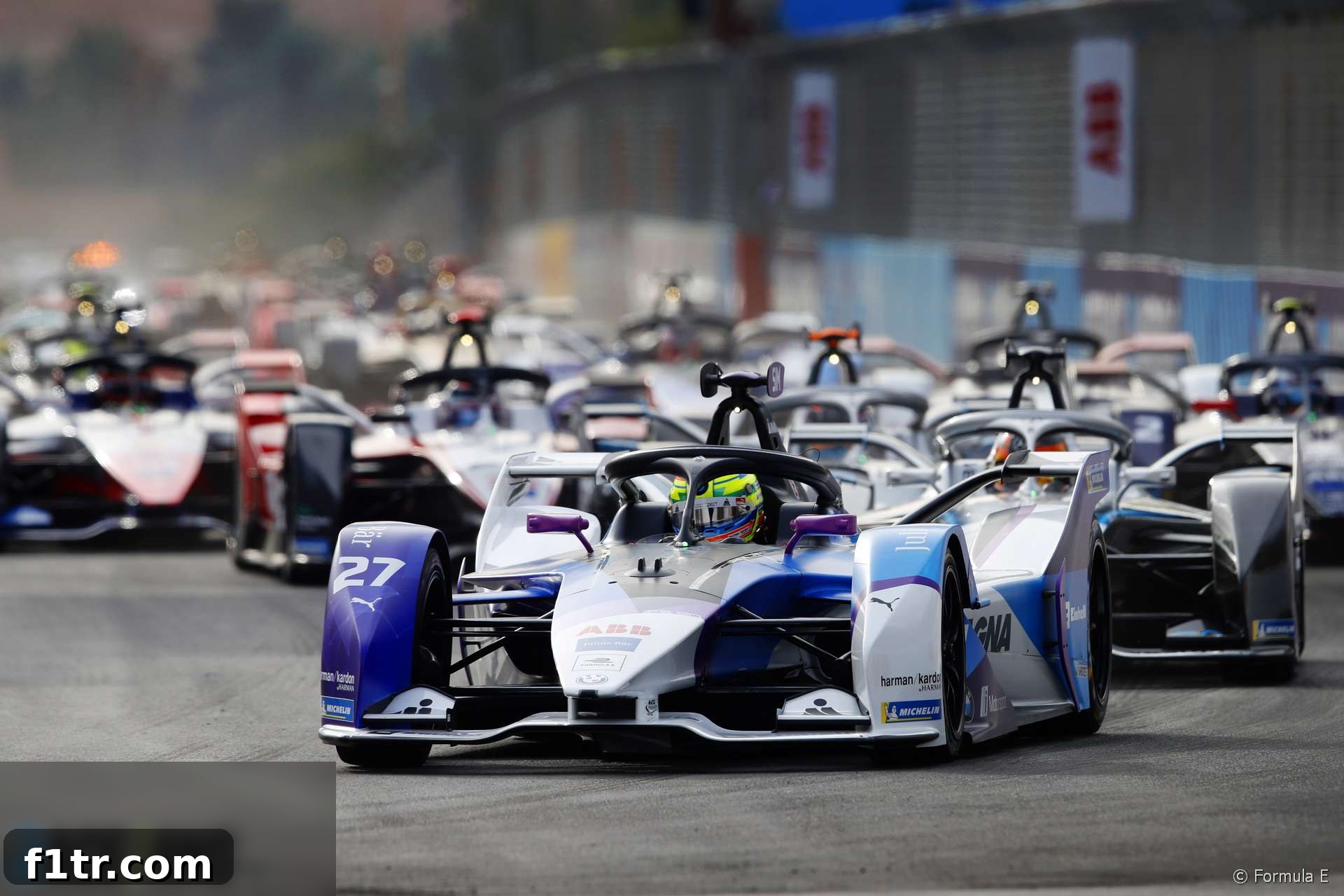
Formula E Jakarta E-Prix Cancelled as Global Motorsport Navigates Unprecedented COVID-19 Disruptions
The global motorsport community finds itself grappling with extraordinary challenges as the Coronavirus pandemic continues to spread across the world. Formula E, the innovative all-electric street racing championship, has become the latest series to significantly alter its calendar, announcing the cancellation of the Jakarta E-Prix. This unfortunate but necessary decision marks the third event removed from the 2019-20 Formula E season, underscoring the profound impact of COVID-19 on international sporting events and the crucial need to prioritize public health and safety.
Advert | Become a Supporter & go ad-free
Originally scheduled for June 6th, 2020, the Jakarta E-Prix was poised to make history as Indonesia’s inaugural Formula E event. The race carried immense significance for the championship’s ongoing expansion into key Asian markets, offering a vibrant urban backdrop for the cutting-edge electric single-seaters. However, the escalating health crisis made proceeding with the event untenable. The cancellation was confirmed following direct instructions from Jakarta Governor Anies Baswedan, acting in concert with Formula E, the Fédération Internationale de l’Automobile (FIA), Ikatan Motor Indonesia (IMI), and the local Organising Committee of the Jakarta E-Prix.
A statement released by Formula E meticulously explained the rationale behind this difficult decision: “As instructed by the governor of Jakarta Anies Baswedan, and in consultation together with Formula E, the FIA, Ikatan Motor Indonesia and the Organising Committee of the Jakarta E-Prix, it will no longer be possible to race in Jakarta on the scheduled date of June 6th, 2020.” The statement emphasized the paramount concern for public well-being: “Due to the outbreak of Covid-19 and the escalating number of cases in Indonesia and Jakarta, the decision has been taken as the most responsible course of action, to protect the health and safety of championship participants, staff and spectators.” This clear articulation reflects the unified commitment of all stakeholders to safeguard the health of everyone involved and the wider community.
Despite the immediate setback, Formula E expressed a desire to revisit the possibility of hosting the event in the future. The statement concluded with a hopeful outlook: “We will continue to monitor the situation closely with the relevant authorities and the Organising Committee of the Jakarta E-Prix, in order to assess the possibilities of rescheduling the race at a later date.” This indicates that while the current circumstances prevent the race, the long-term ambition to bring electric racing to Indonesia remains strong, pending an improvement in global health conditions.
Formula E’s Strategic Adaptation: Contingency Plans for a Challenged Season
The cancellation of the Jakarta E-Prix follows earlier decisions to postpone or cancel other pivotal races on the Formula E calendar, including events in Sanya, China, and Rome, Italy. These successive disruptions have significantly altered the landscape of the 2019-20 championship, prompting Formula E leadership to develop comprehensive contingency plans aimed at preserving the integrity and competitive spirit of the season.
Alberto Longo, co-founder of Formula E, has been at the forefront of these efforts, confirming that the series is “evaluating contingency plans to lessen the potential impact of coronavirus and maintain the highest possible number of races on the calendar.” This proactive stance highlights the determination within the championship to deliver a meaningful season for teams, drivers, partners, and fans alike, even in the face of unprecedented global challenges.
Among the innovative solutions being actively considered are “adding double-headers to existing events, using permanent facilities and racing behind closed doors if necessary and advised to do so by local authorities in any given location.” Each of these strategies offers a unique approach to mitigating the ongoing crisis. Double-headers, for instance, involve hosting two races over a single weekend at the same venue, a highly efficient method for making up for lost events while minimizing extensive travel and logistical costs. The proposal to utilize permanent racing facilities, rather than the series’ traditional temporary street circuits, offers enhanced flexibility and control. These venues are better equipped for rapid modifications, controlled access, and the implementation of stringent health protocols, especially if races are to be held without spectators.
The Ricardo Tormo circuit in Valencia, Spain, has emerged as a strong candidate for such adaptable solutions, with reports suggesting it is under active consideration. Its established infrastructure, modern facilities, and experience in hosting major motorsport events make it an ideal location for implementing new formats, including races held in a more contained environment. Racing behind closed doors, although a stark departure from Formula E’s vibrant public-facing events, represents a last-resort option to ensure that championship points can still be awarded and commercial obligations met, safeguarding the sport’s continuity for global broadcast audiences.
Advert | Become a RaceFans supporter andgo ad-free
The Wider Ripple Effect: Global Motorsport Grapples with Cancellations and Postponements
The challenges confronting Formula E are indicative of a broader crisis impacting the entirety of global motorsport. From the pinnacle of Formula 1 to regional single-seater and touring car championships, virtually no racing series has remained untouched by the far-reaching effects of the COVID-19 pandemic. This unprecedented disruption has compelled event organizers, national and international federations, teams, and drivers into a continuous state of adaptation and difficult decision-making, often with significant financial implications across the industry.
Stringent travel restrictions, government-mandated lockdowns, and evolving public health advisories have collectively rendered a vast number of international sporting events unfeasible. The paramount concern across all motorsport disciplines remains the health and safety of competitors, dedicated team personnel, officials, and, crucially, the millions of passionate spectators who typically animate these events. Beyond the immediate health concerns, the economic ramifications are profound, impacting vital sponsorship deals, ticket revenues, hospitality services, and the numerous local economies that rely heavily on race tourism. The uncertainty has created a domino effect of postponements and cancellations, forcing a complete reimagining of the global motorsport calendar.
Below is a comprehensive overview of some of the major motorsport events that have been cancelled or postponed due to the Coronavirus outbreak, illustrating the widespread and indiscriminate nature of the disruption:
Major Motorsport Events Cancelled or Postponed Due to Coronavirus
| Dates | Series | Event | Location | Country | Notes |
|---|---|---|---|---|---|
| March 6 – March 8 | Moto GP | Qatar Grand Prix | Losail International Circuit | Qatar | The premier class race was cancelled due to significant travel restrictions impacting Italian personnel and teams. |
| March 13 – March 15 | World Superbikes | Qatar Round | Losail International Circuit | Qatar | This event was also affected by the same regional travel restrictions that impacted MotoGP. |
| March 17 | Ferrari Challenge UK | Prologue | Donington Park | UK | The season’s introductory event was postponed and rescheduled to coincide with the first championship round. |
| March 21 | Formula E | Sanya E-Prix | Sanya | China | One of the earliest Formula E events to be impacted, reflecting the initial epicenter of the virus outbreak. |
| March 20 – March 22 | Moto GP | Thailand Grand Prix | Buriram International Circuit | Thailand | A crucial event in MotoGP’s Asian leg, moved due to rising regional health concerns. |
| March 21 – March 22 | Super Taikyu | Round One | Suzuka | Japan | Japan’s significant endurance racing series faced early disruption to its championship calendar. |
| April 4 | Formula E | Rome E-Prix | Rome | Italy | Directly affected by Italy becoming a major hotspot for the virus within Europe, leading to severe restrictions. |
| April 4 – April 5 | Super Formula | Round One | Suzuka | Japan | Japan’s top single-seater championship also saw its highly anticipated season opener postponed. |
| April 3 – April 5 | Ferrari Challenge Europe | Mugello Round | Mugello | Italy | Another key Italian motorsport event, underlining the severe and widespread impact within the country. |
| April 3 – April 5 | Moto GP | Americas Grand Prix | Circuit of the Americas | USA | Initially postponed from its April date, with efforts made to reschedule it for November 13th-15th. |
| April 17 – April 19 | Formula 1 | Chinese Grand Prix | Shanghai International Circuit | China | One of the most high-profile postponements, significantly affecting the start of the Formula 1 season. |
| April 17 – April 19 | Porsche Carrera Cup Asia | Shanghai Round | Shanghai International Circuit | China | As a key support race for the Chinese Grand Prix, its status was directly tied to the F1 event’s fate. |
| April 17 – April 19 | Chinese Formula Four | Shanghai Round | Shanghai International Circuit | China | This junior single-seater series, also a Chinese Grand Prix support event, was similarly impacted. |
| April 17 – April 19 | GT World Challenge Europe | Monza Round | Monza | Italy | Including GT Sports Club Europe, this GT racing series faced significant disruption in Italy. |
| April 17 – April 19 | Formula Renault Eurocup | Monza Round | Monza | Italy | Another prestigious junior single-seater championship event affected by Italian restrictions. |
| May 6 | Formula E | Jakarta E-Prix | Jakarta | Indonesia | The most recent cancellation for Formula E, further deepening the challenges for the series. |
Advert | Become a RaceFans supporter andgo ad-free
Looking Ahead: Resilience and Adaptation in the World of Electric Motorsport
The cancellation of the Jakarta E-Prix and the extensive impact of COVID-19 on the global motorsport calendar underscore a period of unprecedented challenge and uncertainty. However, the response from Formula E, along with other major racing series, has been characterized by a strong commitment to resilience, innovation, and adaptation. The strategic consideration of double-headers, the exploration of alternative, permanent venues, and the drastic measure of spectator-free races all highlight a collective determination to deliver a championship season, even if its ultimate form deviates significantly from initial plans.
As the world continues its battle against the pandemic, the motorsport community remains vigilant and flexible. Prioritizing the health and safety of all participants, officials, and fans is paramount, while simultaneously striving to maintain the excitement, competition, and technological advancement that define the sport. The ability of series like Formula E to innovate, adjust, and embrace new operational models will be crucial in navigating these turbulent times, ensuring the long-term viability and continued growth of electric motorsport on the global stage. The focus now shifts to a careful monitoring of the situation and agile decision-making, aiming to resume racing safely and responsibly whenever conditions permit.
More on Formula E
- McLaren to quit Formula E at end of season
- Wehrlein beats Jaguar pair to title in dramatic Formula E finale
- Wehrlein’s London win sets up thrilling three-way title showdown in finale
- Da Costa takes hat-trick of wins in chaotic second Portland race
- Da Costa inherits Portland win from Evans after Cassidy spins lead away
Browse all Formula E articles