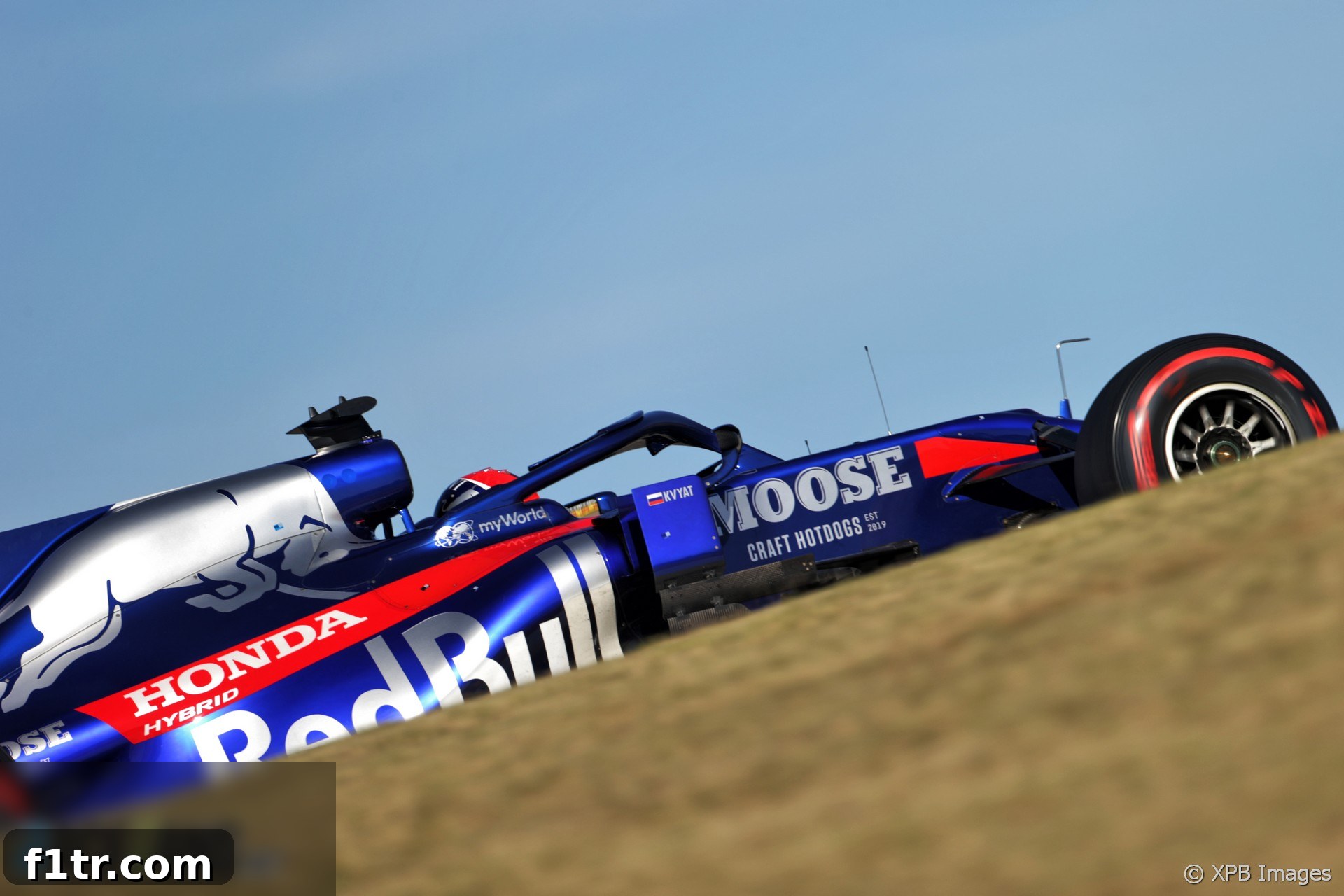
An impassioned Daniil Kvyat voiced his profound dissatisfaction with the penalty that stripped him of a hard-earned points finish at the 2019 United States Grand Prix, emphatically stating the decision is “not what our sport needs.” The incident, a last-lap collision with Racing Point’s Sergio Perez, sparked immediate controversy and reignited the perennial debate surrounding aggressive racing and the consistency of Formula 1 stewarding.
Advert | Become a Supporter & go ad-free
The Controversial Final Lap Collision at COTA
The Toro Rosso driver found himself in a familiar, unwelcome position, losing a potential points finish for the second consecutive race due to a post-race time penalty. The flashpoint occurred on the final lap of the Grand Prix at the Circuit of the Americas (COTA), as Kvyat lunged past Sergio Perez in a desperate bid for a valuable championship point. Their cars made contact, an event that would ultimately unravel Kvyat’s efforts. The battle for the final points-paying position (10th) was intense, with both drivers pushing to the absolute limit, knowing the significance of every single point in the fiercely competitive midfield. Kvyat, known for his aggressive racing style, saw an opening and seized it, demonstrating the kind of daring overtake that fans often crave.
Kvyat’s Outcry: “Harsh But Fair Move” Punished
Kvyat, often dubbed “The Torpedo” for his bold maneuvers, was unequivocal in his assessment of the overtake itself. “I think it was a harsh but fair move,” Kvyat asserted, reflecting on the close-quarters combat. “It was great racing like we want to see and what we have seen this season without other drivers being penalised.” His comments highlight a deep frustration with what he perceives as a double standard or an overly cautious approach to racing incidents by the stewards. For Kvyat, the move was a testament to the exciting, wheel-to-wheel action that defines Formula 1, and to penalise it, in his view, undermines the very spirit of the sport. He felt he had executed a clean, albeit aggressive, maneuver that should have been celebrated, not penalized.
The five-second time penalty subsequently relegated Kvyat from 10th to 12th place, thereby restoring Perez to the coveted final points-paying position. This reversal left Kvyat utterly distraught. “I’m very upset and disappointed about this penalty because I don’t think this is what our sport needs,” he reiterated, his words resonating with a sentiment shared by many fans and pundits who advocate for less intervention and more “let them race” philosophy. This wasn’t merely about losing a point; it was about the fundamental interpretation of racing conduct and what constitutes an acceptable overtake in modern Formula 1. The emotional toll of having a hard-fought result snatched away post-race, particularly in a season where every point was vital for Toro Rosso, was palpable.
The Stewards’ Swift Verdict: An Unchallenged Decision
The decision-making process itself added another layer of contention. The stewards swiftly handed down the post-race penalty after examining video evidence of the collision, notably without consulting the drivers involved. Their official statement provided a detailed justification: “Car 11 [Perez] was in front immediately prior to the apex of the corner,” they noted, adding that “car 26 [Kvyat] ‘dived’ down the inside, had a small lock up and bounced off the kerb, which moved the car to the outside of the exit of the corner, colliding with car 11.”
This explanation suggested that Kvyat initiated the contact by failing to maintain control after his aggressive lunge. The stewards’ interpretation placed the onus squarely on Kvyat for not ensuring a clean pass, particularly given Perez’s prior track position. Such rapid decisions, made without direct input from the drivers who were at the heart of the action, often fuel accusations of disconnect between the race control and the competitors themselves. For drivers, explaining their split-second decisions and the nuances of car control during high-speed maneuvers can offer crucial context that video alone might not fully convey. In addition to the five-second time penalty, Kvyat was also assessed a penalty point on his Super Licence, bringing his total to five. Accumulating 12 penalty points within a 12-month period results in a race ban, adding further pressure to a driver already under scrutiny.
Sergio Perez’s Counter-Accusation: Yellow Flag Infringement?
Adding another dimension to the incident, Sergio Perez offered his own perspective, accusing his rival of failing to adhere to yellow flag protocols earlier in the lap. According to Perez, Kvyat’s alleged infraction allowed him to gain an unfair advantage, putting him in a position to execute the final-lap attack. “He overdid it a bit too much,” said Perez, explaining his view of Kvyat’s driving. “Under the yellow flag, he didn’t lift, he attacked me straight away after the yellow flag and then into 15 he just crashed into me.”
Perez’s accusation, if proven, would highlight a more serious breach of regulations, suggesting that Kvyat’s aggressive pass was not only poorly executed but also predicated on a prior infringement. While the stewards’ decision focused solely on the contact at Turn 15, Perez’s remarks introduced the element of driving standards under caution, a critical aspect of driver safety and fair play in Formula 1. This additional layer of accusation only served to deepen the complexity and controversy surrounding the incident.
Advert | Become a RaceFans supporter andgo ad-free
The Broader Debate: Racing Incidents and F1 Stewarding Consistency
This incident at the 2019 US Grand Prix became a microcosm of a larger, ongoing debate within Formula 1: where should the line be drawn between a legitimate, aggressive racing maneuver and an illegal, contact-inducing infringement? The F1 community, including drivers, teams, and fans, frequently grapples with the perceived inconsistency of stewarding decisions. One week, a similar contact might be deemed a “racing incident” and go unpunished, while the next, a seemingly less severe bump results in a penalty. This unpredictability creates confusion and frustration, making it difficult for drivers to know precisely what is permissible and what is not, thereby impacting their confidence to push the limits in wheel-to-wheel combat.
The “let them race” philosophy, championed by many purists, argues that F1 should tolerate more contact and allow drivers to settle battles on track, fostering more excitement and authentic racing. However, counter-arguments emphasize the need for driver safety and maintaining a fair competitive environment, preventing overly aggressive or dangerous driving. The stewards are tasked with the unenviable job of balancing these competing interests, often under immense pressure and with only seconds to review replays. The Kvyat-Perez incident perfectly encapsulated this tension, with Kvyat arguing for the former and the stewards upholding the latter by punishing what they saw as an avoidable collision. Such decisions, regardless of their immediate impact, contribute to the ongoing narrative about Formula 1’s identity and its future direction in balancing spectacle with strict regulation.
Impact on Kvyat’s 2019 Season and Toro Rosso’s Fight
The 2019 season marked Daniil Kvyat’s return to Formula 1 after a year away, and he had already delivered one of the standout moments of the year with a sensational podium finish at the chaotic German Grand Prix. Losing points in Texas, especially after a hard-fought race, was a significant blow not just to Kvyat’s individual tally but also to Toro Rosso’s constructors’ championship ambitions. Every point was crucial for the midfield teams battling for precious positions and the associated prize money. This penalty, following another similar incident in Mexico, added to a frustrating string of events that undoubtedly impacted Kvyat’s morale and the team’s overall strategic planning for the closing races of the season. It highlighted the fine margins that define success and failure in Formula 1, where a single decision can dramatically alter a driver’s and team’s fortunes.
The penalty handed to Daniil Kvyat at the 2019 United States Grand Prix served as a potent reminder of the complexities inherent in Formula 1 stewarding. While Kvyat felt aggrieved, believing he was delivering the kind of “harsh but fair” racing the sport needs, the stewards’ decision underscored the stringent rules governing contact and responsibility. The incident fueled discussions about consistency, the “let them race” ethos, and the critical role of officials in maintaining safety and fairness on track. Ultimately, it was a costly point for Kvyat and a defining moment in the season’s ongoing narrative of aggressive racing meeting uncompromising regulations.
2019 F1 Season Insights
- Crying in the Melbourne car park at 2019 grand prix was my career low – Ocon
- McLaren Racing reports reduced £71 million loss in 2019
- Kvyat: Hockenheim podium last year was “my biggest achievement” so far
- How the FIA’s new encrypted fuel flow meter targets Ferrari’s suspected ‘aliasing’ trick
- “He smashed my office door”: 23 must-see moments from ‘Drive to Survive’ season two
Browse all 2019 F1 season articles