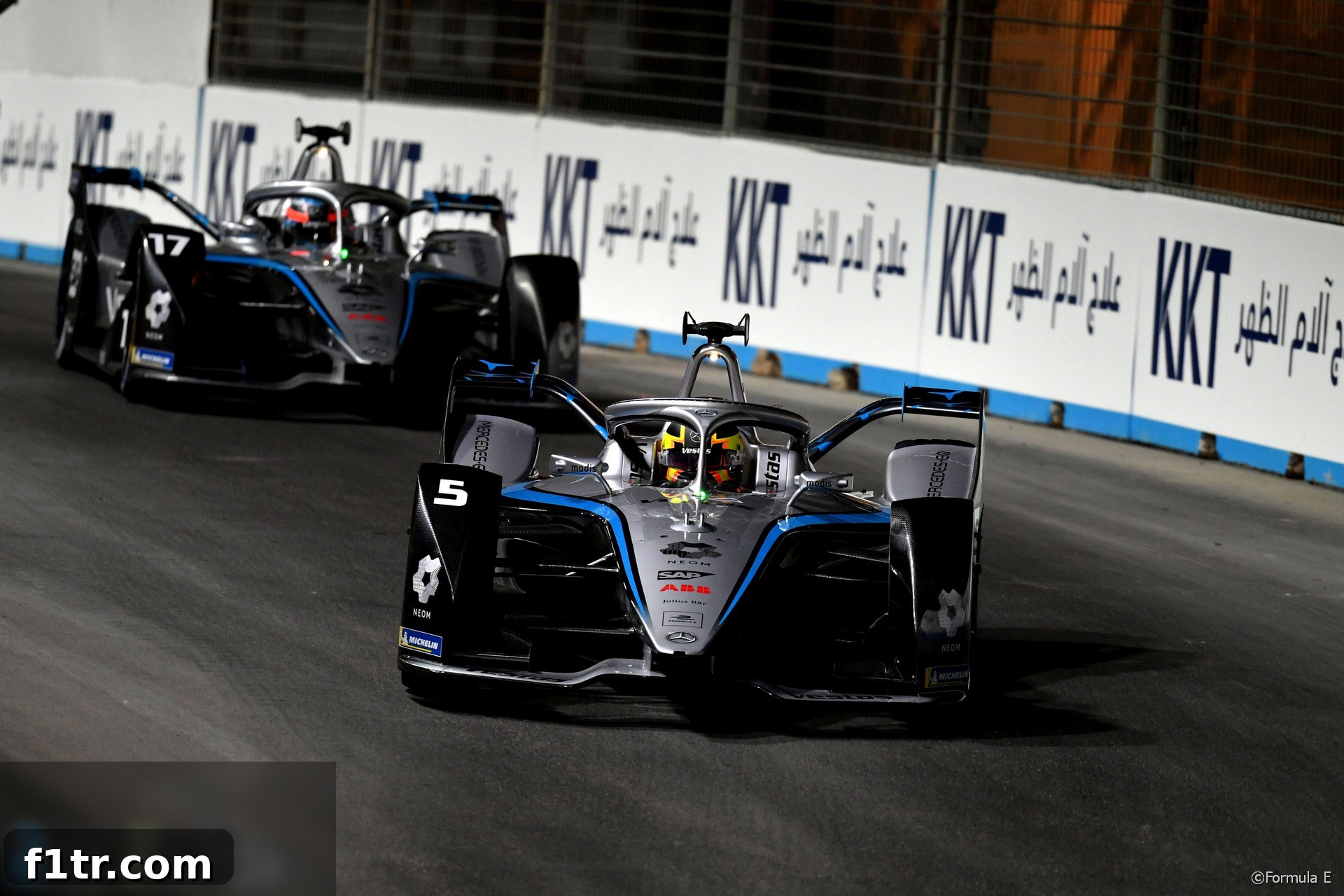
Stoffel Vandoorne Reflects on Diriyah E-Prix Attack Mode Error: A Missed Opportunity
Mercedes-EQ driver Stoffel Vandoorne openly admitted to a costly error during the opening Diriyah E-Prix, acknowledging that he had “only myself to blame” after a critical misjudgment with the Attack Mode activation led to him losing the race lead. The incident, which occurred during a pivotal Safety Car restart, ultimately paved the way for his teammate Nyck de Vries to secure victory in what was a dramatic start to the Formula E season.
Advert | Become a Supporter & go ad-free
The Critical Miss: How an Attack Mode Blunder Cost Vandoorne the Win
Vandoorne had demonstrated impressive pace from the outset of the Diriyah E-Prix, converting his pole position into a commanding lead over the field, including his Mercedes-EQ stablemate Nyck de Vries. The race was unfolding perfectly for the Belgian driver until a Safety Car period disrupted the rhythm. Following the restart, Vandoorne strategically opted to take his second mandatory Attack Mode activation of the race, a critical power boost designed to inject excitement and strategic complexity into Formula E events.
However, what should have been a routine procedure turned into a race-altering mistake. As he veered off the conventional racing line to pass through the designated activation zone, Vandoorne failed to properly trigger the system. This meant he did not receive the crucial power increase, forcing him to attempt the activation again on the subsequent lap. The rules of Formula E are clear: drivers must successfully pass through a specific activation loop, usually located off the ideal racing line, to gain the temporary boost in power. A missed activation wastes precious time and, more critically, the opportunity for a strategic advantage.
Understanding Formula E’s Attack Mode
For those new to Formula E, Attack Mode is one of the championship’s most unique and exhilarating features. Introduced to create more overtaking opportunities and strategic variation, it allows drivers to temporarily access a higher power output for a specified duration during the race. To activate it, drivers must drive off the racing line through a designated “activation zone” at certain points on the circuit. This involves sacrificing track position and time to gain a later speed advantage, demanding precise timing and execution from the drivers and strategic foresight from their teams. A missed activation, as Vandoorne experienced, means losing both the time spent going off-line and the power boost, a double penalty that can severely impact a driver’s race outcome.
Vandoorne’s Immediate Reaction and Self-Reflection
The impact of the error was immediate and profound. “I realised it immediately, to be honest,” Vandoorne confessed after the race. “I missed the third Attack Mode loop on my second activation, which meant that I’d just lost 1.5 to two seconds for nothing, basically. There’s only myself to blame for that.” His candid admission highlighted the high-pressure environment of Formula E, where even the smallest miscalculation can have significant consequences. The lost time allowed De Vries to inherit the lead and activate his own Attack Mode immediately afterward, solidifying his position at the front and ultimately securing the race win.
Despite the disappointment of losing the lead and the potential victory, Vandoorne maintained a pragmatic perspective on the day’s events. “I think, before that, the race was going well. I was leading the pack. I think our pace was looking quite strong and it was about hitting the targets and making sure we were doing everything right with the procedures,” he explained. “But yeah, I basically handed the position to Nyck. And from there, we stayed together and managed to finish one-two.” He acknowledged his regret but also recognized the larger success for the Mercedes-EQ team, securing a superb one-two finish to kick off their season. “I’m a little bit disappointed, obviously, with the way I had with the Attack Mode and not taking the loop correctly, but that’s the way it is. It’s still a very positive day in general for myself, for the team. Pole position and a second place where we can be satisfied with the start of our season.”
Mercedes-EQ’s Strong Start: A One-Two Finish Despite the Setback
While Vandoorne’s personal disappointment was palpable, the Diriyah E-Prix marked an undeniably strong start for the Mercedes-EQ team. Securing both pole position and a dominant one-two finish demonstrated the formidable package they possess for the current Formula E season. Vandoorne’s pole position was particularly noteworthy, as he became the first driver to achieve this feat under Formula E’s innovative new qualifying duels system. This head-to-head format, designed to add further excitement to qualifying sessions, showcases a driver’s raw speed and ability to perform under pressure, making Vandoorne’s achievement all the more significant. The collective performance underscores Mercedes-EQ’s championship aspirations and sets a high benchmark for their rivals.
Advert | Become a RaceFans supporter andgo ad-free
Looking Ahead: Why Tomorrow’s Race Poses an Even Greater Challenge
Despite the strong performance and his own pace in the first race, Vandoorne expressed a cautious optimism for the upcoming second race of the Diriyah double-header. He believes that repeating such a dominant showing will be an even harder task. “It’s quite weird, actually, because you know that tomorrow we have the same opportunity to do it, but at the same time, I think it’s going to be closer than ever,” he stated. His reasoning highlights the rapid learning curve and intense competitiveness inherent in Formula E.
“I think everyone’s now got a day of running behind them. Everyone’s dialed their cars in and I think it’s even going to be harder to get in through those qualifying duels to start with, because everyone will be much more on the limit,” Vandoorne elaborated. This insight reflects a common phenomenon in motorsport double-headers: teams and drivers quickly analyze data, make crucial setup adjustments, and refine their strategies overnight. The track itself also evolves, often gaining more grip as more rubber is laid down, allowing drivers to push harder. This combination of factors means that the margins between competitors are expected to shrink dramatically, turning an already tight championship into an even fiercer battle.
The Evolving Dynamics of Formula E Qualifying Duels
The new qualifying duels format in Formula E is a testament to the series’ commitment to thrilling competition. Unlike traditional single-lap qualifying, this system pits drivers directly against each other in knockout rounds, culminating in a head-to-head battle for pole position. Vandoorne’s successful navigation of this new format for pole in Race 1 was commendable, but he anticipates an even greater challenge in Race 2. With all teams having experienced the duels firsthand, and with car setups optimized, the precision required to advance through each stage will be immense. Drivers will be pushing the absolute limits, making every millisecond count and increasing the likelihood of unexpected upsets. This dynamic ensures that securing a strong starting position will be a monumental task, influencing the entire race strategy.
The Significance of the Diriyah E-Prix Opener
The Diriyah E-Prix holds a special place in the Formula E calendar as the traditional season opener, often setting the tone for the championship battle ahead. The challenging street circuit, with its unique characteristics and demanding corners, provides an immediate test for both drivers and teams. Events like Vandoorne’s Attack Mode error highlight how quickly fortunes can change in electric racing, where precise execution, strategic acumen, and raw pace must all converge. The double-header format further intensifies the pressure, as teams must perform consistently over two consecutive days. For Mercedes-EQ, starting with a pole and a 1-2 finish, despite the individual error, sends a strong message to the paddock about their championship intentions for the season.
Stoffel Vandoorne’s Journey in Electric Racing
Stoffel Vandoorne’s career trajectory has seen him compete at the highest levels of motorsport, including a stint in Formula 1 with McLaren, followed by success in the FIA World Endurance Championship (WEC) and now a prominent role in Formula E. His transition to electric racing has showcased his adaptability and skill, proving himself to be one of the most consistent and formidable competitors on the grid. His ability to secure pole position and contend for victory immediately in the Diriyah E-Prix underscores his talent and determination. Despite the recent setback, Vandoorne remains a key contender for the Formula E title, leveraging his vast experience and the strong backing of the Mercedes-EQ team. His journey in Formula E is a testament to the diverse challenges and opportunities presented by modern motorsport.
Conclusion: A Season of High Hopes and Fierce Competition
The opening Diriyah E-Prix delivered all the drama and excitement that Formula E is renowned for. Stoffel Vandoorne’s candid reflection on his Attack Mode error serves as a powerful reminder of the fine margins that define success and failure in elite motorsport. While the missed activation cost him a victory, the overall performance of the Mercedes-EQ team, crowned by a one-two finish, signals a strong start to their championship campaign. As the season progresses, the lessons learned from this opening race will undoubtedly shape future strategies and performances. With drivers and teams continually pushing the boundaries, the remainder of the Formula E season promises fierce competition, thrilling races, and potentially more unexpected twists and turns. Vandoorne, with his experience and focus, will undoubtedly be a force to be reckoned with, eager to convert future poles into wins.
Formula E
- McLaren to quit Formula E at end of season
- Wehrlein beats Jaguar pair to title in dramatic Formula E finale
- Wehrlein’s London win sets up thrilling three-way title showdown in finale
- Da Costa takes hat-trick of wins in chaotic second Portland race
- Da Costa inherits Portland win from Evans after Cassidy spins lead away
Browse all Formula E articles