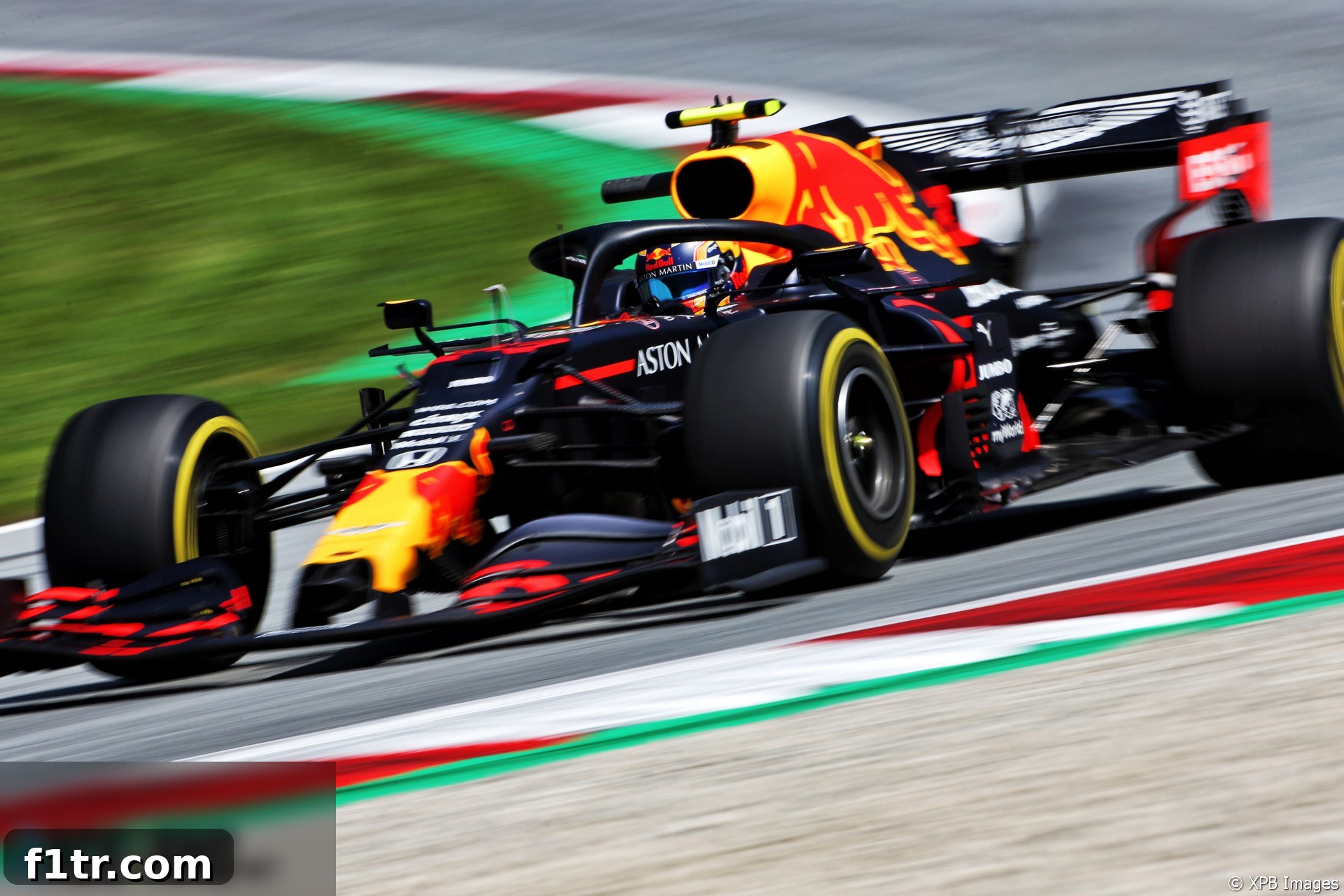
Alexander Albon’s Red Bull Challenge: Navigating Performance Gaps and High Expectations in Formula 1
The high-octane world of Formula 1 consistently pushes drivers to their absolute limits, not just against their rivals but also against the formidable benchmark set by their own teammates. For Alexander Albon, his tenure at Red Bull Racing presented a unique set of challenges, particularly when paired with the prodigious talent of Max Verstappen. Following the initial two races of a demanding season, Albon found himself under scrutiny, grappling with a significant performance delta to his Dutch counterpart. Yet, despite the disparity, Albon remained remarkably unfazed, expressing confidence in his ability to close the gap.
The early stages of the season painted a stark picture, with Verstappen often enjoying a comfortable lead over Albon. In one particular instance during Sunday’s race, the gap between the two Red Bull drivers stretched to over 40 seconds. This significant difference wasn’t lost on Albon, who openly acknowledged his struggles, particularly with tyre management during the crucial opening stint of the race. This critical aspect of modern F1 racing often dictates a driver’s ability to maintain pace, execute strategy, and ultimately secure strong results.
Albon’s Candid Assessment: Unpacking Early Season Hurdles and Tyre Management
Reflecting on his performance, Alexander Albon didn’t shy away from identifying the core issues plaguing his early season form. “It was one kind of poor start to the race in race two and that was more or less the main issue,” Albon stated, pinpointing a specific moment that set the tone for a difficult outing. His assessment underscored that the problem wasn’t a fundamental lack of pace or skill, but rather a specific operational challenge that compounded into a larger performance deficit.
Albon’s analysis further delved into the intricacies of managing Pirelli’s sensitive tyres. “So I don’t think there needs to be a panic. It’s just managing the tyres a bit better and knowing when to push, when not to push. That’s more or less it at the moment,” he explained. This insight highlights a common challenge for many F1 drivers: finding the delicate balance between extracting maximum performance from the car and preserving the tyres to ensure optimal grip and longevity throughout a race stint. Mastering this art is crucial for consistent performance at the elite level of motorsport.
The Red Bull RB16, like any cutting-edge F1 machine, demands a unique driving style and intimate understanding to unlock its full potential. Albon acknowledged this learning curve, expressing optimism that his pace would naturally improve as he grew more accustomed to the car’s characteristics. “I think once I get a bit more comfortable with a car the pace will come as well,” he confidently predicted. This sentiment resonates with the experiences of numerous drivers transitioning into new machinery or adapting to complex aerodynamic packages, where familiarity and confidence often translate directly into lap time.
The Inherent Pressure of Formula 1: A Deep Dive into High Stakes and Expectations
Albon’s journey to Red Bull Racing was a rapid ascent, moving from its junior team, Toro Rosso (now AlphaTauri), to the main squad in just his rookie season. This promotion, while a testament to his talent, inherently brought increased pressure and heightened expectations. However, Albon asserted that he felt no additional burden simply because he was now in a front-running car. His perspective offered a glimpse into the mindset required to thrive in the high-pressure environment of Formula 1.
“It’s still the same,” Albon remarked, downplaying any perceived escalation of pressure. “Formula 1 is Formula 1, every driver is under pressure to perform.” This fundamental truth underpins the entire sport. From the moment a driver straps into an F1 cockpit, they are judged on their performance, their ability to extract the maximum from the car, and their contribution to the team’s success. The stakes are perpetually high, and every lap is scrutinized.
Albon’s calm demeanor in the face of such intense scrutiny stems from a lifelong immersion in competitive racing. “Of course, I know I’ve got to do a good job, but it’s been like that since I’ve been eight years old so nothing really changes,” he mused. This declaration speaks volumes about the early conditioning of professional racing drivers. From karting to junior formulas, the imperative to perform is ingrained from a young age, creating a robust mental fortitude that allows them to navigate the immense pressures of F1 without being overwhelmed. For Albon, the Red Bull seat was simply a continuation of a journey defined by the constant pursuit of excellence.
Christian Horner’s Strategic Insight: Deconstructing Albon’s “Race of Two Halves”
The Red Bull Racing team principal, Christian Horner, provided a more nuanced perspective on Albon’s performance, particularly highlighting his resilience and improvement over the course of the race. Horner’s assessment offered a valuable counterpoint to the raw lap time difference, focusing on the progression and adaptation Albon demonstrated as the race unfolded. This kind of feedback from team management is crucial for a driver’s development and confidence.
“Alex had a race of two halves,” Horner observed, encapsulating Albon’s fluctuating performance. He elaborated, “The first half he was struggling and then the second half I thought he drove well and his pace was good. So we need to understand that with him and hopefully help him get more comfortable with the car on the heavy fuel because his pace in the second half of the race was strong.” This detailed analysis indicates a proactive approach from the team to identify the root causes of Albon’s early struggles and provide targeted support. Understanding how a car performs with varying fuel loads is a fundamental aspect of race strategy and driver comfort, especially in the demanding conditions of an F1 Grand Prix.
Horner further underscored Albon’s commendable recovery and competitive spirit, specifically citing his battle with Sergio Perez. “He fought very well with Perez who was the fastest car on the circuit at that stage, three or four tenths quicker than Bottas who had the freshest tyres,” Horner pointed out. This comparison with a highly competitive driver in an equally capable car, especially one benefiting from fresher rubber, speaks volumes about Albon’s raw pace and fighting ability once he found his rhythm. It’s a testament to his talent that, despite early difficulties, he could match and even exceed the pace of other top contenders during certain phases of the race. “So I thought Alex did drive a good race, particularly the second half,” Horner concluded, offering a vote of confidence that highlighted Albon’s potential for recovery and strong finishes.
The Intricate Dance of Team Dynamics: Albon, Verstappen, and Red Bull’s Ambitious Strategy
The dynamic between teammates in Formula 1 is a complex interplay of competition and cooperation. At Red Bull, the primary objective is always to challenge for victories and championships, and this often means having two drivers who can consistently deliver strong results. Max Verstappen, as the established star, sets an incredibly high benchmark, making the task for any second driver immensely challenging.
Albon’s performance, therefore, was not just about his individual skill but also about how effectively he could support Red Bull’s overall strategic ambitions. A consistent points scorer in the second car is vital for securing the Constructors’ Championship, a title that brings significant financial and prestige benefits. The team’s investment in understanding Albon’s struggles and working to improve his comfort with the car reflects their commitment to maximizing both drivers’ potential.
The Red Bull RB16 itself was known for being a somewhat temperamental machine, often described as having a tricky rear end, which made it challenging for drivers to extract its full performance envelope consistently. Such characteristics can disproportionately affect drivers who are still adapting to the car or lack the extensive experience of a veteran like Verstappen. This highlights the ongoing battle within the team to not only develop the car but also to tailor its setup to suit both drivers, or at least to make it manageable for the driver who is struggling more.
The Path Forward: Building Confidence, Consistency, and Adapting to the RB16
For Alexander Albon, the path forward involved a continuous process of learning, adaptation, and refinement. The insights gained from each race, particularly the detailed feedback from his engineers and team principal, were invaluable. Addressing the tyre degradation issue, for instance, required a combination of driver technique, car setup adjustments, and understanding the nuances of the compounds available.
Building confidence is paramount in Formula 1. Each strong stint, each successful overtake, and each race where he could demonstrate improved pace contributed to strengthening Albon’s belief in his capabilities. Consistency, however, was the ultimate goal – the ability to deliver strong performances weekend after weekend, irrespective of track conditions or car characteristics. This is what separates the good drivers from the truly elite.
The mental and physical demands on an F1 driver are immense. The constant travel, the rigorous training, and the relentless pressure to perform at the pinnacle of motorsport require exceptional resilience. For Albon, navigating the scrutiny of being a Red Bull driver meant focusing on the process, trusting his team, and continually striving for incremental improvements. His ability to perform strongly in the second half of the race, even when starting poorly, indicated a deep well of talent and a capacity for learning under pressure.
Ultimately, Alexander Albon’s early season challenges at Red Bull were a testament to the brutal competitiveness of Formula 1 and the specific demands of driving for a championship-contending team. His candid self-assessment, coupled with the constructive feedback and support from Christian Horner, painted a picture of a driver committed to overcoming obstacles and fulfilling his potential. The journey to consistently match a talent like Max Verstappen is arduous, but Albon’s resolve and the team’s backing provided a foundation for growth and improvement throughout the remainder of what promised to be an enthralling season.
Further Reading: Insights into the World of Formula 1
- Understanding Driver Development in Top F1 Teams
- The Science of Tyre Management in Modern Formula 1
- Red Bull Racing’s Approach to Team and Driver Strategy
- Aerodynamics and Car Setup: Keys to F1 Performance
- Coping with Pressure: The Mental Game of F1 Drivers