Mercedes W10: A Strategic Start to the 2019 F1 Season Without Major Aero Upgrades
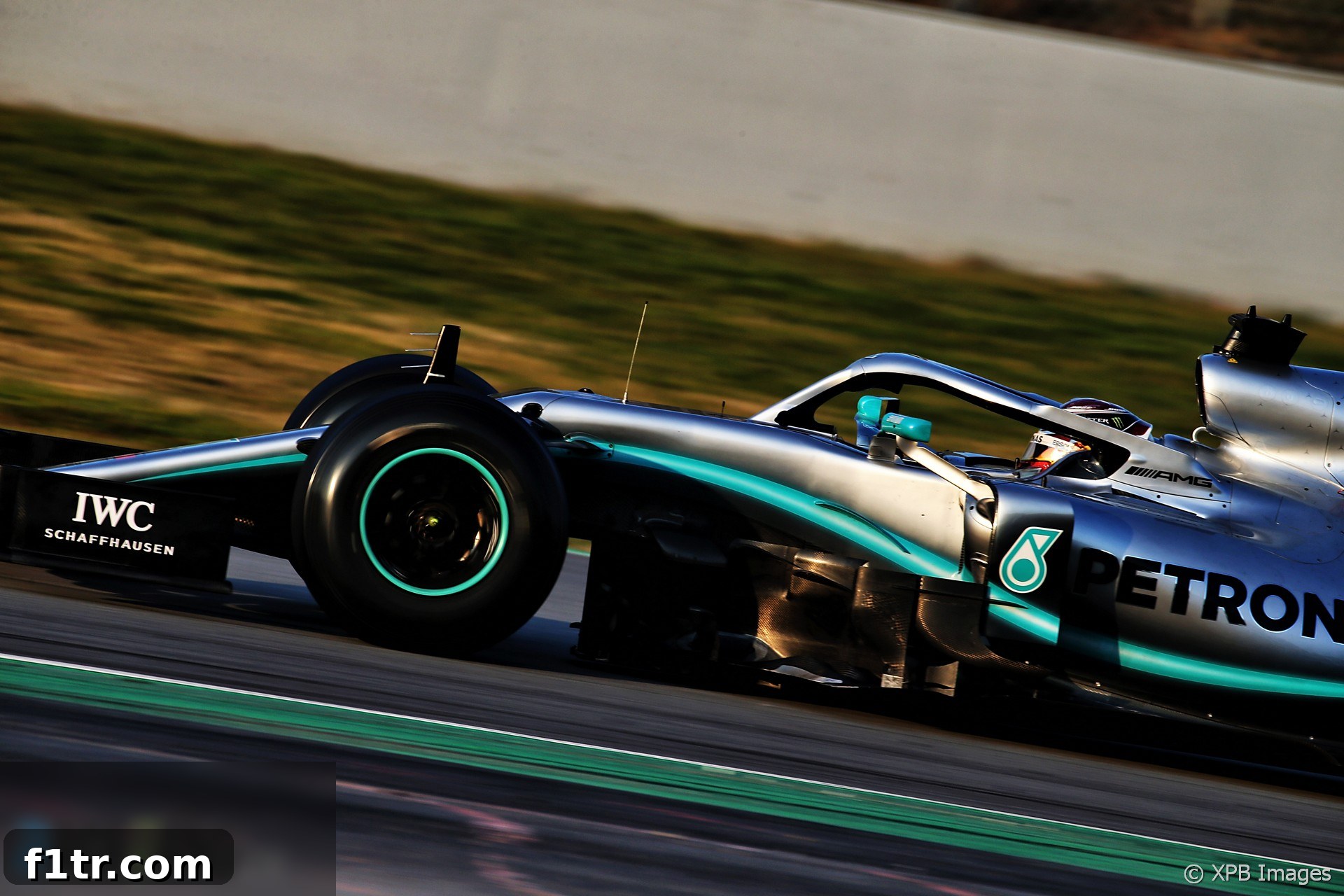
As the Formula 1 circus prepared for the thrilling curtain-raiser of the 2019 season, all eyes were on the championship contenders. Mercedes-AMG Petronas Motorsport, a team synonymous with excellence and innovation, made a significant strategic declaration regarding their new challenger, the Mercedes W10 EQ Power+. Team Principal Toto Wolff confirmed that the Silver Arrows had no intention of introducing a major new aerodynamic specification for their W10 car at the first race of the season in Melbourne. This decision, seemingly counter-intuitive in a sport driven by relentless development, offers a fascinating glimpse into Mercedes’ methodical approach to performance optimization and their quest for continued dominance in the fiercely competitive world of Formula 1.
The announcement came after the initial pre-season testing sessions in Barcelona, where Mercedes’ lap times, while not at the very top of the leaderboard, belied a clear strategic focus. After the first three days of testing, Mercedes’ best lap time ranked eighth among the ten teams. However, this seemingly modest position was accompanied by an impressive statistic: the team had completed the most laps of any competitor. This dedication to mileage underscored Wolff’s explanation that the team was concentrating intently on understanding its current package, ensuring every facet of the W10 was meticulously comprehended and optimized in time for the crucial start of the 2019 Formula 1 season.
The Philosophy Behind Aerodynamic Development and Testing
In Formula 1, the pursuit of aerodynamic perfection is a never-ending journey. Teams constantly push the boundaries of design, simulation, and on-track validation to extract every millisecond of performance. However, Mercedes’ approach for the W10’s debut was rooted in a pragmatic philosophy articulated by Toto Wolff. He emphasized the delicate balance that teams must strike between pushing development to the absolute last possible moment and ensuring that any new components are thoroughly tested and understood before being deployed in a race environment.
“You always need to get the balance right between developing to the last possible moment, and therefore then putting parts onto the very first race car in Melbourne but not having tested them,” Wolff explained. The inherent risk of introducing untested, unvalidated aerodynamic parts at the season opener is considerable. Melbourne’s Albert Park circuit is notorious for its challenging layout, often catching out teams with unexpected issues. A significant aerodynamic overhaul without sufficient real-world testing could lead to correlation problems between simulation data and on-track performance, jeopardizing a strong start to the championship campaign.
Mercedes’ strategy, therefore, prioritised a deep understanding of their existing package over a high-risk, high-reward radical upgrade. “We always try to find a way in the middle of bringing parts to the car that we want to test and see how they function rather than coming up with an aero package in Melbourne that we haven’t understood before, haven’t seen before,” Wolff elaborated. This methodical approach ensures that by the time the W10 hits the track in competitive conditions, the team has a comprehensive grasp of its aerodynamic characteristics, allowing for more precise adjustments and optimization during a race weekend. This philosophy also highlights the importance of data acquisition during testing, where the team gathers crucial information about how the car behaves across various conditions, rather than simply chasing headline lap times.
Furthermore, Wolff highlighted the benefit of having a well-developed initial specification. “So our cars tend to be already in a good spec at the first test in order to increase the learning.” This means that from the very first day of testing, Mercedes aims to have a stable, reliable platform that allows drivers Lewis Hamilton and Valtteri Bottas to provide consistent feedback and for engineers to collect valuable data without being hampered by fundamental design flaws or significant component changes. This approach accelerates the learning curve, enabling the team to fine-tune the W10’s setup and extract its inherent potential more efficiently, laying a solid foundation for incremental improvements throughout the demanding 2019 Formula 1 season.
The Evolution of Car Launches: Mercedes’ Digital Experiment
Beyond the technical strategy concerning the W10’s aerodynamics, Mercedes also revealed insights into another significant decision: the move away from a traditional, grand car launch event. In an era where team and sponsor engagement is paramount, a glitzy unveiling of a new F1 car has long been a staple of the pre-season calendar. However, for the W10, Mercedes opted for a more understated, digital-first approach. This decision, as Toto Wolff clarified, was influenced by several factors, including the team’s tight schedule for completing the W10.
Wolff playfully referenced McLaren’s iconic 1997 livery launch, famously featuring the Spice Girls, when discussing the allure of traditional spectacles. “We all prefer to have the Spice Girls kind of big event and launch the cars,” he quipped. However, he quickly pivoted to Mercedes’ modern, data-driven perspective: “But what we are doing is looking at things and seeing our car develop.” This statement underscores a shift in focus, prioritizing core development and performance over marketing theatrics, especially when resources and time are stretched thin.
The team had previously hosted a large-scale launch event at Silverstone in the preceding year, an experience Wolff described as “fantastic.” This provided a benchmark for comparison. For the W10, Mercedes consciously decided to “go more digital and see what the impact would be.” This wasn’t merely a practical choice dictated by timing but also an experimental venture into exploring future communication concepts. In an increasingly digital world, leveraging online platforms for content dissemination can offer broader reach, immediate global access, and more direct engagement with fans, potentially at a lower logistical cost compared to elaborate physical events.
The primary driver for this shift, however, was undeniably the relentless pressure of Formula 1 development. “It was one factor, the other one was that the timing was pretty tight in getting the car right and done as it’s getting tougher out there on track,” Wolff revealed. The competitive landscape of Formula 1 allows for increasingly less margin for error or delay. Every hour saved in the production and assembly process of the W10 meant more valuable time for refinement and testing. Diverting resources to organize a large-scale launch, even for a brief period, could potentially impact the critical path of car development, a trade-off Mercedes was unwilling to make.
The decision to opt for a digital launch was an informed, albeit experimental, one. Mercedes, known for its meticulous data analysis, intended to evaluate the success and impact of this new approach. “But having said that, we will form an opinion Bradley [Lord, communications director] and I how we liked it and how the results were on social media and maybe do the Spice Girls kind of thing next year,” Wolff concluded. This highlights Mercedes’ culture of continuous improvement, not just in engineering but across all operational aspects, including their marketing and communications strategy. The experience with the W10’s digital launch would undoubtedly inform their future decisions, balancing the need for impactful fan engagement with the non-negotiable demands of high-performance racing development.
Strategic Implications for the 2019 F1 Season and Beyond
Mercedes’ strategic decisions regarding the W10’s initial aerodynamic specification and its launch event paint a clear picture of a team focused intently on efficiency, understanding, and performance delivery. By foregoing major last-minute aero upgrades for the Australian Grand Prix, they aimed to arrive in Melbourne with a thoroughly validated and understood package, minimizing variables and maximizing the potential for a consistent performance from the outset. This “learn before you race” philosophy is a testament to their mature approach to F1 development, aiming for sustained excellence rather than flash-in-the-pan brilliance.
The digital launch, while partly a necessity due to a compressed schedule, also represents Mercedes’ willingness to innovate beyond the technical realm. It showcased a forward-thinking attitude towards fan engagement and brand communication, acknowledging the evolving landscape of media consumption. Both decisions underline a core principle at Mercedes-AMG Petronas Motorsport: every choice, whether technical or operational, is made with the ultimate goal of competitive advantage and championship success. As the 2019 F1 season unfolded, these early strategic choices by Toto Wolff and his team proved pivotal in their remarkable journey, demonstrating that sometimes, less is more when it comes to the immediate deployment of new parts, and efficiency can be just as impactful as extravagance.
Related Articles: Exploring the 2019 F1 Season
- Crying in the Melbourne car park at 2019 grand prix was my career low – Ocon
- McLaren Racing reports reduced £71 million loss in 2019
- Kvyat: Hockenheim podium last year was “my biggest achievement” so far
- How the FIA’s new encrypted fuel flow meter targets Ferrari’s suspected ‘aliasing’ trick
- “He smashed my office door”: 23 must-see moments from ‘Drive to Survive’ season two
Browse all 2019 F1 season articles