Mercedes’ Fortuitous Front-Row Lockout: Toto Wolff Admits Luck Amidst Red Bull’s Dominance at Saudi Arabian Grand Prix
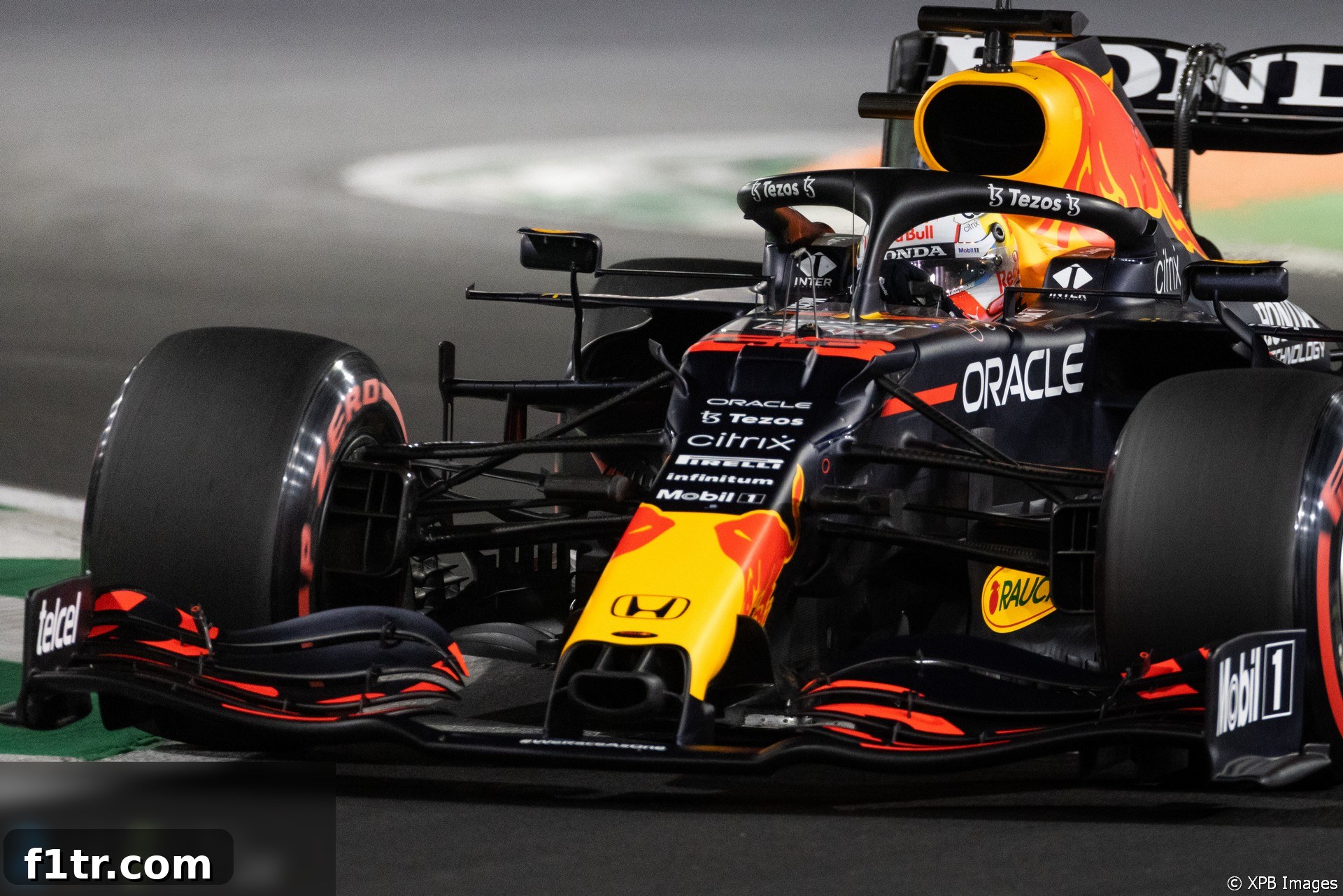
The intense 2021 Formula 1 season reached another fever pitch during qualifying for the inaugural Saudi Arabian Grand Prix. Mercedes-AMG Petronas F1 Team secured a front-row lockout, a seemingly dominant performance, yet Team Principal Toto Wolff candidly admitted his squad was exceptionally fortunate. His assessment pointed directly to the raw, blistering pace of Red Bull Racing’s Max Verstappen, suggesting the Dutchman would have effortlessly claimed pole position by a significant margin, potentially half a second, had he not made a crucial error on his final flying lap.
Verstappen’s Blistering Pace and Costly Error
The qualifying session at the rapid Jeddah Corniche Circuit was a testament to the fine margins and immense pressure inherent in Formula 1. Max Verstappen, a formidable contender for the Drivers’ Championship, was demonstrating a masterclass in car control and aggression. Through the initial two sectors of his decisive final qualifying lap, Verstappen was comfortably ahead of Lewis Hamilton, clocking a lead of over two-tenths of a second. This advantage, substantial in F1 terms, highlighted a clear performance gap at that moment between the Red Bull and Mercedes machines.
However, fate, or perhaps the sheer audacity of pushing the limits, intervened at the very last corner. A slight miscalculation, a brush with the unforgiving barriers on the exit of the final turn, brought Verstappen’s phenomenal lap to an abrupt and dramatic halt. The incident not only cost him pole position but also inflicted damage that prevented him from improving his time. This pivotal moment directly handed the advantage to Mercedes, allowing Lewis Hamilton and Valtteri Bottas to secure the coveted front-row starting positions for the Grand Prix.
Wolff’s Honest Appraisal: Outperforming the Car
“We clearly weren’t quick enough,” stated a remarkably humble Toto Wolff following the dramatic qualifying session. His honesty underscored the underlying concern within the Mercedes garage, despite the superficial triumph. Wolff openly believed that without Verstappen’s error, Mercedes cars were realistically positioned for P2 and P3 at best. He attributed their actual front-row lockout to the exceptional skill and effort of his drivers, Lewis Hamilton and Valtteri Bottas, suggesting they “outperformed the car” under immense pressure.
The magnitude of Verstappen’s potential pole position, “almost half a second” faster than the Mercedes, was a stark revelation for the team. This significant performance disparity on a critical qualifying day mandated thorough analysis, as it deviated considerably from their pre-session expectations. Wolff reiterated their good fortune, acknowledging, “Max crashing out obviously on the last lap puts us in a more fortunate situation with one and two on the grid. I think we can deem ourselves fortunate for that situation, but the race is a totally different game again.” This acknowledgment set the tone for Mercedes’ approach to the Grand Prix, understanding that their starting advantage was more a gift than a earned superiority.
The Unrelenting Championship Battle: A Shifting Advantage
With only two races remaining in what had been one of the most enthralling Formula 1 seasons in recent memory, both the Drivers’ and Constructors’ Championships hung precariously in the balance. The rivalry between Mercedes and Red Bull, Lewis Hamilton and Max Verstappen, had captivated audiences worldwide. Wolff perfectly encapsulated the volatile nature of this championship fight, noting how the perceived advantage “changes throughout the sessions.”
Throughout the weekend at Jeddah, the performance scales tipped back and forth. Mercedes found themselves competitively matched with Red Bull on the straights, an area where their engine often provides a critical edge. However, the high-speed sections of the Jeddah circuit proved challenging, where Mercedes seemed to be losing precious time. Interestingly, qualifying also revealed struggles in some of the low-speed corners, suggesting a complex interplay of factors affecting the W12’s performance envelope. This constant fluctuation highlighted the razor-thin margins separating the two championship protagonists, making every setup decision, every driver input, and every strategic call absolutely critical.
Mercedes’ Technical Headaches: Car Handling Woes
Behind the scenes, the Mercedes engineers and drivers were grappling with significant challenges in extracting maximum performance from the W12. Wolff’s comments painted a vivid picture of the car’s unpredictable handling characteristics. “The drivers are not at all happy with the car,” he revealed, detailing a litany of issues: “It’s between understeer, snapping, checking, rolling, you name it.”
These terms describe a car that is difficult to balance and inconsistent in its behaviour. Understeer makes it hard to turn into corners, forcing drivers to apply more steering lock. Snapping refers to sudden, unpredictable oversteer, where the rear of the car abruptly loses grip. “Checking” implies moments where the driver has to momentarily lift off the throttle or apply the brakes to regain control, interrupting the flow of the lap. “Rolling” suggests excessive body roll through corners, compromising aerodynamic stability. Such issues not only make it harder for drivers like Hamilton and Bottas to push the car to its absolute limit but also demand immense mental energy and physical precision to manage over a race distance. On a demanding, high-speed street circuit like Jeddah, where walls unforgivingly punish the slightest error, these handling nuances become even more pronounced and perilous.
The Constructors’ Crown in Sight: A Strategic Imperative
Beyond the individual glory of the Drivers’ Championship, the Constructors’ Championship carries immense prestige and financial rewards for the teams. Heading into the Saudi Arabian Grand Prix, Mercedes had a clear mathematical objective: they could clinch their record-extending eighth consecutive Constructors’ title. To do so, they needed to build a 44-point gap over Red Bull by the chequered flag, effectively requiring them to outscore their rivals by a significant 40 points in Jeddah.
This strategic imperative added another layer of pressure to the weekend. While Hamilton was locked in a titanic battle for the drivers’ crown, the team’s collective performance was paramount for the Constructors’ title. A dominant 1-2 finish for Mercedes, coupled with Red Bull scoring minimal points, would have sealed the deal. The focus shifted from individual brilliance to meticulous team execution, ensuring both cars finished strongly and maximized their points haul. The prospect of securing such a monumental achievement, especially after a season of relentless competition, was a powerful motivator for the entire Mercedes operation, even amidst the acknowledgment of their qualifying good fortune.
The Jeddah Circuit: A Double-Edged Sword of Thrills and Peril
The Jeddah Corniche Circuit, making its Formula 1 debut, proved to be a track of unprecedented characteristics. Billed as the “fastest street circuit in the world,” its layout featured a bewildering array of high-speed corners and narrow sections flanked by unforgiving walls. This design, while thrilling for spectators and a supreme test of driver skill, also drew criticism for being potentially a “recipe for disaster,” as hinted by some observers prior to the event.
Max Verstappen’s qualifying crash was a stark illustration of these inherent risks. Pushing the absolute limit, with blind corners and minimal run-off areas, left no room for error. The circuit amplified the consequences of even a minor mistake, turning what might have been a recoverable slide on a traditional track into a race-ending impact against the concrete barriers. The high-speed nature also put immense strain on car setups, demanding a delicate balance between aerodynamic grip for corners and straight-line speed. For teams like Mercedes struggling with consistent car handling, Jeddah presented an even greater challenge, forcing drivers to navigate its treacherous layout with compromised confidence.
Looking Ahead: The Grand Prix Decider
As the grid formed for the Saudi Arabian Grand Prix, the narrative shifted from qualifying pace to race strategy and endurance. While starting from the front row provided Mercedes a significant advantage in controlling the race from the outset, the unique characteristics of Jeddah meant that nothing was guaranteed. The potential for safety cars, red flags, and unpredictable incidents was high, adding layers of strategic complexity.
Toto Wolff’s remark that “the race is a totally different game again” perfectly encapsulated this sentiment. Tyre degradation, fuel management, pit stop execution, and the ever-present threat of contact on a tight circuit would all play crucial roles. Red Bull, despite their qualifying setback, would be formidable challengers, eager to unleash Verstappen’s raw race pace and capitalize on any Mercedes vulnerability. The Saudi Arabian Grand Prix was set to be another thrilling chapter in a championship battle destined for a dramatic conclusion.
Conclusion: A Season of Unpredictable Drama
The qualifying session for the Saudi Arabian Grand Prix served as a microcosm of the entire 2021 Formula 1 season: intense, unpredictable, and laden with drama. Mercedes’ front-row lockout, while a statistical victory, was tempered by Toto Wolff’s honest admission of good fortune and Red Bull’s underlying pace advantage. The technical struggles faced by Mercedes and the raw speed demonstrated by Max Verstappen underscored the relentless championship fight, where every thousandth of a second and every strategic decision held immense weight.
As the teams prepared for the race, the stakes could not have been higher for both the Drivers’ and Constructors’ titles. The Jeddah Corniche Circuit, with its unique blend of speed and danger, promised an unforgettable spectacle, further cementing 2021 as one of Formula 1’s most compelling and closely fought seasons in recent history. The Grand Prix itself would be the true test, determining whether Mercedes could capitalize on their fortuitous starting position or if Red Bull could overcome their qualifying setback with a dominant race performance.
2021 Saudi Arabian Grand Prix
- Mercedes seal record eighth consecutive constructors title as Hamilton misses driver’s crown
- Analysis: Is Jeddah circuit’s layout fit for F1 or a “recipe for disaster”?
- Hamilton closes on another Schumacher record with first ‘hat-trick’ of 2021
- How Hamilton and Verstappen’s roughest scrap yet played out on the radio
- Brawn defends Masi following criticism of Saudi Arabian GP decisions
Browse all 2021 Saudi Arabian Grand Prix articles