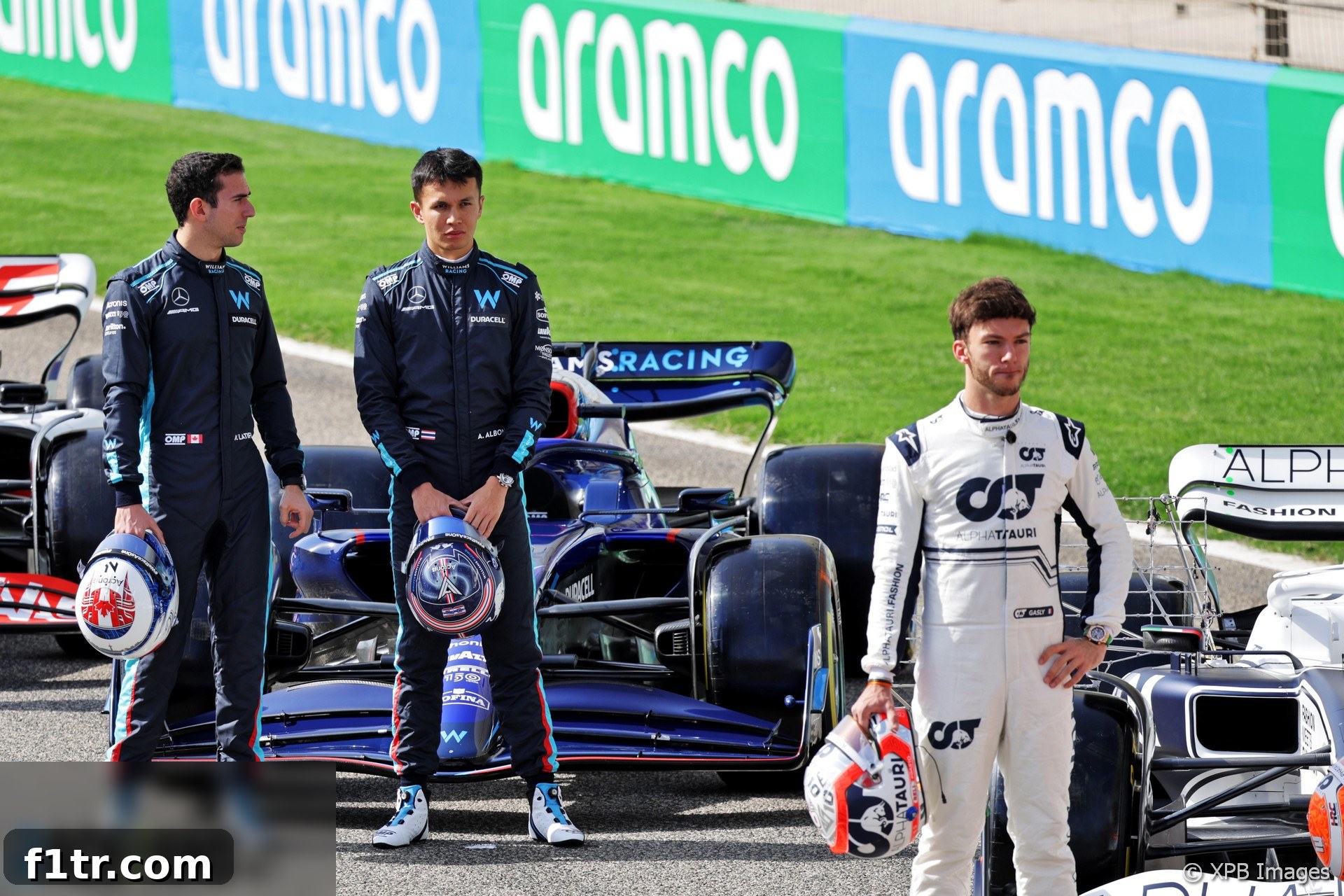
Alexander Albon Sees Tighter F1 Field Ahead with Challenging New Ground Effect Cars
After four crucial days of pre-season testing, Formula 1 drivers are beginning to grasp the intricate nature of the radically redesigned 2022 cars. Among them, Williams driver Alexander Albon has voiced a promising outlook, suggesting that the competitive landscape of Formula 1 could become significantly “tighter” this season. This sentiment resonates with the core objective of the new regulations: to foster closer racing and enhance the on-track spectacle for fans worldwide. The advent of ground-effect aerodynamics marks a pivotal shift, aiming to allow cars to follow each other more closely and, in turn, facilitate more overtakes.
Advert | Become a Supporter & go ad-free
Albon’s Optimism for a More Competitive Grid
When pressed on his initial assessment of Williams’ performance following extensive running, Albon’s response was cautiously optimistic. He noted, “it feels pretty good,” a significant statement for a team that has often found itself at the back of the grid in recent years. This positive feeling extends beyond his own team’s garage, as Albon believes the new regulations are achieving their intended effect across the entire paddock.
“I think it’s like we’ve seen before – or what we saw in Barcelona – everyone looks like they’ve bunched up a little bit, you could say,” Albon commented, reflecting on the initial impressions from both testing venues. He elaborated on this observation, adding, “I think everyone’s done a good job on the cars and the gaps are tighter, which is great. It looks promising for the year.” This collective belief in a reduced performance gap between teams could signal a thrilling season ahead, where individual driver skill and strategic brilliance might play an even more decisive role in the outcome of races.
The hope for a tighter field is not just a driver’s wish; it’s the very foundation upon which the 2022 regulatory overhaul was built. The FIA and Formula 1 management aimed to eradicate the ‘dirty air’ phenomenon that plagued previous generations of cars, making it difficult for drivers to follow closely and initiate overtakes. By simplifying aerodynamics above the car and reintroducing ground effect, the goal is to create racing machines that are less sensitive to aerodynamic wake, thereby fostering more wheel-to-wheel action and making the sport more engaging for fans globally. Albon’s early feedback suggests that this ambitious goal might indeed be within reach.
Williams FW44: Early Performance Insights
During the Bahrain testing, Albon demonstrated promising pace in the FW44. On Thursday, he completed an impressive 104 laps, showcasing the car’s reliability and providing the team with invaluable data. His best time placed him fifth fastest in that session, just over a second adrift of Pierre Gasly’s quickest lap in the AlphaTauri. While testing times should always be taken with a grain of salt, given varying fuel loads and testing programmes, Albon’s consistent lap count and competitive position offer a glimmer of hope for Williams. The team’s ability to adapt quickly to these new regulations will be crucial, and Albon’s detailed feedback will be instrumental in unlocking the FW44’s full potential.
For Williams, a team undergoing a rebuilding phase, a closer field presents both a challenge and an opportunity. If the gaps are indeed tighter, it means smaller gains can lead to significant jumps up the grid. Their focus during testing would have been on understanding the new car’s characteristics, optimizing its setup, and ensuring reliability. Albon’s significant mileage is a positive indicator that they are making progress in gathering the necessary data to fine-tune the FW44 before the first race.
The Evolving Challenge of Ground Effect Cars
Having experienced the new ground-effect car at both the Barcelona and Bahrain tests, Albon has highlighted a noticeable difference in driving dynamics between the two venues. This distinction underscores the adaptability drivers and engineers will need throughout the season, as track characteristics, temperatures, and wind conditions significantly influence car performance under the new regulations.
Bahrain vs. Barcelona: A Study in Contrasts

Albon explained the varying characteristics: “I think coming from yesterday, just with the temperature and the winds, it’s changed quite a lot – the feeling of the car from Barcelona.” The Bahrain International Circuit is known for its high temperatures and often gusty winds, factors that can profoundly impact aerodynamic stability and tyre degradation. These environmental variables make understanding the car’s behaviour under different conditions paramount.
Perhaps the most striking difference Albon noted was the physical sensation within the car. “Also purely on how stiff or how bumpy it is here, it’s incredible. It’s a big difference. You can tell that these cars are running low and stiff here – much more than in Barcelona. So it’s been tricky. I’ve seen a lot of mistakes – I was making a lot of mistakes. I think that’s the new era that we’re in, so it’s interesting.”
This observation points to a critical aspect of the 2022 ground effect cars: their inherent stiffness and low ride height are crucial for generating maximum downforce. The ‘ground effect’ relies on shaping the underside of the car to create a low-pressure area, essentially sucking the car to the track. To maintain this effect effectively, the car needs to run extremely close to the ground, necessitating very stiff suspensions. While this maximizes aerodynamic performance, it inevitably leads to a harsher ride, especially on bumpier tracks like Bahrain. The phenomenon of ‘porpoising’ – a rapid oscillation of the car at high speeds – has also been a major challenge for teams to manage, further contributing to the car’s dynamic behaviour and demanding significant physical exertion from the drivers.
The increased stiffness and the resulting bumpiness not only affect driver comfort but also demand a higher level of precision and concentration. Albon’s admission of making “a lot of mistakes” highlights the fine line drivers must tread to extract performance without overstepping the limit. This could mean a renewed emphasis on driver skill and adaptation, potentially leading to more unpredictable races where even seasoned veterans could be caught out.
Testing Tribulations and Team Impact
Pre-season testing is not just about raw pace; it’s equally about reliability and data gathering. For Williams, the testing period in Bahrain was not without its challenges, notably affecting Alexander Albon’s teammate, Nicholas Latifi.
Latifi’s Incident: A Setback for Williams
Nicholas Latifi was scheduled for a full day of running on the second day of the Bahrain test. However, his morning session was unfortunately cut short after only two hours when his rear brakes caught fire. This dramatic incident caused him to spin to a halt on track, bringing out a red flag. Latifi quickly deployed a fire extinguisher to help bring the blaze under control, showcasing his quick thinking under pressure. While the fire was eventually extinguished, the damage caused to the car was significant. The team faced an extensive repair job, preventing Latifi from returning to the track for the remainder of the session. This loss of crucial track time is a considerable setback for Williams, as every lap counts towards understanding the new car and validating design decisions. Engineers rely on this data to fine-tune setups and identify any underlying issues before the competitive season begins.
Incidents like Latifi’s brake fire are not uncommon in pre-season testing, especially when teams are pushing radical new designs to their limits. They serve as harsh reminders of the complexities involved in Formula 1 engineering and the constant quest for the perfect balance between performance and reliability. For Williams, overcoming this hurdle efficiently will be key to ensuring both Albon and Latifi have a fully optimized package for the season opener.
Advert | Become a RaceFans supporter andgo ad-free
2022 F1 Season – Related Articles and Insights
The 2022 Formula 1 season promises to be one of the most transformative in recent memory. Beyond the technical changes discussed, the season brought numerous storylines and developments that shaped the sport. Here are a few related articles that provide further context and insights into this pivotal year:
- Mercedes told me “you’re wrong” about 2022 car’s problems – Hamilton
- FIA confirms all 10 F1 teams complied with 2022 cost cap
- Steiner “not ashamed” of panning “slow” Schumacher in Drive to Survive
- Albon believes year out of F1 improved him as a driver
- Hamilton sees diversity gains in F1 years on from his ‘traumatising’ experience of racism
Browse all 2022 F1 season articles
In conclusion, Alexander Albon’s observations from pre-season testing paint a compelling picture for the 2022 Formula 1 season. The new ground effect cars are indeed delivering on the promise of a potentially tighter competitive field, offering hope for more unpredictable and thrilling races. However, they also present significant driving and engineering challenges, as demonstrated by the contrasting experiences between Barcelona and Bahrain, and by incidents like Nicholas Latifi’s brake fire. As teams continue to refine their understanding of these complex machines, the stage is set for an exciting year where adaptation, reliability, and sheer driving talent will be paramount. The global Formula 1 community eagerly awaits the season opener, ready to witness the dawn of this new era.