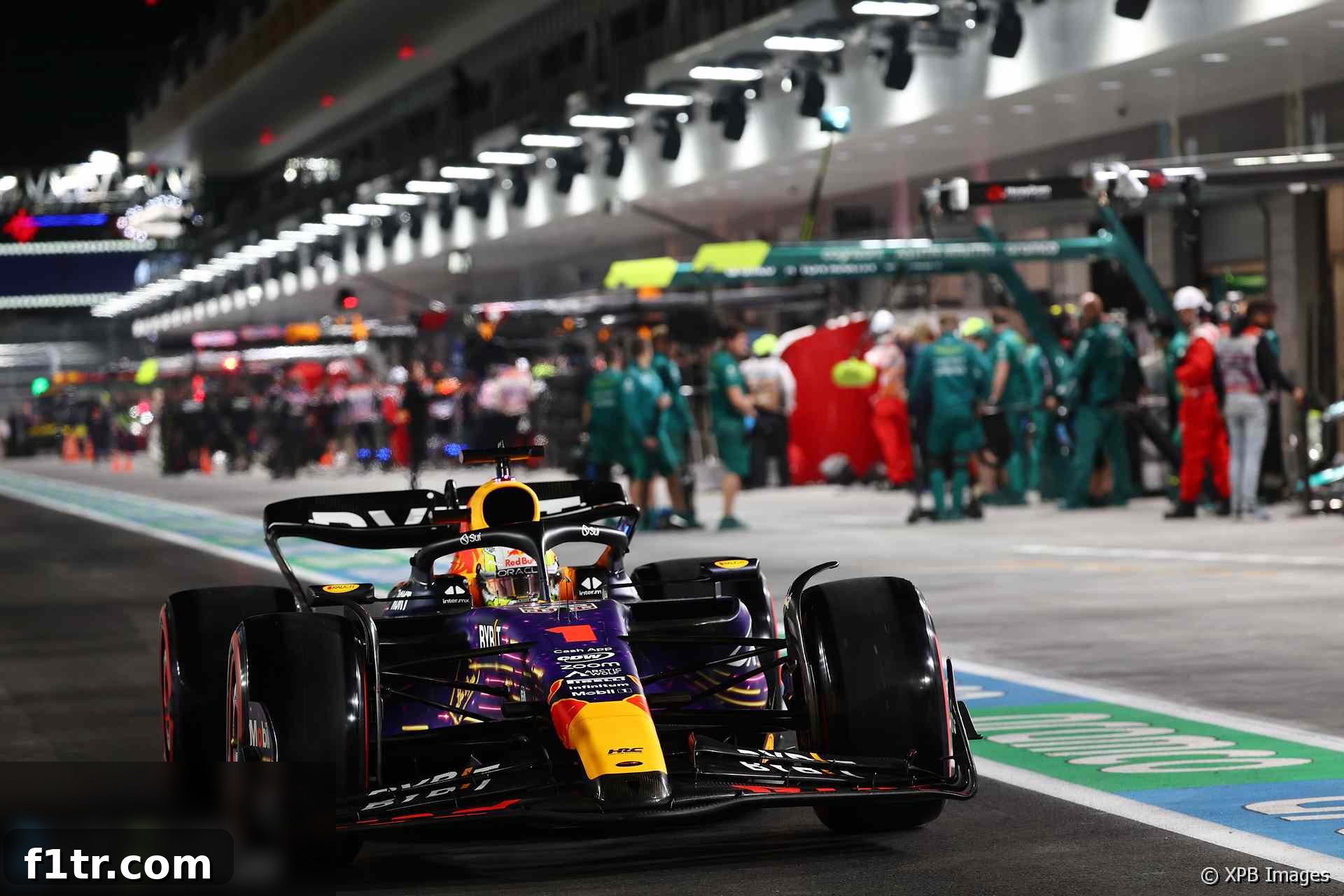
The highly anticipated Formula 1 Las Vegas Grand Prix, a spectacle designed to blend high-octane racing with unparalleled entertainment, certainly kicked off with a flourish. However, for three-time world champion Max Verstappen, the inaugural experience of the glittering street circuit proved to be less exhilarating than the hype suggested. Having previously voiced his reservations after testing the track in a simulator, the Red Bull Racing star found nothing in his initial real-world laps that altered his critical perspective.
Max Verstappen’s Candid Assessment of the Las Vegas Circuit
Verstappen, known for his straightforward and often uncompromising opinions, had already made it clear before setting foot on the Las Vegas Strip that the circuit layout in the simulator hadn’t particularly impressed him. His assessment, delivered with characteristic bluntness after the first night of practice, was unequivocal: when asked if he had fun on the track, the Dutchman simply stated, “No.” This immediate and unambiguous feedback underscored his consistent stance on the circuit’s design and overall appeal for a competitive racing driver.
Elaborating on his feelings to the official F1 website, Verstappen added, “No, I’ve had better tracks in my life. I already said that yesterday [and] there’s nothing new that I discovered or whatever. But we’ll just get on with it.” His remarks highlight a prevalent sentiment among some drivers who often prioritize challenging, flowing circuits with a rich history over modern street tracks that, while visually spectacular, can sometimes lack the intricate demands that truly test a Formula 1 car and driver. The Las Vegas circuit, with its long straights and relatively straightforward corners, seemed to fall into the latter category for the reigning champion.
For drivers like Verstappen, the thrill of Formula 1 lies in mastering complex sequences of bends, navigating elevation changes, and pushing the limits through high-speed, technical sections. Street circuits, by their very nature, often present a different kind of challenge, emphasizing precision and straight-line speed over pure aerodynamic prowess in corners. While this can lead to exciting slipstream battles, it doesn’t always satisfy a purist’s desire for a truly engaging driving experience, a point Verstappen clearly articulated.
A Shaky Start: Practice Session Disruptions in Las Vegas
The Unforeseen Water Valve Incident
The much-hyped opening practice session of the Las Vegas Grand Prix weekend was unexpectedly curtailed, lasting less than ten minutes before being abandoned. The disruption stemmed from a highly unusual and concerning incident: a water valve cover on the circuit came loose and was subsequently struck by two cars. This unfortunate event led to significant damage for both vehicles, raising immediate safety concerns and throwing the weekend’s schedule into disarray. The incident underscored the unique challenges and potential hazards of preparing a temporary street circuit for the speeds of Formula 1 cars.
The severity of the damage, particularly to Carlos Sainz’s Ferrari, which necessitated a complete chassis change and gearbox penalty, highlighted the critical importance of track integrity. Such an oversight, where a crucial element of the circuit’s infrastructure was not adequately secured, prompted a thorough review and widespread inspections. The incident was a stark reminder that even with meticulous planning, unforeseen issues can arise, causing major headaches for teams and race organizers alike. The immediate priority was to ensure the safety of all participants, leading to extensive repairs and inspections across the entire 6.2-kilometer circuit.
Extended Practice Under the Las Vegas Lights
Following the significant delay caused by the track repairs, the second practice session (FP2) was pushed back by a substantial two-and-a-half hours. To compensate for the lost track time in FP1, the session was extended to 90 minutes, providing teams and drivers with a crucial opportunity to gather data and familiarize themselves with the challenging conditions. Despite the late start, which saw cars running well into the early hours of Friday morning, the session proceeded without further incident, allowing for a more productive period of running.
During this extended session, Max Verstappen was able to log an impressive 37 laps, covering significant mileage. This was vital for the Red Bull team, as it allowed them to collect valuable data on the brand-new circuit surface, assess car performance, and begin to understand the unique demands of racing at night in the desert. As more cars completed laps, the track surface began to “rubber in” – a process where tyre compounds laid down on the tarmac improve grip levels. Verstappen confirmed this development, noting that conditions gradually improved as the session progressed and rubber accumulated on the racing line.
Navigating the Unique Challenges of the Las Vegas Track
Grip Levels and Track Evolution
Verstappen described the track as initially “slippery,” a common characteristic of newly laid asphalt and temporary street circuits that lack the ingrained rubber of permanent race tracks. The absence of a substantial FP1 meant the track’s evolution was slower than usual, but the extended FP2 allowed for a noticeable improvement. “It’s slippery,” he noted. “Of course, we didn’t really run a lot in FP1 so it took a bit of time to rubber in a little bit more. At the end it was a little bit better. We managed to do the whole program, which I guess was the most important for today.” This gradual increase in grip is crucial for drivers to push their cars closer to the limit and for engineers to fine-tune setups.
Beyond the lack of rubber, the unique environment of Las Vegas presented additional grip challenges. The circuit, running through city streets, would naturally be prone to dust and debris from its urban surroundings. Coupled with the cold night temperatures, which dipped below 15 degrees Celsius during FP2, these factors created a complex scenario for generating and maintaining optimal tyre performance. Understanding and adapting to this evolving grip level was a key objective for all teams, especially given the limited pre-race running.
The Intricate Dance of Tyre Strategy in Cold Conditions
The cold track temperatures proved to be a significant factor, particularly in managing tyre heat and degradation over multiple-lap stints. Drivers, including Verstappen, found it difficult to keep the softer compounds within their optimal operating window, leading to swift performance drop-offs. This presented a substantial strategic headache, as tyre choice and management often dictate race outcomes in Formula 1.
Verstappen offered insightful feedback on the tyre performance: “I think the soft over one lap of course is good,” he stated, acknowledging its qualifying potential. However, the long run painted a different picture: “The long run was a bit more difficult, it seemed like the soft tyre was struggling quite a lot out there so we very quickly went onto the medium.” The struggle to maintain the soft tyre’s performance over an extended period meant that teams would likely lean towards harder compounds for the race. Yet, even the medium tyre presented its own set of complexities.
“But it seems that even the medium is not a straightforward tyre as well in the long run,” Verstappen added. This indicated that no single tyre compound provided an easy solution, forcing teams to meticulously analyze data and make nuanced strategic decisions. The challenge of tyre degradation in such cold conditions could open up various strategic avenues for the race, potentially leading to varied pit stop strategies and unpredictable outcomes. The delicate balance between outright pace and tyre longevity would be paramount, making the Saturday night race a true test of strategic acumen.
Verstappen’s Strategic Outlook and Red Bull’s Precision
Despite the various challenges, Verstappen remained confident in Red Bull’s overall performance. “So there’s still a bit of things that we have to look into, to see how we can improve our deg on the long run,” he acknowledged, highlighting the team’s relentless pursuit of perfection. “I think we still look very good compared to others, as well, but I feel like maybe we can still do a better job. So not straightforward to pick your tyres I think for the race.” This statement perfectly encapsulates the Red Bull ethos: even when leading the pack, there is always room for improvement and optimization.
The precision with which Red Bull Racing approaches every detail is a cornerstone of their success. Verstappen’s comments reflect this methodical approach, focusing on extracting every last ounce of performance, especially concerning tyre management – an area that can often be the decisive factor in close races. Their ability to dissect data, identify marginal gains, and implement effective strategies in challenging conditions often sets them apart. For the Las Vegas Grand Prix, this meticulous analysis of tyre degradation and optimal compound choice would be crucial to maintaining their competitive edge and navigating the unique demands of the new circuit.
The Verdict on the Inaugural Las Vegas Grand Prix Weekend
The inaugural Las Vegas Grand Prix weekend, despite its initial teething problems and Max Verstappen’s somewhat reserved enthusiasm for the track itself, promised a unique blend of racing and entertainment. The technical challenges posed by the cold temperatures, a new and evolving circuit surface, and unpredictable tyre behavior ensured that the on-track action remained compelling. For all the glitz and glamour, the core of Formula 1—the battle against the clock, the elements, and formidable rivals—was very much alive.
While some drivers might prefer more traditional racing circuits, the spectacle of Formula 1 cars hurtling down the iconic Las Vegas Strip under floodlights undoubtedly captured global attention. The strategic puzzles presented by the circuit’s conditions added an extra layer of intrigue, keeping teams and fans alike on the edge of their seats. As the weekend progressed from practice to qualifying and finally to the main event, the Las Vegas Grand Prix was set to deliver a memorable, albeit unconventional, chapter in the rich history of Formula 1.
Related Articles: 2023 Las Vegas Grand Prix
- Tost blames track inspection oversight for Sainz’s damage in Las Vegas
- Hard to repeat “rare” combination of factors behind Vegas shunt – Norris
- Las Vegas Grand Prix “got a lot more hate than it deserved” – Sargeant
- Williams’ “incredible” Vegas qualifying made us “poor” in race – Vowles
- Piastri is first rookie to take two fastest laps in a season since Hamilton
Browse all 2023 Las Vegas Grand Prix articles