Advert | Become a Supporter & go ad-free
Alexander Albon’s Miraculous Return: From Intensive Care to Singapore’s Streets
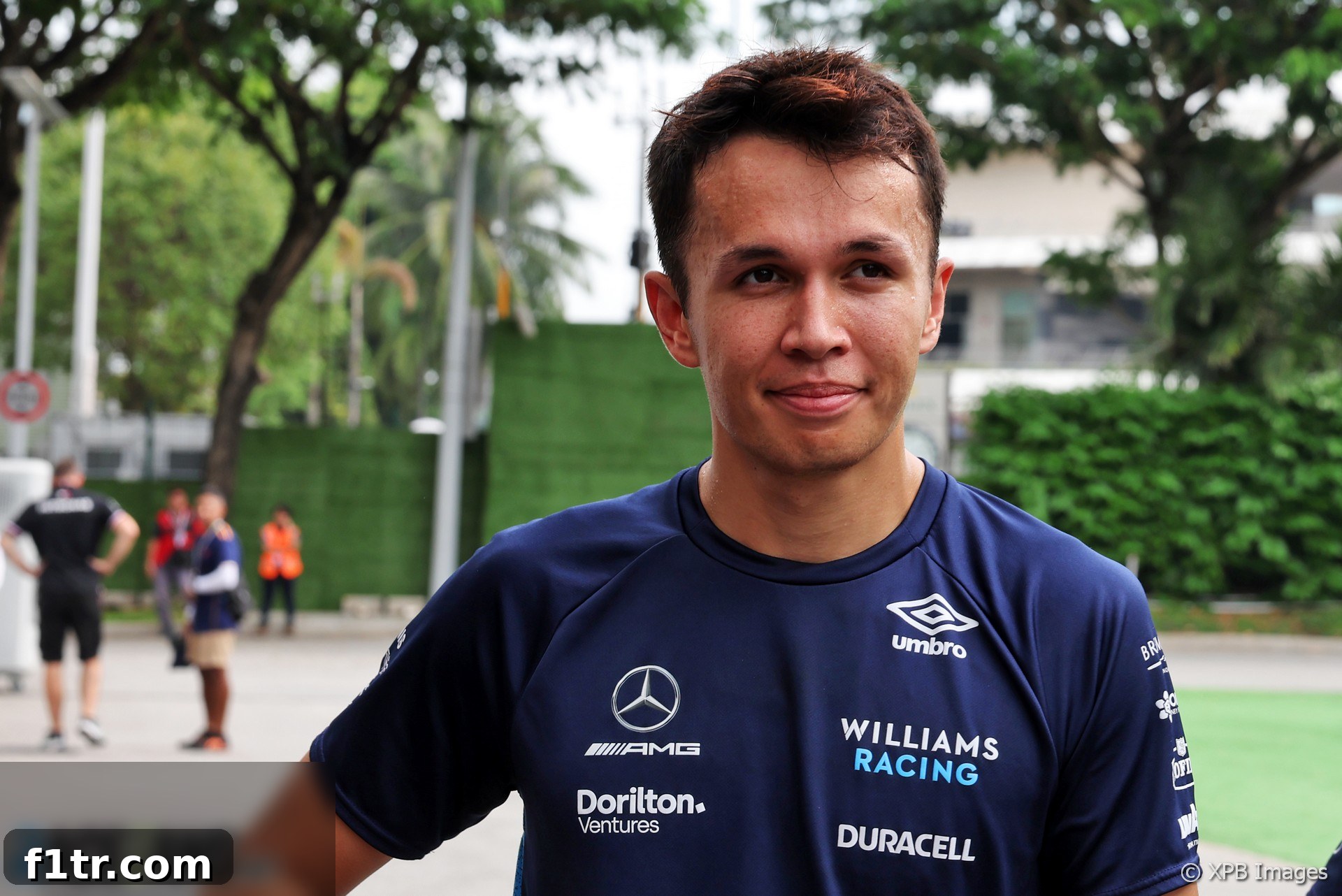
Formula 1 driver Alexander Albon stunned the paddock by announcing his readiness to compete in the Singapore Grand Prix, a mere two weeks after undergoing emergency appendicitis surgery that led to severe complications. His unexpected return to one of the calendar’s most physically demanding races highlights an incredible journey of recovery, resilience, and an unwavering determination to get back behind the wheel.
The Williams driver was forced to sit out the Italian Grand Prix at Monza after being diagnosed with appendicitis. While the surgical procedure on Saturday, September 10th, was initially expected to be straightforward, Albon suffered respiratory failure post-operation, necessitating a transfer to intensive care and a period of mechanical ventilation. This unforeseen setback cast a shadow of doubt over his immediate racing future, making his presence in Singapore all the more remarkable.
The Ordeal: A Battle Beyond the Track
Albon’s journey back to fitness was far from typical. The physical toll of the surgery, combined with the debilitating effects of respiratory failure and subsequent sedation, left him in a precarious state. “It was more kind of bed recovery to begin with,” Albon explained during the FIA press conference in Singapore, painting a vivid picture of the initial days following his discharge from intensive care. The primary challenge wasn’t just healing from the surgery itself, but regaining full lung function – a critical component for any athlete, let alone an F1 driver operating in extreme conditions.
“It’s quite a tricky one because you’re basically waiting for your lungs to recover. And at the same time, your body can’t move as well as it normally can,” he elaborated. This meant a complete overhaul of his training regimen. Instead of immediately jumping back into high-intensity workouts, his recovery had to be a meticulously structured, gradual process. The initial phase focused on allowing his body to heal and his lungs to strengthen naturally, before any strenuous physical activity could even be considered. The mental fortitude required during this period, knowing his rivals were competing, must have been immense, yet Albon remained steadfast in his focus on recovery.
Intensive Rehabilitation: A ‘Nine-to-Five Job’
The true intensity of Albon’s recovery began “starting Monday last week when we really started to push it and see what we can do.” He approached his rehabilitation with the same discipline and dedication he applies to his racing, transforming it into a full-time commitment. “I treated it like a nine-to-five job, training and recovery. Of course, recovery is really important, basically throwing everything [at it], and day by day I was getting better and better.” This included a rigorous schedule of exercises designed to rebuild strength, improve cardiovascular fitness, and specifically target respiratory recovery. Physiotherapists and medical experts played a crucial role, guiding him through each step, ensuring his body was responding positively and preventing any further complications.
The speed of his recovery surprised even Albon himself and his medical team. While a standard appendectomy is generally considered a minor procedure, the respiratory complications Albon experienced were significant and could have had a much longer-lasting impact. Fortunately, his lungs cleared within a mere 12 hours, a stark contrast to the two to three days of induced sedation initially anticipated. This rapid improvement allowed him to begin his rehabilitation much sooner, accelerating his improbable return to the cockpit. His innate fitness as an F1 driver undoubtedly played a vital role in his body’s ability to bounce back from such a severe ordeal.
Singapore’s Brutal Test: The Ultimate Comeback Stage
Albon’s decision to return in Singapore is perhaps the most striking aspect of his comeback. The Marina Bay Street Circuit is widely acknowledged as the toughest physical challenge on the Formula 1 calendar. Unlike traditional purpose-built racetracks, Singapore’s street circuit is inherently bumpy and unforgiving, transmitting significant forces through the car and directly to the driver’s body. The race length, often pushing the two-hour mark due to safety car periods, combined with the notoriously high ambient temperatures and stifling humidity, creates an environment that pushes even the fittest athletes to their absolute limits.
Drivers typically lose several kilograms of fluid during the Singapore Grand Prix due to profuse sweating. The relentless concentration required to navigate the barrier-lined circuit under floodlights for nearly 60 laps, coupled with extreme G-forces in cornering and braking, places immense strain on the neck, core, and cardiovascular system. For a driver recovering from abdominal surgery and respiratory issues, these factors amplify the challenge exponentially. Every bump, every high-speed corner, and every minute spent in the cockpit will test his healing body and newly recovered lung capacity like no other event.
A Calculated Risk: Ready, But Cautious
Despite the daunting nature of the Singapore Grand Prix, Albon felt compelled to attempt his return. “I got to a point where the recovery was going really well and I don’t think we truthfully had in mind Singapore on the cards,” he admitted, highlighting the unexpected pace of his improvement. “But just with the speed of the recovery, it was definitely a possible thing.” The decision wasn’t taken lightly, involving extensive discussions with his medical team, the Williams team, and his family.
“We sat long and hard to think about it, shall we do it or not, and I feel like I am ready,” he stated, demonstrating his inner confidence. However, Albon is also a realist, acknowledging that the true test would come once he was back in the car. “Of course, we have to wait until FP1 tomorrow to see where it’s at because driving around here is a bit of a different beast.” The free practice sessions would be crucial, not just for setting up the car, but primarily for Albon to gauge his own physical limits. He revealed that the team would be particularly focused on “long runs [in practice]” during FP2, as these longer stints offer the most accurate indication of a driver’s endurance and how their body will hold up over a full race distance.
While short runs might feel comfortable, “by FP2 especially you do get a really good idea of how it’s going to feel on your body for the race,” he explained. His determination remains unwavering: “I’m not planning to not race, I’m planning to be there, and truthfully I feel pretty confident in my body, but of course nothing quite compares it to the actual toll of driving these cars.” This sentiment perfectly encapsulates the unique demands of Formula 1, where simulation and training can only go so far in preparing an athlete for the real forces and stresses of a Grand Prix.
Looking Ahead: A Small Setback, A Great Return
Despite missing a race and enduring a significant health scare, Albon remains remarkably pragmatic about the overall impact on his season. “In terms of setbacks, it’s a small one really,” he reflected, focusing on the positives of his swift recovery. His gratitude towards the medical professionals who cared for him was palpable. “I’ve been very lucky I’ve had very good doctors around me who were in Italy to get me back into a good place. So I feel very fortunate.”
Albon’s return not only provides continuity for the Williams team but also serves as an inspiring testament to human resilience and the incredible advancements in sports medicine. His ability to bounce back from such a severe medical episode in such a short timeframe is nothing short of extraordinary. The paddock, fans, and competitors alike will be watching with bated breath to see how Alexander Albon performs in Singapore, not just for the points, but as a celebration of an athlete’s triumph over adversity.
Advert | Become a RaceFans supporter andgo ad-free
2022 Singapore Grand Prix Related Articles
- How many victory chances did Hamilton have in his first winless F1 season?
- Alfa Romeo expect another step from Zhou after confirming 2023 deal
- Closest three-team pole fight for almost 20 years in Singapore
- F1 teams back race control’s decisions on delayed start and DRS activation
- It’s “game over” if F1 fails first “vital test” of budget cap rules – Ferrari
Browse all 2022 Singapore Grand Prix articles