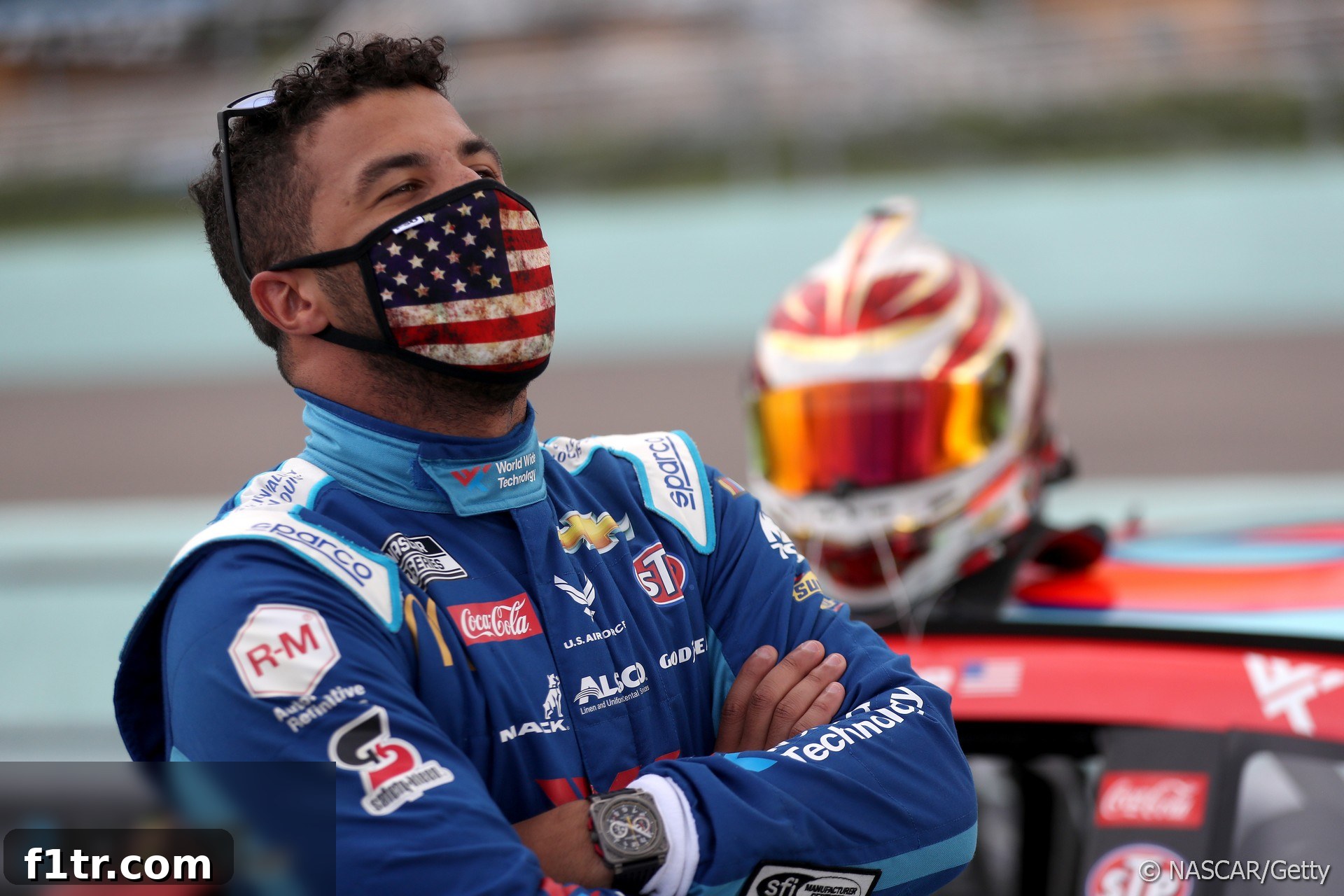
NASCAR’s Unwavering Stand: Investigating the Noose Found in Bubba Wallace’s Garage
In a deeply disturbing incident that sent shockwaves through the world of motorsports and beyond, a noose was discovered in the garage stall of Bubba Wallace, NASCAR’s only full-time Black competitor, yesterday afternoon. This heinous act immediately triggered a comprehensive investigation by NASCAR, underscoring the sport’s firm commitment to eradicating racism and fostering an inclusive environment for all.
A Symbol of Hate: The Disturbing Discovery
The discovery of the noose was not merely an isolated act of vandalism; it was a potent symbol of racial hatred and intimidation. Nooses have historically been used to terrorize and target Black people, particularly in the context of lynchings – a brutal form of extrajudicial murder aimed at enforcing racial terror and maintaining white supremacy in American history. The presence of such a vile symbol in a professional sports environment, aimed directly at a Black athlete, immediately highlighted the persistent struggle against racism that continues to plague society.
“Late this afternoon, NASCAR was made aware that a noose was found in the garage stall of the 43 team,” the series declared in an unequivocal statement. The immediate reaction from the organization was one of profound outrage and condemnation. “We are angry and outraged, and cannot state strongly enough how seriously we take this heinous act. We have launched an immediate investigation, and will do everything we can to identify the person(s) responsible and eliminate them from the sport.” This resolute stance signaled NASCAR’s determination to address this grave challenge head-on.
Bubba Wallace: A Voice for Change
The incident occurred amidst a period of heightened racial tensions and a global reckoning with systemic racism, following the tragic death of George Floyd. Bubba Wallace, a prominent figure in NASCAR and a courageous advocate for social justice, had emerged as a leading voice within the sport. In the weeks prior to the noose discovery, Wallace had openly voiced his unwavering support for anti-racism protesters and the broader Black Lives Matter movement.
His advocacy extended beyond mere words. Wallace boldly showcased a ‘Black Lives Matter’ livery on his car, transforming his vehicle into a powerful statement for equality and justice. Crucially, he spearheaded calls for NASCAR to ban the display of the Confederate flag from all its events. This flag, deeply rooted in the history of slavery and racial oppression, had long been a controversial symbol at racing venues, creating an unwelcoming atmosphere for many, especially Black fans and competitors.
NASCAR’s Decisive Action: Banning the Confederate Flag
Responding to Wallace’s impassioned plea and a growing chorus of voices demanding change, NASCAR took a monumental step just 12 days before the noose incident: it officially banned the use and display of the Confederate flag at its races and properties. This was a landmark decision, signaling a significant shift in the sport’s culture and its commitment to inclusivity. The ban was widely praised by civil rights activists and many fans, who saw it as a necessary move to align NASCAR with modern values of equality.
However, the transition was not without its challenges. At the first race weekend following the ban, held at Talladega, Alabama – a venue steeped in racing history – several individuals were seen protesting the ban outside the circuit, displaying Confederate flags. This demonstrated the deep-seated divisions and resistance to change that still existed, setting a tense backdrop for the sport’s efforts to move forward.
Wallace’s Emotional Response and the Call for Perseverance
Upon learning of the noose in his garage, Bubba Wallace expressed profound sorrow and determination. He described the incident as a “despicable act of racism and hatred” that left him “incredibly saddened.” His statement further emphasized the gravity of the situation: “[It] serves as a painful reminder of how much further we have to go as a society and how persistent we must be in the fight against racism.”
Wallace’s measured yet powerful response resonated deeply, highlighting not only the personal impact of such an attack but also the broader societal challenge that it represented. His courage in continuing to compete and speak out, despite facing direct threats, solidified his role as a pivotal figure in the ongoing struggle for racial justice within sports.
Reinforcing Commitment: No Place for Racism
NASCAR reiterated its unequivocal stance against discrimination in the aftermath of the noose discovery. “As we have stated unequivocally, there is no place for racism in NASCAR, and this act only strengthens our resolve to make the sport open and welcoming to all,” the statement affirmed. This commitment went beyond words, as the immediate launch of an investigation demonstrated the organization’s intent to uphold its values.
The incident occurred as NASCAR had cautiously begun readmitting spectators to races, marking a gradual return to normalcy amidst public health concerns. The Talladega round, for instance, was open to 5,000 fans, although Sunday’s race was ultimately postponed to Monday due to adverse weather conditions. The timing of the noose discovery, coinciding with the return of fans and NASCAR’s bold anti-racism initiatives, underscored the urgent need for vigilance and firm action against all forms of hate.
The Broader Implications for Motorsports and Society
The Bubba Wallace noose incident transcended the boundaries of sports, becoming a potent symbol of the enduring fight against systemic racism and prejudice. It forced a critical examination of diversity and inclusion within motorsports, a field traditionally dominated by white participants and fans. The incident served as a stark reminder that even as organizations make strides toward progress, hateful ideologies can still lurk in the shadows, requiring constant vigilance and unwavering commitment to change.
NASCAR’s response, characterized by swift action, firm condemnation, and a pledge for a thorough investigation, set a precedent for how major sports leagues should address such appalling acts. It highlighted the power of athletes like Bubba Wallace to use their platforms for social good and the responsibility of governing bodies to protect their athletes and uphold the values of equality.
The incident also sparked a wave of solidarity for Wallace from fellow drivers, teams, sponsors, and fans across the globe. This outpouring of support demonstrated that while pockets of hate may exist, there is also a vast community committed to standing against racism and championing justice. The image of drivers and crew members pushing Wallace’s car to the starting line in a show of unity became an iconic moment, symbolizing collective resolve against prejudice.
Moving Forward: A Continuous Journey Towards Inclusion
While the discovery of a noose was a profoundly distressing event, it also catalyzed further conversations and actions aimed at making NASCAR, and indeed society, a more equitable place. It reinforced the notion that the fight against racism is not a sprint but a marathon, requiring sustained effort, education, and accountability.
NASCAR’s journey towards a truly inclusive environment is ongoing. This incident served as a powerful litmus test for its declared values, and its strong response demonstrated a clear direction. By taking a firm stand against hate and supporting its diverse athletes, NASCAR aims to create a sport that genuinely reflects the diversity of its fanbase and offers a welcoming space for everyone, regardless of their background.
The legacy of the Bubba Wallace noose incident will likely be defined not just by the act of hatred itself, but by the powerful, unified response it provoked – a response that continues to fuel the critical conversation about race, equality, and the enduring power of solidarity in the face of adversity. It underscored that sports, at their best, can be a microcosm of society’s highest ideals, pushing forward the vital work of justice and human dignity.