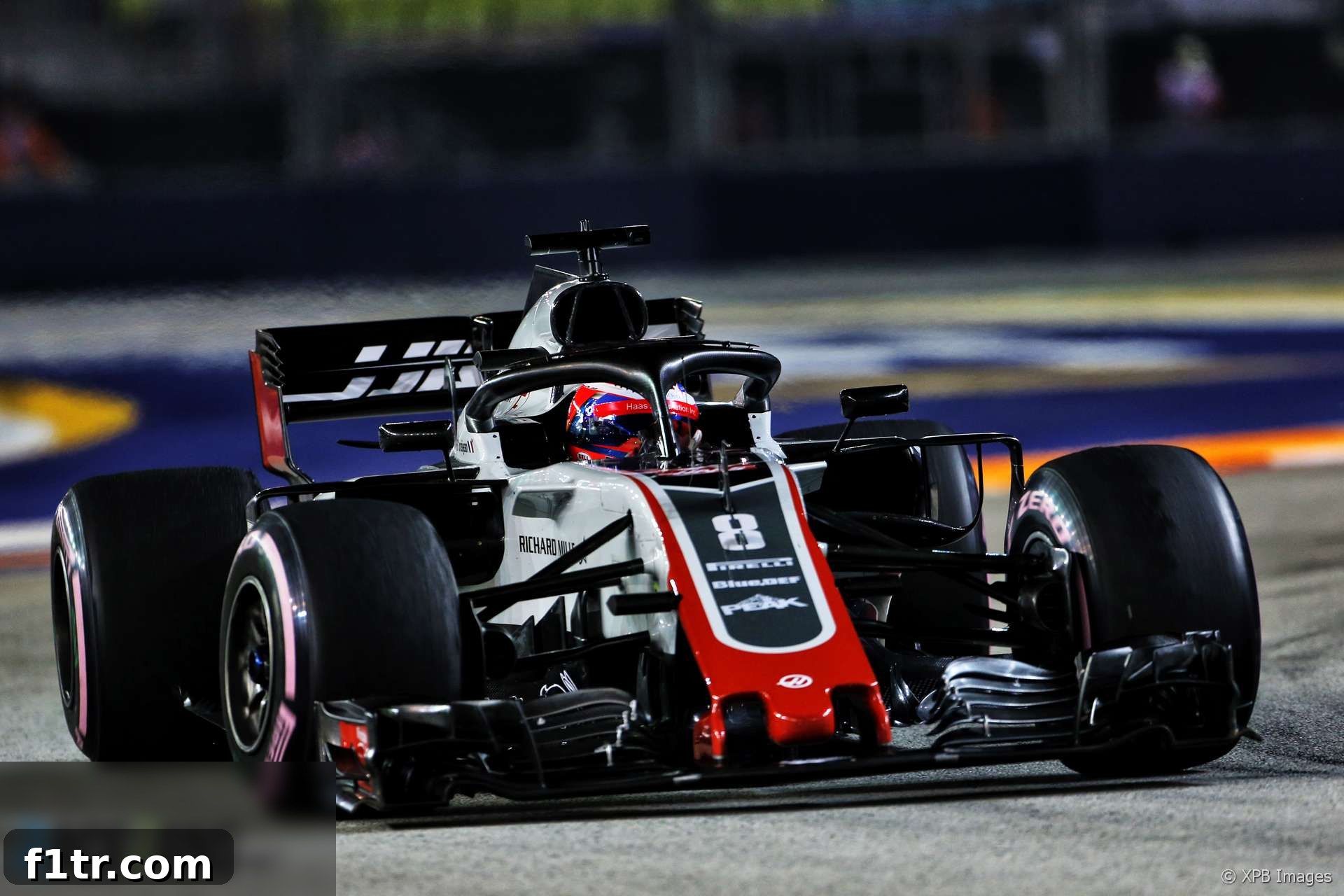
Romain Grosjean, a driver synonymous with both speed and occasional controversy, has found himself in a precarious position within Formula 1. Following a recent incident, the Haas F1 pilot is now in serious danger of incurring a one-race ban before the culmination of the current season. This looming threat highlights the stringent disciplinary measures in place within the sport, designed to ensure fair play and, most importantly, driver safety across all Grand Prix weekends.
Romain Grosjean’s Precarious Position: A Deep Dive into F1 Penalty Points and the Looming Race Ban
Formula 1 is a sport where every millisecond, every maneuver, and every decision can dramatically impact a driver’s career and a team’s championship aspirations. Beyond the raw speed and strategic brilliance, there lies a strict regulatory framework designed to ensure fair play and, crucially, driver safety. At the heart of this system are penalty points, a mechanism introduced to curb dangerous driving and enforce compliance with race regulations. For French driver Romain Grosjean, this system has placed him in an increasingly precarious position, teetering on the brink of an automatic one-race ban, a fate he knows all too well from an infamous incident years prior.
Grosjean’s Latest Infraction and its Ramifications
The spotlight intensified on the Haas F1 driver following a recent incident that saw him accrue an additional two penalty points, pushing his cumulative total to a critical nine. The infraction occurred during a fiercely contested race where Grosjean was deemed to have failed in observing blue flags, a vital directive for lapped drivers to yield to faster cars. Specifically, race leader Lewis Hamilton found his progress impeded by Grosjean, a scenario that can have significant implications in the tight margins of Formula 1. Blue flags are not merely suggestions; they are explicit instructions designed to prevent undue interference with drivers battling for position or leading the race. Ignoring them not only disrupts the flow of the race but can also be seen as a sporting infringement, hence the two-point penalty.
This latest sanction has placed Grosjean within striking distance of the dreaded 12-point threshold, which automatically triggers a one-race suspension. The penalty points system operates on a rolling 12-month basis, meaning points remain on a driver’s super license for a full year from the date of the offense before expiring. For Grosjean, this means an anxious wait. While he will lose one point on October 29th and a further two points on November 12th, these deductions offer only partial relief in the immediate future. Until then, any further penalty points – even a single one – would result in him crossing the 12-point line, forcing him to miss an upcoming Grand Prix. The pressure on Grosjean, known for his sometimes erratic driving, is now immense, requiring him to exercise extreme caution in the remaining races of the season.
The Penalty Points System: A Guardian of Fair Play and Safety
The introduction of the penalty points system in Formula 1 was a direct response to a need for a more structured and consistent approach to disciplining drivers. Prior to its implementation, penalties often varied, and there was no clear, cumulative system for repeat offenders. The system was famously catalyzed by the very driver now facing its consequences: Romain Grosjean. In 2012, his involvement in a multi-car pile-up at the Belgian Grand Prix – an incident that saw his Lotus car launch spectacularly over Fernando Alonso’s Ferrari – led to him receiving a one-race ban for the subsequent Italian Grand Prix at Monza. This was the last time an F1 driver was handed a ban, and it served as a stark reminder of the potential dangers of aggressive or careless driving. The incident underscored the necessity for a system that not only punishes individual infractions but also holds drivers accountable for a pattern of unsafe or unsporting conduct over time.
Under the current regulations, stewards can issue between one and three penalty points for incidents, depending on their severity. Minor infractions, such as speeding in the pit lane during a race, might warrant one point, while more serious offenses like causing a collision or dangerous driving could result in two or three points. The rolling 12-month period is crucial because it ensures that drivers remain accountable for their actions over an extended period, rather than simply having their slate wiped clean at the end of a season. This continuous oversight aims to promote sustained disciplined driving and reinforces the message that driver conduct has long-term consequences. The meticulous tracking of these points means that every on-track maneuver is scrutinized, and every potential infraction carries the weight of a cumulative penalty that could ultimately lead to a race suspension, a significant blow to any driver’s career and their team’s performance.
Grosjean’s History: A Recurring Theme?
Romain Grosjean has always been a driver who races on the edge, capable of moments of brilliance but also prone to costly mistakes. His 2012 ban was a watershed moment in his career and for the sport itself. That incident at Spa Francorchamps was a devastating multi-car crash at the start of the race, triggered by Grosjean veering across the track. The resultant collision took out championship contenders like Lewis Hamilton and Fernando Alonso, highlighting the catastrophic impact a single driver’s misjudgment can have. The ban was a severe but necessary message, forcing Grosjean to reflect on his approach to racing.
Since that pivotal moment, while his driving has matured considerably, the specter of penalties has never entirely left him. This current situation, with nine points on his license, serves as a poignant reminder of his past and the constant pressure F1 drivers face to maintain impeccable conduct under immense pressure. For the Haas F1 team, having one of their key drivers potentially sidelined is a significant concern, impacting not only their on-track performance but also their constructors’ championship aspirations. A race ban for Grosjean would mean a significant loss of potential points for the team and could force them to field a reserve driver, disrupting their rhythm and strategy during a crucial phase of the season. The team will undoubtedly be working closely with Grosjean to ensure he avoids any further incidents.
Other Incidents and Stewards’ Scrutiny
Grosjean wasn’t the only driver to fall foul of the stewards in the recent race. Sergey Sirotkin, the Williams driver, also received two penalty points, increasing his total to six. His transgression involved forcing Brendon Hartley off the track during a maneuver, a clear breach of racing etiquette and safety standards. Drivers are expected to leave sufficient room for competitors, particularly during wheel-to-wheel racing, and any action that deliberately pushes another car off the track is typically met with a penalty. Sirotkin’s six points place him in a less immediate danger zone than Grosjean, but it still serves as a warning that he too needs to be mindful of his actions on track and avoid any further infractions that could see him climb closer to the 12-point limit.
The stewards’ office was a busy place, but not all incidents resulted in penalties. Force India teammates Esteban Ocon and Sergio Perez, known for their fiery rivalry and previous clashes, were investigated over their first-lap clash. However, after reviewing the evidence, the stewards decided to take no further action. First-lap incidents are often judged with a degree of leniency due to the inherent chaos and tight packing of cars, making it difficult to apportion blame definitively in the heat of the moment. Similarly, Kevin Magnussen’s incident with Brendon Hartley also escaped sanction. These decisions highlight the nuanced and sometimes subjective nature of stewarding, where context, intent, and available evidence all play a critical role in determining whether a penalty is warranted. The consistency of stewarding decisions is a constant point of discussion among drivers, teams, and fans, underscoring the complexities of governing such a high-stakes sport and ensuring impartiality across the grid.
The Broader Implications for F1 Discipline
The penalty points system is fundamental to maintaining discipline and safety in Formula 1. While some argue about the consistency of its application, its underlying purpose remains vital. It acts as a deterrent against reckless driving, encourages drivers to adhere to racing rules, and provides a clear pathway for consequences when those rules are broken. For drivers like Grosjean and Sirotkin, the accumulation of points means they must now drive with an added layer of caution, knowing that even a minor misjudgment could lead to a significant professional setback. This pressure can influence racing decisions, potentially leading to more conservative driving at critical moments, especially when battling for position or defending against overtakes.
Ultimately, the system serves to protect the integrity of the sport and the well-being of its participants. Each penalty, each investigation, contributes to the ongoing narrative of a sport that demands not only extraordinary skill but also unwavering respect for its regulations and fellow competitors. As the 2018 F1 season progresses, all eyes will be on drivers like Romain Grosjean, not just for their pace and racecraft, but for their ability to navigate the fine line between aggressive racing and disciplined conduct, ensuring they remain on track and out of the stewards’ crosshairs. The threat of a ban adds a compelling layer of drama, reminding everyone that in Formula 1, every action truly has a consequence, potentially shaping the outcome of the season for individuals and teams alike.
2018 F1 season
- F1 feared “death knell” for Drive to Survive after Ferrari and Mercedes snub
- McLaren staff told us we were “totally crazy” to take Honda engines in 2018 – Tost
- ‘It doesn’t matter if we start last’: How Red Bull’s junior team aided Honda’s leap forward
- Honda’s jet division helped F1 engineers solve power unit problem
- McLaren Racing losses rise after Honda split
Browse all 2018 F1 season articles