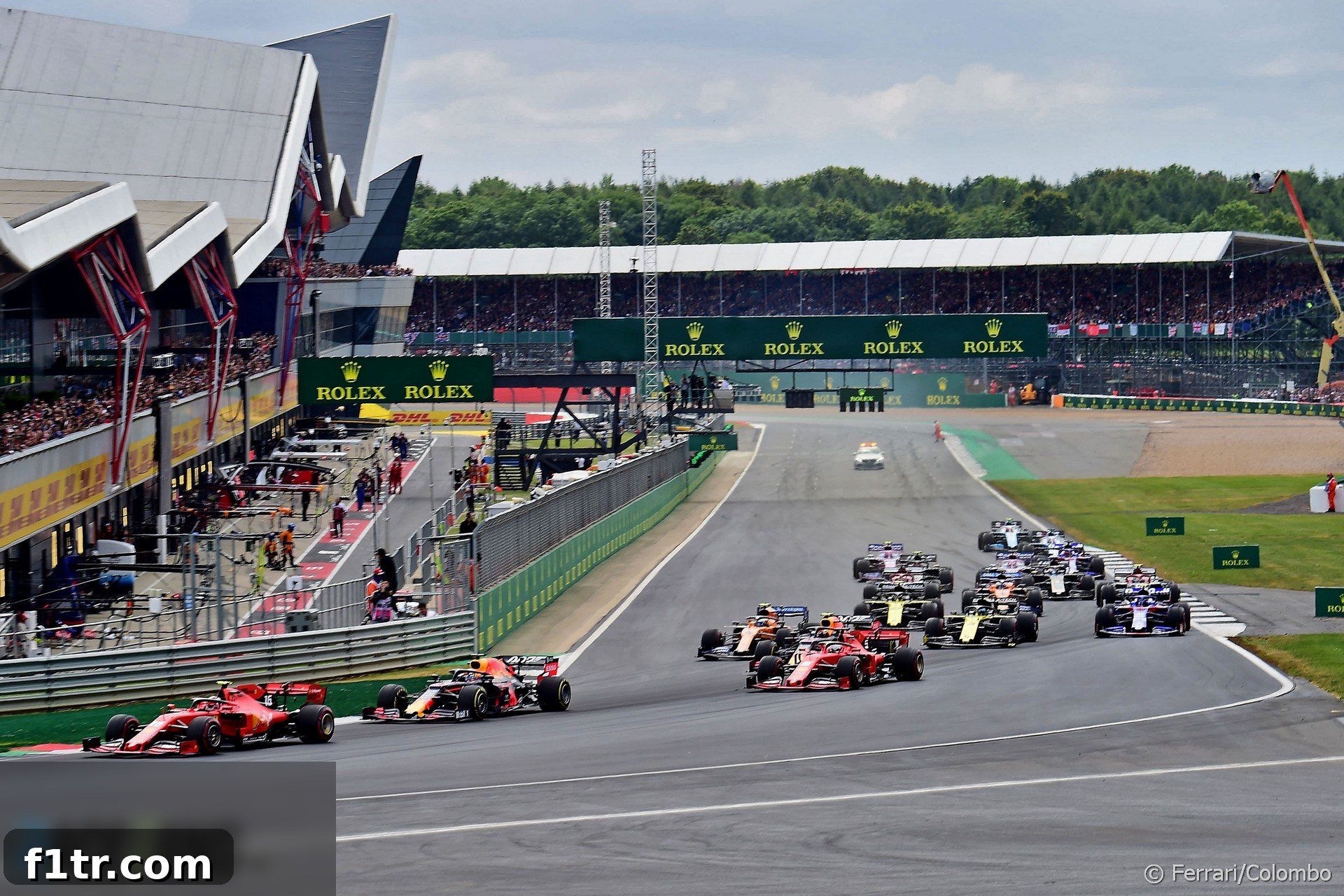
The hallowed grounds of Silverstone Circuit, a cornerstone of Formula 1 history, find themselves amidst an unprecedented period of uncertainty. While the roar of engines typically heralds the arrival of summer at the British Grand Prix, the global landscape irrevocably altered by the COVID-19 pandemic has cast a long shadow over the 2020 season. At the heart of the matter is the circuit’s ability to host the prestigious Grand Prix, an event deeply ingrained in the fabric of British motorsport, behind closed doors.
For weeks, the motorsport community has awaited definitive news regarding Silverstone’s fate. Stuart Pringle, managing director of the iconic circuit, has made it clear that a confirmation regarding the viability of a spectator-free British Grand Prix is still several weeks away. This extended timeline underscores the immense complexity and myriad challenges involved in reimagining one of the world’s largest sporting spectacles under extraordinary circumstances.
Advert | Become a Supporter & go ad-free
Formula 1’s revised aspirations for the 2020 calendar optimistically eye a season commencement with a double-header at the Red Bull Ring in Austria on July 5th. Following these initial European races, Silverstone remains a crucial fixture in the championship’s attempt to salvage a significant portion of its season. The British Grand Prix, traditionally a highlight of the F1 calendar, is not merely a race; it’s a cultural institution and a critical economic driver for the sport and the region.
A Shifting Deadline and New Realities
Initially, the promoters of the British Grand Prix had established an ambitious deadline of the end of April to determine whether the race could proceed as planned with a full complement of spectators. This deadline represented the absolute latest point at which they could commit to the colossal logistical undertaking required for an event drawing over 350,000 fans across the weekend. However, as the global health crisis intensified and government restrictions tightened, the dream of a packed grandstand faded. The stark reality emerged: if the race were to happen, it would be without fans.
This acceptance fundamentally altered the decision-making process. With the absence of spectators now a foregone conclusion, the pressure to make an early call based on crowd logistics has eased. The revised focus shifts entirely to the feasibility of hosting a safe, contained sporting event. “We don’t actually know whether or not we have a race behind closed doors,” Stuart Pringle conveyed in an interview with the BBC, emphasizing the lingering uncertainty. “I need to be clear on that.” His statement encapsulates the precarious balance between optimism and the significant hurdles that remain.
Navigating the Labyrinth of Approval and Agreements
The path to hosting a “behind closed doors” Grand Prix is paved with two primary, equally challenging obstacles: securing governmental approval and reaching a mutually beneficial agreement with Formula 1. The sheer scale and international nature of F1 mean that a multitude of factors, far beyond typical sporting event planning, must be meticulously addressed.
Firstly, Silverstone must obtain the necessary green light from the UK government. This isn’t a simple formality; it involves stringent criteria and unprecedented health and safety protocols designed to mitigate the risks associated with a global pandemic. Pringle elaborated on this, stating, “We need to understand from the government the criteria that need to be achieved to be allowed to run a sporting event behind closed doors. And I’m working with the Department of Digital Culture, Media and Sport and with the governing body Motorsport UK to establish whether or not we can comply with those and meet them and surpass them.” This collaborative effort highlights the cross-sectoral dedication required to restart major sports events, ensuring public health remains paramount.
Advert | Become a RaceFans supporter andgo ad-free
Secondly, a complex contractual agreement must be finalized with Formula 1’s commercial rights holder. This is arguably the most sensitive aspect, particularly concerning the financial implications of a spectator-free event. Circuits typically derive a substantial portion of their revenue from ticket sales, hospitality packages, and associated on-site expenditures by fans. Without these income streams, the economic model for hosting a Grand Prix collapses. Therefore, discussions are understood to include provisions for remuneration to offset the significant loss of ticket sales. Pringle acknowledged the difficulty, “We also have to reach an agreement with the Formula 1 world championship. That’s not the work of a moment. There’s absolutely the desire on the part of both parties to make that happen but it’s complicated, it’s contractual, and it will take a few more days, probably weeks to get there.” This delicate negotiation aims to find a financial framework that works for both the championship, desperate to race, and the circuit, which faces massive financial exposure.
A Logistical Masterclass in Transformation
Beyond the high-level approvals and contractual agreements, the ground-level logistics present a monumental challenge. Silverstone is renowned for its capacity to host over 100,000 passionate fans on race day, transforming into a bustling temporary city. Adapting this gargantuan public event into a highly controlled, minimalist operation with only essential personnel is a logistical Herculean task.
Pringle offered insight into the scale of this transformation: “We were scaled up and that [meant] a lot of people. Just directly reporting to me with everybody that comes in it’s some 7,000 people that deliver the public elements and then there’s about the same again that work on the sporting side.” To shift from managing tens of thousands of staff and hundreds of thousands of attendees to a skeletal crew operating under strict lockdown conditions requires a complete overhaul of every operational plan. This includes everything from ingress and egress for team personnel, marshals, and broadcast crews, to ensuring social distancing within the paddock, garages, and media centers. The usual considerations of crowd control and public amenities are replaced by intricate bio-security measures and health monitoring.
New, unprecedented protocols will also need to be implemented. “But we also need to understand what would need to be in place to run a safe and secure event behind closed doors. And that will include things that we don’t normally do, like testing for Covid-19 and various medical procedures,” Pringle explained. This means establishing comprehensive testing regimes for everyone entering the circuit, implementing strict hygiene protocols, providing specialized medical support for potential COVID-19 cases, and creating ‘bubbles’ to minimize interaction between different groups. Such measures are not standard for a Grand Prix and demand significant planning, resources, and coordination with health authorities.
Advert | Become a RaceFans supporter andgo ad-free
The human element behind this colossal effort is also significant. With reduced staff due to the pandemic’s economic impact and social distancing requirements, the remaining teams are working tirelessly. “So there’s a whole heap of work and it’s having to be done now by an awful lot less people that would normally do it and I’m becoming quite familiar with the wee small hours of the morning to try to get through the through the volume. But that’s no hardship,” Pringle candidly admitted. His dedication reflects the broader determination within the motorsport community to bring racing back, even if it means personal sacrifice and unconventional working hours.
The Broader Significance: A Glimmer of Hope
Despite the formidable challenges, there’s a strong desire from all parties – Formula 1, Silverstone, and motorsport fans worldwide – to see the British Grand Prix proceed. For F1, it represents a critical race in its home country, home to seven of the ten teams, and a pivotal event for regaining momentum in a disrupted season. For Silverstone, it’s about preserving its place on the calendar and contributing to the sport’s resilience. For the fans, albeit watching from home, it offers a much-needed sense of normalcy and entertainment during a period of global upheaval.
Pringle encapsulated this sentiment, expressing hope that “We’ve just got to get some clarity and see whether we can get at least a race behind closed doors. I think we’ll all enjoy that, it’ll be something for our summer even if we can’t be there in person.” This underscores the broader role of sports in society – providing distraction, excitement, and a shared experience, even when physical presence is impossible. The successful execution of a behind-closed-doors British Grand Prix would not only be a testament to the perseverance of Silverstone and Formula 1 but also a beacon of hope for other major sporting events navigating the complexities of the pandemic.
The coming weeks will be crucial as Silverstone continues its intensive dialogue with government bodies and Formula 1. The circuit’s ability to demonstrate compliance with stringent health and safety mandates, coupled with a viable commercial agreement, will ultimately determine whether the historic British Grand Prix can indeed light up the summer, even if only for television screens across the globe.
2020 F1 season – Related Articles
- Grosjean to make F1 test return tomorrow for first time since Bahrain horror crash
- Pictures: Wrecked chassis from Grosjean’s Bahrain fireball crash to go on display
- Bottas vs Rosberg: Hamilton’s Mercedes team mates compared after 78 races each
- F1 revenues fell by $877 million in Covid-struck 2020 season
- Hamilton and Mercedes finally announce new deal for 2021 season
Browse all 2020 F1 season articles