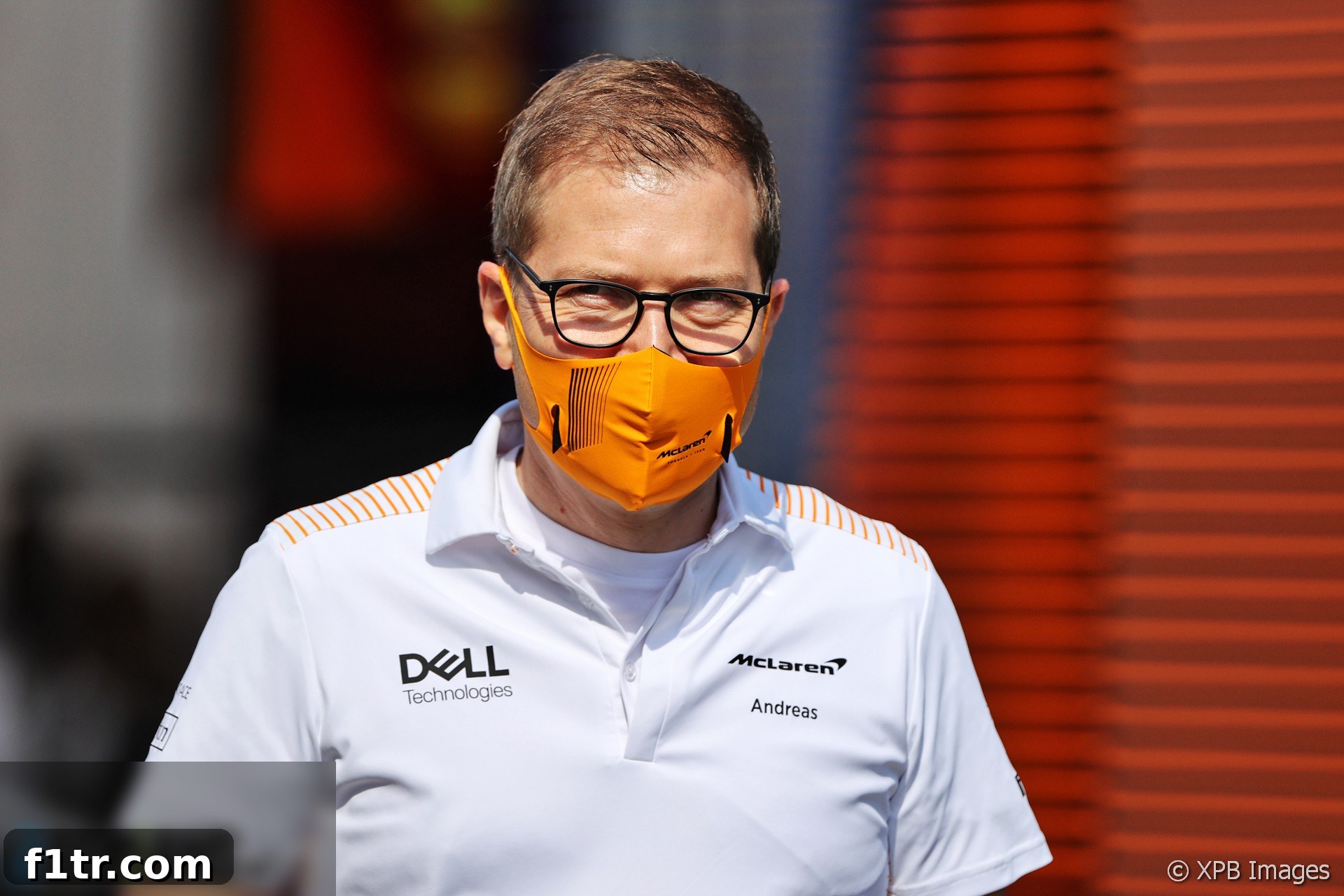
McLaren Boss Andreas Seidl Rejects Success Ballast, Champions Meritocracy in Formula 1 Amidst Fan Survey Discussions
McLaren team principal Andreas Seidl has unequivocally stated his firm opposition to the potential introduction of success ballast in Formula 1, emphasizing his commitment to a championship governed by pure meritocracy.
This stance comes at a pivotal time as Formula 1 has initiated a comprehensive global fan survey. This ambitious initiative aims to gather valuable insights from its worldwide fanbase on a variety of potential modifications and enhancements to the sport. Among the numerous suggestions presented in the survey, one of the most contentious is the concept of success ballast. This system, widely adopted in other motorsport categories such as touring car racing, involves adding weight to the cars of leading teams and drivers to level the playing field and potentially create more unpredictable races by aiding their rivals.
Seidl welcomed Formula 1’s proactive approach in engaging with its fanbase and gauging their attitudes towards the sport’s future direction. However, he was equally emphatic in expressing his strong disapproval of success ballast and any performance-equalizing regulations, aligning his views with the fundamental principles he believes define Formula 1.
“I believe it is incredibly important that Formula 1 and all participating teams actively listen to the opinions and feedback of our fans,” Seidl articulated. “We are intrinsically involved in this sport not merely for our own enjoyment or for the spectacle of racing around circuits; fundamentally, we do this for our dedicated fans, who are the lifeblood of Formula 1.”
The Case Against Success Ballast: A Purity of Competition
Delving deeper into his rationale, Seidl underscored a deeply held personal and professional conviction regarding the integrity of competition. “When the discussion turns to success ballast, I must emphasize that I have invested a significant amount of effort throughout my entire career to ensure that I am involved in championships where such measures are strictly absent, and where there is no form of balance of performance. Therefore, I am genuinely content with the regulatory framework currently in place within Formula 1, which champions competition based purely on performance and innovation.”
Success ballast, while aiming to create closer racing, is often viewed by purists as an artificial mechanism that detracts from the essence of motorsport. In categories like British Touring Car Championship (BTCC), cars are loaded with ballast proportional to their championship position or recent race results. While this undeniably generates dramatic racing and championship battles that go down to the wire, critics argue that it undermines the pursuit of ultimate speed and engineering excellence – cornerstones of Formula 1’s identity. F1 has historically prided itself on being the pinnacle of technological advancement and driver skill, where the fastest car and most talented driver should, in theory, emerge victorious without artificial handicaps. Introducing ballast, many argue, would fundamentally alter this philosophy, potentially penalizing success rather than rewarding it.
Beyond Ballast: Other Potential F1 Rule Changes
The global fan survey initiated by F1 encompasses a broad spectrum of other potential rule changes, reflecting the sport’s ongoing quest to enhance entertainment value and fan engagement. These suggestions include:
- Reintroducing Refuelling during Races: A practice abandoned after the 2009 season due to cost, safety concerns, and its tendency to spread out the field strategically. Its reintroduction could bring back a significant strategic variable and alter race dynamics.
- Requiring Drivers to Use Three Different Tyre Compounds per Race: Currently, drivers must use at least two different compounds. Mandating three would dramatically increase strategic complexity, potentially forcing teams into more aggressive or unconventional strategies.
- Introducing Reverse Grid Races: A highly controversial concept, often tested in junior categories, where grid positions for a sprint or even the main race are determined by reversing championship standings or previous race results. This is designed to shake up the order and create more overtaking opportunities but could unfairly penalize top performers.
- Using the Sprint Qualifying Format at Every Grand Prix Weekend: Building on the experimental sprint events, this would fundamentally restructure every F1 weekend, introducing a short Saturday race to determine the grid for Sunday’s main Grand Prix.
- Adding an Extra Race for Third Drivers: This concept could offer valuable track time for development drivers, increase opportunities for young talent, and potentially provide additional entertainment for fans.
The Sprint Qualifying Experiment: A Detailed Look
Among these proposed changes, the sprint qualifying format has already moved from concept to reality, with Formula 1 having conducted its second such event at Monza after the inaugural trial at Silverstone. Formula 1 CEO Stefano Domenicali has previously highlighted that the first sprint event at Silverstone garnered an “overwhelmingly positive feedback” from a significant segment of the fanbase, signaling a potential shift in the sport’s traditional weekend structure.
However, Andreas Seidl’s approach to the sprint qualifying format is characterized by a measured and data-driven perspective. He emphasized that Formula 1, alongside its constituent teams, must undertake a thorough and meticulous analysis of fan responses and overall feedback from all three planned sprint qualifying events before committing to any long-term decisions regarding the format’s continuation in the subsequent season.
“There’s a significant amount of analysis actively underway following each of these events,” Seidl explained when prompted by RaceFans for details regarding the fan feedback data shared by F1. “This involves our internal processes, utilizing various data channels, conducting comprehensive analyses as a team, and engaging directly with our fanbase. Concurrently, Formula 1 is conducting its own similar rigorous analysis, which is then shared with us.”
A Comprehensive Evaluation for the Future
Seidl further elaborated on the multi-faceted evaluation process. “As far as my understanding goes, and this perspective is mirrored by Formula 1’s side, the strategy is to complete these three designated events. Subsequently, we will consolidate all the accumulated data and observations. This includes assessing how the format performed, crucial insights into how it translated across different circuits and their unique track characteristics – because these variations could indeed significantly influence the level of excitement generated by a sprint race compared to a traditional qualifying session or even the original main race. It’s vital to understand the amount of action and strategic unfolding that occurs during the sprint, for example, on a Saturday afternoon.”
The core objective of the sprint qualifying format is to inject more excitement and unpredictability into the Grand Prix weekend. By transforming Saturday from a traditional qualifying day into a shorter, intense race, F1 aims to provide competitive action on two days of the weekend. This also changes the narrative, making Friday’s practice more crucial for setting the sprint grid, and the sprint itself a genuine competition for grid positions and a few championship points. However, some traditionalists argue it devalues the Sunday Grand Prix or that the sprint itself lacks the strategic depth of a full race.
The cautious approach from figures like Seidl highlights the critical balance F1 must strike between innovation and preserving its core identity. While fan engagement is paramount, any fundamental change to the race format must be thoroughly vetted against its long-term impact on competition, strategy, and the championship narrative.
“Then, I believe we must synthesize all this information, critically including the hard facts and figures derived from the data. Only then can we proceed to make an informed and strategic decision regarding the future of sprint qualifying within Formula 1,” Seidl concluded, emphasizing the need for evidence-based decision-making over reactive sentiment.
The feedback gathered from the global fan survey and the detailed analysis of the sprint qualifying events will undoubtedly play a crucial role in shaping the regulatory landscape of Formula 1 in the coming seasons. The debate between maintaining the sport’s traditional ethos of pure competition and embracing innovations for increased entertainment will continue to define F1’s evolution, with figures like Seidl advocating strongly for the former.
2021 Italian Grand Prix: Related Articles
- Who was to blame for Hamilton and Verstappen’s collision at Monza?
- Hamilton-Verstappen crash was ‘a racing incident, no danger’ – Alonso
- Hamilton pleased stewards “set a precedent”, Verstappen “doesn’t fully agree”
- Ricciardo didn’t need title rivals’ latest clash for stunning Monza win
- Why Verstappen’s grid penalty differed from Hamilton’s Silverstone sanction
Browse all 2021 Italian Grand Prix articles