FIA Approves Crucial F1 Regulation Changes for Enhanced Safety and Future Growth
The FIA’s World Motor Sport Council has formally endorsed a series of significant regulation adjustments set to shape the landscape of the Formula 1 season in 2024 and beyond. These changes underscore the governing body’s unwavering commitment to driver safety, technological advancement, and the long-term sustainability of motorsport’s pinnacle series.
Pirelli Continues as Exclusive Tyre Supplier for F1, F2, and F3 (2025-2027)
Following a rigorous evaluation process that concluded after the Qatar Grand Prix, the World Motor Sport Council officially reappointed Pirelli as the exclusive tyre supplier for the Formula 1, Formula 2, and Formula 3 championships. This renewed partnership extends Pirelli’s tenure from 2025 through to the end of the 2027 season, ensuring continuity and stability for all three categories.
Pirelli’s role in Formula 1 is multifaceted, encompassing not only the supply of high-performance tyres but also extensive research and development to meet the ever-evolving technical demands of the sport. Their continued involvement brings a wealth of experience and expertise, crucial for maintaining competitive balance and safety standards across the grid. The decision reflects the FIA’s confidence in Pirelli’s capability to deliver the necessary performance, durability, and innovation required at the elite level of motorsport. This long-term commitment allows for strategic planning and deeper integration between the tyre manufacturer and the sport’s technical working groups, fostering an environment ripe for further advancements in tyre technology.
The tyre supplier’s responsibility extends beyond simply providing rubber; it involves a complex logistical operation, extensive trackside support, and continuous data analysis. Pirelli’s dedication to evolving its products in line with F1’s dynamic regulations, including the transition to new car generations and power unit specifications, was a key factor in their reappointment. This ensures that the tyres remain a vital element of the racing spectacle while contributing significantly to the safety and performance envelopes of the cars.
Increased Tyre Testing Days to Boost Performance and Safety Development
In a move designed to further enhance tyre development and safety, the council approved a pivotal amendment to F1’s sporting regulations. The maximum number of tyre testing days permitted in a single season has been increased from 35 to 40. This augmentation specifically applies to private tyre testing sessions conducted throughout the season with individual teams, distinct from the mandatory pre-season testing events.
The additional five days provide Pirelli with greater flexibility and opportunity to fine-tune tyre compounds and constructions in real-world conditions. This expanded testing allowance is critical for addressing the rigorous demands placed on tyres by modern Formula 1 cars, which generate immense downforce and speeds. More testing translates into more data, enabling Pirelli to refine its products, develop new specifications, and respond more effectively to feedback from teams and drivers. Ultimately, this leads to safer, more durable, and more performance-optimized tyres, benefiting the entire grid and contributing to more exciting racing.
The strategic allocation of these extra testing days is expected to yield substantial benefits, particularly in the context of ongoing research into various tyre characteristics, including wear rates, grip levels across different temperatures, and overall integrity. It also offers teams a more extensive platform to collaborate with Pirelli, providing invaluable real-time feedback that can accelerate development cycles. This collaborative approach is vital for ensuring that the tyres are perfectly matched to the performance characteristics of the cars, thereby enhancing both safety and competitive potential.
Tackling Wet Weather Visibility: A Priority for Driver Safety
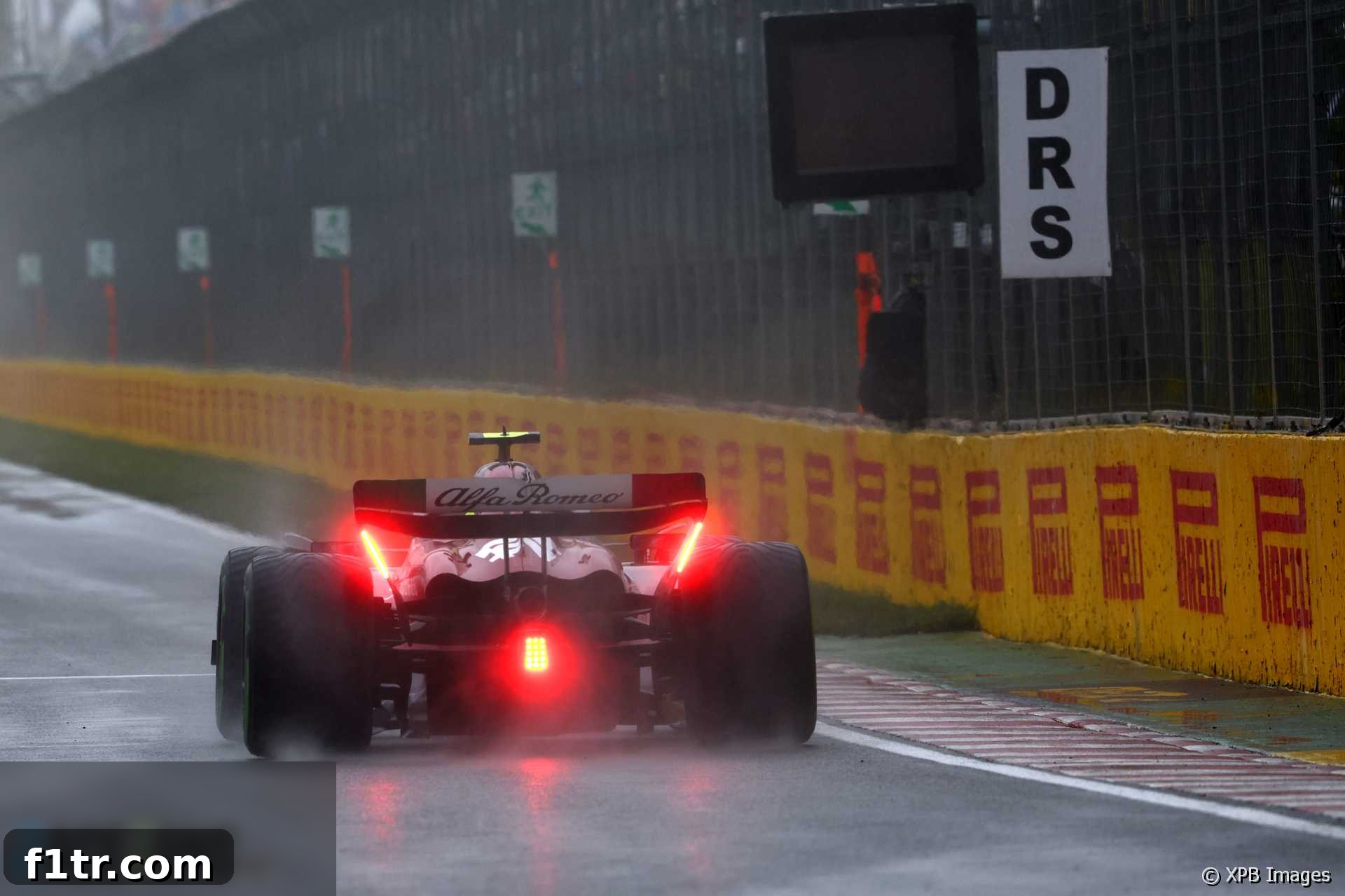
A significant allocation of four dedicated testing days has been approved by the FIA for crucial research and development focused on reducing the amount of spray generated by current cars in wet weather conditions. Driver visibility during rain-hit races has emerged as a paramount safety concern in recent years, reaching a critical point after the tragic death of Formula Regional European racer Dilano van ‘t Hoff in a multi-car crash at Spa-Francorchamps in early July.
The FIA has been proactively exploring various solutions, including the development and testing of a specialized wheel pod design. These pods are envisioned to be fitted to cars during exceptionally wet races, with the primary objective of mitigating the dense plume of spray that severely obscures visibility for following drivers. The dangers posed by reduced visibility are immense, escalating the risk of high-speed collisions in adverse conditions. The commitment of dedicated testing days underscores the urgency and seriousness with which the FIA is addressing this life-threatening issue.
This initiative represents a proactive step towards making wet weather racing safer without compromising the spectacle. The engineering challenge is considerable, requiring solutions that effectively manage water displacement without unduly impacting aerodynamic performance or adding excessive weight. The tests will aim to find an optimal balance, ensuring that any adopted solution genuinely improves safety while remaining practical for race implementation. Addressing the spray issue is not just about preventing accidents; it’s about ensuring that drivers can compete fairly and safely, even when faced with the most challenging environmental conditions. The lessons learned from these tests could revolutionize how wet races are managed and contested, setting new benchmarks for driver protection across all levels of motorsport.
FIA President Reaffirms Support for Andretti’s Entry into Formula 1
During his address to the World Motor Sport Council meeting in Geneva, FIA President Mohammed ben Sulayem took the opportunity to publicly reaffirm the governing body’s strong support for Andretti Formula Racing’s bid to join the Formula 1 grid. This declaration reinforces the FIA’s stance following its rigorous due diligence process, which led to the approval of Andretti’s application.
Ben Sulayem highlighted the meticulous nature of the assessment, stating, “We have recently announced the approval of Andretti Formula Racing’s application following a rigorous due diligence process. I would like to thank the FIA team members for their support in this process and I congratulate them for what they did. We firmly believe we are doing what is best for the long-term sustainability of the sport.” This statement underscores the FIA’s dedication to expanding the grid with credible and competitive new entries, provided they meet the stringent technical, financial, and operational criteria.
The potential addition of Andretti Global to Formula 1 has been a subject of intense discussion, reflecting the sport’s growing global appeal and commercial interest. While the FIA has approved their application from a sporting and technical standpoint, the final decision also rests with Formula 1 Management (FOM). Ben Sulayem’s consistent support signals the FIA’s belief that a new, well-resourced team like Andretti can bring fresh competition, expand the sport’s reach, particularly in key markets, and contribute positively to F1’s ecosystem. The commitment to “long-term sustainability” suggests a vision that includes carefully managed growth and innovation within the championship structure.
Investing in Motorsport’s Future: FIA University Programs and Governance
President Ben Sulayem also shed light on the FIA’s broader initiatives aimed at strengthening the sport from within. He mentioned the launch of two new FIA university programs: the “Motorsport Leadership and Management” and the “FIA University Certificate in Modern Sport Governance.” These programs signify the FIA’s commitment to fostering professional development and ensuring robust governance across the global motorsport community.
These educational initiatives are designed to equip current and future leaders within motorsport with the essential skills and knowledge required to navigate the complex challenges of modern sports administration, ethics, and sustainability. By investing in human capital through structured academic programs, the FIA aims to elevate the standards of leadership, management, and governance across all its affiliated clubs and championships. This proactive approach ensures that the sport is managed by highly competent and ethically sound professionals, contributing to its credibility, transparency, and overall success for generations to come.
The council meeting itself, held at the organization’s offices in Geneva, served as a crucial forum for these important discussions and decisions. It demonstrated the FIA’s continuous effort to evolve and adapt the sport to new challenges and opportunities, always with an eye on safety, fairness, and the exciting future of Formula 1.
Related Formula 1 Insights
- Safety First: Exploring the Challenges of Motorsport Circuits
- F1’s Future: Adapting Tracks and Regulations for 2026 and Beyond
- Insights from the Paddock: New Motorsport Books and Key Personalities
- Revisiting Classics: The Greatest Races and Their Legacies in F1 History
- The Art of Overtaking: Debating the Authenticity of F1 Racing Action
- Team Strategies: How F1 Teams Navigate New Regulations for Edge Performance
- Budget Caps in F1: Balancing Innovation with Financial Sustainability
- From Junior Series to F1: Nurturing the Next Generation of Motorsport Talent
- Aerodynamic Evolution: The Cutting Edge of F1 Car Design
Browse all Formula 1 articles