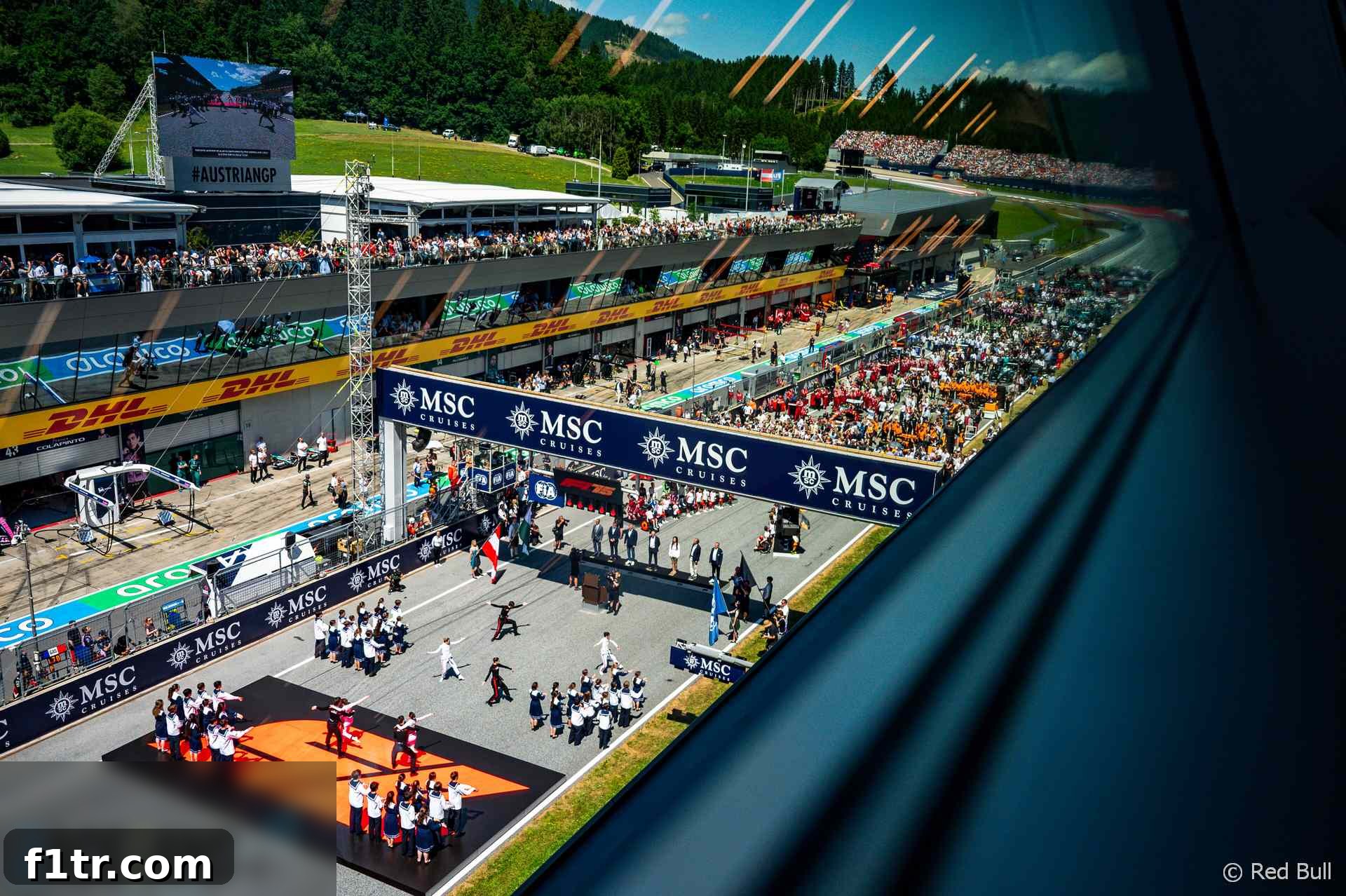
The landscape of Formula 1 has undergone significant transformation in recent years, with sprint races emerging as a prominent, albeit polarizing, addition to the championship calendar. While these shorter, Saturday contests continue to elicit mixed reactions from a segment of the sport’s dedicated fanbase, they have firmly cemented their place as an integral sporting element of the modern world championship, particularly under the stewardship of Liberty Media, the commercial rights holder.
Since Liberty Media assumed ownership, there has been a clear strategic push to innovate and enhance the F1 product for a broader global audience. Sprint races are a direct manifestation of this vision, designed to inject more competitive action into race weekends and provide fans with additional high-stakes racing. Stefano Domenicali, Formula 1’s CEO, stands out as a particularly ardent advocate for the sprint format. Under his influential leadership, the number of sprint races has doubled from three to an impressive six per season over the past three years, signaling a strong commitment to their future within the sport.
Domenicali’s proactive approach to evolving F1’s format extends beyond the current sprint structure. He has, on multiple occasions, floated the controversial idea of introducing reverse grids into the sport, initially for Grand Prix events. While this concept has historically faced considerable resistance from F1 teams and many purists who uphold the traditional values of the sport, Domenicali has recently revived the discussion, specifically advocating for reverse grids within the sprint race format. This move draws inspiration from their successful implementation in junior categories like Formula 2 and Formula 3, where they often deliver thrilling and unpredictable racing.
Despite Domenicali’s palpable enthusiasm, it is clear that his vision for an expanded sprint calendar and the potential introduction of reverse grids is not universally shared, particularly among many of the drivers. Their primary focus often remains on the prestige and competitive integrity of the main Grand Prix, viewing any additional, manufactured elements with skepticism. The sprint format currently features in only a quarter of the world championship rounds, highlighting its still-evolving status. This prompts a crucial question for the future of Formula 1: having gradually established the sprint race concept, is the time truly ripe to introduce an even more radical shake-up with reverse grids, or would such a move fundamentally alter the very essence of what makes F1 the pinnacle of motorsport?
For: Embracing Spectacle and Unpredictability
At its core, the argument for reverse grids in Formula 1 sprint races revolves singularly around enhancing entertainment. The very genesis of sprint races was an attempt to offer a more condensed, intense, and immediately gratifying form of racing to further captivate fans. The logic is simple: if F1 fans love racing, why not provide them with more opportunities to witness thrilling on-track battles?
However, the current 100km sprint races frequently fall short of delivering the spectacular and unpredictable action that fans crave. Too often, the results mirror those of the main Grand Prix, with the same dominant teams and drivers predictably contending for victory and championship points. This predictability can dampen the excitement and lead to a sense of déjà vu, diminishing the unique appeal that sprints were intended to offer.
Introducing a reverse grid, either for the entire field or a significant portion of it, would almost guarantee a drastic increase in excitement and unpredictability. Imagine the fastest cars and most skilled drivers, typically at the front, being forced to start from deep within the pack. This scenario would invariably lead to a flurry of overtakes, strategic daring, and genuinely intense wheel-to-wheel racing as they battle their way through the field. It would create opportunities for underdog teams and drivers to experience leading an F1 race or even vying for a podium position, something they might never achieve under normal circumstances. Furthermore, fans would relish seeing unusual combinations of cars and drivers fighting at the sharp end, fostering narratives of heroic charges and unexpected upsets. This format promises a spectacle where every position gained is a hard-fought victory, transforming a potentially processional sprint into a captivating demonstration of skill and strategy. From a pure entertainment standpoint, the potential for high-octane drama is undeniable, offering a fresh dynamic that could revitalize fan engagement and attract new viewers to the sport.
Against: Upholding Sporting Integrity and the Pinnacle of Motorsport
While reverse grids undoubtedly generate excitement, their suitability for Formula 1 is fiercely debated, particularly when considering the fundamental differences between F1 and junior formulae. Reverse grids work exceptionally well in categories like Formula 2 and Formula 3 precisely because these series are designed as proving grounds and training platforms for aspiring F1 drivers and other major championships. In these feeder series, the objective is often to test a driver’s ability to overtake, manage tire wear in traffic, and handle pressure from varying grid positions, rather than solely to crown the fastest car and driver on merit.
By compelling the fastest teams and drivers to commence a race from the middle or rear of the grid, reverse grids in junior categories serve a dual purpose: they provide invaluable racing experience to the most talented prospects, forcing them to hone their race craft, and simultaneously offer invaluable opportunities for those still developing their skills to taste the intense pressure of battling for a podium or even a victory – an experience they might not typically encounter. This helps level the playing field, fosters greater competition, and prepares drivers for the diverse challenges of top-tier motorsport.
However, applying this model to Formula 1 raises profound questions about sporting integrity. F1 is widely recognized as the pinnacle of motorsport, where the core ethos dictates that the fastest car, driven by the most skilled driver, should prevail based on pure performance and merit. If drivers were to achieve their positions through entirely artificial means, what true value would such a victory hold? The concern is that a win under reverse grid conditions might be perceived as manufactured rather than earned through genuine supremacy. For instance, if a driver like Gabriel Bortoleto were to win a sprint race for Sauber from a reverse grid pole position, while undoubtedly an exciting moment, its significance might be diminished in the context of the sport’s highest echelons. Would such a victory be celebrated with the same reverence as a standard Grand Prix win, or would it carry an asterisk, undermining the very notion of ‘world champion’ and the pursuit of ultimate speed and engineering excellence that defines Formula 1?
My Perspective: The Perilous Pursuit of Spectacle Over Sport
Stefano Domenicali, without question, is an exceptionally astute and fiercely intelligent figure who has made significant, meaningful contributions to both Ferrari and Formula 1 as a sport, achieving more than the vast majority of individuals who have ever worked within these legendary institutions. Yet, at times, it becomes genuinely challenging to fully grasp the underlying motivation behind some of his more radical proposals for the racing series he now so prominently presides over. Oh, but then it becomes starkly clear. The motivation, almost invariably, is rooted in commercial interests and, ultimately, money.
It would be disingenuous to pretend not to see the immediate, visceral appeal of reverse grids. The prospect of seeing a top team’s drivers – imagine the McLarens, for instance – having to carve their way through an entire field from the back row of the grid within the limited confines of a 20-lap sprint race is undeniably intriguing. Such a scenario would almost certainly offer far more immediate drama and genuine on-track excitement than many of the current sprint races typically manage to deliver, even at their most engaging moments. The visual spectacle of cars battling relentlessly for every position, with overtakes happening frequently, is a powerful draw for any motorsport fan.

However, the allure of this manufactured spectacle quickly fades when confronted with the myriad and profound problems inherent in introducing reverse grids into Formula 1’s current sprint format. The complexities and potential for unintended negative consequences are simply too numerous and too significant to ever seriously consider such a radical departure from F1’s core principles.
Firstly, the practical implementation poses immediate dilemmas. How much of the grid would be reversed? Would it be the top ten, mirroring the format seen in F2, or would it be the entire field, leading to an even more chaotic start? Regardless of the chosen scale, a fundamental question emerges: how would the original grid order be determined before being reversed? If it’s based on Friday qualifying results, what genuine incentive would there be for drivers to push to their absolute maximum in that qualifying session? A driver might strategically aim for a mid-pack position to secure a more favorable starting spot for the sprint, thereby undermining the competitive integrity of qualifying itself. This creates a perverse incentive structure where drivers are not striving for outright speed but for a tactical advantage, which is antithetical to Formula 1.
Then, we arrive at arguably the most critical and contentious issue: championship points. Historically, points were a reward exclusively reserved for the top finishers in a Grand Prix, recognizing exceptional performance in the sport’s premier event. Currently, points are also awarded to the top eight finishers in Saturday sprint races, adding weight and significance to these shorter contests. If reverse grids are introduced, how would championship points be allocated? If drivers still earn points based on their finishing positions, it could lead to truly farcical sprint qualifying sessions. Picture this: drivers deliberately slowing down or making strategic errors to achieve, say, the tenth-fastest time, knowing that this position would translate into pole or a front-row start for the reversed grid sprint. This would transform qualifying from a pure test of speed into a tactical game of aiming for the ‘optimal bad’ result, completely devaluing the competitive nature of the entire weekend. Conversely, if points were to be removed from reverse grid sprint races to prevent such manipulation, what incentive would drivers have to genuinely care about these sprints at all? They are professionals focused on championship success and legacy; without points, the races would risk becoming glorified exhibition events, turning into a high-speed parade with little competitive substance or motivation for the teams to commit resources.
Ultimately, reverse grids simply make no logical sense within the framework of Formula 1, in any capacity. At some critical juncture, the relentless pursuit of creating immediate, fleeting value for promoters and generating short-term entertainment dividends must be overridden by the overarching imperative to maintain and safeguard F1’s intrinsic value as a legitimate, prestigious sporting competition. This is a sport that is, by definition and aspiration, supposed to be the most challenging, technologically advanced, and meritocratic circuit racing contest on the entire planet. To introduce artificial mechanisms that fundamentally undermine the principle of the fastest winning would be to dilute its prestige and betray its heritage. The sport’s enduring appeal lies in its authenticity, its pursuit of perfection, and the belief that the best driver in the best car, on that given day, will triumph. Reverse grids would irrevocably compromise this foundational promise.
In conclusion, the harsh reality is that sprint races, as they currently stand, need reverse grids about as much as Formula 1 itself needed sprint races to begin with – which is to say, not at all. The solutions to enhancing F1’s spectacle should come from refining the existing Grand Prix format, improving track design for better racing, and fostering genuine competition through fair regulations, rather than resorting to artificial contrivances that threaten to erode the very credibility of the sport’s ultimate prize.
Your Voice Matters: Shape the Future of F1
The debate around reverse grids in Formula 1’s sprint race format is a complex one, touching upon the very essence of sporting integrity versus entertainment value. We want to hear from you, our passionate community of Formula 1 enthusiasts. Would you welcome reverse grids as a means to inject more excitement, or do you believe they would detract from the sport’s purist values? Cast your vote below to make your opinion count, and join the conversation by sharing your detailed thoughts and arguments in the comments section. Your insights are invaluable as Formula 1 navigates its future.
A RaceFans account is required in order to vote. If you do not have one, register an account here or read more about registering here. When this poll is closed the result will be displayed instead of the voting form.
Continuing the Discussion: Debates and Polls
Engage further with critical topics shaping Formula 1’s future:
- What must Formula 1 fix with its new rules – and what should it leave unchanged?
- ADUO: Do F1 teams who fall behind deserve to get help to catch up?
- F1 is considering doubling its sprint races. Do you want more or fewer?
- Will this be a fight or a rout? 20 questions for the 2026 Formula 1 season
- Which Formula 1 team has the best-looking car – and the worst – for the 2026 season?
Browse all debates and polls