Pirelli Unleashes Hyper-Softs for High-Altitude Mexican Grand Prix: 2018 F1 Tyre Strategy Explored
As the pinnacle of motorsport, Formula 1 thrives on a blend of cutting-edge technology, driver skill, and strategic acumen. A critical component in this complex equation is tyre management, an area meticulously overseen by Pirelli, the sport’s exclusive tyre supplier. For the highly anticipated 2018 Mexican Grand Prix, held at the unique Autódromo Hermanos Rodríguez, Pirelli made a strategic and exciting decision: nominating its softest compound, the hyper-softs, to challenge teams and drivers.
Support Independent F1 Journalism: Become a Supporter & go ad-free
Formula 1’s official tyre supplier confirmed that drivers would have access to the hyper-soft, ultra-soft, and super-soft compounds for the race weekend in October. This selection represented the absolute softest trio of tyres from Pirelli’s 2018 range, a choice deliberately made to promote aggressive strategies and maximize performance on a circuit renowned for its unique characteristics. The decision highlighted Pirelli’s ongoing commitment to enhancing the spectacle of racing by providing compounds that offer both blistering speed and significant strategic challenges due to their degradation characteristics.
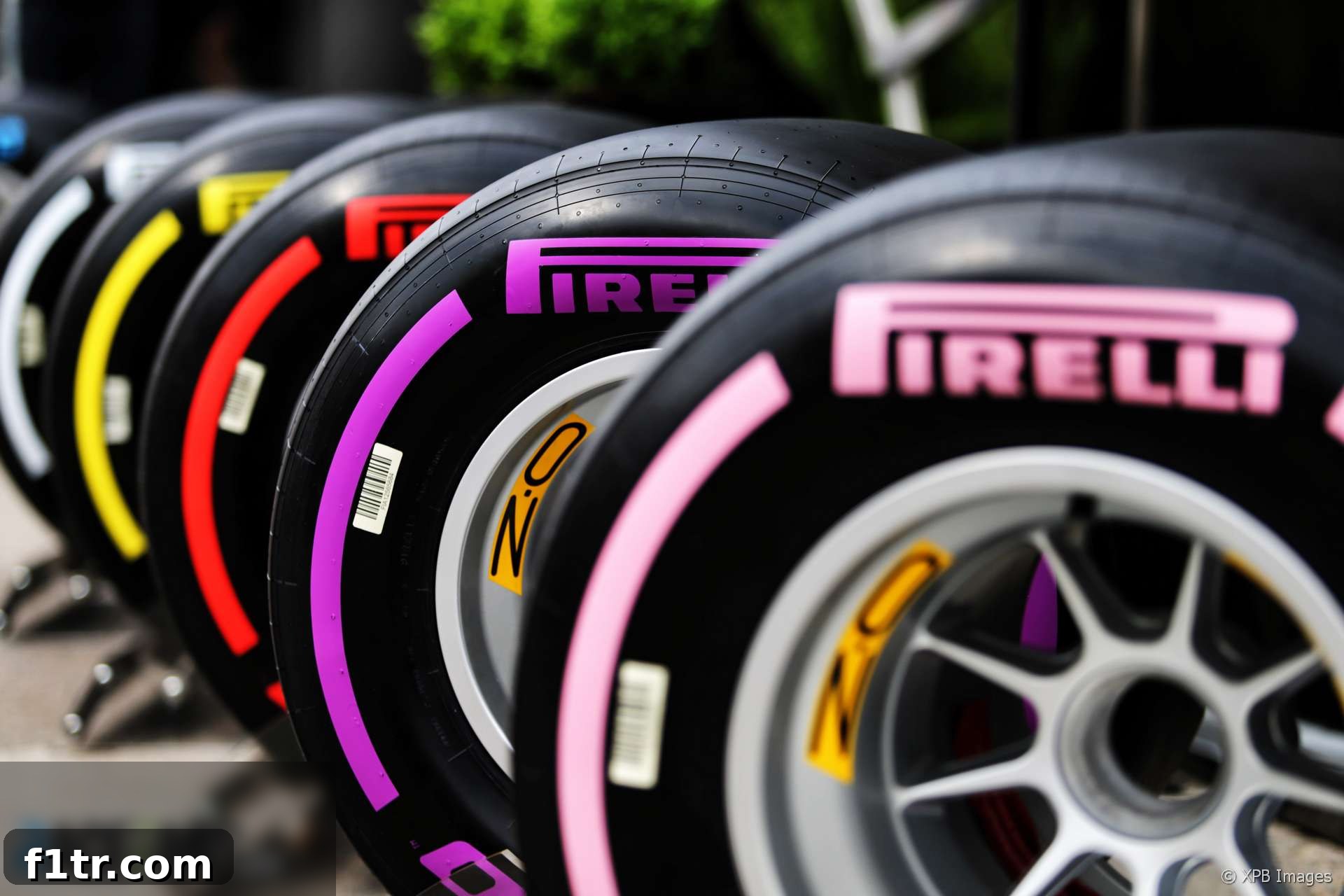
The hyper-soft compound, easily distinguishable by its vibrant pink sidewall, was a relatively new addition for the 2018 season, designed to be the fastest and grippiest tyre in the dry weather lineup. Its presence for the Mexican Grand Prix immediately signaled an intention to push the limits of performance. This particular softest possible tyre selection had been deployed at only two other races earlier in the 2018 calendar: the iconic Monaco Grand Prix and the high-speed Canadian Grand Prix. Furthermore, the hyper-softs were also nominated for the subsequent races in Singapore and Russia, underscoring its role in key events where maximum mechanical grip and varied strategy were deemed essential. The consistent theme was to provide tyres that rewarded brave strategy calls and precise driving, often leading to multi-stop races.
The Unique Challenge of the Autódromo Hermanos Rodríguez
The Autódromo Hermanos Rodríguez in Mexico City is unlike any other circuit on the Formula 1 calendar, primarily due to its extreme altitude. Situated over 2,200 meters (approximately 7,200 feet) above sea level, it is by far the highest track in F1. This thin air has profound effects on the cars and, consequently, on tyre performance and strategy. The reduced air density means engines generate less power, and more critically, aerodynamic downforce is significantly diminished. Even with teams running maximum wing settings, the cars still generate less downforce than they would at sea level, leading to lower grip levels and increased sliding.
This inherent lack of grip, combined with the circuit’s mixture of fast straights, technical sections, and the stadium sector, places considerable stress on the tyres. The track surface itself, while not overtly abrasive in all areas, can still contribute to higher degradation, especially when cars are sliding. Therefore, Pirelli’s choice to bring the hyper-soft, ultra-soft, and super-soft compounds to Mexico was a calculated risk. While these compounds offer phenomenal initial grip and outright pace, their soft nature makes them susceptible to higher wear and thermal degradation, particularly under the demanding conditions of high-altitude racing. Teams had to prepare for a delicate balancing act between extracting performance and preserving tyre life over long stints.
Pirelli’s 2018 Tyre Lineup: A Detailed Overview
To fully grasp the strategic ramifications of the Mexican Grand Prix tyre nomination, it’s beneficial to recall Pirelli’s entire dry-weather tyre range for the 2018 Formula 1 season. Pirelli had evolved its compounds and simplified its naming system slightly to provide a clear ladder of performance and durability:
- Hard (Ice Blue Sidewall): The most durable tyre, designed for extreme conditions or long, consistent stints where longevity is prioritized over outright speed.
- Medium (White Sidewall): A versatile compound offering a good blend of grip and durability. It served as a robust option for the majority of race distances.
- Soft (Yellow Sidewall): A popular choice, providing a noticeable step up in grip from the medium, ideal for qualifying runs or the opening stages of a race.
- Super-soft (Red Sidewall): A more performance-oriented compound, offering even greater grip and faster lap times than the soft, but with an accelerated degradation rate.
- Ultra-soft (Purple Sidewall): Known for its exceptional grip and peak performance over short runs, it was often a preferred compound for qualifying and sprint stints.
- Hyper-soft (Pink Sidewall): The pinnacle of Pirelli’s dry-weather performance for 2018. It offered the quickest lap times but was also the most susceptible to degradation, making it a high-risk, high-reward option for strategic plays.
The selection for Mexico, consisting of the super-soft, ultra-soft, and hyper-soft, provided teams with three compounds that were all on the softer side of this spectrum. This emphasized the importance of mechanical grip at the Autódromo Hermanos Rodríguez and indicated that outright pace would be readily available, albeit at the cost of durability. The key challenge for teams and drivers would be to manage these sensitive compounds, especially the hyper-soft, to maintain performance throughout the race without succumbing to excessive wear and lap time drop-off.
Strategic Implications and Race Day Dynamics
The aggressive tyre choice for the Mexican Grand Prix had profound implications for race strategy. In qualifying, the hyper-softs were expected to deliver the fastest lap times, making them the default choice for Q3. However, the critical decision would revolve around Q2: which tyre compound would be best for starting the race? Teams aiming for a one-stop strategy might try to qualify on the ultra-softs or even super-softs, sacrificing a little outright pace for greater flexibility and potentially a longer first stint.
On race day, managing the hyper-softs would be a delicate art. While they offer unparalleled grip, their lifespan is inherently shorter. High track temperatures, combined with the sliding motion caused by reduced downforce at altitude, would accelerate thermal degradation. Drivers who could maintain a smooth driving style, minimizing slip and preserving the integrity of the tyres, would undoubtedly gain an advantage. Pit stop windows would be tight, and the timing of tyre changes would be crucial. A two-stop strategy was widely anticipated, but the possibility of a three-stopper could not be ruled out, particularly if unexpected weather changes or safety car periods reshuffled the pack.
The presence of three soft compounds also meant that the performance delta between them would be significant, allowing for diverse strategic approaches. Some teams might opt for an aggressive start on hyper-softs, hoping to build a gap before pitting early, while others might play a longer game on ultra-softs. The tactical battle between teams, adapting to track conditions, traffic, and rival strategies, was set to be a highlight of the Mexican Grand Prix, making tyre management a central theme of the race weekend.
2018 F1 Tyre Nominations: A Season Perspective
The 2018 Formula 1 season marked a deliberate shift by Pirelli towards providing softer compounds across the calendar, aiming to inject more strategic variety and promote closer, more exciting racing. The introduction and widespread use of the hyper-soft compound was a testament to this philosophy. Let’s examine the full tyre nominations for the 2018 season, comparing them with those from 2017, to illustrate these evolving trends and understand the context of the Mexican Grand Prix selection.
| Circuit | 2018 Tyre Compounds | 2017 Tyre Compounds | ||||
|---|---|---|---|---|---|---|
| Compound 1 | Compound 2 | Compound 3 | Compound 1 | Compound 2 | Compound 3 | |
| Melbourne | Soft | Super-soft | Ultra-soft | Soft | Super-soft | Ultra-soft |
| Bahrain | Medium | Soft | Super-soft | Medium | Soft | Super-soft |
| Shanghai | Medium | Soft | Ultra-soft | Medium | Soft | Super-soft |
| Baku | Soft | Super-soft | Ultra-soft | Medium | Soft | Super-soft |
| Catalunya | Medium | Soft | Super-soft | Hard | Medium | Soft |
| Monte-Carlo | Super-soft | Ultra-soft | Hyper-soft | Soft | Super-soft | Ultra-soft |
| Montreal | Super-soft | Ultra-soft | Hyper-soft | Soft | Super-soft | Ultra-soft |
| Paul Ricard | Soft | Super-soft | Ultra-soft | n/a | n/a | n/a |
| Red Bull Ring | Soft | Super-soft | Ultra-soft | Soft | Super-soft | Ultra-soft |
| Silverstone | Hard | Medium | Soft | Medium | Soft | Super-soft |
| Hockenheimring | Medium | Soft | Ultra-soft | n/a | n/a | n/a |
| Hungaroring | Medium | Soft | Ultra-soft | Medium | Soft | Super-soft |
| Spa-Francorchamps | Medium | Soft | Super-soft | Soft | Super-soft | Ultra-soft |
| Monza | Medium | Soft | Super-soft | Medium | Soft | Super-soft |
| Singapore | Soft | Ultra-soft | Hyper-soft | Soft | Super-soft | Ultra-soft |
| Sochi | Super-soft | Ultra-soft | Hyper-soft | Soft | Super-soft | Ultra-soft |
| Suzuka | Medium | Soft | Super-soft | Medium | Soft | Super-soft |
| Circuit of the Americas | Soft | Super-soft | Ultra-soft | Soft | Super-soft | Ultra-soft |
| Autodromo Hermanos Rodriguez | Super-soft | Ultra-soft | Hyper-soft | Soft | Super-soft | Ultra-soft |
| Interlagos | Medium | Soft | Super-soft | |||
| Yas Marina | Soft | Super-soft | Ultra-soft | |||
A review of the 2018 nominations table clearly shows Pirelli’s push towards softer compounds compared to the previous year. Circuits like the Circuit de Barcelona-Catalunya, traditionally a harder tyre track, saw the hardest nominated compound shift from Hard in 2017 to Medium in 2018. Similarly, Baku and Singapore also received softer options. The hyper-soft, as highlighted, made its appearance at several demanding circuits throughout the season, including Monaco, Canada, Singapore, Russia, and finally Mexico. This aggressive approach aimed to reduce the likelihood of one-stop races and create more strategic dilemmas for the teams, thus enhancing the overall race spectacle.
The choice for the Autódromo Hermanos Rodríguez was particularly symbolic, as it joined an exclusive club of circuits receiving the very softest tyre allocation. This underscored Pirelli’s confidence in the compounds’ ability to deliver performance even under the unique atmospheric pressures of Mexico City, while simultaneously challenging teams to master the intricate art of tyre management. At the time of this announcement, Pirelli was yet to confirm the tyre nominations for the two final races of the season, Brazil (Interlagos) and Abu Dhabi (Yas Marina). However, the trend of promoting softer, more performance-oriented compounds had been firmly established throughout the 2018 season, shaping strategies and influencing race outcomes consistently.
For exclusive content and an ad-free experience, become a RaceFans supporter today!Go ad-free
More on the 2018 F1 Season
Stay informed about all the developments from a memorable year in Formula 1 racing. Dive deeper into analysis, race reports, and behind-the-scenes stories that shaped the 2018 championship.
- F1 feared “death knell” for Drive to Survive after Ferrari and Mercedes snub
- McLaren staff told us we were “totally crazy” to take Honda engines in 2018 – Tost
- ‘It doesn’t matter if we start last’: How Red Bull’s junior team aided Honda’s leap forward
- Honda’s jet division helped F1 engineers solve power unit problem
- McLaren Racing losses rise after Honda split
Browse all 2018 F1 season articles