Formula 1 Teams: Navigating Staffing Growth and the Budget Cap Era
Formula 1, the pinnacle of motorsport, is renowned for its relentless pursuit of technological advantage and on-track excellence. This high-stakes environment demands not only cutting-edge machinery but also an incredibly skilled and dedicated workforce. Over recent years, the trend has been clear: F1 teams have significantly expanded their personnel, investing heavily in human capital to gain a competitive edge. This expansion has occurred even as the sport’s owners, Liberty Media, began to lay out ambitious plans for financial regulations, most notably the implementation of a budget cap, aimed at curbing expenditure and fostering a more equitable playing field.
The year 2018 served as a pivotal point, illustrating the tension between unchecked team growth and the impending era of financial prudence. While discussions about capping budgets after the 2020 season were already underway, teams continued their recruitment drives, pushing staffing levels to unprecedented heights. This article delves into the dynamics of F1 team growth, examines specific case studies, and explores the profound implications of the budget cap on the sport’s highly specialized workforce and the future of competition.
The Unprecedented Growth of F1 Teams
Data compiled on the staffing levels of each Formula 1 team over the preceding six seasons reveals a compelling narrative of continuous expansion. For the purpose of fair comparison, this analysis specifically focuses on the teams’ chassis-building operations, deliberately excluding the engine manufacturing programmes undertaken by a select few, namely Mercedes, Ferrari, and Renault, to ensure a consistent metric across the grid. The findings highlight a dramatic surge in personnel numbers, reflecting the escalating demands of modern F1.
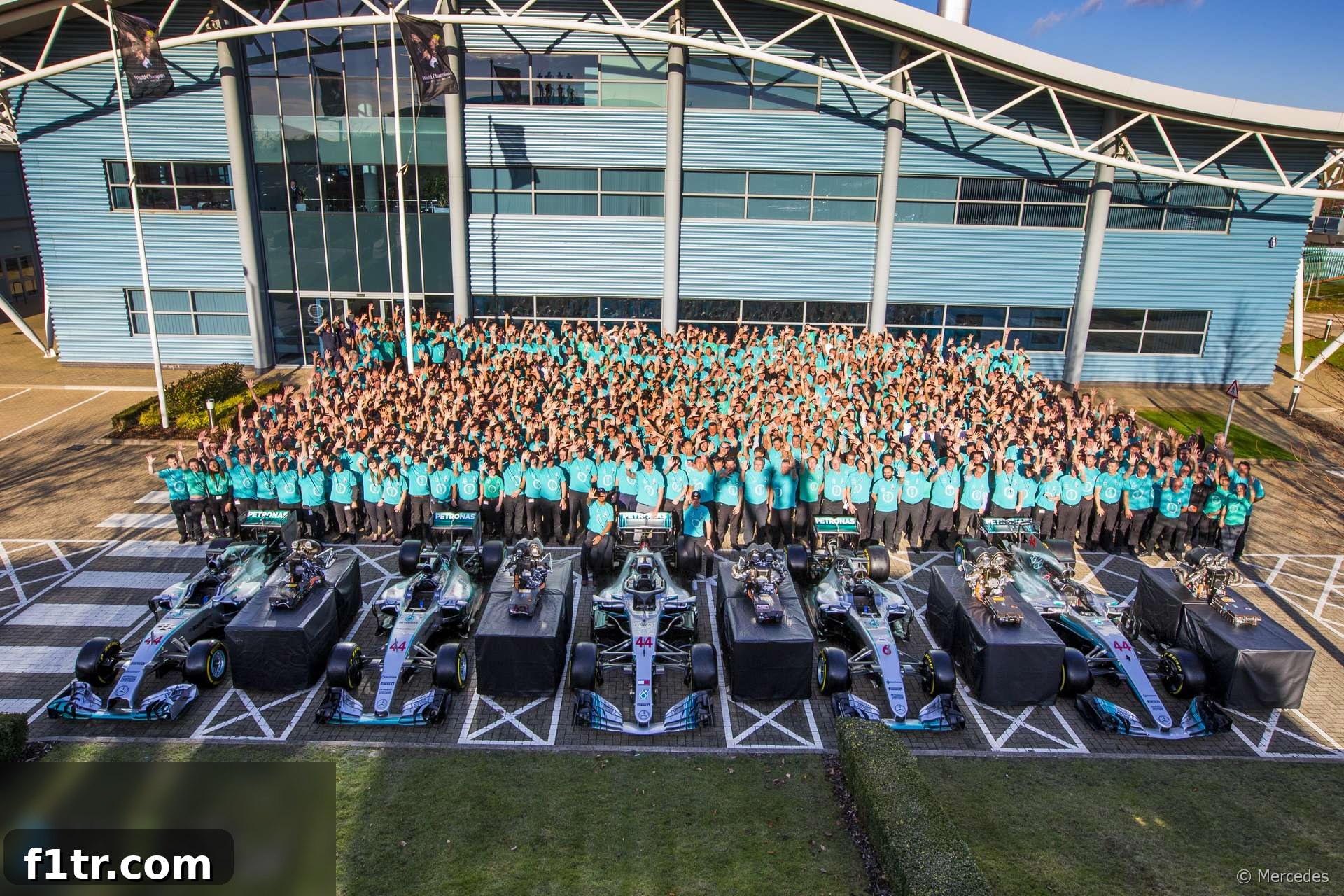
Over a span of five years leading up to 2018, the average Formula 1 team witnessed its workforce swell from approximately 450 staff to a staggering 620 – an increase of more than a third. This significant growth underscores the escalating complexity of modern F1 cars, the intense demands of developing cutting-edge technology, and the ever-present pressure to innovate across all departments. Each new regulation often introduces fresh challenges requiring specialized expertise, driving the need for more hands-on deck. From advanced simulation and aerodynamics to complex hybrid power unit integration and sophisticated data analytics, every facet of F1 demands a deeper pool of talent and specialized skills than ever before.
The phenomenon of staff expansion wasn’t confined solely to the sport’s traditional giants like Mercedes and Ferrari, who are known for their vast resources and seemingly limitless budgets. Even teams operating with more modest budgets found themselves in recruitment mode, recognizing the imperative of increased personnel to remain competitive. A notable example from 2018 was Racing Point, formerly known as Force India, which declared its intention to augment its workforce by at least another 100 staff over the subsequent two years, aiming to exceed 500 employees. This ambition demonstrated that even mid-tier teams recognized the necessity of expanding their human capital to stay relevant in an increasingly demanding landscape.
Racing Point’s Resilience Amidst Uncertainty
The story of Racing Point’s planned expansion is particularly insightful, especially considering the tumultuous period the team navigated in 2018. Originally competing as Force India, the team entered administration mid-season, a critical juncture that typically sparks fears among senior management regarding the potential loss of key personnel to rival outfits. Such a scenario could be catastrophic, as experienced and talented individuals are the lifeblood of any successful F1 operation, possessing invaluable institutional knowledge and specialized skills that are difficult to replace.
However, despite the significant uncertainty surrounding the team’s future and ownership – a period stretching over the crucial summer break – team principal Otmar Szafnauer famously asserted that they “lost nobody” during this challenging transition. Speaking to the official F1 website, Szafnauer emphasized the remarkable loyalty and dedication of his staff, stating, “Not a single soul.” He elaborated on the difficulty of this achievement, noting that the best and most sought-after individuals often receive lucrative offers from well-established competitors such as McLaren, Williams, and Renault, amongst others. The ability of the team to retain its core talent through such a crisis speaks volumes about the team culture, the leadership, and perhaps the unique appeal of being part of a close-knit F1 operation, even one facing existential threats.
This remarkable retention of staff was a testament to the team’s internal strength and cohesion, providing a stable foundation upon which the new ownership, led by Lawrence Stroll, could build. The commitment to expanding the workforce post-acquisition further signalled a renewed ambition and significant investment in the team’s future, reinforcing the idea that human capital remains a paramount asset in Formula 1, often outweighing purely financial considerations in times of crisis.
Haas F1 Team: A Lean Model in a Growing Sport
In stark contrast to the general trend of burgeoning staff numbers across the Formula 1 grid, the Haas F1 Team has consistently operated with a significantly leaner workforce since its inception. This distinctive approach has allowed them to remain F1’s smallest team by a considerable margin, largely due to their innovative and strategic exploitation of the sport’s ‘listed parts’ regulations. These regulations permit teams to source a substantial portion of their car components from external suppliers, rather than undertaking all design and manufacturing in-house.
Haas has leveraged this flexibility to its fullest extent, acquiring crucial components such as the powertrain, gearbox, and hydraulics from Ferrari, their technical partner. This strategic alliance allows Haas to concentrate its in-house resources on areas like chassis development, aerodynamics, and race operations, significantly reducing the need for a massive manufacturing and engineering infrastructure. Consequently, Haas operates with a staff count that is little more than a quarter the size of the chassis operations at powerhouses like Mercedes or Ferrari, yet still manages to compete in the highly competitive environment of Formula 1.
The efficiency of Haas’s model can be better understood when compared to historical benchmarks within Formula 1. Their 250-strong workforce in 2018 is remarkably similar to the staff levels maintained by Williams when they clinched the Formula 1 championship in 1996 with Damon Hill. To put this into further perspective, during an earlier successful championship campaign in 1987, when Williams won with Nelson Piquet, the team operated with a remarkably lean total of just 85 staff. This historical comparison dramatically underscores how much the demands of Formula 1 have evolved, with today’s complex machinery, sophisticated simulations, and intense data analysis requiring far greater human resources, even for a lean operation like Haas.
Haas’s model presents an interesting counter-narrative to the prevailing growth trend and offers a viable pathway for new entrants or smaller teams to compete without matching the colossal budgets and staff numbers of the top outfits. While it offers undeniable cost-effectiveness, it also highlights a potential trade-off between purchasing components and the ultimate innovative potential that comes with full in-house design and manufacturing. Nevertheless, their approach demonstrates that success in F1 isn’t solely dictated by the sheer volume of staff, but also by strategic operational choices, clever interpretation of regulations, and efficient resource deployment.
The Budget Cap Debate: Balancing Sustainability with Staffing
The burgeoning staff numbers and escalating operational costs in Formula 1 have long been a significant concern for the sport’s stakeholders, prompting serious discussions about financial sustainability and competitive balance. Central to these discussions is the concept of a budget cap, a regulatory measure designed to limit the amount of money teams can spend annually. The aim is to create a more level playing field, prevent the wealthiest teams from simply outspending their rivals, and secure the long-term health of the sport. However, a key sticking point in the ongoing debate around F1’s budget cap has consistently been its potential ripple effect on employment levels within the highly skilled motorsport industry. Teams have expressed genuine apprehension that a sudden and significant reduction in their operational budgets could inevitably force them to implement large-scale layoffs, impacting hundreds, if not thousands, of specialized engineers, mechanics, and administrative staff, leading to a talent drain from the sport.
Liberty Media, the commercial rights holder of Formula 1, recognizing these legitimate concerns and the potential for severe disruption, refined its initial proposals for the budget cap. Their revised plan, as outlined in 2018, aimed for an initial cap of $200 million to be introduced in 2021, a figure notably higher than the originally floated $150 million. The strategic intent was then to gradually reduce this cap in measured increments, eventually targeting the $150 million mark by 2023. This phased approach was specifically designed to provide teams with a transitional period, allowing them to adapt their structures and budgets more smoothly, thereby mitigating the immediate impact on staffing and allowing for natural attrition or redeployment rather than mass redundancies.
The rationale behind the budget cap is multi-faceted and crucial for the sport’s future. Firstly, it seeks to create a more level playing field, preventing the wealthiest teams from simply outspending their rivals into submission, which often leads to predictable championship outcomes. This, in turn, is expected to foster closer competition on track, enhancing the spectacle for fans worldwide. Secondly, it aims to ensure the long-term financial health and sustainability of the sport, making it more attractive for new investors and potential new teams to join the grid. By controlling costs, Formula 1 hopes to secure the future of existing teams and reduce the risk of them folding due to insurmountable financial pressures, which has been a recurring issue in its history.
However, as of 2018, when teams continued to expand their workforces and the budget cap was still two years away, there was little immediate indication that these impending financial regulations were having a discernible effect on staffing decisions. The inherent momentum of F1 development, coupled with the competitive imperative to constantly push boundaries and exploit every possible advantage, meant that recruitment continued unabated. This delay in impact underscored the significant challenge of implementing such a transformative regulation and the time it takes for deeply entrenched operational models to fundamentally alter in anticipation of new financial realities.
Williams: A Case Study in Operating Under Future Cap Levels
The situation of the Williams Racing team in 2018 offers a poignant illustration of the complexities surrounding the budget cap. Historically one of Formula 1’s most successful and iconic independent constructors, Williams found itself operating at expenditure and staffing levels that closely mirrored the targets proposed by the future budget cap plans. Yet, despite this lean operation compared to the front-runners, the team finished the 2018 season last in the championship, a stark indicator that merely reducing spending or operating with fewer staff does not automatically guarantee competitive success.
Williams’s struggles highlighted that financial constraint, while necessary for the sport’s overall health and competitive balance, must be coupled with incredibly efficient resource allocation, smart strategic decisions, and a robust organizational structure. For Williams, their challenges extended beyond just budget, encompassing factors such as historical underinvestment in critical infrastructure, difficulties in attracting and retaining top-tier talent amidst declining performance, and specific car design flaws that proved difficult to rectify within their existing framework. Their experience served as a potent reminder that the budget cap, while a crucial tool for long-term sustainability, is but one piece of the complex puzzle in achieving a truly competitive and enduring Formula 1. It emphasizes that spending less efficiently might still yield poor results, and that smart management will be key in the cap era.
The Future of F1 Staffing and Sustainability
The ongoing evolution of Formula 1, marked by burgeoning staff numbers and the impending budget cap, represents a critical juncture for the sport. The trend of continuous expansion in F1 teams, driven by technological advancements and the relentless pursuit of performance, has created a highly specialized and highly paid workforce. Yet, this growth has also contributed to an unsustainable financial arms race, threatening the competitive balance and, at times, the very existence of smaller teams on the grid.
The introduction of the budget cap, despite initial resistance and legitimate concerns over potential job losses, aims to reset this dynamic fundamentally. While its immediate effect on staffing levels might not have been fully evident in 2018, its long-term implications are profound. Teams will be forced to operate with unprecedented efficiency, meticulously prioritize spending, and potentially rethink their entire organizational structures. This shift could lead to a greater emphasis on innovation in processes, methodologies, and the optimal deployment of existing talent, rather than simply throwing more resources at problems. It challenges teams to be smarter, not just bigger.
The overarching challenge for Formula 1 will be to manage this transition effectively, ensuring that the sport remains at the forefront of automotive engineering and innovation without sacrificing the highly skilled talent that defines it. The success of the budget cap will ultimately be judged not only by its ability to create a more competitive and thrilling grid but also by how well teams adapt, innovate within new constraints, and crucially, how they manage and retain their most valuable asset: their people. The future of Formula 1 promises a fascinating balance between fiscal responsibility, engineering ingenuity, and the enduring quest for speed, all under the watchful eye of a transforming financial landscape.
Related Formula 1 Insights from the 2018 Season
- F1 feared “death knell” for Drive to Survive after Ferrari and Mercedes snub
- McLaren staff told us we were “totally crazy” to take Honda engines in 2018 – Tost
- ‘It doesn’t matter if we start last’: How Red Bull’s junior team aided Honda’s leap forward
- Honda’s jet division helped F1 engineers solve power unit problem
- McLaren Racing losses rise after Honda split
Browse all 2018 F1 season articles